
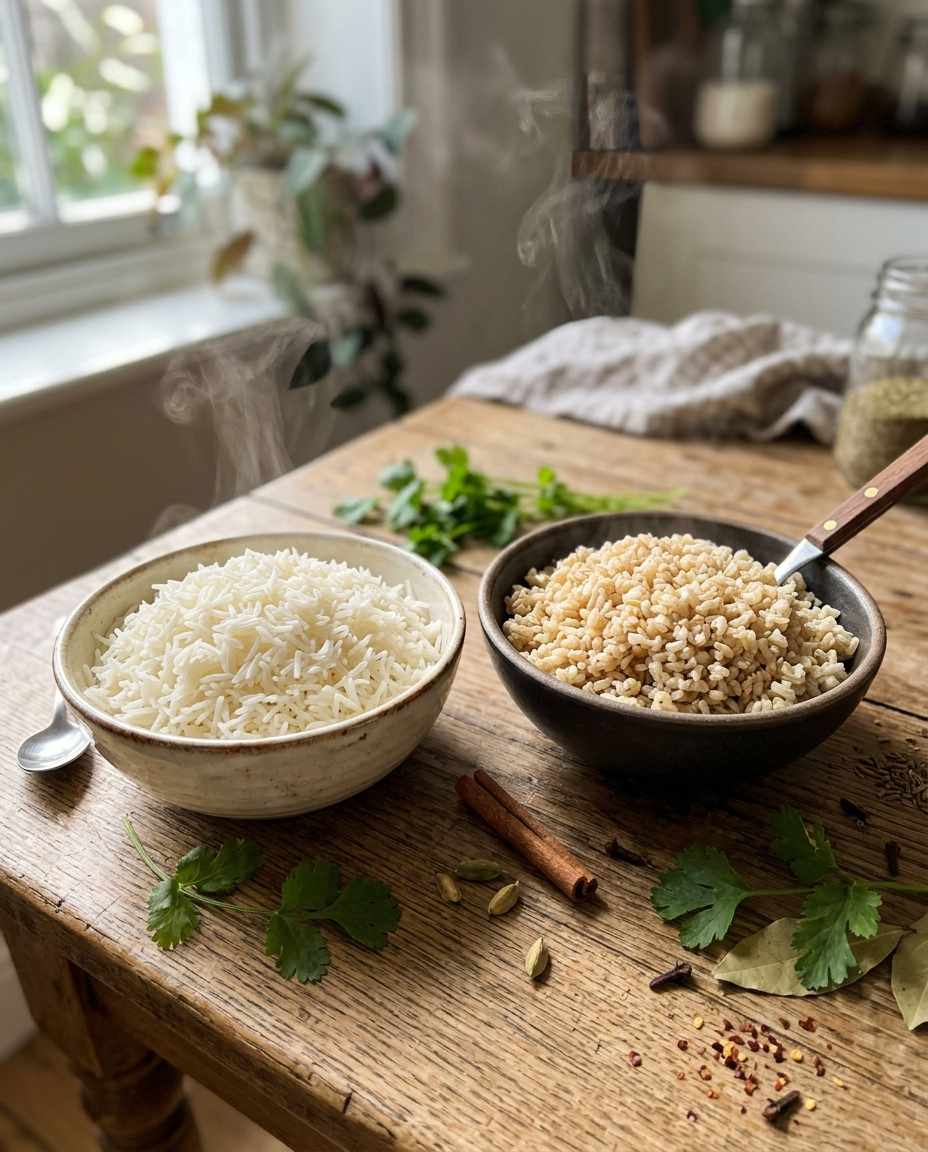
I remember the first time I cooked a pot of basmati rice alongside brown rice to compare them side by side.
The aromas clashed and harmonized, textures surprised me, and nutritional labels sparked questions.
Navigating their complexities reveals surprising trade-offs beyond simple health claims or flavor preferences.
Grain Anatomy and Processing Differences
Basmati rice and brown rice originate from the same grass species but differ significantly in post-harvest treatment.
Basmati is a long-grain, aromatic white rice variety, fully milled and polished to remove the bran and germ layers.
In contrast, brown rice is whole grain with only the inedible hull removed, preserving the bran and germ, which contain fiber, vitamins, and oils.
Understanding this anatomy is crucial because the milling process impacts cooking behavior, shelf life, nutrient content, and texture.
For example, basmati’s removal of bran leads to less chewiness and faster cooking times, whereas brown rice’s intact layers cause it to take roughly 40-50 minutes to soften fully.
I once overcooked brown rice by treating it like basmati, resulting in a gummy, less appetizing dish.
The bran layer in brown rice contains around 3-4 grams of fiber per 100 grams uncooked, compared to nearly zero in basmati.
This impacts digestion and glycemic response, influencing blood sugar spikes after meals.
A common mistake is assuming all rice varieties have similar cooking water ratios; brown rice typically requires about 2.5 cups water per cup of rice, compared to about 1.5 for basmati.
To optimize your rice cooking, measure water precisely and adjust for rice type, altitude, and desired texture.
Sterilizing or soaking brown rice for 30 minutes before cooking improves texture and nutrient bioavailability by softening outer layers and reducing phytic acid.
For basmati, rinsing three times removes excess starch and prevents sticky clumping.
Flavor Profiles and Culinary Uses

Basmati rice is prized for its unique nutty aroma caused by the compound 2-acetyl-1-pyrroline, which peaks around 0.09 parts per million in aged grains.
This aromatic profile lends itself well to dishes like biryanis, pilafs, and delicate Indian or Middle Eastern cuisines.
I’ve noticed that fresh basmati often lacks this complexity, so purchasing aged basmati (1–2 years) ensures the fullest flavor expression.
Brown rice delivers a distinctly earthy, nutty taste and chewy texture.
Its more robust flavor stands up better in hearty grain bowls, stir-fries, and salads.
However, the slightly grassy notes can be overpowering if poorly cooked or paired with subtle sauces.
I once served brown rice with a light vegetable broth and found the heavier texture overshadowed the dish.
A key tip for flavor balancing is to use broths, herbs, or roasting techniques when cooking brown rice to soften its intensity.
In contrast, basmati benefits from minimal seasoning to showcase its delicate aroma.
Often, a touch of cardamom or cinnamon during the simmering phase enhances basmati’s natural bouquet.
Do not rely solely on one for convenience or price; taste adaptability matters more.
Experiment by swapping basmati into typically white rice recipes and brown rice where complexity and chew are welcomed.
You’ll find both perform best in distinct culinary contexts rather than interchangeable substitutes.
Nutritional Impact and Health Considerations
Brown rice is lauded for its superior nutrient density due to the retention of bran and germ, providing fiber, essential minerals such as magnesium (~143 mg per 100 g), manganese (~1.1 mg), and B vitamins.
Studies demonstrate that diets rich in whole grains like brown rice reduce risks of cardiovascular disease, diabetes, and obesity by improving glycemic regulation and satiety.
In contrast, basmati rice,especially the white polished variety,has a higher glycemic index (GI ~56 to 69, depending on aging and cooking), while brown rice GI ranges from 50-55.
This means brown rice generally causes slower blood sugar increases.
From personal testing with continuous glucose monitoring during meals, brown rice showed notably smoother postprandial glucose curves.
However, brown rice’s nutritional advantage is offset in certain populations because its higher phytic acid content impairs mineral absorption.
For example, individuals with iron deficiency or mineral-sensitive gut issues may need to moderate brown rice consumption or process it via soaking and sprouting.
Meanwhile, basmati rice offers a cleaner digestibility profile with fewer antinutrients.
The takeaway is that brown rice is preferable for sustained energy and nutrition when properly prepared.
Basmati suits those prioritizing taste, convenience, or sensitive digestion.
Do not overlook portion size and meal composition, as rice is rarely consumed alone, so pairing it with fiber and protein optimizes overall nutrition.
Cooking Techniques and Texture Outcomes
Mastering the textures of basmati and brown rice hinges on water ratio, heat control, and timing.
Basmati typically uses a 1:1.5 rice-to-water volume ratio and requires draining excess water post simmer to maintain grain separation.
Achieving the signature fluffy, elongated grains means avoiding over-stirring or excessive moisture retention.
Brown rice demands a longer cooking time,at least 40-50 minutes,and a higher water ratio of around 1:2.5 or more.
The bran layer slows water absorption and gelatinization of starches.
I found using a heavy-bottomed pot with a tight-fitting lid minimizes steam loss, yielding consistently soft but chewy brown rice without mushiness.
A common pitfall baking or steaming brown rice without soaking causes dense, undercooked kernels.
To avoid this, soak brown rice for 30–60 minutes beforehand; this softens the bran and shortens cooking by 5-10 minutes.
For basmati, washing grains three times before cooking removes surface starch, preventing clumping.
For real-world application, I recommend a stovetop simmer over quick-cook rice cookers for both types, as temperature can be manually adjusted.
Sticky basmati ruins pilaf aesthetics, while grainy brown rice makes stir-fry less pleasant.
Practice adjusting cookware and timing to suit your preferences and kitchen setup.
Shelf Life, Storage, and Oxidation Effects

Brown rice contains natural oils in its bran layer that make it prone to rancidity and spoilage, giving it a shelf life of approximately 6 months when stored at room temperature.
In contrast, white basmati rice, being stripped of oils, can last up to 1-2 years in a cool, dry environment without quality loss.
From experience, storing brown rice in an airtight container with oxygen absorbers in a temperature-controlled environment (below 60°F) significantly prolongs freshness.
Refrigeration works well, but moisture control is critical to prevent mold.
Conversely, basmati is much more forgiving and suitable for pantry storage, but I always advise sealed opaque containers to reduce light exposure that degrades quality.
A common storage mistake is purchasing brown rice in bulk without planning to consume it quickly, resulting in off-flavors and potentially harmful oxidation byproducts.
Signs include a stale, paint-like odor and yellowing grains.
Storing rice in clear jars near heat sources accelerates this process, reducing nutritional and sensory quality.
Actionable advice is to buy small batches of brown rice with a clear expiration date, store it in dark, cool areas like a root cellar or fridge, and use within 3–6 months.
Invest in resealable food-grade mylar bags or vacuum sealers to maximize shelf life.
For basmati, buying in bulk is fine if stored appropriately.
Cost, Accessibility, and Environmental Considerations
Basmati rice generally is more expensive per pound compared to brown rice due to its premium grading, aging process, and import origins largely linked to India and Pakistan.
Prices vary between $3 to $8 per pound for aged basmati versus $1.50 to $3 for bulk brown rice varieties in North America and Europe.
Brown rice is widely available worldwide, produced locally in many countries, reducing carbon footprint associated with transportation.
Additionally, organic brown rice options are abundant and often offered as non-GMO, making them attractive for environmentally conscious consumers.
I prefer locally sourced brown rice when possible to reduce embodied energy and support sustainable farming.
One overlooked factor is that basmati rice’s fragile grains require careful harvesting and processing to avoid breakage, increasing labor costs and environmental impacts associated with specialized milling equipment.
Brown rice’s simpler milling results in higher mechanical efficiency and less energy input per kilogram processed.
If minimizing cost and environmental impact is your goal, brown rice is the better choice.
However, remember that preference for flavor and culinary use can justify basmati’s extra cost.
You can also look for basmati brands certified under sustainable agriculture programs to balance ethics and indulgence.
Cultural Significance and Global Popularity

Basmati rice carries deep cultural significance in South Asia, especially India and Pakistan, where it is ritualistically used in weddings, religious ceremonies, and celebratory feasts.
Its name meaning ‘fragrant’ in Hindi encapsulates its revered sensory identity.
I attended a Punjabi wedding where the slow-cooked basmati biryani was a centerpiece, symbolizing hospitality and craftsmanship.
Brown rice, conversely, has historically been considered a whole-grain staple in East Asian and some African households but was less glamorous in Western markets until the modern health food movement.
I recall my first introduction to brown rice in a Tokyo izakaya, where it formed the fibrous textural base to many traditional dishes.
Global acceptance of basmati rice has increased due to diaspora migrations, while brown rice’s popularity surged with wellness trends advocating whole grains.
Both rice types represent culinary heritage and health narratives but serve different social and gastronomic roles.
Appreciating this duality enriches your dining experience beyond taste metrics.
For consumers, honoring cultural contexts means respecting rice varieties’ origins and cooking methods.
For example, pairing basmati with cumin and garam masala versus integrating brown rice in robust salads or grains bowls rather than delicate pilafs enhances authenticity.
Cultural insight can elevate your meal preparation beyond technique.
Which to Choose: Decision Framework
Choosing between basmati and brown rice depends heavily on your priorities across taste, nutrition, cooking, and lifestyle preferences.
I recommend asking yourself whether flavor or fiber is more critical to your meal goals.
For aromatic, fluffy long-grain rice suitable for celebratory or delicately spiced dishes, basmati is unmatched.
Conversely, if sustained energy release, higher micronutrients, and digestive benefits dominate your requirements, brown rice wins out.
Keep in mind that brown rice demands more cooking patience and processing knowledge to avoid undershooting texture quality, while basmati provides greater convenience.
Budget and storage considerations also influence choice; brown rice is more economic and locally available in many markets but can spoil faster.
Basmati offers more shelf stability and easier cooking but comes at a premium.
I suggest experimenting with combined recipes where basmati serves as a textured contrast when mixed sparingly with brown rice.
Ultimately, neither is objectively better universally.
By aligning rice selection with your culinary habits, health needs, and cultural context, you can optimize every meal.
Track how each affects your satiety, digestion, and taste satisfaction across multiple cooking trials to settle on your personal rice equilibrium.




Leave a Reply