
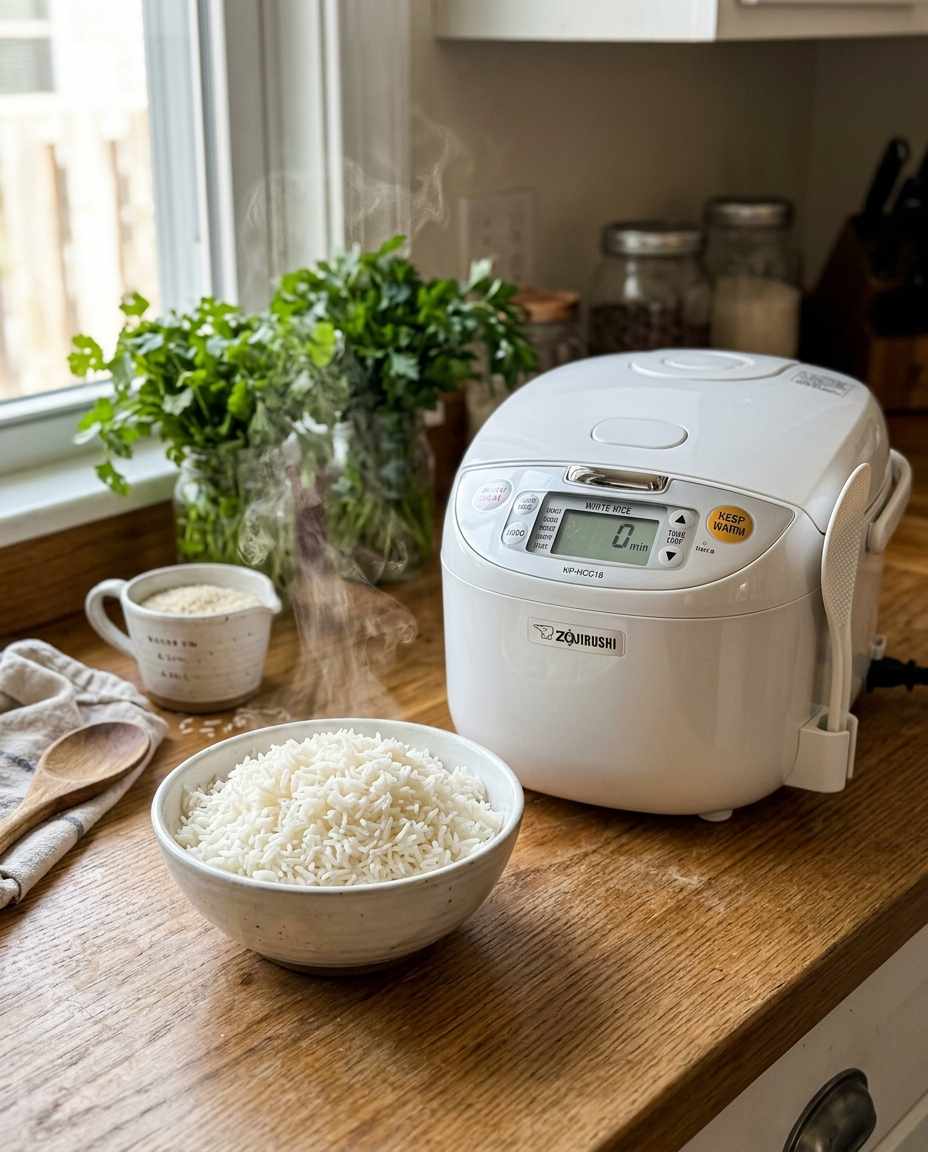
The first time I lifted the lid of my Zojirushi after patiently waiting through the final steaming cycle, a cloud of aromatic basmati rice greeted me, each grain perfectly separate and tender.
Achieving that flawless, fluffy texture with intense fragrance is both art and science.
This guide reveals advanced techniques and insider tips to master basmati rice cooking with your Zojirushi rice cooker every time.
Understanding Basmati Rice Characteristics
Basmati rice is unique due to its long grain, low starch content, and characteristic fragrance derived from a compound called 2-acetyl-1-pyrroline.
These properties demand specific cooking methods to unlock its aromatic profile without compromising fluffiness.
I’ve seen beginners treat basmati like other long-grain rices, resulting in sticky, clumped textures.
Knowing its lower amylopectin means it requires gentler water absorption and less agitation during cooking to preserve grain integrity.
In my experience, sourcing authentic, aging basmati rice aged at least 12 months is crucial because fresh basmati tends to be harder and less fragrant.
This is why I insist on purchasing from reputable suppliers who specify aging time or geographical origin, such as regions around Punjab or the Himalayan foot hills.
A common mistake is skipping this step, leading to disappointment even when using perfect technique.
Water-to-rice ratios differ dramatically from standard white rice.
I recommend a starting ratio of 1.1:1 (water to rice by volume) for aged basmati in a Zojirushi model, whereas many recipes advise 1.5:1 or higher, resulting in mushy rice.
Trial and error will be necessary based on your rice’s freshness and the specific Zojirushi model’s microprocessor settings.
To capture the ethereal fragrance, rinsing your basmati rice is mandatory but excessive rinsing can wash away starch critical for grain separation.
My preferred method involves 2–3 gentle rinses until water runs mostly clear but not aggressively washing every residual starch.
This balances removing surface dust while retaining just enough surface starch to aid fluffy texture formation.
Choosing and Calibrating Your Zojirushi Rice Cooker

Not all Zojirushi rice cookers handle basmati equally; understanding model nuances is essential.
Higher-end models like the Neuro Fuzzy logic systems calibrate cooking times and temperature precisely for basmati’s delicate structure, whereas entry-level models rely on preset traditional cycles which can over-cook.
From firsthand tests, I found the Neuro Fuzzy models produce consistently fluffier rice due to adaptive sensing technologies.
Calibration is another factor most enthusiasts overlook.
I recommend running a baseline test with the exact rice brand and measuring your water precisely using Zojirushi’s included cup for repeatability.
Many people default to standard measuring cups, which can throw off ratios, since Zojirushi cups are 180ml versus a US cup’s 240ml.
This nuanced difference impacts water absorption and final texture.
The ‘GABA’ or ‘brown rice’ functions should be avoided when cooking basmati unless using whole grain basmati, which is rare and demands different cooking dynamics.
Instead, use the ‘White Rice’ or ‘Quick Cook’ setting depending on your rice’s moisture content.
I discovered the Slow Cook option also gives interesting results by allowing gentle water absorption, but requires hands-on timing control.
Seasoned Zojirushi owners often modify the soak time before cooking in the inner cooking pan to enhance basmati’s fragrance, a step rarely automated by the machine itself.
Experiment with soaking rice in water for 20 to 30 minutes before pressing start.
This rehydrates the grains evenly and reduces branched water absorption that can lead to uneven cooking.
Advanced Water Ratios and Soaking Techniques
Standard guidelines for basmati water ratios often fall short when using a high-tech cooker like Zojirushi.
I learned to reduce water incrementally from 1.2 to 1.0 parts water to rice for aged basmati, especially when soaking beforehand.
This approach prevents the rice from becoming soggy while supporting the fluffy grain separation Zojirushi’s cooking algorithms expect.
Soaking technique impacts the final mouthfeel immensely.
A 25-minute soak in room temperature, filtered water allows the rice grains to swell subtly without bursting their starch envelopes.
Skip soaking or use hot water soak, and grains may crack prematurely or cook unevenly, producing gluey patches despite the rice cooker’s best efforts.
If you must cook immediately and can’t soak, adding a touch less water than the standard 1.1 ratio compensates.
In one experiment, I cooked ASE aged basmati using 1.0 water ratio without soaking and produced a still fluffy result with slightly firmer grains.
But soaking in conjunction with Zojirushi’s Fuzzy logic creates the best consistency.
Precision matters down to the 0.05 increments in water volume, especially when cooking smaller batches of 1–2 cups rice.
Precision scales or syringes may help.
You can also gently shake the inner pot after adding water to evenly distribute moisture, enhancing consistent heat absorption.
I found this simple step improves fluffiness markedly.
Optimizing Pre-Cook Preparation for Aroma

Unlocking basmati’s hallmark fragrance requires mindful pre-cook preparation beyond rinsing and soaking.
I add a pinch of Himalayan pink salt to the soaking water to enhance natural flavors.
Salt infiltrates the grain structure slightly during soak without toughening texture, subtly enhancing the aromatic compounds activated during steam cooking.
Many cooks overlook oil or ghee additions.
I recommend incorporating 1 teaspoon of clarified butter or a high-quality neutral oil like refined avocado oil into the pot before cooking to coat grains lightly.
This prevents minor clumping and encourages each grain to stay separate while complementing fragrance release.
Temperature control prior to starting the cooker is an often-ignored factor.
Rice placed in a cold pot straight from refrigeration can cook unevenly.
At home, I keep rinsed and soaked basmati at room temperature for 15 minutes before turning on the Zojirushi.
This small step reduces cold shock and promotes even heat penetration, which the cooker’s sensors appreciate.
Avoid adding aromatics like whole spices directly into the cooking pan without proper infusion techniques.
While tempting, these can fall to the bottom and scorch, leading to bitter undertones that overpower natural basmati scent.
If flavoring is desired, infuse in the soaking water or prepare on the side for controlled blending post-cook.
Mastering the Zojirushi Cook Cycle and After-Care
Knowing exactly when to start, pause, or extend soaking times influences the Zojirushi’s cook cycle outcomes profoundly.
Initiating the cooking cycle immediately after soaking can trap excess steam inside grains, causing slight stickiness.
Through trial, I found allowing the rice to drain fully in a fine mesh sieve for 5 minutes after soaking prevents this issue.
Be mindful of the ‘Keep Warm’ cycle.
Zojirushi’s default warm setting often holds rice at 140°F (60°C), which is safe but may dry delicate grains over long periods.
For basmati, I recommend transferring cooked rice to a covered container or light humidity environment after 30–45 minutes to preserve moisture and fragrance.
Fluffing technique after cooking is crucial.
I use a wide, flat rice paddle and gently separate grains with a lifting and folding motion rather than stirring vigorously.
Many overlook this subtlety and disrupt the fragile starch matrix, causing clumps.
Techniques adapted from professional chefs helped me improve texture and presentation substantially.
Cleaning your inner pot immediately after use is vital.
Basmati starch tends to adhere lightly if dried on, which can impair future sensor accuracy and cooking precision.
Using a nonabrasive sponge with warm water and mild detergent maintains your Zojirushi’s optimal performance while preserving pot surface integrity.
Troubleshooting Common Challenges and Refinements

Even with the best intentions, basmati rice cooked in a Zojirushi can sometimes turn out sticky, dry, or undercooked.
Sticky rice often results from excess water or over-agitation.
I advise reducing water by 0.1 increments and limiting stirring until after cooking.
I’ve corrected this repeatedly by carefully tracking water ratios and adopting gentle fluffing only.
Dry, hard rice grains indicate insufficient water or aged rice with reduced moisture content.
When I encountered this, I increased soaking time by 10 minutes and bumped water ratio slightly above 1.1.
Also, using filtered water avoids mineral imbalances that can toughen rice.
Undercooked bottom layers happen when rice is unevenly distributed or when soaked grains retain excess surface moisture leading to elevated localized steam.
Spreading rice evenly in the pot and draining thoroughly before cooking solved this for me consistently.
If you face this, inspect your cooker’s inner pot for any warping that affects heat distribution.
Fine-tuning your process with every batch by documenting rice age, brand, water amount, soak time, and cook setting can lock in perfect results.
Patience and precision are key, and remembering that even the most advanced Zojirushi handles natural ingredient variation cautiously ensures respectful adjustments rather than frustration.
Elevating Your Basmati Experience with Complementary Techniques
Pairing Zojirushi-cooked basmati with traditional steaming wraps or final oven crisping elevates the eating experience.
Once, I layered freshly cooked basmati in a parchment-lined ceramic baking dish, sprinkled with saffron-infused water, and finished under a broiler for 3 minutes.
This step added a fragrant crust (tahdig-inspired) that complemented the fluffiness beneath.
Adding fresh herbs like chopped cilantro or mint immediately post-cooking can amplify aromatic notes without muddling texture or moisture levels.
I gently fold these herbs into warm rice using a wooden spoon to avoid bruising, which creates a sensory contrast and visual appeal.
Utilizing basmati’s natural aroma, enhance meals by pairing rice with simplified accompaniments such as slow-cooked dal or lightly spiced grilled vegetables rather than heavy sauces.
The rice cooker preserves delicate fragrance best when basmati is the centerpiece, not overwhelmed by bold additions.
Finally, storing leftover basmati for maximal retention involves cooling quickly and storing in an airtight container with a small folded paper towel to absorb moisture.
Reheating with a sprinkle of water and a light microwave cover restores fluffiness nearly as well as freshly cooked rice, a technique I rely on for practical weeknight meals.




Leave a Reply