
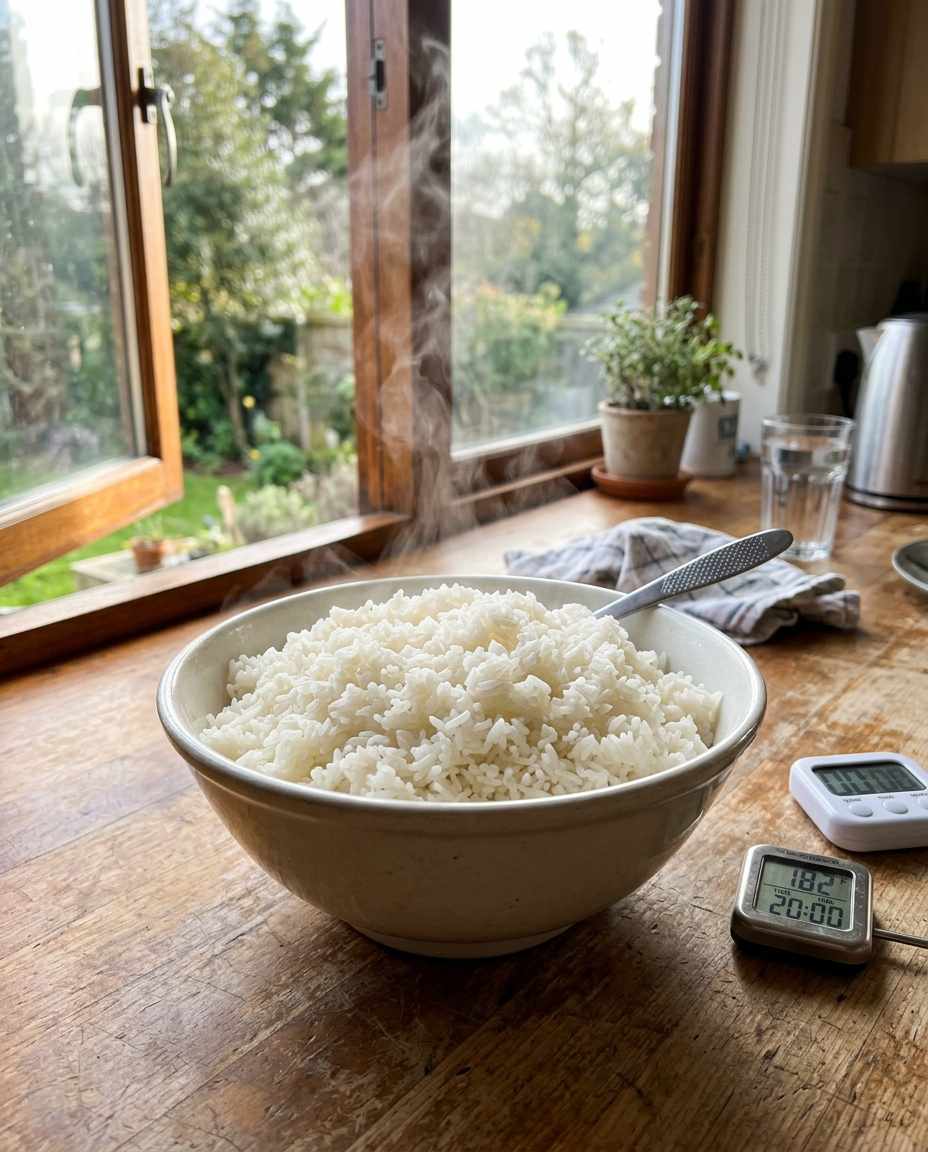
I stood in my kitchen as a steaming mound of freshly cooked jasmine rice billowed heat, the scent swelling around me.
It was dinner prep crunch time, and I knew letting it sit too long would risk food safety—and dull the texture.
Mastering quick-cooling rice is an art every cook should own, blending science, timing, and practical know-how.
Why Rapid Rice Cooling Matters
Rice is a notorious breeding ground for Bacillus cereus, a bacteria that thrives if cooked rice is left at room temperature for too long.
The spores survive cooking and activate as the rice cools slowly, producing toxins that cause food poisoning.
I learned this the hard way, after a dinner party ended with upset stomachs because I left rice in a deep pot on the counter for hours.
Understanding this risk reframes cooling rice as an urgent safety measure, not just a culinary preference.
The USDA recommends cooling rice from 140°F (60°C) to 70°F (21°C) within two hours, then to below 41°F (5°C) within another four to six hours.
This timeline guards against dangerous bacterial growth.
But speed must be balanced with texture retention.
Rapid cooling that dries out grains or causes them to harden creates unappetizing results.
That’s why mastering the right cooling methods blending airflow, surface area, and technique is crucial.
The key takeaway is to cool freshly cooked rice quickly and safely by breaking it into shallow layers and using airflow or refrigeration—waiting hours at room temperature invites risk and degrades quality.
Ideal Containers for Quick Cooling

The container you choose dramatically influences how quickly rice cools.
Metal pans, especially stainless steel, conduct heat far faster than glass or ceramic, rapidly drawing warmth away.
I use a shallow, 3-inch deep stainless steel hotel pan to spread rice in thin layers, which speeds cooling and minimizes hot spots.
Plastic containers tend to insulate, trapping heat and slowing cool down.
I often see home cooks storing rice in a deep plastic bowl, then sealing it airtight, which traps steam and increases spoilage risk.
Instead, select containers no deeper than 2 inches to maximize surface area exposure.
Another trick is dividing rice into multiple small, shallow portions rather than one large mass.
For example, splitting 2 cups of cooked rice into four 1-cup shallow trays cuts cooling time by nearly half.
This segmentation creates a larger surface-to-volume ratio, optimizing heat dissipation.
When possible, choose containers with wide, flat bottoms and no tight-fitting lids during initial cooling.
This design allows heat to escape and air to circulate around the rice, facilitating even, rapid cool down without condensation buildup.
Techniques for Increasing Surface Area
Surface area is the primary lever to accelerate cooling because heat dissipates through exposed contact points with air.
I learned early that plopping rice straight from pot to bowl never cooled fast enough.
Instead, spreading rice in a thin, even layer maximizes heat release.
Use a clean baking sheet or large rimmed tray to spread rice evenly about 1 inch thick or less.
Thin layers ensure that steam escapes promptly and top grains cool naturally.
For example, when preparing 4 cups, I use a 9×13 inch sheet to spread it uniformly for best airflow.
You can also gently fluff rice with a fork during spreading to separate grains, preventing clumps that trap heat pockets.
Clumped rice behaves like insulation, keeping the core warm and promoting bacterial growth.
The common mistake is leaving rice tightly packed, which reduces cooling speed dramatically.
An actionable tip: if space is tight, place rice in multiple shallow trays stacked with breathing room, or use cooling racks under trays to lift them off counter surfaces and increase airflow on all sides.
Using Ambient Airflow and Temperature

Airflow accelerates cooling by carrying heat away from rice surfaces.
In my urban kitchen, the best cooling air source is often a fan or open window providing steady, indirect breeze.
Fans set to low or medium speed help maintain airflow without drying rice excessively.
However, ambient temperature also plays a crucial role.
Cooking in hot climates or summer months means room air may hover too warm to cool rice efficiently.
I recall once trying to cool rice on a 90°F (32°C) afternoon without refrigeration, which slowed cooling dangerously and tempted me to use refrigeration sooner.
To harness airflow optimally, position trays in a well-ventilated area away from direct sunlight or heat sources.
Even a desktop fan placed 12-18 inches away blowing gently across shallow trays can reduce cooling time by 30-50 percent.
Just be careful not to blow dust or contaminants onto exposed food.
Ultimately, if your room temperature exceeds 75°F (24°C), you should prioritize combining airflow with refrigeration rather than relying on air alone for safe quick cooling.
Refrigeration vs. Freezing: What Works Best?
Placing rice directly into a refrigerator is often the fastest, safest way to cool it, but it comes with nuances I learned through trial and error.
Putting a hot pot or deep container right into the fridge can raise the appliance temperature, risking other foods and preventing proper cooling of your rice.
The best practice is to first reduce the temperature by spreading rice in shallow containers and allowing it to cool somewhat at room temperature no longer than 20–30 minutes.
Once the temperature is closer to 120°F (49°C) or below, move the rice into the fridge promptly.
Avoid freezing unless you plan to store rice long-term.
Freezing halts bacterial growth perfectly but changes rice texture noticeably when thawed.
I reserve freezing only for pre-cooked meal portions; otherwise, cool in the refrigerator below 41°F (5°C) to maintain quality.
Remember to leave containers slightly unsealed or cover loosely to prevent moisture buildup as rice cools in the fridge.
Tight lids trap condensation, creating sogginess and extended cooling times.
Cool Rice Safely in Commercial vs. Home Kitchens

Commercial kitchens face unique challenges and solutions for cooling rice quickly and safely.
Large batches exceeding 10 pounds require specialized equipment like blast chillers or ice water baths in hotel pans.
These technologies rapidly draw heat down to safe temperatures within mandated timeframes.
I observed a catering kitchen where chefs submerge shallow pans of rice into ice water sinks, stirring occasionally to transfer heat efficiently.
This technique cuts cooling from 140°F to under 70°F within an hour, meeting FDA food code guidelines for commercially prepared rice.
Home cooks can adopt simplified versions by placing shallow trays atop a frozen gel pack or chilled metal surface, then stirring periodically.
However, direct ice contact risks waterlogging unless the rice container is well sealed or double-bagged.
A frequent error is cooling large volumes in single deep pots or bags, which traps heat centrally, violating food safety laws and increasing spoilage risk.
The takeaway: always split large quantities into manageable shallow batches for consistent cooling.
Common Mistakes and How to Avoid Them
One pervasive mistake is leaving rice to cool overnight at room temperature.
The belief that covering rice tightly preserves freshness actually creates a warm, moist environment perfect for bacteria.
From my experience, even covering with a cloth or lid without cooling accelerates spoilage.
Another error is cooling rice in containers deeper than 3 inches, which inhibits heat release from the core, a problem likely because many people assume deeper bowls save space.
I once stacked a deep rice bowl in my fridge and noticed uneven cooling, resulting in mushy edges and overheated centers.
Additionally, many overlook stirring or fluffing rice during cooling.
Stirring breaks clumps, distributes residual heat, and exposes warmer grains to air.
Leaving dense rice untouched traps heat and moisture, fostering microbial growth.
To avoid these mistakes, spread rice in thin layers, use proper containers, cool uncovered in airflow for short periods, and then refrigerate promptly.
Stir rice gently if possible before refrigeration to accelerate uniform cooling.
Tools and Gadgets That Make the Process Easier

Investing in the right tools can transform rice cooling from a chore into a streamlined routine.
A digital instant-read thermometer with a probe is indispensable; it provides precise internal temperature readings guiding when rice is safely cooled before refrigeration.
I use a thermapen with a ±0.5°F accuracy for consistent results.
Airflow devices like compact kitchen fans or cooling mats enhance evaporation and heat dispersion.
I found a USB-powered fan with adjustable speeds perfect for near-tray placement without excessive air disturbance.
Likewise, silicone mats beneath trays can insulate counters and promote airflow underneath containers.
For commercial cooks or rice aficionados, blast chillers represent the gold standard, forcing rapid cooling curves through refrigerated blasts reaching as low as 20°F (-6°C).
Though costly, these machines ensure regulatory compliance and impeccable food safety.
Another handy gadget is stackable shallow stainless steel hotel pans with lids that allow cooling in layers while saving space.
Double-bagged zip-top freezer bags support safe ice bath chilling without water seepage, avoiding soggy rice—a crucial hack if you lack specialized equipment.
Balancing Texture and Food Safety
While cooling rice quickly is essential for food safety, preserving the ideal fluffy texture is equally important.
I learned that aggressive cooling methods like overexposure to cold air or freezing produce dry, grainy rice that loses its pleasant chew.
The key is to achieve cooling within safety windows without overshooting.
Slow, controlled airflow combined with shallow spreading keeps grains separate and surrounded by gentle cooling instead of a harsh chill that seals moisture inside grains, making rice armored to heat release.
Another texture issue arises from prolonged storage after cooling.
Even properly cooled rice dehydrates or hardens if left uncovered in a fridge.
I recommend storing rice in loosely sealed containers balanced between vapor permeability and moisture retention, such as BPA-free polypropylene containers with vented lids.
Ultimately, the balance comes from timing: cool rice within two hours with thin layers and airflow, refrigerate promptly, and consume within three to four days.
This approach prioritizes safety while retaining wardrobe-worthy fluffy rice textures.



Leave a Reply