
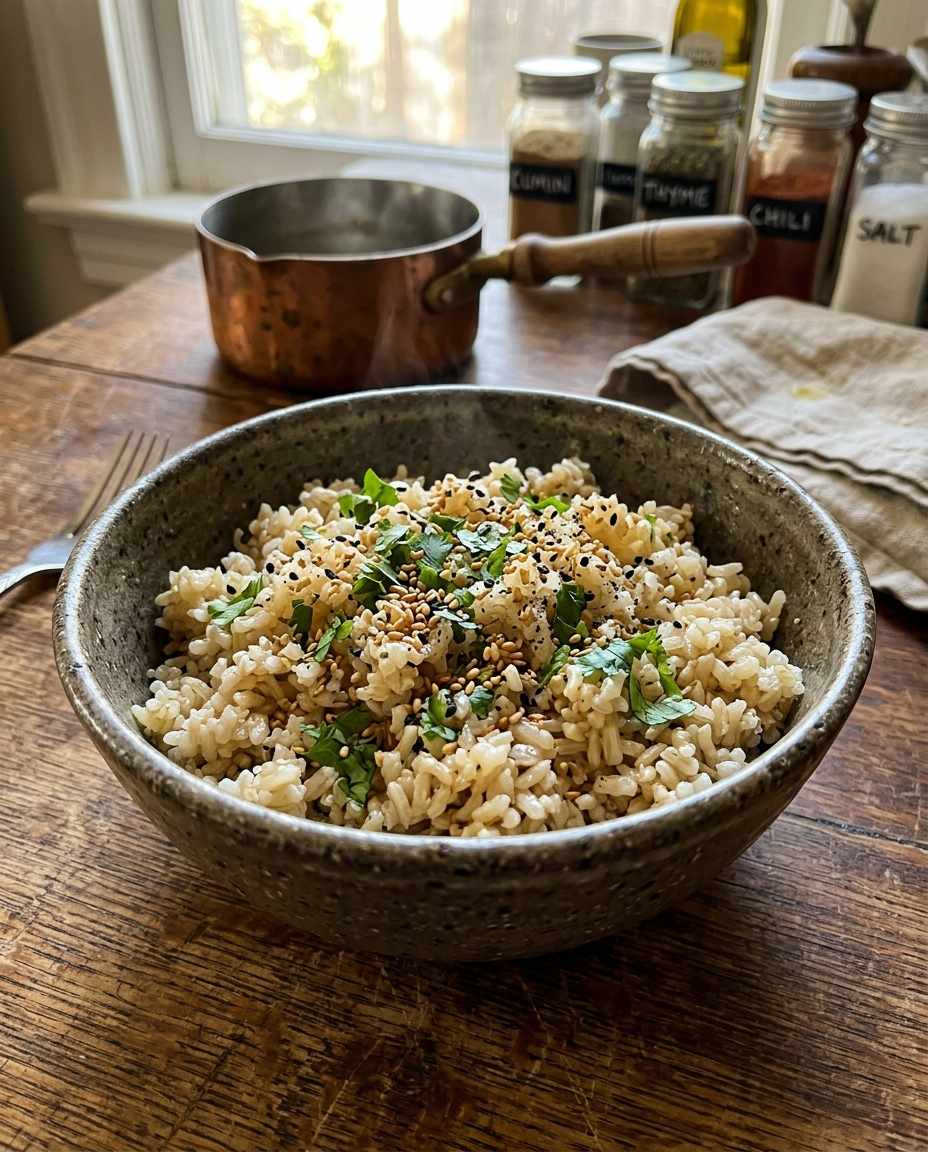
Early one Saturday morning, the earthy aroma of toasting spices mingled with simmering brown rice on my stove.
That moment cracked my lifelong struggle with bland, dry brown rice.
I’ll show you exactly how to transform this hearty grain into a delicious, satisfying staple with simple, science-backed flavor hacks.
Understanding Brown Rice’s Flavor Profile
Brown rice carries a complex, nutty flavor far deeper than its white counterpoint due to the intact bran and germ layers.
These components, rich in oils and fiber, impart a slightly chewy texture and inherently earthy notes but also house minerals that can sometimes create a slightly bitter taste.
The bran layer acts as a natural flavor reservoir and dense fiber matrix, which affects both taste and mouthfeel.
When I first understood these flavor mechanics, it helped me accept that brown rice needs complementary flavoring rather than masking.
A common mistake is treating it like white rice—overcooking or under-seasoning—and ending up with a dull, dry dish.
Recognizing the bran’s oil content means the rice benefits from gentle heat and well-balanced moisture.
In practical kitchen terms, texture and taste depend heavily on the rice’s variety (long vs. short grain), soaking time, and cooking method.
For example, short-grain brown rice tends to be stickier with a more pronounced earthy taste, ideal for Japanese or Korean dishes.
Long-grain brown rice, leaner and fluffier, works better for pilafs and sides.
Your takeaway is to embrace brown rice’s unique profile rather than expecting it to behave like white rice.
Start by selecting a variety that matches your dish and try soaking it up to 8 hours, which softens the bran and releases complex starches, improving both texture and flavor absorption.
Choosing the Right Brown Rice and Tools

One overlooked factor in flavor is rice quality and age.
Freshly milled brown rice retains more fragrant lipid compounds, while older rice, often stored improperly, develops rancid notes that dull flavor.
I learned this the hard way after buying bulk brown rice stored in warm, humid conditions—its flat taste was unmistakable.
Your first step should be buying brown rice packaged with minimal exposure to air and heat; vacuum-sealed bags or jars with airtight lids and stored in cool, dark places extend freshness.
Look for brands specifying harvest dates or ‘fresh-milled’ labeling.
Organic certifications sometimes correlate with better post-harvest handling, improving taste.
Beyond the rice itself, the cookware and tools dictate final texture, which influences flavor perception.
A heavy-bottomed stainless steel pot or enameled cast iron with a tight-fitting lid prevents scorching and promotes even steaming, essential to coax chewy yet tender grains.
Avoid thin aluminum pots that can overheat and burn the outer bran layer.
Keep a rice-to-water ratio scale handy—a kitchen scale measuring 150 grams of rice to about 375 ml of water (a 1:2.5 ratio)—to maintain consistency.
I recommend investing in a digital scale with 1-gram accuracy.
Accurate measurement avoids the blandness or stickiness common when eyeballing volumes.
Pre-Soaking and Rinsing Techniques
Soaking brown rice is a game-changer in flavor and texture, as it hydrates the dense bran and initiates enzymatic processes that break down phytic acid, reducing bitterness.
In my experience, a soak between four to eight hours at room temperature optimizes taste without risking fermentation.
Too short, and the rice remains tough; too long, and it can turn mushy or sour.
Rinsing is equally crucial but often misunderstood.
Rinsing twice under cold water removes surface starch and any residual silts or dust but should be gentle to avoid stripping essential oils in the bran that contribute flavor.
I’ve seen cooks rinse relentlessly, leading to flat-tasting rice.
For best results, gently swish the rice in a large bowl with cool water, drain, then repeat once more, finishing with a light drain.
After rinsing, let the rice drain for 15 minutes to remove excess water that dilutes cooking, preserving the bran’s concentrated aroma.
Remember, soaking and rinsing can be combined for expediency: soak first, rinse right before cooking.
This sequence softens the rice kernel and removes off-flavors without sacrificing flavor-boosting oils.
Mastering the Cooking Methods
Cooking brown rice perfectly involves balancing water absorption and heat application to unfold its robust flavors without creating gummy or dried-out textures.
I tested stovetop simmer, absorption pot, and rice cooker methods extensively, each with distinct trade-offs.
Absorption on low heat in a heavy pot yields tender rice with more pronounced nuttiness, while a rice cooker emphasizes convenience but can sometimes create uneven texture.
Stovetop absorption requires precise water ratios; typically, 2.25 to 2.5 cups water per 1 cup rice works best depending on grain size.
Heavy lid pressure and consistent low heat are keys to prevent evaporation and burning.
A common beginner mistake is lifting the lid too soon, disturbing the steam environment.
Interestingly, I found adding aromatics directly during cooking changes flavor depth significantly.
Toasting rice dry for 2-3 minutes before adding hot broth or water develops delicious Maillard notes that amplify nuttiness.
Adding coarse salt at this stage also enhances internal flavor rather than just surface seasoning.
You should consider experimenting with slow-simmer methods using broth instead of plain water for more flavor infusion and reserve some cooking liquid to moisten rice at the end if it appears a little dry.
Patience and incremental water adjustments after trials will lead to that perfect balance uniquely suited to your cookware and rice batch.
Enhancing Flavor with Infusions and Add-ins

Adding flavor enhancers during or after cooking transforms brown rice from plain to memorable.
The secret lies in layering flavors that complement the grain’s inherent earthiness without overpowering it.
I often use toasted spices, aromatics like garlic and onions, or fresh herbs added into the pot before cooking to build a multi-dimensional taste profile.
In a real-world setting, toasting cumin seeds and bay leaves in a teaspoon of oil for one minute before adding soaked rice profoundly changes the dish.
This technique releases volatile flavor compounds that infuse every kernel.
Skipping this step usually leads to flat, one-note rice that feels underwhelming.
After cooking, stirring in a tablespoon of toasted nuts or seeds such as sesame or sunflower seeds adds a delightful texture contrast and rounds out the dish with subtle fatty richness.
A splash of acid, like fresh lemon juice or a dash of apple cider vinegar, brightens the flavors and balances any bitterness that lingers.
Your practical takeaway: build flavor gradually from the start, incorporating spices and aromatics into the cooking process, then finish with textures and acidity to elevate the eating experience.
Experiment with global flavor profiles, but keep the additions modest to respect brown rice’s natural character.
Finishing Touches: Texture and Presentation
Texture transforms perception of flavor, especially with brown rice’s hearty grain.
Fluffy, separate grains signal ideal cooking and enhance enjoyment.
I learned that immediately fluffing the rice with a fork after resting for 10 minutes redistributes moisture evenly and staves off clumping or mushiness.
Overlooking resting time is a common mistake.
Removing the pot from heat and fluffing rice hot results in sticky clumps and lost aromatic steam.
I now always cover the pot POPPING off heat for a precise 10-minute interval, which finishes gentle steaming and firming the grain.
Presentation also influences flavor perception.
I often garnish brown rice with a sprinkle of toasted seeds or vibrant chopped herbs like scallions or parsley, providing visual contrast and added fragrance that primes your palate.
Bright colored garnishes invite sensory anticipation vital to flavor enjoyment.
To sum up, prioritize letting your rice rest undisturbed, then use gentle fork fluffing to preserve grain integrity.
Finally, finish with vivid contrasting garnishes and a drizzle of finishing oil like toasted sesame or walnut oil to amplify aroma and mouthfeel.
Common Mistakes and How to Avoid Them

One common error is rushing the cooking process by using too much water, which results in mushy, bland rice lacking nuttiness.
I once attempted fast-cooking brown rice by simply boiling it like pasta, dumping excess water afterward.
The flavor washed away, and the texture turned pasty.
The bran layers don’t tolerate such harsh treatment.
Under-seasoning is another pitfall.
Many treat brown rice like plain filler rather than as a base for flavor building.
As a rule, you should salt cooking water similar to pasta (about 1 teaspoon kosher salt per cup uncooked rice) to season the grain itself.
Ignoring this leaves the rice tasting flat.
Skipping the soak and rinse steps often leads to dry, tough rice with bitterness from residual phytic acid or dust.
I’ve seen cooks impatiently try to speed-cook dry-packed, unrinsed brown rice, which exposes the edible oils to burning and off-flavors.
Patience is essential.
Avoid these mistakes by planning ahead: soak thoroughly, measure precisely, season the cooking liquid well, and choose a cooking method that respects brown rice’s texture requirements.
These deliberate steps produce flavorful, tender brown rice every time.
Pairing Brown Rice with Complementary Dishes
Understanding how brown rice interacts with other dish components maximizes its flavor impact.
The grain’s hearty, slightly nutty taste thrives alongside protein-rich and vegetable-based dishes with robust sauces or seasoning.
For example, pairing with dishes featuring smoky chipotle, turmeric, or coconut milk highlights and balances brown rice’s natural earthiness.
I often serve brown rice with spiced chickpea curries or grilled fish with herbaceous chimichurri.
The contrast of creaminess and acidity against brown rice’s texture creates a rewarding flavor harmony.
Avoid pairing with very mild or watery sauces that leave the rice’s flavor exposed and less appealing.
Temperature matters too.
Serving brown rice warm promotes aromatic perception, while cold brown rice tends to mute flavor notes and hardens the bran layer.
That’s why room temperature or freshly cooked rice shines best in most meals.
For your meals, think of the rice as a flavorful grounding element rather than neutral filler.
Select side dishes with boldness or character enough to make the rice’s nuttiness feel integral to the overall flavor composition.




Leave a Reply