
Zoysia grass offers a lush, dense lawn that thrives in warm climates and stands up to drought and foot traffic better than many other turfgrasses.
This guide covers everything you need to know about growing, establishing, and maintaining healthy Zoysia grass for a beautiful, resilient lawn all year round.
Understanding Zoysia Grass Characteristics

Zoysia grass is a warm-season turf known for its dense growth and shade tolerance.
Unlike many grasses that grow aggressively upwards, Zoysia spreads via rhizomes and stolons, creating a thick mat that crowds out weeds naturally.
Its slow growth rate means it takes time to establish but rewards you with a lush, carpet-like lawn.
This grass is tough, capable of enduring foot traffic and drought better than many cool-season varieties.
It also has a unique texture, with fine to medium leaf blades displaying a vibrant green color in its peak season.
Understanding these attributes helps set realistic expectations for its growth patterns and maintenance needs.
Recognizing that Zoysia’s slow vertical growth contrasts with its spreading habit is key.
This explains why patience is necessary during establishment phases, especially if planting from plugs or sod.
The grass’s density and drought resistance ultimately provide one of the toughest yet most attractive turf options for homeowners in the right climate zones.
Selecting the Right Zoysia Variety

There are multiple Zoysia varieties suited to different climates and soil types.
Common types include Zoysia japonica, known for its cold tolerance, and Zoysia matrella, prized for a finer texture and better shade tolerance.
Choosing the right variety aligns with your climate zone and soil pH to promote healthy growth.
Zoysia japonica grows more rapidly and tolerates cooler winters but has coarser blades.
Zoysia matrella and Zoysia tenuifolia offer a tighter, more manicured lawn appearance but require warmer, more humid conditions.
Identifying your predominant climate challenges,cold, shade, or drought,helps select the ideal cultivar.
Do not overlook variations within varieties, as some cultivars are bred for faster establishment or disease resistance.
When sourcing grass, be sure to ask suppliers about their recommendations based on your regional conditions.
The proper selection will lessen maintenance efforts and improve lawn durability over time.
Preparing Soil for Zoysia Planting

Successful Zoysia grass lawns begin with soil preparation.
The soil should be well-drained and moderately fertile, ideally with a pH between 6.0 and 6.5.
Before planting, you’ll want to test soil nutrient levels and adjust accordingly, often adding lime or sulfur to balance pH.
Clearing the area of weeds, rocks, and debris is crucial before planting.
Loosen soil to a depth of 4 to 6 inches and incorporate organic matter like compost to improve texture and nutrient retention.
Proper grading ensures no pools of standing water threaten root health.
Avoid compacted soil conditions because Zoysia roots need loose soil to extol vigorous growth underground.
Fertilizer application before planting supports root establishment.
Taking the time to prepare soil well pays off with faster establishment and a more resilient lawn during growth.
Planting Techniques: Sod, Plugs, and Seed

Zoysia grass can be established through sod, plugs, or seed, each with pros and cons.
Sod offers the fastest method with instant coverage but typically carries a higher upfront cost.
Properly laid sod, like the fresh square patches of bright green in the photo, showcases uniform coverage and clearly defined edges, emphasizing the premium look it provides immediately.
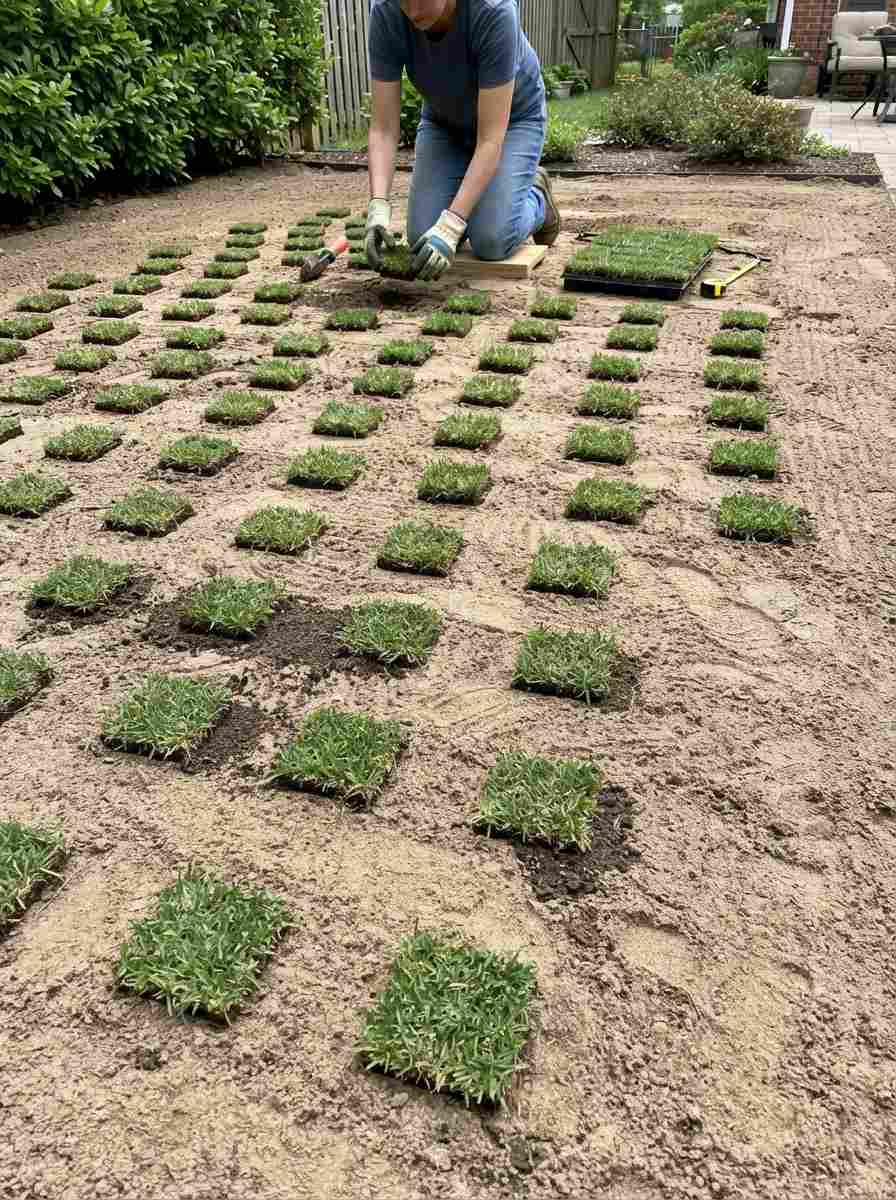
Plugs take longer to fill in but are a cost-effective way to establish Zoysia, especially in smaller yards.
This method involves spaced planting squares or circular plugs, seen here as small green patches carefully positioned over bare soil.
It’s critical to maintain moisture levels during plug establishment, ensuring roots take hold without drying out.
Seeding is the most economical but the slowest option, often requiring weed control and patience.
When planting, the key is consistent watering and preventing soil crusting.
The method you choose influences your timeline but all require good soil prep and care for success.
Watering Practices for Healthy Growth

Zoysia grass is drought tolerant but still requires watering to establish roots and maintain deep green color during dry spells.
After planting, frequent light watering encourages root penetration without waterlogging soil.
As the lawn matures, watering frequency decreases while duration increases to promote deep rooting.
During peak summer, about 1 inch of water weekly from rainfall or irrigation keeps Zoysia lush but avoid daily shallow watering which weakens root systems.
Early morning irrigation minimizes disease risk and moisture evaporation.
Adjust irrigation based on weather, soil type, and lawn condition.
Overwatering can suffocate roots and invite fungal issues.
The goal is balanced moisture that supports health without excess saturation.
Mowing Zoysia for Optimal Health

Mowing Zoysia correctly is vital to maintain its dense appearance and prevent stress.
This grass prefers a mowing height between 1 and 2 inches, with more frequent mowing during rapid growth periods to avoid scalping.
The vintage Greenskeeper reel mower cutting a thick carpet of vibrant green grass demonstrates how reel mowers provide clean cuts essential for Zoysia’s fine blades.
Using dull mower blades or cutting too low causes ragged edges that increase susceptibility to disease and browning.
To retain density, remove no more than one-third of the leaf blade at once.
Gradually raise mowing heights as growing slows in cooler months to reduce lawn shock.
The goal is to keep Zoysia looking manicured without overcutting.
Reel mowers are preferable for precision and blade health, but sharp rotary mowers can suffice with careful blade maintenance.
Fertilizing Strategies for Zoysia Turf
Zoysia benefits from a balanced fertilization plan supporting growth without excessive top growth.
Nitrogen encourages green color and thickness but applying too quickly or late in the season risks winter damage.
Ideally, start fertilizing in late spring when Zoysia begins active growth.
Applying a slow-release fertilizer with balanced nitrogen, phosphorus, and potassium helps maintain soil fertility long-term.
Avoid high nitrogen levels in late fall as the grass prepares for dormancy.
Supplemental applications can be tailored to soil tests showing nutrient deficiencies.
Regularly feeding at proper intervals strengthens roots and supports recovery from traffic wear.
Proper fertilization complements mowing and watering practices to keep lawns healthy and vibrant.
Weed and Pest Management
Due to its dense growth habit, Zoysia naturally suppresses many weeds but isn’t immune.
Annual broadleaf and grassy weeds can invade thin spots or stressed areas.
Early identification and treatment are essential to prevent weed takeovers.
Selecting herbicides safe for Zoysia or manually removing weeds is best during establishment and mature phases.
Chemical applications work best when the lawn is healthy and growing robustly.
Also, monitor for pests such as sod webworms and chinch bugs which may damage leaves or roots.
Integrated pest management emphasizes proper watering, mowing, and fertilization to maintain vigor and resilience.
Keeping your lawn thick and healthy reduces pest and weed pressure substantially over time.
Seasonal Care and Dormancy Considerations

Zoysia is a warm-season grass and naturally goes dormant with the first frost, turning golden brown as shown in the dormant lawn image.
Understanding this dormancy cycle helps avoid unnecessary treatment and manages lawn appearance expectations through winter.
In fall, lowering nitrogen inputs and raising mowing height prepares the grass for dormancy, encouraging root carbohydrate storage.
Avoid heavy watering which can cause root rot in the cooler months.
Spring green-up follows warming temperatures, often signaling the time for aeration and fertilization.
Embracing dormancy as part of the cycle prevents frustration with browning and encourages proper care timing, keeping your Zoysia lawn healthy year after year.
Common Mistakes in Zoysia Lawn Care
Many lawn owners mistakenly treat Zoysia like a fast-growing cool-season grass, expecting rapid fill-in and quick recovery from damage.
Its slow vertical growth and spreading via rhizomes mean patience and proper ground prep are vital.
Overwatering and overfertilizing with nitrogen late in the season frequently cause stress and disease vulnerability.
Mowing too low or using dull blades contributes to ragged leaf edges and weak turf prone to weed invasion.
Another common error is neglecting soil pH testing, leading to nutrient deficiencies that stunt growth.
Improper weed control timing can damage the grass itself.
Avoid these pitfalls by following tailored Zoysia care practices based on regional climate, soil health, and growth cycles.
This ensures your lawn remains dense, green, and resilient through changing seasons.
Troubleshooting Zoysia Lawn Problems
Yellowing, thinning, or patchy areas in Zoysia lawns often stem from common issues like drought stress, soil compaction, or fungal diseases.
Addressing problems early by carefully inspecting for root health, watering adequacy, and mowing practices can save time and expense.
Aeration relieves compaction and improves water and nutrient flow.
Adjusting irrigation to prevent overly wet or dry extremes supports recovery from disease or pest incidents.
Soil testing guides fertilizer amendments correcting micronutrient imbalances.
Understanding symptoms versus causes prevents misdiagnosis.
Lawn care professionals can offer tailored advice, but most problems respond well to proper cultural practices and consistent monitoring.
Comparing Zoysia to Other Lawn Grasses
Zoysia stands out for its drought resilience and dense growth but has slower establishment compared to fast-growing grasses like Bermuda.
The side-by-side plot in the photo dramatically illustrates this contrast; on one side the dark green, plush Zoysia lawn thrives, while the adjacent cool-season grass suffers drought stress, appearing dry and patchy.
This visual emphasizes Zoysia’s superior tolerance for heat and water scarcity, making it an excellent choice for those in warm climates wanting a durable yard.
However, in cooler regions prone to long winters, Zoysia may go dormant for extended periods, sacrificing year-round green color.
Knowing these trade-offs helps determine if Zoysia aligns with your lawn goals and growing conditions.
It offers a robust alternative for homeowners prioritizing drought resistance and low maintenance once established.

Leave a Reply