
A flourishing lawn requires precise care tailored to the seasons.
This comprehensive guide breaks down month-by-month lawn care essentials, providing you with expert knowledge on mowing, feeding, watering, and problem-solving.
Discover how to maintain, repair, and nurture your lawn at every stage of the year.
Understanding Your Lawn Type
Not all lawns are created equal.
Knowing whether you have cool-season or warm-season grass is foundational for effective care throughout the year.
Cool-season grasses thrive in cooler temperatures, seeing their peak growth in spring and fall, while warm-season grasses flourish in summer heat.
Tailoring your maintenance schedule to your lawn type ensures optimal growth, appropriate fertilization, and disease prevention.
Many common mistakes stem from treating diverse grass varieties with a one-size-fits-all approach.
When selecting grass seed or fertilizers, consider your region’s climate and soil to match the specific requirements of your turf.
This understanding serves as the cornerstone for all subsequent actions outlined in this guide.
Essential Soil Testing and Preparation

Healthy soil is the key to a vibrant lawn, making soil testing an indispensable early step.
Testing your soil’s pH and nutrient content guides precise fertilization, preventing waste and damage.
Soil that is too acidic or alkaline can impede nutrient absorption, leaving your grass weak and vulnerable.
Before planting or extensive care, prepare your soil by aerating or adding organic amendments based on test results.
Poor soil preparation often leads to patchy or stunted lawns despite rigorous care later on.
Investing this upfront effort boosts root development and lawn resilience, setting a strong foundation for year-round maintenance.
Planning Your Lawn Care Calendar

Creating a structured lawn care calendar tailored to your climate and personal schedule helps avoid common timing errors.
You’ll want to map out key actions such as fertilizing, seeding, dethatching, and pest control.
This proactive approach reduces lawn stress by delivering care precisely when it is most effective.
The photo of a cozy window view with a detailed, hand-illustrated February planner captures how thoughtful organization supports successful lawn management.
Including notes on weather patterns, planned tasks, and seed-starting dates creates a reliable blueprint that guides your care throughout the seasons.
Early Spring Lawn Recovery

After winter’s dormant spell, spring recovery demands gentle but decisive action.
Begin by clearing debris and thatch to allow sunlight and air to reach roots.
Gradually increase mowing frequency as grass begins to green.
It is essential not to rush growth by overwatering or fertilizing early in the season, as this can cause shallow roots.
Select slow-release fertilizers to support sustained health.
Balance your interventions to encourage steady recovery without causing stress or disease susceptibility.
Fertilizing Best Practices

Applying the right fertilizer at the right time is vital for vibrant turf.
Early spring’s nitrogen boost stimulates shoots, while late fall feeding with potassium strengthens roots for winter resilience.
Understanding the N-P-K ratio,nitrogen, phosphorus, and potassium,matches your lawn’s seasonal nutritional needs.
Over-fertilization is a common error that results in excess growth vulnerable to pests and can severely pollute runoff waters.
Always follow precise dosing guides and consider organic options to maintain environmental balance.
Precision feeding produces a lush, thick lawn that naturally resists weeds and drought.
Watering Strategies Through the Year

Watering is one of the most misunderstood aspects of lawn care, varying dramatically with season and temperature.
Water deeply but infrequently to encourage deep root development, rather than frequent shallow watering which weakens roots.
The image of an oscillating sprinkler casting a shimmering water arc over emerald turf exemplifies the ideal watering scenario: early morning irrigation that minimizes evaporation and fungal risk.
Avoid watering during peak heat to preserve moisture and protect your lawn’s health efficiently.
Mowing Techniques and Timing

Proper mowing promotes lawn density and reduces weed invasions.
Adjust your mower blades to the appropriate height for your grass type and seasonal stage.
Avoid cutting more than one-third of the grass blade at once to prevent shock.
The vibrant photo of a person pushing a mower through robust, tall grass illustrates the heavy workload involved during rapid spring or summer growth.
Regular mowing with sharp blades improves grass health, promotes strong root systems, and enhances your lawn’s overall appearance.
Routine Lawn Equipment Maintenance

Maintaining your lawn equipment extends its life and ensures optimal performance.
Regularly sharpening mower blades and checking oil and belts prevents uneven cuts and breakdowns.
Avoid grinding or damaging the blades which can harm your grass.
The image showing a gloved hand tightening a blade on a riding mower in a workshop’s soft light highlights this often-overlooked step.
Diligent maintenance avoids interruptions during critical lawn care seasons, saves costly repairs, and produces cleaner, healthier cuts that protect your grass’s crown.
Dealing with Common Lawn Pests

White grubs and other pests destroy roots beneath the soil surface, often unnoticed until damage is severe.
Early detection through visual inspection or soil sampling enables timely intervention.
Biological and chemical treatments can be matched to pest type, severity, and environmental considerations.
The compelling close-up photo of lifted turf revealing plump white grubs in dark, wet soil vividly captures this underground threat.
Addressing pest infestations promptly prevents lawn thinning and brown patches, preserving lawn aesthetics and function throughout the year.
Combating Weeds Effectively

Weeds compete aggressively for nutrients and sunlight, threatening lawn health.
Pre-emergent herbicides in early spring block weed seeds, while spot treatments control persistent invasives.
Correct timing and application rates are critical to avoid damaging desirable grass.
Visualizing a person carefully spraying an herbicide over leafy weeds, as shown in the bright, sunny image, demonstrates an effective selective treatment method.
Consistent monitoring and prompt action reduce weed spread significantly, contributing to a thick, competitive lawn that naturally suppresses unwanted plants.
Overseeding for a Dense Lawn

Overseeding fills in bare or thin spots and introduces disease-resistant cultivars suitable for current conditions.
Prepare soil by loosening it to ensure good seed-to-soil contact.
Later, keep the area moist until seeds germinate.
The photo depicting a hand methodically spreading grass seed over rich, dark soil on a sunny autumn day highlights the care required to rejuvenate a lawn.
Ignoring overseeding or doing it at the wrong time often leads to patchiness.
Regular overseeding ensures a thick, uniform lawn with fewer weed or pest issues over time.
Lawn Aeration Benefits and Timing

Aeration reduces soil compaction and improves air, water, and nutrient penetration to grassroots.
This process is especially vital in clay soils or heavily trafficked lawns.
Best done in early spring or fall, aeration stimulates root growth and relieves stress.
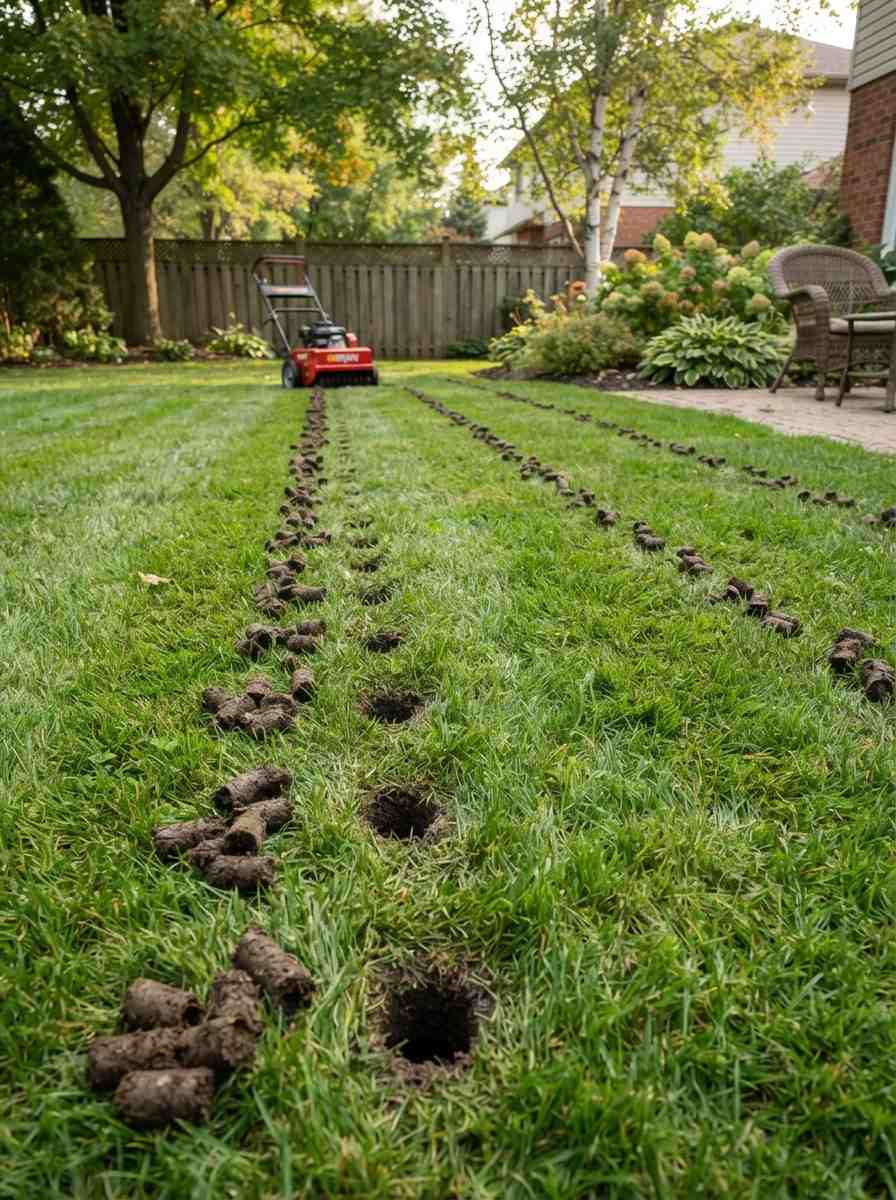
A striking photo featuring neat lines of extracted turf plugs left behind after aeration visually explains this technique’s benefits.
Skipping this step commonly results in hardened soil that stunts lawn vitality and encourages water runoff instead of absorption.
Lawn Rolling After Installation

Rolling newly installed sod improves soil contact, evens the surface, and eliminates air pockets that can dry out roots.
It is usually done soon after laying sod to promote quick establishment.
Be cautious not to over-roll, which can compact soil and restrict root growth.
The image of a person wearing gloves pushing a heavy, steel lawn roller over freshly laid sod in morning light illustrates this final installation step well.
Timely rolling enhances sod health, fosters faster rooting, and establishes a level, attractive lawn surface.
Leaf Management in Fall

Leaves left on lawns in fall block sunlight and trap moisture, creating a breeding ground for disease.
Regular, thorough leaf removal preserves grass health and prevents disease outbreaks.
Using proper tools and collecting leaves efficiently makes this less daunting.
A warm-toned image of a person smiling while raking colorful autumn leaves into an organized pile conveys the seasonal chore’s importance and satisfaction.
Consistent leaf cleanup sets the stage for a clean winter dormancy and vigorous spring growth.
Winter Lawn Protection Strategies

Although grass growth slows or stops in winter, proper protection prepares your lawn for robust spring recovery.
Avoid excessive foot traffic on frosted grass, as brittle blades can break easily.
Keeping lawn edges trimmed and removing debris reduces fungal risks.
Close-up frost-covered grass blades with delicate ice crystals convey the fragility of winter turf.
Understanding this vulnerability allows you to adjust care accordingly and preserve your lawn’s structural integrity through harsh conditions.
Correcting Bare and Damaged Spots

Lawn damage from pests, foot traffic, or diseases often leaves unsightly patches.
Repairing these areas involves removing dead grass, preparing the soil, and reseeding or patching with sod.
Consistent watering and protection from stressors promote successful repair.
An aerial image depicting a yard with sharply contrasting bare patches and lush green grass clearly demonstrates common lawn damage scenarios.
Addressing these areas promptly prevents weed invasion and restores uniformity in appearance.
Understanding Lawn Disease Identification
Fungal and bacterial diseases can quickly spread if undiagnosed or left untreated.
Symptoms include discolored spots, thinning, or moldy patches.
Early identification allows for targeted fungicide application and cultural adjustments like improving drainage or mowing practices.
Regular lawn inspections during warm, wet periods help spot issues before widespread damage.
Educating yourself on common diseases in your region enables swift response that preserves lawn health through disease seasons.
Customizing Lawn Care by Climate Zone
Care routines must align with your local climate for success.
Temperature fluctuations, rainfall patterns, and zone-specific pests influence when and how you perform key tasks.
For example, drought-prone zones require strategic watering and xeriscaping practices.
Consulting regional extension services or lawn care professionals provides that critical localized information.
Ignoring climatic realities leads to frustration and poor lawn outcomes.
Tailoring your maintenance accordingly maximizes your lawn’s natural strengths and durability.
Safe Use and Storage of Lawn Chemicals
Using fertilizers, herbicides, and pesticides safely protects you, your family, and the environment.
Always read and adhere to label instructions regarding application rates, protective gear, and timing.
Proper storage prevents accidental exposure or degradation.
Consider targeted, minimal-use approaches to reduce chemical load.
Over-application not only harms your lawn but contaminates soil and water.
Responsible management ensures your lawn care routine is effective and sustainable.
Lawn Care Tools and Technology Advances
Modern tools like robotic mowers, smart irrigation controllers, and precision seeders revolutionize lawn care efficiency and results.
These technologies conserve water, optimize timing, and reduce manual labor.
Adopting suitable innovations tailored to your lawn’s scale and needs enhances your ability to maintain a healthy lawn year-round.
Staying informed about emerging tools allows you to invest wisely and upgrade your routine effectively over time.



Leave a Reply