

Discover how to create breathtaking landscapes that thrive with minimal water.
These 24 drought-tolerant ideas combine beauty, sustainability, and clever design, helping you craft a yard that’s both eco-friendly and visually captivating all year round.
Get inspired to rethink your outdoor space today!
Why Choose Drought-Tolerant Landscaping?
You should consider drought-tolerant landscaping to save water, reduce maintenance, and enjoy a resilient garden that stands strong even in the hottest, driest months.
Embracing native and desert-adapted plants not only preserves resources but also supports local ecosystems and wildlife.
I find that mixing textures and colors is key to keeping a drought-wise garden vibrant and inviting.
I love how these landscapes use natural materials like gravel, stone, and mulch paired with succulents, cacti, and grasses to create dynamic, low-water scenes that don’t skimp on style.
1. Elegantly Simple Concrete and Ornamental Grass

This modern front courtyard features a clean, grid-patterned concrete walkway flanked by tall, feathery ornamental grasses that add softness and movement.
The grasses’ golden tones contrast beautifully with the gray concrete, creating an inviting, serene approach to the home.
You can easily replicate this by pairing architectural hardscape with low-maintenance grasses like Feather Reed Grass or Fountain Grass.
Practical and chic, this design channels contemporary aesthetics while embracing water-smart planting.
The gravel mulch on the sides keeps soil moist and adds a polished finish, making the space both stylish and efficient.
2. Southwestern Courtyard with Vibrant Blooms and Fountain

This adobe-style courtyard boasts a stunning centerpiece: a classic stone fountain surrounded by drought-friendly agave, prickly pear cacti, and vibrant snapdragons.
The blend of earthy terracotta walls with pops of purple, magenta, and green offers warmth and a splash of life in a water-wise setting.
Layering textures from smooth stones to rough adobe walls creates depth, while the fountain provides gentle movement and sound without excessive water use.
Adding climbing vines and terracotta pots helps soften the hardscape, offering a lush feel in a dry environment.
3. Metal Pergola with Climbing Bougainvillea

An industrial-style black metal pergola frames a peaceful seating area, with bright pink bougainvillea gracefully climbing its structure.
This vibrant floral accent contrasts with desert succulents and cacti lining the path, combining vivid color with drought resistance.
The pergola not only adds architectural interest but provides dappled shade, enhancing comfort for outdoor lounging.
You can mimic this by selecting native or drought-tolerant climbers that thrive with minimal irrigation, creating a striking vertical element that enlivens any dry landscape.
4. Soft, Feathered Ornamental Grass Border

A neat row of soft, feathery fountain grass lines the edge of a driveway, complemented by dark mulch and gravel mulch underneath.
The deep green blades tipped with pinkish-purple flowers sway gently, adding natural motion and texture.
This low-water option is perfect for defining spaces or softening harsh concrete lines.
To recreate, plant these grasses in clusters for fuller impact and ensure proper spacing to prevent overcrowding, which encourages healthy growth and air circulation.
5. Desert Cactus Garden with Red Soil

A dramatic desert landscape features towering saguaro and other columnar cacti interspersed with barrel cacti on rich red soil.
The backdrop of rugged mountains enhances the natural beauty and dry ambiance, while the minimalist stone pathway invites exploration.
This garden embodies authentic desert beauty using native plants adapted to extreme conditions with zero irrigation needs.
When planting, consider layering cacti of varied heights and shapes to mimic natural desert ecosystems and add visual intrigue.
6. Rustic Stone Fire Pit with Desert Surrounds

A circular stone fire pit surrounded by rustic stone benches sits amidst prickly pear cacti, agaves, and other drought-tolerant perennials.
Soft tan blankets draped over the benches invite cozy evenings in this dry-climate retreat.
Designing an outdoor gathering spot like this offers year-round use and complements drought landscapes by focusing on hardscape features paired with low-water plants.
Use native frozen stone or flagstone materials and cluster succulents to soften rough textures and add greenery.
7. Silver-Leaved Mugwort and Manzanita Shrubs

This close-up showcases a naturalistic planting of silvery mugwort with small pink manzanita blossoms, layered with wood mulch under dappled sunlight.
These drought-tolerant shrubs provide varied textures and subtle color shifts from silvery greens to soft pinks.
I love how the soft leaf tones bring brightness to shaded garden areas while requiring minimal water.
Your planting should focus on groupings of complementary shrubs that thrive in dry soil and can handle morning sun or partial shade for best effect.
8. Rock Garden with Live Succulent Centerpiece

A striking rock garden path winds past agaves and yuccas, centering around a lush cluster of succulents nestled into the rocky soil.
The mix of dark volcanic boulders with green and purple succulent rosettes offers dramatic textural contrast.
Rock gardens provide excellent drainage and temperature regulation for succulents, which thrive in dry environments.
When creating your own, use well-draining soil amended with gravel and choose hardy, low-water succulents for year-round interest and structure.
9. Coastal-Inspired Drought Garden by the Sea

A sweeping coastal garden features vibrant magenta ice plants, lush agave, and feathery ornamental grasses lining a natural stone path above the ocean.
The bright blues of the sea and sky contrast beautifully with the saturated garden colors.
This look works well in mild, coastal climates with drought-prone summer months.
Striking color comes from ice plants and lavender, while drought-formatted ornamental grasses add softness and movement.
Mulching with stones keeps moisture in and weeds down near salty sea breezes.
10. Color-Rich Succulent and Groundcover Walkway

A welcoming front garden boasts a soft walkway through a varied spread of colorful low-growing succulents and groundcovers, punctuated with stone slabs for footing.
The rich reds, yellows, greens, and blues bring an unexpected palette to drought-conscious gardening.
Plant a mix of hardy sedums and drought-tolerant perennials, layering color and height to fill in gaps and suppress weeds naturally.
This lush approach feels full and vibrant without requiring frequent watering, ideal for temperate to arid zones.
11. Layered Succulent and Agave Planting with Stone Path

This landscape uses a sophisticated blend of spiky yuccas, agave varieties, and hardy grasses framed by volcanic rocks and stone pathways.
The multi-level layout creates depth and interest, with distant mountains emphasizing the expansive, arid setting.
Layering plants of varied heights and textures, especially strong architectural succulents, enhances visual complexity while staying drought-smart.
When planning, alternate large and small plants with hardscape elements to achieve balance and easier maintenance.
12. Terraced Grassy Hillside with Concrete Steps

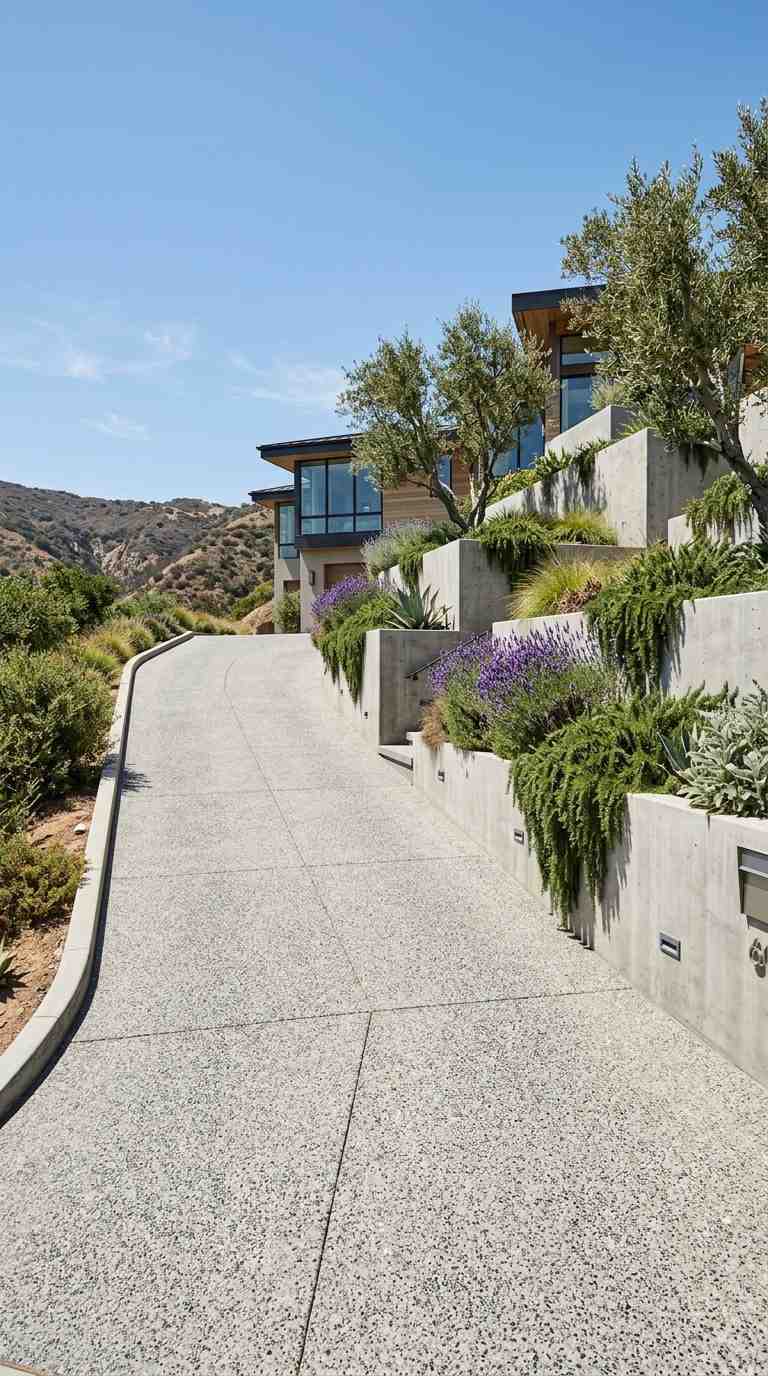
A hillside landscape incorporates linear concrete steps flanked by dense patches of flowering grasses and shrubs.
The grasses’ pinkish hues blend naturally with the soft greens, complementing the timber accents on the modern home.
This design softens steep slopes with drought-tolerant plants that prevent erosion, adding graceful motion through the wind.
For best results, choose native bunch grasses and provide deep but infrequent watering to develop hardy root systems.
13. Desert Garden with Dry Stream Bed

A drought-tolerant dry stream bed winds between agave and barrel cactus clusters, bordered by a subtle line of rusty steel edging.
The gravel serves as both decorative mulch and an efficient water runoff channel.
Using dry creek beds is a smart way to direct water flow while enhancing texture and interest in xeriscaped gardens.
To build your own, choose rounded river rocks mixed with drought-loving plants nearby that thrive despite seasonal water pulses.
14. Green Driveway Inserted with Creeping Plants

This unique driveway design uses concrete grids with lush green creeping plants filling the gaps, bringing a soft, living texture to a typically hard surface.
The greenery breaks up the expanse of gray, creating a friendly, inviting entry.
Opt for hardy, drought-tolerant groundcovers like creeping thyme or sedum that can withstand foot and car traffic.
This approach reduces water runoff, improves soil infiltration, and adds breathing space to otherwise impermeable surfaces.
15. Native Desert Scape with Agave and Barrel Cacti

This striking front yard design incorporates a vast expanse of white gravel with prominent agave and barrel cacti, alongside stone pathways and a sleek mid-century home.
The neutral tones of rock and building materials create a minimalist desert oasis.
White gravel reflects sunlight, reducing heat buildup while black or brown rocks emphasize plant forms.
Planning this style means selecting long-lived plants suited to extreme drought and sandy, well-draining soils to maximize success.
16. Innovative Rain Garden with Stone Bridges

A gently sloping garden uses stacked stone terraces and carefully placed flat stones forming small bridges over a dry creek of river rock.
Low-water natives and wildflowers border the waterway, adding color and texture.
Rain gardens like this efficiently capture runoff, reducing erosion while enriching habitats.
Choose native plants that tolerate dry spells interrupted by occasional rain and use hardscape features to create accessible and inviting paths.
17. Drought-Tolerant Lavender and Blue Fescue Path

A tranquil pathway leads through a thick border of fragrant lavender and compact blue fescue grasses, flanked by more mixed drought-adapted perennials and shrubs.
The soft purple and blue hues add a calming, cohesive color scheme.
Lavender provides aromatic appeal and attracts beneficial pollinators, while blue fescue adds fine texture contrast.
Maintain this look with occasional pruning, ensuring good air circulation to prevent fungal issues in warmer climates.
18. Natural Prairie-inspired Wildflower Meadow

A sprawling meadow intertwines tall prairie grasses with native wildflowers like black-eyed Susans and milkweed, bordered by rustic fencing and distant barn buildings.
The natural tones blend golden yellows, soft greens, and pops of peach and purple.
Prairie-style plantings bring vibrant biodiversity and provide essential habitat for pollinators with minimal watering once established.
Sow native prairie seed mixes in fall and avoid over-mulching to allow native seedlings to thrive naturally.
19. Traditional Japanese Zen Garden with Gravel Raking

A minimalist Zen garden features meticulously raked black gravel punctuated by boulders and low-growing shrubs, enclosed by a smooth concrete border.
The circular gravel patterns evoke a sense of calm and order.
Zen gardens embrace simplicity and drought tolerance, ideal for small yards or modern homes.
You can recreate this look by selecting sculptural evergreens and mosses that thrive in dry conditions paired with gravel and rock for texture and serene ambience.
20. Sun-Dappled Olive Tree in Gravel Courtyard

Centered in a neat gravel courtyard, a mature olive tree offers graceful shade with its silvery-green leaves.
A ring of smooth river rocks encircles the trunk, contrasting with warm earth tones of the gravel and rustic metal edging.
Olive trees are perfectly suited to Mediterranean and dry climates, craving well-drained soil and full sun.
Incorporate gravel surfaces around the base to prevent moisture retention and fungal diseases while highlighting the tree’s architectural silhouette.
21. Spiky Yucca and Rock Grouping

Three large yucca plants with tall flower spikes rise from a bed of dark gravel and grey volcanic stone, accented by small agaves and a pruning of barrel cactus.
The robust structure contrasts with rounded rocks, creating dramatic focal points.
Yucca thrives in drought-prone landscapes with minimal water and poor soils.
For impact, group yuccas in odd numbers surrounded with varied rock textures and smaller companion plants that share similar water and sun needs.
22. Lush Native Wildflower and Grass Border

This scene features a mixed border of native wildflowers and grasses bursting with color in pinks, purples, and yellows.
The garden feels vibrant yet natural, embodying a well-balanced ecosystem with layered plants and seasonal blooms.
Wildflower beds support wildlife like butterflies and bees, while requiring little irrigation once established.
You should plant diverse species for staggered bloom times and improve soil health with organic mulch layered between plants to retain moisture.
23. Rustic Flagstone Pathway on Ranch Property

A meandering flagstone path guides visitors through a rustic landscape dotted with native grasses, wildflowers, and sagebrush.
Weathered wooden fences and distant barns create an authentic country charm fitting for drylands.
Flagstone paths paired with natural mulches integrate seamlessly into drought-themed gardens.
Choose thick stones with irregular shapes for a timeless look, and fill joints with gravel or native ground covers to maintain permeability and reduce runoff.
24. Stepped Terraced Garden with Lush Drought Plants

A finely crafted terraced yard uses stacked stone walls to hold in raised beds overflowing with drought-tolerant shrubs, rosemary, and ornamental grasses spilling gracefully over edges.
The elevated design maximizes space and improves drainage.
This multi-level approach is perfect for sloped lots or compact yards.
Employ companion planting principles by grouping plants with similar moisture needs together, and incorporate drip irrigation for efficient watering.
Leave a Reply