
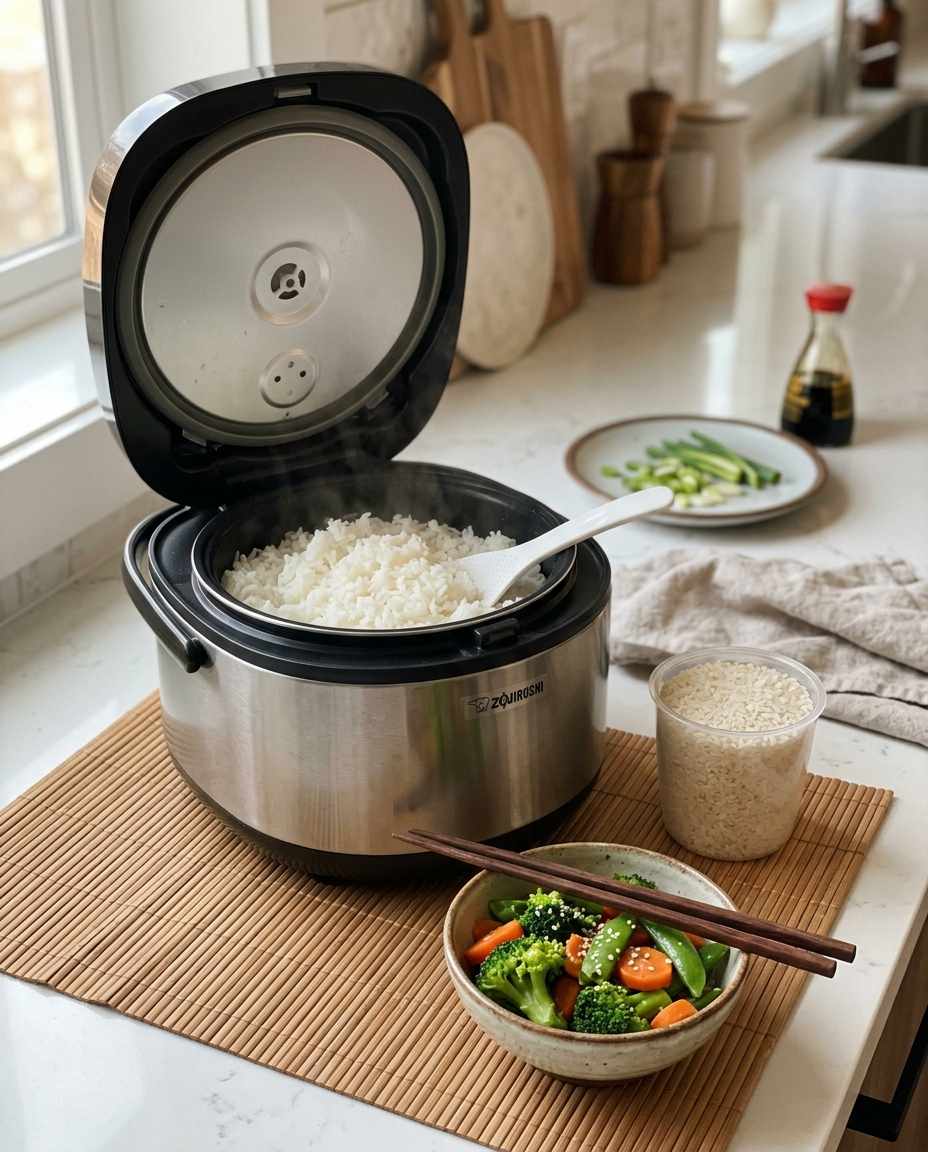
I remember standing in my cramped kitchen on a rainy Sunday, staring down at the tiny measuring cup that came with my new rice cooker.
It was marked simply “cup” but tasting perfectly cooked rice hinged on understanding what that cup really meant.
This article dives deep into rice cooker cup sizes to help you master every grain.
Understanding Rice Cooker Cups: The Basics
Rice cooker cups differ from standard US measuring cups and this disconnect causes one of the biggest issues in cooking perfect rice.
The typical rice cooker cup holds roughly 180 milliliters, about 3/4 the volume of a standard 240-milliliter measuring cup.
Many first-time users unaware of this often over or under-measure rice, resulting in poor texture or burnt rice.
The rice cooker manufacturer typically includes a small plastic rice cup calibrated precisely for the rice cooker’s water-to-rice ratio.
For example, if a rice cooker says “2 cups of rice,” it means two rice cooker cups, not standard cups.
I discovered this early when I unintentionally added more water based on standard cups and ended up with gummy rice.
This difference arises because rice cooker cups are designed to complement the cooker’s specific heating element and cooking vessel size.
The rice-to-water ratio is calibrated so each rice cooker cup of rice matches a corresponding water line inside the pot, often marked.
This tailored system simplifies cooking but requires precise measurement with the right cup.
The practical takeaway is always use the rice cooker’s provided cup for accuracy.
If it’s lost, measure 180 ml to approximate, never rely on a standard measuring cup alone.
This nuance can be the difference between light, fluffy rice and a sticky, undercooked mess, especially for beginners or those trying recipes from different regions.
Why Rice Cooker Cup Size Varies by Region

Rice cooker cup sizes vary worldwide, reflecting regional culinary traditions and measurement systems.
In Japan, standard rice cooker cups hold exactly 180 ml, aligning with metric standards.
Conversely, many Korean rice cookers use a similar 180 ml measure, whereas some Chinese models vary between 150 ml and 200 ml, depending on the brand and cooker design.
This variation stems from regional rice types and texture preferences.
For example, Japanese short grain rice requires a specific ratio for al dente texture, while in parts of China, longer grain varieties may change the preferred rice-to-water relationships, prompting slight cup size alterations.
Understanding local rice types ties directly into the choice of cup size.
Consumers often mistakenly assume a rice cooker cup is interchangeable globally, which produces inconsistent results from following recipes sourced internationally.
I tested the same recipe using Japanese and Chinese rice cooker cups and found texture and water absorption rates differed significantly, requiring water line adjustments.
To account for these differences, check your rice cooker’s manual for cup size details and always calibrate water levels accordingly.
If importing a rice cooker, default to manufacturer’s standards rather than traditional measuring cups.
This avoids misestimating water volume, a key step toward consistent rice quality across cuisines.
How Rice Cooker Cup Size Affects Rice-To-Water Ratios
Rice cookers rely on carefully calibrated water-to-rice ratios matched exactly with the rice cooker cup size to automate cooking times and temperatures.
If you incorrectly measure rice with a standard 240 ml cup but fill water to the rice cooker’s pot level for rice cooker cups, your ratio will be off, often leading to soggy or dried out rice.
For instance, a cooker might recommend 1 rice cooker cup of rice to 1.2 cups of water.
Using a standard cup for rice without adjusting water will shift that ratio to nearly 1:1.6 water-to-rice, causing overcooked rice.
I made this mistake early on by not acknowledging the difference between measuring cups, ending with overly mushy rice batches.
Knowing the exact volume of your rice cooker cup lets you calculate water requirements precisely, even if you use alternative rice types or quantities.
Some advanced rice cookers use sensors that adjust water and cooking times automatically, but most rely on strictly defined ratios aligned with their included cup.
The key takeaway is to base your water volume measurements on the rice cooker cup volume, not on cups used for other ingredients.
If you substitute measuring tools, convert volumes carefully to maintain the rice-to-water balance essential for ideal texture and flavor.
Measuring Rice for Different Cooker Sizes
Rice cooker capacity is often expressed in rice cooker cups, with typical sizes ranging from 3 to 10 cups.
These measurements refer to the dry uncooked rice volume and affect cooking time, water ratios, and overall cooker dimensions.
For example, a 5-cup rice cooker is designed to perfectly cook up to 900 ml (5 rice cooker cups) of dry rice.
Choosing the correct cooker size depends on your cooking needs, but it’s critical to measure rice consistently to avoid improper water ratios.
I’ve worked with 3-cup and 10-cup machines, and using the same volume measurement tools for both was essential.
Using a standard cup instead would confuse quantities, risking overflow or undercooked rice.
Large cookers have proportionally larger pots with heat spread across a bigger surface, which affects cooking uniformity and time.
This means water measurements must precisely match rice volume to avoid uneven cooking,overfilling or underfilling compromises texture.
Many users accidentally attempt to cook more rice than a smaller machine safely allows by ignoring cup size.
The best advice is to use the rice cooker cup for the specific appliance and never exceed capacity markings.
If you’re unsure, measure rice in the supplied cup and check pot markings before adding water, ensuring you respect your machine’s limitations for consistently great rice, whether cooking for one or a crowd.
How Rice Type Influences Cup Measurements

Different rice varieties absorb water differently and vary in grain size, which influences how you interpret rice cooker cup measurements.
Short-grain rice is denser and more water absorbent, meaning a rice cooker cup will weigh more and require specific water volumes compared to long-grain basmati or jasmine types.
I once prepared jasmine rice using the same rice cooker cup strategy I use for sushi rice and noticed the results were less fluffy and more sticky than desired.
This happens because jasmine rice expands more in volume and absorbs water differently, requiring slight water adjustment.
The measuring cup volume remains the same, but water ratios shift.
Brown rice further complicates this as it needs more water and longer cooking times, yet the rice cooker cup still measures the same volume of uncooked grain.
Without modifying water volumes and soak times, using the standard cups can produce tough or partially cooked rice.
This disconnect causes beginners to overlook the need to adapt recipes for rice type.
The key is that rice cooker cups measure volume, not weight, so adjustments in water and cooking time must accompany different rice types.
When cooking a rice variety new to your cooker, start with recommended water increments for that grain and tweak gradually, using the same rice cooker cup volume as your baseline.
Common Mistakes with Rice Cooker Cups
One of the most frequent errors I see is assuming the rice cooker cup equals a standard cup measure.
Many people forget to switch cups when using the rice cooker, leading to major discrepancies in rice fluffiness and water requirements.
This mistake is surprisingly common even among experienced cooks transitioning to electric rice cookers.
Another issue is misreading the water level inside the pot, often ignoring the markings that correspond to rice cooker cups specifically.
I once had a friend add water to the max line for rice cups after measuring rice with a standard cup, resulting in a sticky, soupy batch that wasted both rice and effort.
A lesser-known mistake is using the rice cooker cup for anything but rice measurement,for example, liquid ingredients.
Because the cup is designed for dry volume measurement, liquids measured with it can be inaccurate due to shape and meniscus differences.
This misuse causes inconsistent results when cooking more complex dishes.
To avoid these problems always use the rice cooker cup provided and follow water level lines inside the pot for that exact model.
If you lose the cup, use a precise 180 ml measuring cup.
Do not rely on volume intuition and never cross-use the rice cup for liquids or alternate ingredients.
Tips for Replacing Lost or Missing Rice Cooker Cups
Losing the original rice cooker measuring cup is common, but replacing it with the wrong size can ruin your cooking results.
The standard rice cooker cup is approximately 180 ml, but substitute cups may be either standard US cups or metric cups at 250 ml, creating water-rice imbalances.
If you do not have the original cup, measure 180 ml with a kitchen scale or measuring jug when measuring rice.
I tested this method for a week and consistently got better rice texture than just guestimating cup size.
It is important to note that not all rice cookers accept non-standard cups due to calibration of water lines.
Many online stores sell universal rice cooker cups, but their shape and translucency affect how accurately you can judge volume.
A transparent plastic cup with graduated markings is preferable over opaque ones, enabling precise fill levels.
I recommend checking forums specific to your rice cooker brand to find exact replacement part codes.
Ultimately, buy a replacement or use a calibrated 180 ml measuring cup for uncooked rice and adjust water accordingly.
Avoid substituting a standard 240 ml cup and never eyeball volumes, because small mismeasurements compound quickly in rice cooking.
Advanced Considerations: Measuring Cups for Specialty Rice Cookers

High-end and specialty rice cookers often come with uniquely shaped measuring cups or even integrated measuring tools tailored to their advanced sensors and cooking algorithms.
For example, models with induction heating or pressure cooking features may use proprietary cups that optimize water absorption and cooking pressure.
I encountered an induction rice cooker that included a slightly smaller measuring cup, about 160 ml, designed to improve steam circulation inside the pot during pressure cooking.
Using a standard 180 ml cup led to inconsistent rice texture and longer cooking times, as water volume assumed by the machine was mismatched.
Some smart rice cookers include cups with RFID chips or barcode markings for auto-recognition and recipe adjustment.
This niche technology depends on perfectly calibrated cup sizes to communicate rice volume to the cooker’s microprocessor.
Homemade measuring tools cannot replace these specialized cups without affecting functionality.
If you own one of these advanced cookers, always use the provided cup and follow brand guidelines strictly.
Using alternative cups or approximate measurements can void warranties or degrade rice quality.
For traditional models, the 180 ml standard rice cooker cup remains the universal reference for accurate rice measurement.
Conclusion: Mastering Rice Cooker Cup Sizes for Perfect Rice
Mastering rice cooker cup sizes comes down to understanding their unique volume, regional variations, and correct usage to maintain ideal water ratios.
Only by using the exact rice cooker cup can you ensure predictable and delectable rice preparation every time.
Ignoring these measurements or substituting standard cups often leads to disappointing outcomes like soggy or undercooked rice, which can surprise even experienced cooks.
I have learned that patience in measurement and respecting your cooker’s systems pay off in consistent texture and flavor.
The nuances of rice types, cooker size, and specialty appliance technology mean most cooks must adapt water levels in tandem with cup size.
Designing precision into the measurement process guarantees perfect rice regardless of grain or cook volume.
By following these advanced tips and always using the proper measuring tools, you’ll avoid common pitfalls and elevate your rice cooking from guesswork to mastery.
Your rice cooker cup is your most important measuring instrument and deserves your full attention.




Leave a Reply