
Horseweed is one of the most persistent and frustrating weeds to find in your lawn.
This guide will walk you through everything from early identification to effective control methods.
You’ll learn how to spot it at various growth stages, understand why it spreads, and take smart, practical steps to reclaim your green space.
Understanding Horseweed and Its Impact

Horseweed, also known by its scientific name Conyza canadensis, is an aggressive weed that thrives in disturbed landscapes like lawns and gardens.
It often grows unnoticed until it reaches a mature size, making management difficult if delayed.
Horseweed competes with desirable turfgrass for nutrients, water, and sunlight, putting your lawn’s health at risk.
This weed’s ability to produce tens of thousands of wind-dispersed seeds makes it a prime invader in many regions.
Once established, it can form dense patches that outcompete native plants and grass, diminishing the biodiversity and aesthetic appeal of your yard.
Understanding the biology and impact of horseweed is crucial for timely intervention.
Without prompt control, horseweed can severely reduce the productivity and beauty of your lawn.
It is especially problematic because of its resistance to some herbicides, necessitating a strategic and informed approach to control.
Knowing what you’re up against helps you anticipate challenges and avoid ineffective treatments.
Recognizing Horseweed’s Early Seedling Stage
Identifying horseweed during its seedling phase is the most effective way to prevent it from overrunning your lawn.
The tender young plants typically emerge with small, elongated leaves covered in fine hairs that give them a fuzzy appearance.
These seedlings often appear clustered close to the soil surface, which makes them difficult to spot among grass and mulch.
In one photo, small horseweed seedlings sprout through dark, finely shredded bark mulch.
The new growth is vibrant green and shows characteristic leaf shape with a slight serration and fuzzy texture that contrasts against the dark brown mulch.
Spotting these early signs allows you to take swift action through manual removal or targeted herbicide use.
If missed, these seedlings rapidly grow into mature plants that are harder to manage.
Regular lawn inspections in spring and early summer can help you catch these young plants before they develop complex root systems and flower heads.
Identifying Mature Horseweed Plants

Mature horseweed plants can grow up to several feet tall, with erect, branched stems covered in fine hairs.
These plants exhibit lance-shaped leaves arranged alternately along the stem.
The upper stems often culminate in clusters of small white or pale yellow flowers that transition to fluffy seed heads.
One image vividly captures a fully grown horseweed plant with dense clusters of tiny white flowers tinged with yellow centers.
The background shows a natural field setting with other similar plants, emphasizing how horseweed can dominate an area if left unmanaged.
The twiggy, bushy form at this stage is unmistakable once you know what to look for.
Recognizing this mature growth form warns you that the plant is producing seeds, which will soon disperse and increase the infestation.
Removing plants before seed set is essential to curb further spreading.
Examining Horseweed’s Root Structure

The root system of horseweed is another critical identification characteristic and control consideration.
It features a long, sturdy taproot with multiple smaller roots branching off, anchoring it firmly in the soil.
This extensive root makes pulling out mature plants challenging, as incomplete removal allows regrowth.
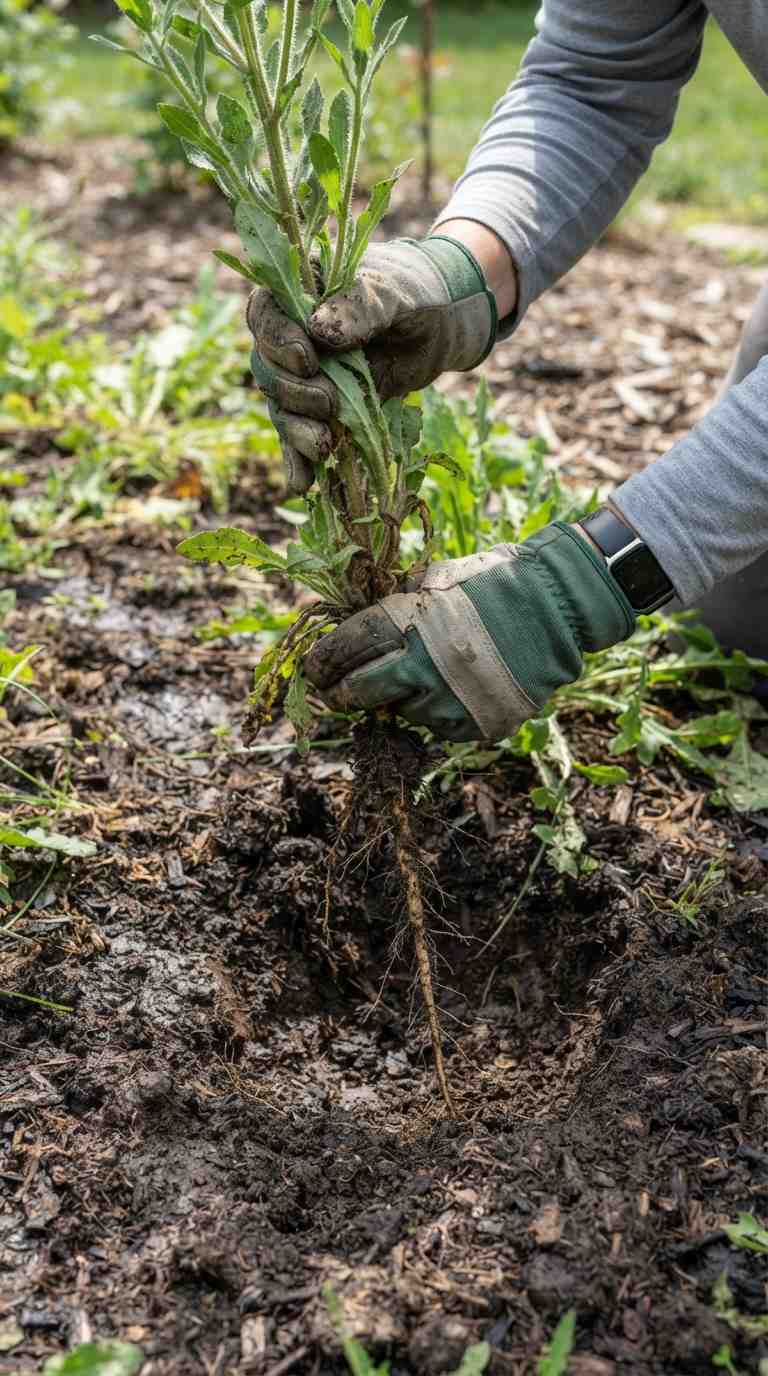
One photo focuses on a hand holding a freshly uprooted horseweed, revealing the long, pale brown taproot extending deep into the dark, loamy soil.
The root’s thickness and length signify why this weed can be so resilient, as a single snapped root left behind may regenerate new shoots.
The green basal rosette of leaves attached above contrasts vividly against the earthy soil, illustrating the weed’s form from ground to root.
Understanding the root depth guides you to dig carefully and thoroughly when removing horseweed manually.
It also influences herbicide application decisions since some systemic herbicides must reach the root zone for effective control.
Manual Removal Techniques for Horseweed

Hand-pulling and digging out horseweed can be effective, especially for small infestations or seedlings.
The key is to remove the entire root system to prevent regrowth.
Using gloves and appropriate weeding tools helps improve grip and comfort while minimizing contact with possibly irritating plant hairs.
In one image, a gardener wearing gloves grips horseweed firmly near the base and extracts it from soil thick with mulch and organic matter.
The surrounding disturbed soil emphasizes how loosening soil before pulling facilitates easier root removal.
Gloves protect the hands from scratching due to the hairy stems.
Manual removal requires regular monitoring as new seedlings will emerge from the large seed bank in your soil.
Timing is critical,pulling before flowering will save considerable effort managing seed dispersal later.
Effective Chemical Control Measures
Chemical control can be necessary when horseweed infestation is widespread.
Herbicides that include glyphosate or selective post-emergent formulas tend to provide the best systemic control by moving through the plant to the roots.
However, treatment timing and thorough coverage are essential for success.
Applying herbicides in the rosette or early bolting stage maximizes uptake and prevents seed production.
Avoid applications during drought or extreme heat, as stressed plants absorb chemicals less efficiently.
Always follow label instructions to avoid turf damage and environmental harm.
Repeated treatments may be needed when seed banks are heavy.
Rotating herbicides with different modes of action helps prevent resistance development, an increasing issue in horseweed control.
Preventing Horseweed in Establishing Lawns

Prevention remains the best defense against horseweed invasion, especially during lawn establishment.
Healthy, dense turf naturally suppresses weeds by competing aggressively for resources.
Start with soil testing and amend the soil to promote optimal grass growth.
One photo shows a lush, well-maintained lawn under bright sunlight, featuring healthy green turf with neatly edged flower beds.
This ideal lawn environment makes it harder for horseweed seeds to germinate and establish, highlighting how good cultural practices improve resilience.
Regular fertilization, proper irrigation, and mowing height maintenance prevent bare or stressed spots that invite horseweed colonization.
Using quality seed mixtures suited for your climate reduces vulnerability to weed encroachment.
Identifying Horseweed Flowering and Seeds
Horseweed’s flowering stage signals seed production and the height of its spread potential.
The flowers are small, with white petals and yellow centers clustered densely at stem tips.
As flowers mature, they form fluffy white seed heads that disperse easily in the wind.
A close-up photo reveals the hairy green stem with narrow, linear leaves and the upper growth tip forming flower buds just before blooming.
The texture and coloration of the leaves and stems highlight the plant’s adaptive features that deter herbivory and aid survival.
Recognizing this stage allows you to time control efforts before seeds develop and spread.
Removing flowering plants early reduces the future weed burden in your lawn.
Monitoring Lawn Health to Reduce Recurrence
Consistent lawn monitoring after horseweed removal is crucial for sustained control.
Weed seeds stored in the soil can germinate long after initial treatment.
A routine inspection schedule helps catch new seedlings early when they are easiest to remove.
Look for irregular patches in turf, differences in leaf texture, or small rosettes that deviate from grass patterns.
Early detection saves time and prevents large-scale reinfestations.
Applying preventative herbicides during vulnerable growth periods also supports lawn resilience.
Maintaining soil moisture and nutrient balance encourages vigorous grass that naturally resists invasions.
Integrated lawn care combining cultural, mechanical, and chemical controls offer the best long-term success.
Common Mistakes in Horseweed Management

One of the most frequent errors is waiting until horseweed seeds have already developed before initiating control measures.
By that stage, the weed has spread widely and will only multiply with each missed season.
Another mistake is relying solely on herbicides without improving lawn health to create a hostile environment for weeds.
Neglecting to remove the entire taproot during hand-pulling causes regrowth, which frustrates gardeners and leads to repeated effort.
Overapplication or improper timing of herbicides can also damage turf, creating bare spots that encourage further weed invasion.
Avoiding these pitfalls requires an integrated approach, combining monitoring, early identification, and varied removal tactics.
Patience and consistent care yield healthier lawns and reduced horseweed problems over time.
Seasonal Strategies for Long-Term Control
Horseweed control varies seasonally due to its life cycle.
In early spring, targeting seedlings with pre-emergent herbicides or manual removal prevents establishment.
Summer treatments focus on bolting and flower inhibition, while fall provides an opportunity to eliminate late growth before seeds mature.
Timing treatments according to these phases maximizes herbicide efficacy and reduces repeated applications.
Adjusting cultural practices seasonally, such as mowing height in summer and fall aeration, strengthens grass vigor against competition.
Planning annual maintenance calendars based on local climate and lifecycle observations helps stay ahead of infestation and gradually diminish the seed bank in your soil for long-term success.
Integrated Weed Management for Sustainable Lawns

Relying on a single control method often leads to frustration, resistance, or recurring horseweed outbreaks.
Instead, an integrated weed management system uses a combination of cultural, mechanical, biological, and chemical techniques.
This balance reduces reliance on herbicides and promotes ecological lawn health.
Biological controls, such as encouraging beneficial insects that prey on horseweed seedlings, complement manual removal and selective herbicide use.
Cultural adjustments like improving soil structure and overseeding bare areas strengthen grass competition.
The foundation of enduring control is diversity in tactics supported by ongoing observation.
Combining these methods over multiple seasons lessens herbicide resistance risks and maximizes your lawn’s natural defenses.
Identifying Horseweed in Mature Lawn Settings
Spotting horseweed in an established lawn can be challenging due to its ability to blend with other plants.
Mature horsweed typically forms upright clusters rising prominently above the turf.
One image illustrates a tall, bushy plant with pale green foliage, soft white flowers, and seed heads that stand out against a backdrop of dense green grass and neighboring homes.
The height and leaf shape differentiate it from the surrounding grass, making it easier to distinguish once familiar.
Such infested patches greatly reduce the visual and functional quality of the lawn, signaling urgent attention.
Regular lawn walkthroughs in warm months help identify these visual cues early, allowing timely control before seed release and spread.




Leave a Reply