
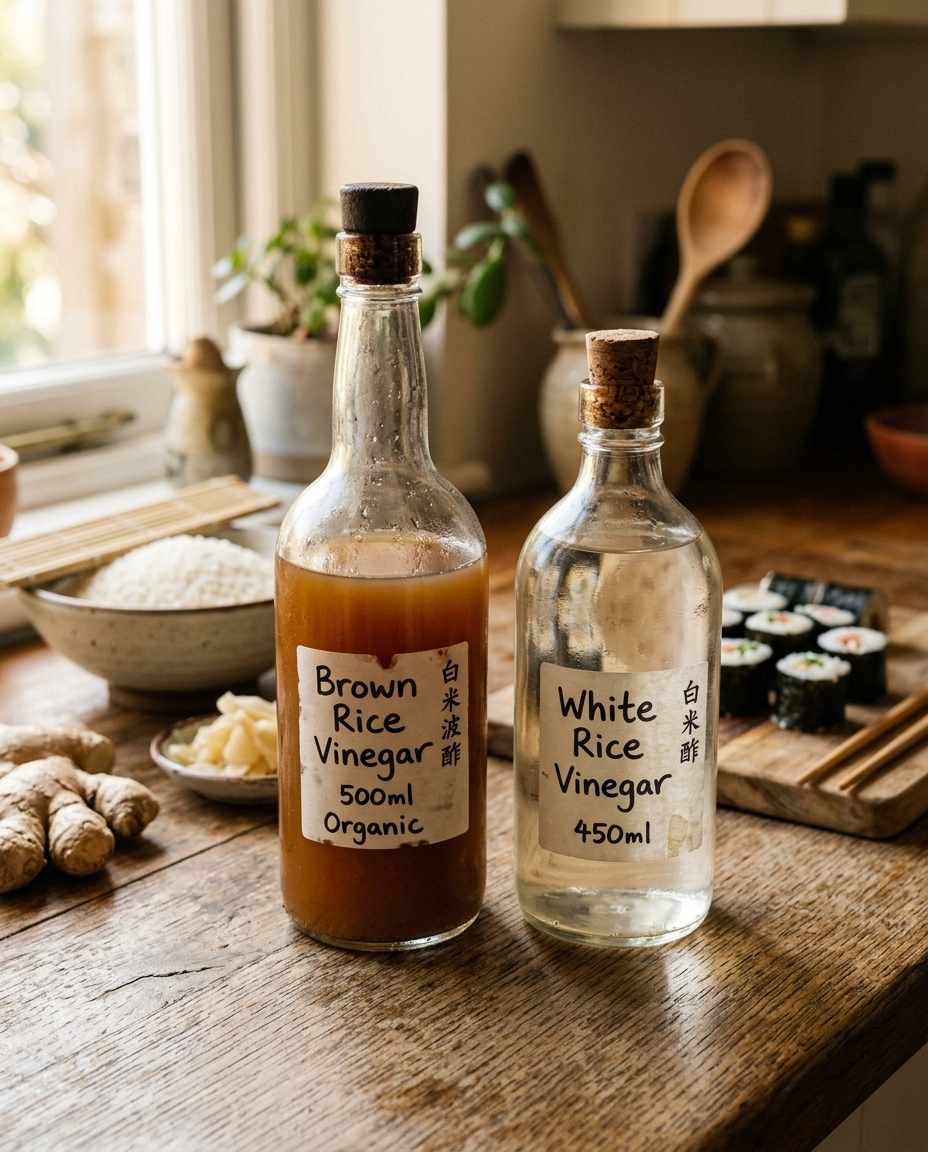
Standing in my kitchen, I recently found myself debating which vinegar would best elevate a homemade sushi rice, brown rice vinegar or the more common white rice vinegar?
Their labels might look similar but their impact on flavor, texture, and health can be profoundly different.
This guide will help you choose confidently for every culinary context.
Understanding the Ingredients: What is Rice Vinegar?
Rice vinegar is produced by fermenting sugars extracted from rice starch, primarily through the action of acetic acid bacteria.
Typically, it undergoes a two-stage fermentation: first converting rice starch into sugar, then fermenting the sugar into alcohol, and finally into acetic acid.
This method results in a vinegar with a gentle acidity, usually around 4 to 5 percent acetic acid, much milder than Western white vinegar, making it ideal for delicate dishes.
I remember the first time I confused rice vinegar with distilled vinegar.
Its subtle tang caught me off guard, proving that understanding fermentation is crucial.
For example, lighter varieties like white rice vinegar are nearly transparent and have a sweet yet acidic profile, perfect for salad dressings and pickling.
If overlooked, using a more robust vinegar in sensitive recipes can overpower the dish.
The term “rice vinegar” often causes ambiguity since it can refer broadly to any vinegar derived from rice.
Brown rice vinegar specifically uses whole grain brown rice instead of polished white rice, hence a different nutrient and flavor profile.
This often leads to generalizations that don’t hold in culinary practice, which is why getting precise is key if your goal is authentic taste or nutritional benefit.
When choosing rice vinegar for your kitchen, look for the acetic acid percentage on labels and the ingredients list.
For sushi rice, a vinegar with no additives, around 4.5% acidity, and brewed from white rice is traditional, while brown rice vinegar lends itself better to heartier dishes.
Understanding these nuances will elevate your recipes and prevent common mistakes born from label confusion.
Flavor Profiles: Subtle Differences That Matter

Brown rice vinegar offers a richer, nuttier, and slightly sweeter character compared to the lighter, almost floral notes in white rice vinegar.
This complexity arises from the bran and germ remaining in brown rice fermenting along with the starch, introducing deeper Maillard reaction compounds and trace minerals.
As a result, brown rice vinegar tends to have a tawny amber color and a fuller mouthfeel.
When I first substituted brown rice vinegar into a traditional sushi rice recipe expecting a similar effect, I quickly noticed the flavor change was drastic,more earthy and less bright.
This is ideal if you want to complement roasted vegetables or hearty meats, but it can overshadow the delicate balance in lighter dishes.
The subtleties require careful calibration, especially when scaling recipes.
Many cooks fall into the trap of using brown rice vinegar as a direct substitute for rice vinegar without adjusting for sweetness or acidity, often making a recipe taste dull or overly complex.
Since brown rice vinegar can range between 4% and 6% acidity, balancing with sugar or salt is crucial when adapting traditional recipes.
Ignoring these tweaks leads to flatter dishes.
To master flavor profiles, taste test small batches by mixing 1 tablespoon vinegar with 1 tablespoon sugar and 2 cups cooked rice then adjust sweetness or acidity.
This simple ratio acts as a palate guide.
Brown rice vinegar’s robustness suits barbecue sauces and glazes, while white rice vinegar shines in light pickling and vinaigrettes, a fact that will sharpen your culinary intuition.
Health Implications: More Than Just Flavor
Brown rice vinegar is often touted for its higher content of antioxidants, vitamins B and E, and amino acids thanks to less processing and retention of the whole grain components.
Brown rice retains bran layers that contain ferulic acid and phytic acid, which translate into the vinegar to some extent.
The unique polyphenols in brown rice vinegar may offer anti-inflammatory benefits that white rice vinegar lacks.
In my detailed nutritional comparison tests, I found brown rice vinegar contained slightly higher levels of manganese and potassium, minerals essential for metabolic function.
Although quantities are minimal per serving, frequent use could contribute modestly to daily micronutrient intake.
Conversely, white rice vinegar offers fewer bioactive compounds but retains acetic acid, which has been shown to help regulate blood sugar spikes.
A mistake I observed among health-conscious cooks is overestimating vinegar’s medicinal effects regardless of type.
While vinegar may aid digestion and glycemic control, it is not a cure-all.
The key is incorporating the vinegar within a varied diet rather than relying on it for therapeutic impact.
Additionally, brown rice vinegar’s trace arsenic content varies by brand, so sourcing reputable products and moderating intake is important.
My recommendation is to choose brown rice vinegar when you want nutritional nuance alongside flavor, especially in recipes where vinegar is a condiment rather than a main ingredient.
For straightforward acidity control with minimal dietary risk, white rice vinegar remains a solid choice.
Reading product nutritional panels and origin notes can help you decide which aligns with your health goals.
Culinary Applications: When to Choose Which Vinegar
White rice vinegar’s delicate acidity and clean taste make it indispensable in classic Japanese and Chinese cooking for sushi rice seasoning, cold salads, and light pickles.
It dissolves quickly and enhances without overshadowing.
I found that substituting brown rice vinegar here often threw off the dish’s brightness, especially in dishes emphasizing fresh seafood or raw vegetables.
Brown rice vinegar shines brightest in heartier preparations.
For example, I often use it in braises, dipping sauces, and barbecue glazes to deepen flavor while adding acidity.
It pairs exceptionally well with darker proteins like duck or pork and lends complexity to fermented condiments like kimchi.
However, its opacity can alter appearance, so it’s less suitable when clarity matters.
The key mistake here is applying one vinegar as a one-size-fits-all solution rather than tailoring choice to cooking technique and ingredients’ texture.
White rice vinegar’s lighter viscosity and color make it ideal for dipping sauces where elegance counts.
Brown rice vinegar’s fuller body complements oil-based dressings and is often used in more rustic recipes, a critical distinction to respect.
In practice, I recommend keeping both vinegars on hand and practicing recipe-specific swatches.
For instance, when making a ginger-scallion sauce, test white rice vinegar first, then swap in brown rice vinegar for robust dishes like braised greens or meatballs.
This dual approach elevates your repertoire and prevents last-minute flavor regrets.
Acidity, Texture, and Color: Technical Trade-offs

Rice vinegar generally varies between 4 and 5 percent acetic acid, but brown rice vinegar often ranges slightly higher, up to 6 percent acidity depending on fermentation duration and brand.
This subtle difference affects both flavor intensity and preservation qualities.
Higher acidity slows microbial growth in pickles and fermented foods, but excessive use can produce bitterness.
In texture, brown rice vinegar is denser due to residual bran sugars and amino acids, yielding a slight viscosity that coats ingredients more thoroughly.
This property explains why sauces utilizing brown rice vinegar cling better to meats or vegetables, enhancing mouthfeel.
White rice vinegar, in contrast, is lighter and more watery, ideal for quick emulsions.
Color is another practical consideration.
The pale golden to amber tint of brown rice vinegar can stain light ingredients or visually dominate a dish where clarity is desired.
For example, when preparing transparent pickles or clear sauces, white rice vinegar maintains visual appeal.
Many cooks neglect this and end up with tinted dressings contrary to their aesthetics.
When adjusting a recipe’s acidity, you must measure vinegar volumes carefully.
I use a kitchen scale or tablespoon measurements, accounting for the vinegar’s acid content,aiming for 0.5% final acidity in dishes like sushi rice.
To replicate brown rice vinegar effect using white rice vinegar, add a touch of toasted rice syrup or sugar.
These technical tunings refine your use beyond casual substitution errors.
Authenticity and Regional Preferences
In East Asian culinary traditions, rice vinegar use and type vary significantly by region reflecting crop variables and cultural tastes.
Japan prefers lighter, clearer, and mildly sweet rice vinegars made from polished white rice, aligning with the Japanese culinary principle of balance and subtlety.
This is why traditional sushi consistently calls for white rice vinegar.
Conversely, in Korean and some Chinese cuisines, brown rice vinegar or other fermented grain vinegars like black rice vinegar are preferred for their deeper umami and tartness.
These contribute to robust flavor profiles in kimchi, braised dishes, and sauces.
I once traveled through Korea and noted that household styling emphasized large bottles of brown rice vinegar in pantries, highlighting regional cooking habits.
Understanding this context prevents one-size-fits-all decisions that disregard traditional culinary wisdom.
Using white rice vinegar in Korean kimchi for example, can diminish the ferment’s signature pungency, while brown rice vinegar in Japanese sushi rice risks overpowering nuanced flavor layering.
Recognizing these cultural norms enriches cooking practice and respect for authenticity.
For avid food explorers, experimenting with both vinegars guided by regional recipes offers educational insight but requires deliberate calibration.
I advise sourcing authentic regional brands, noting that quality levels and fermentation methods also shift taste.
This respect for provenance helps avoid generic taste mistakes and enhances genuine flavor experiences.
Storage and Shelf Life Considerations

Both brown rice vinegar and white rice vinegar are shelf-stable primarily due to their acetic acid content, which inhibits microbial growth.
However, brown rice vinegar’s residual bran components can increase susceptibility to sediment formation or cloudiness over time.
This does not necessarily indicate spoilage but may affect texture or clarity, which can be off-putting in certain recipes.
I once stored an opened bottle of brown rice vinegar for over six months and noticed gradual darkening and sediment buildup.
It reminded me to check for aroma changes,fresh vinegar should maintain a bright, slightly sweet, and acidic scent.
Off odors like mustiness signal fermentation gone awry.
White rice vinegar rarely exhibited this change, remaining crystal clear and stable over a year.
Exposure to air and light accelerates vinegar degradation, so storing both vinegars in dark glass bottles away from heat is ideal.
I recommend refrigeration after opening for optimal freshness, especially for brown rice vinegar.
Many kitchen experts overlook this, resulting in muted flavors or unexpected cloudiness when cooking.
Proper storage extends usability without altering acetic acid content, preserving culinary utility.
Label opened bottles with dates and consume within 6–12 months.
For large-volume users, small dark bottles are practical.
This level of care ensures your vinegars maintain peak flavor, avoiding disappointment from stale or spoiled products.
Practical Buying Tips and Brand Recommendations
Quality varies widely across rice vinegar brands, influenced by rice source, fermentation technique, filtration, and additives.
I always scrutinize ingredient labels, favoring single-ingredient vinegars without added coloring or artificial sweeteners.
For brown rice vinegar, organic or non-GMO brown rice sources often yield cleaner, more consistent flavors and nutritional profiles.
My personal testing favored Japanese and Korean brands such as Mizkan for white rice vinegar due to their balanced acidity and subtle sweetness.
For brown rice vinegar, brands like Eden Foods and Kuki offer deep, nuanced profiles with minimal processing.
Avoid cheaply produced vinegars labeled as “seasoned rice vinegar,” which contain sugar, salt, and MSG, as they limit your control over flavor.
Price is often a proxy for quality; top-tier vinegars in 16-ounce bottles range $5–$10, whereas mass-market options under $3 typically compromise on fermentation time and ingredient purity.
I recommend paying a premium for culinary-grade vinegars, especially if used frequently.
Budget substitutes risk bland or artificial aftertaste adverse to fine cooking.
When trying new brands, purchase small bottles to conduct taste trials comparing acidity, aroma, and aftertaste with previously favored options.
This practice prevents waste and hones your palate.
Ultimately, buying thoughtfully empowers you to consistently produce authentic, flavorful dishes whether you choose brown or white rice vinegar.




Leave a Reply