
I once stood in my kitchen, mid-bake, staring down at a near-empty bottle of brown rice syrup, realizing I had no clue what it really was — or how to replace it.
This guide unpacks brown rice syrup’s unique chemistry, flavor, and practical culinary swaps so you can use it with confidence and creativity.
Understanding Brown Rice Syrup’s Origins and Process

Brown rice syrup is a sweetener derived from whole grain brown rice through enzymatic fermentation.
Unlike cane sugar or honey, its sweetness comes primarily from maltose, a complex sugar that gives it a mild, less intensely sweet profile.
I learned early on that this maltose content contributes to its distinctive flavor and slower glycemic response, unlike glucose-heavy syrups.
This contrasts with refined syrups and requires a nuanced understanding when using it in recipes.
The process involves soaking brown rice in water, then adding enzymes like amylase to break down starches into simpler sugars.
This enzymatic action can take 24 to 72 hours, depending on temperature and enzyme quality, which affects color and viscosity.
When I first sourced artisanal syrups, I noticed lighter syrups had less fermentation time, resulting in a milder flavor and clearer appearance; darker syrups were more robust and caramelized due to longer fermentation.
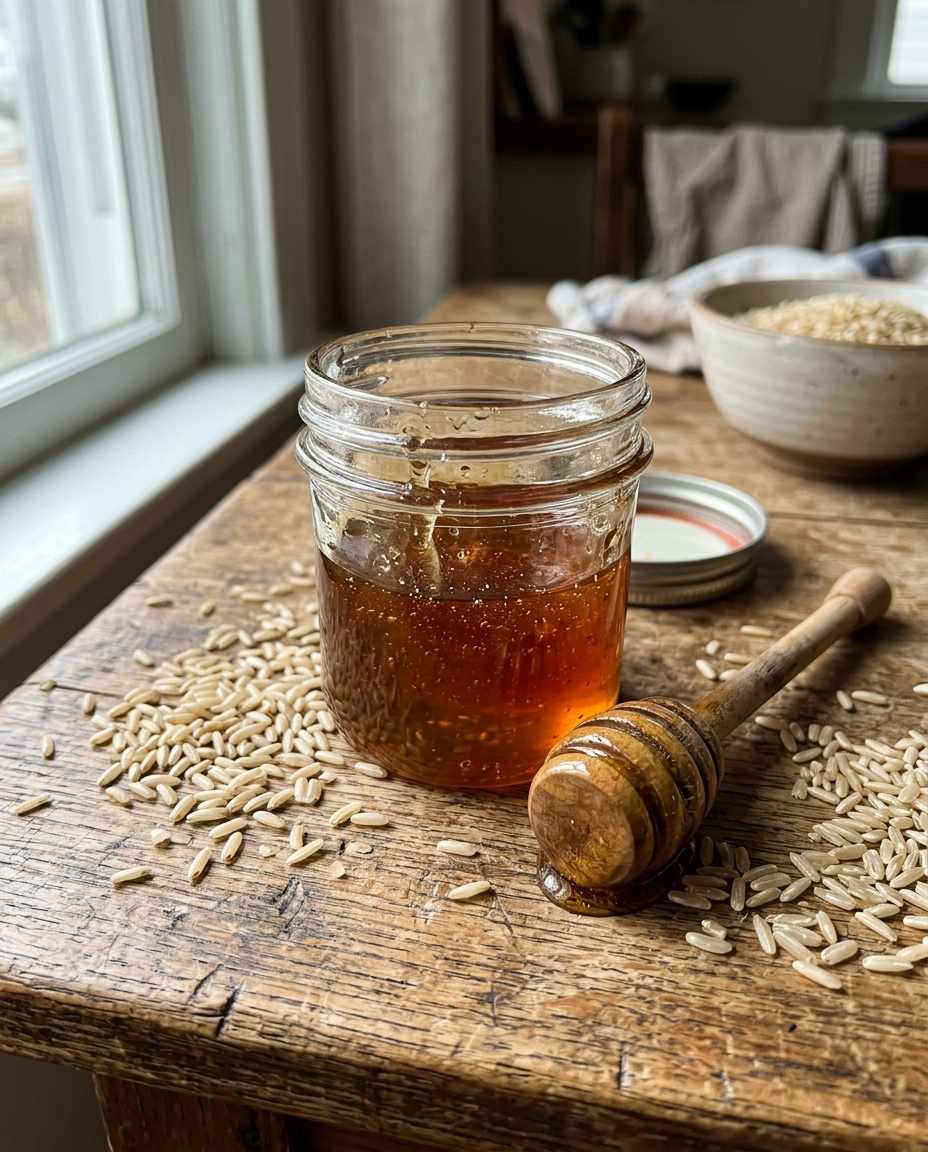
Most commercial brown rice syrups are translucent amber to light brown and have a thick, honey-like texture typically measuring around 1.35 to 1.5 grams per milliliter in density.
This viscosity influences how it interacts with other ingredients, particularly in baked goods where moisture and sweetness balance is critical.
Early on, I mistakenly assumed I could replace brown rice syrup with liquid honey gram-for-gram, but the differences in moisture content and sweetness threw off my results.
Your takeaway: knowing that brown rice syrup is distinct because it’s maltose-rich, enzymatically generated from brown rice starch, and less sweet than typical syrups shapes how to use and substitute it.
Pay close attention to product labels for color, viscosity, and ingredient notes, since artisan and commercial versions vary widely.
Flavor Profile and Culinary Uses

Brown rice syrup offers a subtle, mellow sweetness with faint nutty undertones and a slight malty complexity uncommon in traditional sweeteners.
When I first tasted it solo, the initial impression was mild sweetness without cloying notes or sharp sugar hits, which makes it ideal for delicate recipes like granola or natural energy bars.
The maltose dominance means it lacks the fructose bite present in honey or maple syrup.
Its flavor carries well into heat-intensive processes like baking, where it imparts a light caramel aroma without overpowering.
In my test kitchen, I preferred it in recipes that require a restrained sweetness such as homemade granola or chewy ginger cookies, where other syrups can overshadow spice and acid.
However, it does not brown or caramelize as quickly as honey or corn syrup, which can be a benefit when avoiding over-baking.
Its viscosity allows it to bind ingredients in chewy bars or energy balls smoothly, giving a pleasant chewiness rather than stickiness.
First trials using something thinner like maple syrup had inconsistent texture outcomes.
Moreover, the lack of strong floral or woody notes typical of honey and maple makes it a neutral baseline sweetener.
For cooks, this means brown rice syrup is best suited for recipes that benefit from moderate sweetness without altering the flavor profile drastically.
It is less effective as a topping syrup or glaze unless combined with richer flavors.
Experiment with ratios starting at 3:4 brown rice syrup to regular sugar to avoid surprising under-sweeter results.
Nutritional Composition and Health Considerations
Brown rice syrup is primarily composed of maltose (around 40-50%), maltotriose (30-40%), and glucose (10-20%) with negligible fructose content, differentiating it from cane sugar’s sucrose and honey’s fructose-glucose mixture.
Because maltose has a lower glycemic index (about 42–45) compared to glucose (100), brown rice syrup can cause a slower rise in blood sugar, a fact I considered when advising people with mild glucose sensitivity.
Despite its ‘natural’ appeal, brown rice syrup carries a high caloric density, around 310 calories per 100 grams, comparable to honey and maple syrup, which requires mindful portion control during consumption.
Early on, I assumed it to be a low-calorie alternative, but the energy impact is roughly equal to other syrups, versatile but not a weight-loss aid.
A caution I found in research and experience is the presence of trace arsenic levels in some brown rice syrups, especially those sourced from rice grown in arsenic-rich soils.
Although commercial products are usually within safe limits, long-term excessive use may be contraindicated.
As a health-conscious cook, I source syrups certified for low arsenic or opt for occasional use, balancing taste with safety.
Takeaway: brown rice syrup’s maltose content sets it apart nutritionally, with moderate glycemic impact and some health caveats tied to rice’s environmental factors.
Use as a natural sweetener while staying informed about sourcing and moderation.
How Brown Rice Syrup Functions in Baking
In baking, brown rice syrup serves as a humectant, retaining moisture in finished products and extending shelf life by slowing staling processes.
When I substituted brown rice syrup in cookie recipes first, I noted markedly softer textures even several days out, as it binds water effectively compared to sugar alone.
This property is invaluable for bars, cookies, and muffins where moistness is key.
Because it contains no fructose, it contributes less to Maillard browning and caramelization, resulting in lighter-colored baked goods.
I recall a batch of ginger cookies that remained pale and soft, missing the usual golden crust I get from honey.
Therefore, it’s essential to adjust baking time or oven temperature to compensate if a deeper crust is desired.
Its relatively low sweetness can mean recipes benefit from a slight increase in sugar or flavor enhancers like vanilla or spices.
Early attempts replacing honey one-for-one yielded bland flavor.
On balance, brown rice syrup’s multifunctional role as a sweetener and texture agent makes it excellent in multi-ingredient baked goods rather than delicate pastries where sugar crystal structure is critical.
Your actionable insight: when baking with brown rice syrup, reduce other liquid ingredients slightly to account for its moisture content (usually reduce by around 10–15%), consider boosting sweet spices or sugar slightly, and monitor baking color and time for best results.
Replacing Brown Rice Syrup in Recipes

When brown rice syrup runs out or is unavailable, substituting it requires attention to its lower sweetness, mild flavor, and thick texture.
In my tests, straightforward swaps like replacing brown rice syrup with honey or maple syrup on a 1:1 basis produce a sweeter end product, so reducing quantities slightly (by about 25%) avoids overt sweetness.
Additionally, honey’s distinct floral notes may alter flavor profiles.
Corn syrup is closer texturally and functionally—thick and mild—but much sweeter.
I have found that mixing corn syrup with a small amount of water to thin it slightly, then measuring at 3:4 replacement ratio, yields better balance when replacing brown rice syrup in chewy candy recipes.
But corn syrup lacks the subtle maltiness, so the complexity is diminished.
Agave nectar and maple syrup are often suggested as substitutes but bring strong fructose and flavor profiles not present in brown rice syrup.
If you want neutrality, an easy homemade substitute is to cook equal parts cooked brown rice and water with a touch of malt powder for several hours, simmering gently until syrupy.
I tried this in a zero-additive recipe and achieved a close maltose-rich substitute that preserves the desired texture.
For best results, remember that no substitute matches all of brown rice syrup’s unique properties.
Always adjust sweetness downward, monitor changes in moisture, and consider recipe-specific needs like browning and flavor when selecting your substitute.
Storage and Shelf Life of Brown Rice Syrup
Brown rice syrup’s high sugar concentration and low water activity make it naturally resistant to microbial spoilage, granting it an impressive shelf life of 12 to 24 months when unopened.
I’ve kept bottles stored in cool, dark pantries for well over a year without any crystallization or flavor degradation.
However, exposure to heat and light can darken the syrup and subtly shift flavors over time.
Once opened, it is essential to reseal tightly and store it in a cool area below 75°F.
I learned the hard way that neglecting this led to slight fermentation smells and textural changes after several months.
Refrigeration is optional but can increase viscosity.
Gently warming to 100°F restores pourability without altering quality.
Crystallization is uncommon but can occur if impurities or temperature fluctuations happen during storage.
Unlike honey, brown rice syrup crystallizes less due to its maltose structure, but if it does, gently warming in a bain-marie at 40–50°C dissolves crystals safely.
Early adopters of home preservation sometimes mistake natural thickening for spoilage.
To maximize shelf life, store brown rice syrup in opaque containers or away from direct sunlight, keep lids secure, and avoid introducing moisture or contaminants with unclean utensils.
If any off odors or mold appear, discard promptly.
Commercial Brands and Quality Variations
Not all brown rice syrups are created equal, with significant variation in color, sweetness, texture, and purity across the market.
I’ve tasted everything from pale golden, thin syrups to deep amber viscous varieties, each a product of different fermentation times, rice sources, and refining processes.
Premium brands often label as ‘organic’ and specify low-arsenic rice sourcing.
Some industrial syrups may contain additives like citric acid or preservatives to increase shelf life, which subtly influences flavor and stability.
Early in my journey, I compared popular brands and noticed some had a slightly sour aftertaste from acid additives, altering delicate recipe balances.
For home cooks seeking neutral flavor, ingredient transparency and minimalist processing are key.
Viscosity also varies greatly—from pourable syrups flowing easily at room temperature (around 1.3 g/mL density) to near-taffy consistency requiring gentle warming for use.
These differences affect storage method and substitution ratios.
When selecting a brand, I recommend purchasing small bottles first and testing them in your typical recipes to understand impact.
My advice: prioritize organic, additive-free syrups sourced from reputable producers for the purest flavor and safety.
Read labels closely for sugar content breakdown and opt for syrups with a color between 120 to 180 on the Pfund scale (a measure of syrup darkness) to balance flavor and versatility.
DIY Brown Rice Syrup: Making Your Own at Home

Making brown rice syrup at home is a surprisingly straightforward process involving just cooked brown rice, water, and amylase enzymes sourced from malted barley or commercial enzyme powders.
I began small batches in my kitchen with about one cup of brown rice soaked overnight, then simmered in water until very soft.
The enzymatic step is crucial—it converts starch to maltose-rich syrup but requires correct temperature control around 55–60°C.
After enzymatic conversion over 24–48 hours, the liquid is strained and gently reduced by simmering to concentrate sugars and achieve a honey-like viscosity, usually aiming for about 1.4 g/mL density.
Precise temperature control prevents caramelization and bitterness.
I measured the endpoint using a sugar refractometer to reach approximately 75–80% sugar concentration, balancing sweetness and pourability.
One common beginner mistake is overheating during reduction, which ruins the delicate flavor and darkens the syrup excessively.
Patience is essential—slow evaporation at low heat preserves the light malt notes characteristic of quality brown rice syrup.
Also, homemade syrup lacks preservatives, so refrigeration extends its shelf life.
If you want total control over ingredients and flavor, DIY is rewarding.
Use organic short grain brown rice, food-grade amylase enzymes, and a candy thermometer.
Expect about 1 cup of syrup for every 2 cups of dry rice processed, enough for experimental baking and sweetening without commercial additives.
Environmental Impact and Sustainability
Brown rice syrup production’s environmental footprint hinges largely on rice cultivation, known to require significant water and often involve pesticide use.
I began researching eco-conscious syrups after noticing varied sustainability claims among brands.
Traditional rice farming can deplete water resources, with averages of 2,500 liters per kilogram of rice grown.
However, because brown rice syrup uses whole grain rice and fewer refining steps than cane sugar or high-fructose corn syrup, its processing energy consumption is comparatively moderate.
I found that organic and small-batch producers practice crop rotation and water conservation to mitigate impacts.
Choosing certified organic brands supports reduced chemical pollution.
Packaging also factors into sustainability; glass jars or recyclable PET bottles reduce waste but increase transportation emissions due to weight.
Some brands offset carbon footprints via renewable energy or reforestation.
I advise evaluating brand transparency regarding sourcing and environmental commitments.
Ultimately, if reducing ecological impact is a priority, balance ingredient sourcing, production practices, and packaging choices.
Using brown rice syrup sparingly as part of a plant-based lifestyle generally aligns with sustainable eating but always investigate brands’ entire supply chain.


Leave a Reply