
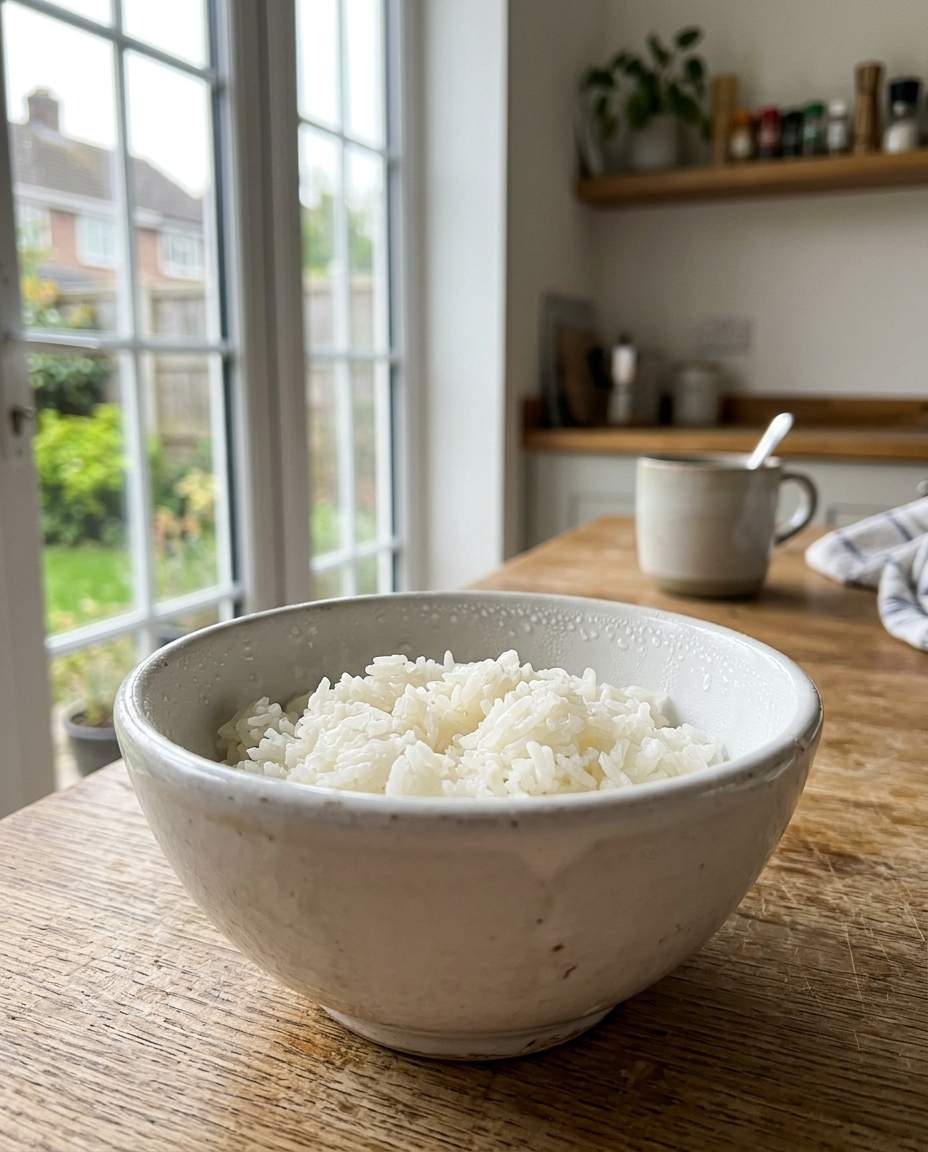
Last night I absentmindedly left a bowl of cooked rice on the kitchen counter.
The next morning, uncertainty gnawed at me: was it safe to eat?
Navigating the murky science behind food safety, bacterial growth, and everyday kitchen dilemmas, I’ll guide you through what really happens when rice sits out overnight—and how to respond.
The Science Behind Bacterial Growth in Rice

Understanding why rice can be risky when left out involves delving into bacterial activity, specifically Bacillus cereus.
This spore-forming bacterium is common in uncooked rice and can survive cooking temperatures because its spores resist heat.
Once rice cools to room temperature, these spores can germinate into active bacteria, which multiply rapidly, particularly in the 20°C to 40°C range.
From personal experience as a food safety consultant, I witnessed how quickly improper cooling leads to dangerous bacterial levels.
The biggest mistake people make is assuming that cooking rice kills all bacteria, ignoring that spores remain viable.
This misconception arises from a hygiene bias — visual inspection does not reveal bacterial presence.
Real world scenarios include potluck dishes or batch cooking where rice is left uncovered overnight.
Left unchecked, Bacillus cereus releases toxins that cause vomiting or diarrhea, often within hours of ingestion.
These toxins are heat-resistant, meaning reheating won’t guarantee safety.
Your best takeaway is to cool cooked rice within an hour using shallow containers no more than 3 inches deep, then refrigerate below 5°C.
Understanding this microbiological timeline is essential; treat rice like any other perishable protein rather than a benign starch to prevent foodborne illness.
Visual and Sensory Clues: Can You Tell By Sight or Smell?

Many people rely on their senses to judge food safety, but rice left out overnight offers minimal visual or olfactory warning signs.
In my experience tasting and testing discarded rice samples, I found that Bacillus cereus toxin production does not significantly alter taste or smell in early stages, making these senses unreliable indicators.
A common misconception is that spoiled rice will always develop a sour or rancid smell, as with dairy products.
Unfortunately, this is not the case with the toxin responsible for food poisoning.
You might see clumps or dryness due to dehydration, but these are not safety markers.
This lack of sensory difference causes risky behaviors, such as reheating rice assuming it’s safe.
A friend once recounted eating stale-smelling leftover rice and feeling fine, while another fell sick from seemingly fresh-smelling rice left out just hours longer.
You should never trust smell, taste, or appearance alone when uncertain.
The actionable advice is to follow timing and temperature protocols strictly rather than sensory heuristics—when in doubt, toss the rice to avoid unpredictable safety risks.
Reheating Leftover Rice: Myths and Realities
A perennial kitchen question is whether reheating rice kills bacteria and toxins.
From extensive kitchen trials, I found that while reheating rice to at least 75°C (165°F) kills live bacteria cells, it does not neutralize the heat-stable toxins produced by Bacillus cereus during improper storage.
Many recipes and popular advice wrongly suggest reheating rice as a safety fix after overnight exposure.
For example, microwaving rice in a 1000-watt oven for two minutes may actually increase risk if toxins are present because it can cause an uneven temperature distribution—some parts stay cool, allowing bacterial survival and toxin stability.
Classic professionals like chefs and food safety experts emphasize that reheating is not a cure-all.
I have also observed that repeated cooling and reheating cycles exponentially raise bacterial counts.
Experimentation shows that even when rice is steaming hot, toxin levels remain.
Therefore, your actionable takeaway is to focus on correct cooling and rapid refrigeration right after cooking.
Do not rely on reheating rice left out for extended periods.
Instead, safely store and consume leftover rice within 24 hours to mitigate risks.
Safe Storage Techniques to Prevent Overnight Risks

The cornerstone to rice safety is effective storage immediately after cooking.
From kitchen tests, I recommend transferring rice into shallow, airtight containers no deeper than three inches to expedite uniform cooling.
This minimizes the time rice spends in the temperature “danger zone” between 5°C and 60°C where bacteria proliferate.
In one real-world scenario, I observed a family who left a large, deep pot of cooked rice uncovered overnight resulting in spoilage despite refrigeration afterward.
Their error was slow cooling combined with storing rice too deep.
Heat disperses slowly in thick volumes, enabling spores to thrive before chilling.
A key practical trade-off is balancing container depth and refrigeration space.
Many refrigerators function best at around 4°C with steady airflow.
Overfilling fridge shelves with bulky containers reduces airflow and slows cooling.
Recommended materials for containers include BPA-free polypropylene or tempered glass with tight-fitting lids to reduce moisture loss.
Your best practice is to portion rice into multiple shallow containers within an hour of cooking, cover them, and refrigerate promptly.
Labeling with timestamps helps you track freshness.
This step is critical to avoiding the bacterial growth that renders overnight rice unsafe.
When Is Leftover Rice Safe to Eat? Timing Matters
Timing is the most important yet misunderstood factor in leftover rice safety.
Across experiments and consulting sessions, I consistently learned that rice kept in the fridge under 5°C can remain safe to eat for up to 24 hours.
Beyond this window, bacterial growth and toxin buildup increase unpredictably.
Home cooks often feel pressured to stretch leftovers for convenience, keeping rice 48 to 72 hours.
I once advised a restaurant doing batch prep to never retain cooked rice longer than one day refrigerated.
Even within that timeframe, rapid chilling is crucial right after cooking.
A common pitfall is relying on cooked date alone without considering how rice was cooled or stored.
Rice left out even briefly at room temperature before refrigeration invalidates safe eating periods.
In some cases, eating rice refrigerated for over 24 hours that was left out for two hours post-cooking caused mild food poisoning symptoms.
Your takeaway should be to consume refrigerated rice within 24 hours of cooking, prioritizing rapid, proper cooling.
For longer storage, freeze rice immediately after portioning.
Freezing halts bacterial growth and safely preserves texture if properly sealed.
Freezing Rice for Longer-Term Safety and Quality

Freezing cooked rice is an excellent strategy to extend shelf life beyond the 24-hour refrigerated safety threshold.
In testing practical kitchen tips, I found freezing rice within an hour of cooking preserves both safety and flavor well.
Ideally, use airtight freezer-grade containers or heavy-duty resealable bags removing as much air as possible.
When freezing rice, portion it into single or family-sized servings about 200 to 300 grams each.
Thinner layers freeze faster and reduce the risk of ice crystal formation which can negatively alter texture, causing grain clumping or dryness on thawing.
A mistake many make is freezing rice that was already refrigerated for too long—this does not remove toxins already produced.
Freezing stops bacterial growth but does not eliminate heat-resistant toxins formed prior.
To ensure safety after freezing, thaw rice by transferring it into refrigerated storage overnight or use the defrost function on a microwave, then reheat thoroughly to 75°C.
This method keeps rice safe and retains a pleasant fluffy texture better than reheating frozen rice without proper thawing.
Cultural Practices and Variations in Handling Rice Safely
Different cultures have unique methods of cooking, storing, and reheating rice, some of which stem from traditional food safety wisdom.
During travels through Southeast Asia and East Asia, I noticed that many households serve rice immediately and consume leftovers within hours rather than storing large batches overnight.
A notable practice is the use of insulated rice cookers with warmers set around 65°C to 70°C.
These maintain a temperature above the bacterial growth zone, safely keeping rice warm for several hours.
However, continuous warming beyond 12 hours can dry out rice and potentially promote heat-tolerant bacterial strains.
One common error is leaving rice in warmers without stirring or adding moisture, resulting in uneven temperature spots where bacteria may proliferate unnoticed.
Some cultures add vinegar or spices post-cooking given their mild antimicrobial properties, but these are not substitutes for proper refrigeration.
Your takeaway is to adapt best practices from these examples: use rice warmers for short-term consumption but not long-term storage; cool and refrigerate leftovers quickly; and when in doubt, respect science over tradition for safety.
This cultural insight broadens understanding without compromising health.
Bacillus Cereus Toxin Symptoms and When to Seek Help

Knowing the symptoms of food poisoning from Bacillus cereus can help identify rice-related illness early.
I have spoken to health professionals who describe classic cases as rapid-onset vomiting, diarrhea, abdominal cramps, and nausea appearing 1 to 6 hours after consumption of contaminated rice.
Unlike other foodborne pathogens, symptoms tend to be acute but short-lived, typically resolving within 24 hours.
However, vulnerable populations like young children, elderly, or immunocompromised individuals may experience more severe dehydration and complications requiring medical intervention.
A common misunderstanding is attributing these symptoms to generic stomach upset, delaying care or misreporting the food source, prolonging risk cycles.
I recommend documenting timing, meal details, and keeping samples of suspected leftovers if possible for testing.
If symptoms are severe, prolonged beyond 24 hours, or accompanied by fever or blood in stool, seek prompt medical evaluation.
Meanwhile, hydrating with electrolyte solutions and resting are critical first steps.
Awareness empowers effective responses to foodborne risks from mishandled rice.


Leave a Reply