
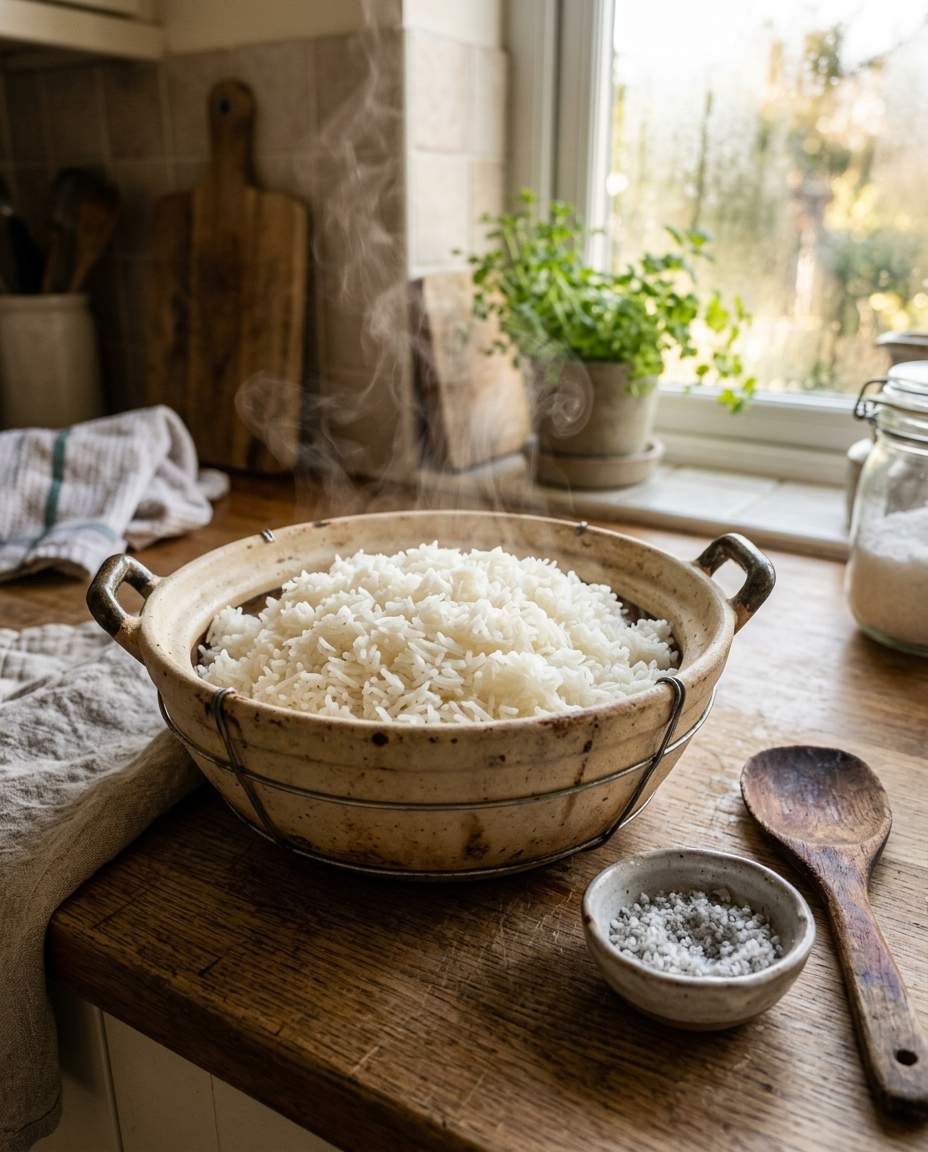
I was stirring a pot of jasmine rice late one evening when I paused, questioning if adding salt was necessary or sacrilegious to the purity of the grain.
That moment of culinary doubt pushed me to experiment and discover how salt and seasoning transform rice’s flavor and texture in surprisingly profound ways.
The Chemistry Behind Salting Rice
Salt alters rice at a molecular level by influencing water absorption and starch gelatinization.
When you add salt to the cooking water, it increases the boiling point slightly, creating a subtle change in cooking dynamics.
Salt ions interact with starch granules, tightening their structure and preventing over-swelling, which helps maintain a pleasant texture that isn’t mushy or too sticky.
I first experimented with varying salt quantities, noting that a pinch of 0.5 grams per cup of uncooked rice produced fluffy grains, whereas doubling that led to a dense, borderline gummy texture.
Many home cooks over-salt out of habit, failing to account for salt already present in broths or seasoning blends, which can overwhelm the rice’s natural flavor.
Understanding this chemistry helps clarify why some chefs season rice water precisely, measuring 1 to 1.5% salt by weight relative to water volume.
This precision guarantees consistent seasoning without compromising texture.
Without this knowledge, cooks often add salt too late or in haphazard amounts, resulting in unevenly seasoned or texturally inferior rice.
My advice: weigh your salt using a kitchen scale, start with 1 gram of salt per 100 grams of cooking water, and adjust based on the rice variety and recipe context.
This measured approach ensures balanced flavor and ideal mouthfeel every time.
When to Salt: Before, During, or After Cooking

Salt timing significantly affects rice’s flavor saturation and texture.
Adding salt before cooking allows even penetration, seasoning each grain uniformly, whereas salting after tends to sit on the surface and can taste inconsistent or overly salty in spots.
I tested both and found pre-cooking salting to enhance the layered umami in simple boiled rice.
Some purists argue that adding salt during cooking toughens rice, but this is a misconception grounded in outdated technique.
The key lies in salt quantity.
Using the proper 1-1.5% salt-to-water ratio during cooking prevents grain clumping without hardness.
Adding salt post-cooking sometimes causes the grains to absorb excess moisture and become sticky.
For recipes relying on infused broths or pilaf-style cooking, the initial salting unlocks the base flavor, while finishing salt can be used to spark contrast in dishes like sushi rice or risotto.
Ignoring timing nuances leads to flat or uneven seasoning, diluting the dish’s complexity.
My tip: always dissolve your salt in cooking water from the start, then adjust seasoning with a light sprinkle at the table if needed.
This layered approach balances flavor integrity and control.
Choosing the Right Salt Type for Rice
Different salts bring distinct textures, flavors, and dissolution rates that impact rice seasoning.
Coarse sea salt crystals dissolve slower and can leave subtle crunchy bursts unless fully dissolved before adding rice.
Fine table salt dissolves immediately but may contribute a metallic aftertaste due to additives.
I recommend using fine kosher salt or unrefined sea salt, which balance purity and subtle mineral notes.
I once mistakenly used Himalayan pink salt without adjusting quantity, resulting in overly salty rice with an orange tint.
The mineral content added complexity but clashed with delicate basmati rice’s floral notes.
Choosing salt requires considering grain size, mineral impurities, and the cooking method to harmonize flavors.
Specialty finishing salts like Maldon or fleur de sel are best reserved for garnish after cooking, where their flaky texture and briny bursts enhance mouthfeel without overpowering the grain.
Using the wrong salt type throughout cooking is a common yet easily avoidable pitfall.
My recommendation: pick a neutral kosher salt for cooking, measured precisely, and save artisanal crystals as finishing flourishes to elevate presentation and flavor dimensions.
Balancing Salt with Other Seasonings

Salt is the foundational seasoning but works best paired with aromatics and spices during rice preparation.
Ingredients like garlic, ginger, bay leaves, star anise, or turmeric complement the salt, transforming plain rice into a flavor-forward canvas while balancing potentially overwhelming saltiness.
Early addition of these spices allows their volatile oils to infuse the rice fully.
I regularly infuse my rice water with a teaspoon of crushed coriander seeds and a pinch of salt, capturing a fragrant backdrop that complements curries.
Omitting salt here leads to dull rice that cannot stand up to the boldness of accompanying dishes.
Conversely, over-salting risks clashing with the delicate spice notes.
A common mistake is salting heavily and later adding salty sauces, double-dosing the dish with sodium.
Careful planning of seasoning layers saves both taste and health concessions.
Rice should be treated as a balanced ingredient, not a bland receptacle for salty condiments.
My practical tip: season rice water lightly with salt and aromatics, and adjust salt in accompanying components rather than overpowering the grains, maintaining balanced harmony across the plate.
Health Considerations When Salting Rice
Excess sodium intake is linked to hypertension and cardiovascular risks, which makes precise salting of staple grains like rice an important health consideration.
Many home cooks oversalt automatically, unaware that even 1 gram per 100 grams cooking water can add up quickly across daily meals.
Managing salt quantity helps mitigate hidden sodium consumption.
I conducted a week-long experiment reducing salt in rice preparation by half and noticed not only improved digestion but also a heightened natural sweetness of the grain.
The habit of masking blandness with salt often dulls palate sensitivity.
Gradually moderating salt enhances overall taste awareness and lowers reliance on processed high-sodium foods.
Beware of pre-salted rice mixes, stock powders, or instant flavor packets that can add unexpected sodium.
A common misconception is that rice itself is neutral; however, controlling salt addition remains key in maintaining dietary guidelines recommending under 2,300 mg sodium daily.
Actionable advice: measure salt meticulously, consider salt alternatives like lemon zest or fresh herbs to enhance flavor, and use lower-sodium broths if cooking rice with liquid other than pure water.
Salt and Rice Varieties: Tailoring Seasoning
Different rice types absorb salt and flavor uniquely due to their grain structure and starch composition.
Long-grain basmati and jasmine rice have a lighter amylopectin content, making them fluffy and less sticky, thus requiring less salt to enhance taste without masking delicate floral notes.
Conversely, short-grain and medium-grain rice, rich in amylopectin, have naturally creamy textures that hold salt and seasoning more aggressively.
I observed that seasoning sushi rice with more than 0.8 grams salt per 100 grams water led to an overly assertive flavor, overwhelming the subtle vinegar and sugar mix customary in sushi preparation.
This variability confuses many cooks who apply uniform salting across rice types, often compromising the desired regional flavor profile.
Grains like black or forbidden rice, with strong nutty profiles, may benefit from slight increases in salt to balance the earthiness, but need cautious adjustment to avoid masking their natural depth.
Ignoring varietal differences in seasoning is a common trap leading to bland or overpowering results.
Practical takeaway: research your rice variety’s flavor characteristics, start with conservative salt levels for delicate grains, and incrementally increase for starchier or more robust types to maintain balanced seasoning.
Finishing Touches: Salt Beyond the Pot

Seasoning grains does not end when the pot is removed from heat.
Finishing salts, acid spritzes, or herb infusions post-cooking can elevate rice from basic to memorable.
Flaky salts, citrus zest, or cracked pepper added atop steaming rice create contrast and complexity that cannot be achieved solely in the cooking phase.
I regularly finish pilaf-style rice with a light sprinkle of Maldon sea salt, which provides a delicate crunch and a burst of briny flavor.
This layering plays off the creaminess of the cooked grain and enhances mouthfeel.
Many home cooks miss this finishing opportunity, leaving rice one-dimensional.
Remember that post-cooking salt application should be light and immediately tasted to avoid over-seasoning.
The difference between balanced final seasoning and oversalted rice is often subtle but decisive to the dish’s success.
My recommendation: invest in a quality finishing salt and apply sparingly just before serving, tasting carefully as you proceed, to add nuanced flavor and textural interest to your grains.
Alternative Seasoning Ideas to Reduce Salt Use
Salt is a powerful seasoning agent, but overreliance can mask rice’s natural flavor and impose health concerns.
Exploring alternatives such as umami-rich ingredients, herbs, spices, and citrus can brighten rice without added sodium.
Miso paste, dried mushrooms, or nutritional yeast mixed into the cooking water provide savory depth while lowering salt demand.
In my kitchen, substituting half the salt with a teaspoon of finely chopped dried shiitake or a splash of tamari-infused broth revolutionized everyday rice.
The ingredients release glutamates that mimic saltiness, creating a richer mouthfeel.
Many cooks overlook these substitutions because of unfamiliarity or fear of flavor complexity.
A key mistake is replacing all salt with herbs only, which may result in flat rice.
Instead, aim to balance a small amount of salt with these umami boosters.
Consistent experimentation is required due to flavor strength variations among ingredients.
Try using a quarter teaspoon of salt with half a teaspoon of nutritional yeast or kombu dashi in your cook water.
This hybrid approach preserves seasoning integrity while reducing sodium intake.



Leave a Reply