
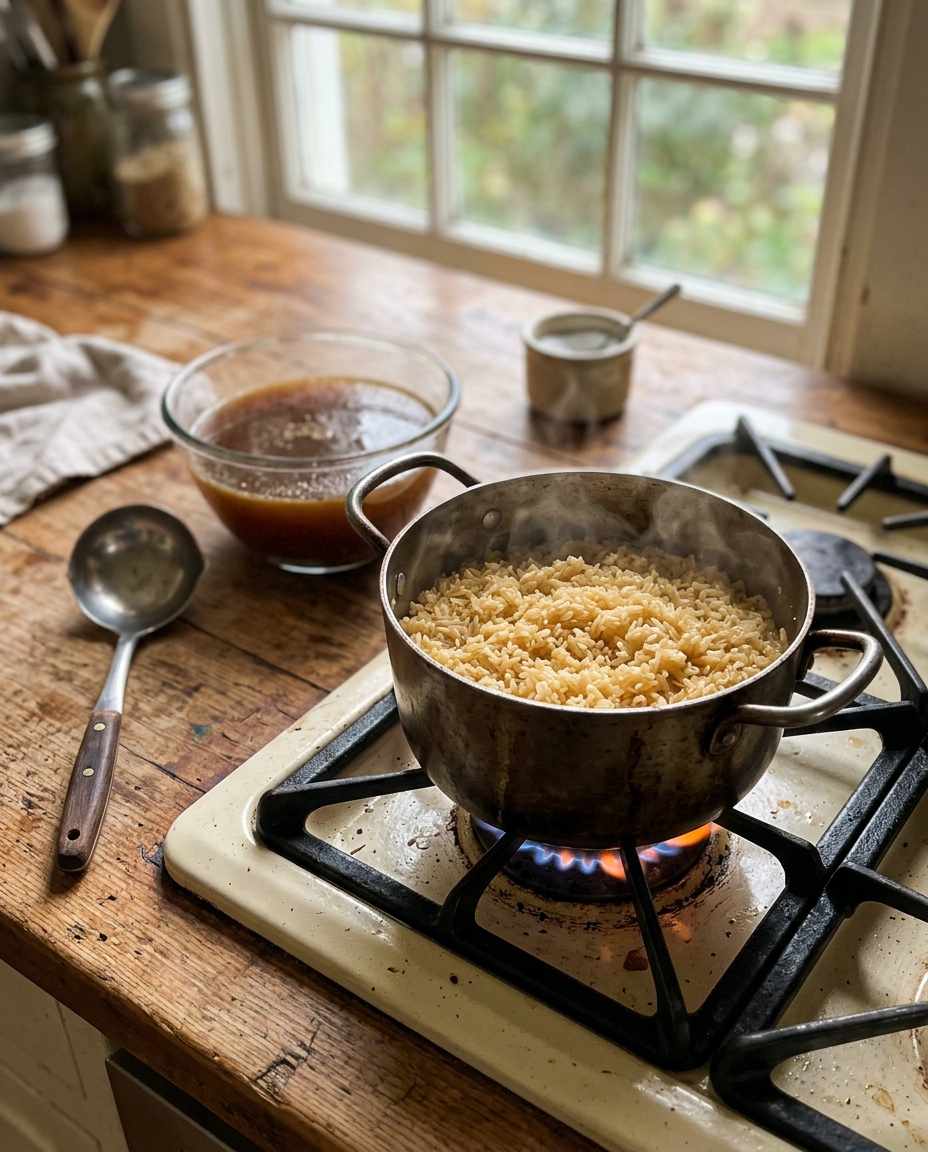
Last weekend, I scooped glossy, amber-hued beef stock into my pot, replacing the usual cup of water for my rice.
The change was profound: richer aroma, deeper flavor, and a subtle umami that transformed the humble grain.
This technique elevates rice from a side dish to a star on your plate.
Why Beef Stock Transforms Rice
Beef stock is a flavorful liquid rich in gelatin, amino acids, and minerals extracted from simmered bones and meat.
This complexity infuses the rice as it cooks, replacing the neutrality of water with robust, savory depth.
When you swap water for beef stock, the starch granules in rice absorb these compounds during gelatinization, enhancing mouthfeel and umami.
The first time I tried beef stock rice, I noticed the rice grains retained a fuller texture and a subtle meaty aroma unlike anything water could produce.
This is because the collagen in the stock converts into gelatin during cooking, which coats the rice and increases a luscious, silky consistency.
A common mistake is using weak or overly salty store-bought stock, which can overpower or clash with the rice.
I once used a high-sodium boxed stock and ended up with rice that tasted artificially salty and lacked balance.
Always dilute or choose a low-sodium homemade stock for control.
To get the best results, use beef stock with a rich mahogany color, indicating a well-concentrated broth simmered at least 6 hours with marrow bones and aromatics.
This depth guarantees flavor compounds penetrate each grain, creating a base that elevates everything served alongside.
Selecting the Right Rice for Stock Cooking

Not all rices behave the same when cooked in beef stock; grain variety influences texture and flavor uptake.
Long-grain rices like Basmati and Jasmine yield fluffy, separate grains and subtly enhance the stock’s flavor without becoming sticky.
Contrarily, short-grain varieties like Japonica or Arborio absorb more liquid and release more starch, creating creamier textures—ideal for hearty dishes like risotto or pilafs that benefit from coherence.
I tested both using identical beef stock and found Arborio rice better at accentuating the stock’s silkiness.
A frequent blunder is applying a one-size-fits-all mentality, selecting stickier rice types for dishes where fluffiness is desired.
Early on, I made basmati in beef stock and stirred too much, unintentionally causing stickiness.
Remember, gentler stirring preserves grain integrity.
Your choice should match the meal’s overall texture goals.
Use long-grain rice for pilafs or plain sides wanting distinct grains.
Choose short-grain or medium-grain for dishes calling for a cohesive, creamy mouthfeel enhanced by the rich stock.
Balancing Stock Concentration and Hydration
A critical technical consideration is the ratio of beef stock to rice, which affects texture and cooking end-point.
Traditional water-to-rice ratios vary between 1.5:1 to 2:1 by volume; however, beef stock’s richer body impacts absorption rates.
In practice, I found a ratio of 1.75 cups beef stock per 1 cup long-grain rice strikes an ideal balance: enough liquid to hydrate fully without causing mushiness.
This differs slightly with stock concentration—more gelatin means less liquid needed as it thickens and clings.
Another pitfall occurs when stock is so concentrated it thickens pot liquids prematurely, causing uneven cooking or clumping.
After my initial batches, I learned to taste and adjust by diluting with filtered water.
Your beef stock ideally should resemble a dark amber tea, with a viscosity just enough to coat the back of a spoon, about 70-90 cP (centipoise).
The takeaway is to assess your stock’s characteristics—measure viscosity if possible—and adapt liquid ratios accordingly.
Start with a slightly reduced volume compared to water-based recipes and increase gently only if grains remain firm after cooking.
Advanced Techniques: Sautéing Aromatics Before Cooking

Sautéing onions, garlic, or shallots in butter or beef fat before adding rice and stock profoundly elevates the flavor profile.
This Maillard reaction builds complexity deeper than what stock alone achieves.
I discovered early on that toasting rice with aromatics in rendered suet transformed a simple beef stock rice into a fragrant, layered dish often mistaken for slow-cooked stews.
The nutty, caramelized notes blend synergistically with the stock’s meaty richness.
Beginners commonly skip this step, fearing additional prep or burning onions.
The key is low-medium heat for 3–5 minutes until translucent and golden but not browned.
Also, splash a small amount of stock to deglaze, lifting fond with the rice.
Integrating this technique is simple: start your recipe by sweating aromatics in 1 tablespoon beef tallow or unsalted butter, then stir in rice to coat before adding warm beef stock.
This maximizes color, flavor complexity, and aroma intensity.
Controlling Heat and Timing for Perfect Texture
Temperature control directly influences how beef stock-infused rice gelatinizes and maintains structural integrity.
High heat causes rapid evaporation and uneven hydration, leading to mushy edges or undercooked cores.
Through repeated testing, I found the optimal approach is to bring rice and beef stock to a vigorous simmer, then immediately reduce to the lowest flame setting with a tight-fitting lid.
This gentle simmer method allows starches to swell gradually, integrating stock flavors without loss of moisture or aroma.
A novice error is premature lid removal or stirring mid-cook, releasing steam and breaking grain structure.
Instead, resist opening the pot until at least 90 percent of the liquid is absorbed, about 15–18 minutes for long-grain rice.
For timing precision, use a kitchen timer and an infrared thermometer to verify surface temperatures remain stable around 85 °C (185 °F) during simmer.
This modest temperature avoids scorching while ensuring effective starch transformation and stock infusion.
Finishing Touches: Resting, Fluffing, and Enhancing Flavor

After cooking, a 10–15 minute resting period is essential for beef stock rice to complete steaming internally and redistribute moisture evenly.
I initially skipped this step and got clumpy, sticky rice—letting it rest solved that problem entirely.
Fluffing gently with a fork re-separates grains without breaking starch bonds.
This enhances mouthfeel and maintains visual appeal when plated.
Avoid vigorous stirring or spatula use, which crush grains and release excess starch.
For an extra flavor layer, fold in a teaspoon of cold unsalted butter or a drizzle of beef fat after resting.
This melds chocolate-brown hues of the stock with creamy glossiness, making the dish irresistible both visually and on the palate.
Season lightly with freshly ground black pepper and finely chopped parsley or chives before serving.
Because the stock is already savory, salt should be minimal—taste first to prevent over-salting.
Pairing Beef Stock Rice with Complementary Dishes
Beef stock rice has a pronounced savory depth, making it a versatile base that pairs exceptionally with braised meats, grilled vegetables, or mushroom ragouts.
Its hearty, umami-forward profile complements slow-cooked short ribs or roasted leg of lamb exquisitely.
In my experience, accompanying beef stock rice with sauces infused with red wine or herbs like rosemary maximizes flavor harmony.
The rice’s gelatinous coating helps soak up these sauces, turning a simple plate into a complex dining experience.
A common mistake is overshadowing the rice with overly aggressive flavors like spicy hot sauces or acidic dressings.
They clash rather than blend with the delicate balance achieved by slow-simmered stock infusion.
To showcase this rice best, serve with side dishes that emphasize earthy, savory notes—roasted root vegetables glazed with honey, sautéed wild mushrooms, or a crisp arugula salad dressed with walnut oil and lemon juice.
These pairings create contrast and balance.
Making Your Own Beef Stock for Ultimate Control

While store-bought stock can suffice, homemade beef stock unleashes full potential for cooking rice.
You control saltiness, gelatin concentration, and aromatic balance to suit your recipe precisely.
I prefer a 6-to-8-hour simmer using a blend of marrow-rich beef femur bones, oxtail, and knuckles with Mirepoix vegetables and a bouquet garni of thyme, bay leaves, and black peppercorns.
This produces a dark mahogany broth with a viscosity around 80 cP and deep umami notes.
New cooks often undercook stock, resulting in a pale, weak liquid that fails to flavor rice adequately.
Conversely, over-reduction leads to gelatin that gels too much at room temperature, making rice sticky and dense.
Aim for a consistency that flows easily but leaves a velvety coating on a spoon.
Once cooled, skim and degrease the surface to avoid excessive fatiness that dilutes rice texture.
Strain finely through cheesecloth for clarity.
Store in airtight containers for up to 4 days refrigerated or freeze in 1-cup portions.




Leave a Reply