
Maintaining a lush, weed-free lawn hinges on choosing the right herbicide.
This guide explores two leading weed killers, Quinclorac and Tenacity, breaking down their differences, applications, and effectiveness to help you make the best decision for your turf’s health and appearance.
Understanding Common Lawn Weeds
A crucial first step in selecting a weed killer is identifying the types of weeds invading your lawn.
Different herbicides target specific weed species, so knowing what you’re dealing with informs your choice.
For example, broadleaf weeds like dandelions and crabgrass require products tailored to their biology, while grassy weeds need a different approach.

In the photo of a dandelion leaf bleached white with chemical damage, you can see how targeted herbicides attack the weed’s core structures.
This damaged leaf contrasts sharply with the surrounding healthy green grass, illustrating successful weed control.
Recognizing these damage patterns helps differentiate between effective treatments and failures.
Many lawn owners overlook the importance of proper weed identification, leading to ineffective treatments and continued weed proliferation.
Understanding the growth habits, life cycles, and resistance traits of common weeds allows you to tailor your intervention precisely.
An actionable takeaway is to start by cataloging your lawn’s weed species, ideally removing any invasive plants manually or consult a local extension service for identification.
This sets a strong foundation for integrating either Quinclorac or Tenacity into your lawn care plan effectively.
How Quinclorac and Tenacity Work
Quinclorac and Tenacity both combat weeds but through distinct modes of action.
Quinclorac primarily targets grassy weeds and certain broadleaf weeds by interfering with their growth hormones, causing them to wither and die.
In contrast, Tenacity functions by inhibiting photosynthesis, starving weeds of the energy needed for survival.
Understanding these mechanisms clarifies their applications and effectiveness.
Quinclorac’s hormonal disruption is particularly effective against crabgrass and certain broadleaf weeds, while Tenacity is versatile, controlling both weeds and moss for a holistic approach.
However, Tenacity’s mode can exhibit visible effects like chlorosis before death.
Choosing between them requires considering the weed species, the lawn type, and environmental factors, as grass tolerance varies.
Since Tenacity affects photosynthesis, it may cause temporary yellowing in some desirable grass during treatment, a nuance often missed by newcomers.
For best results, match the herbicide’s mode of action to your lawn’s needs, and prepare for its visible effects on both weeds and turf.
This understanding helps avoid surprises and maximizes weed control success.
Selecting the Right Product for Your Lawn
Choosing between Quinclorac and Tenacity involves evaluating your lawn’s grass type, weed severity, and environmental conditions.
Quinclorac excels in warm-season lawns and is effective against troublesome grassy weeds, while Tenacity suits cool-season grasses and offers broad-spectrum control including moss.
Considering safety margins is key; some grasses may exhibit temporary stress with Tenacity, requiring careful timing and application rates.
Equally, Quinclorac’s specificity may limit its use where broadleaf weeds predominate.
Your lawn’s lifecycle, soil composition, and watering practices influence these decisions significantly.
Skipping this evaluation often leads to reduced efficacy or unintended turf damage, so take the time to read product labels and consult local experts.
Understanding which herbicide aligns best with your turf environment ensures the healthiest outcomes.
A practical tip is to test a small lawn section first to observe grass tolerance and weed response before wide application.
This mitigates risks and aids in confirming the optimal herbicide choice for your lawn setting.
Application Techniques and Timing

Proper application of Quinclorac and Tenacity dramatically influences their effectiveness and minimizes damage to your grass.
Both herbicides require precise timing, often applied during active weed growth periods but not under extreme heat or drought stress.
The image of a person spraying weeds with a backpack sprayer in a sunlit residential lawn shows ideal application conditions.
The sprayer’s fine mist ensures even coverage without runoff, critical for products like Quinclorac and Tenacity, which demand thorough leaf contact.
Wearing gloves and protective clothing, as seen here, safeguards the applicator.
Common mistakes include applying in windy conditions causing drift or during rainfall leading to wash-off.
Applying outside recommended growth stages can reduce efficacy or harm desirable grasses.
The key takeaway is to follow label instructions meticulously, monitor weather forecasts, and use appropriate equipment to achieve targeted weed control with minimal collateral impact on your lawn and environment.
Post-Application Lawn Care and Monitoring

After treating your lawn with Quinclorac or Tenacity, proper care and vigilant monitoring help ensure optimal weed removal and turf recovery.
Avoid watering or mowing for the recommended period to allow the herbicide to act fully on the targeted weeds.
Visual inspection becomes essential, watching for signs like discoloration or wilting in weeds as an indicator of herbicide performance.
The close-up of a weed with curled, browned leaves amid green grass highlights typical herbicide-induced stress.
This visual cue confirms uptake and successful weed disruption.
Ignoring these signs can miss early treatment failures or turf damage, resulting in wasted effort and expense.
Adjusting subsequent care such as overseeding or fertilizing may be necessary to support lawn health.
Maintaining a treatment log and following up with spot treatments on persistent weeds will keep your lawn vibrant and resilient, underscoring the importance of proactive post-application management.
Comparing Results and Effectiveness

A compelling way to gauge Quinclorac versus Tenacity is through before-and-after evaluations.
Both herbicides boast strong reputations, yet their outcomes vary based on weed spectrum and lawn type compatibility.
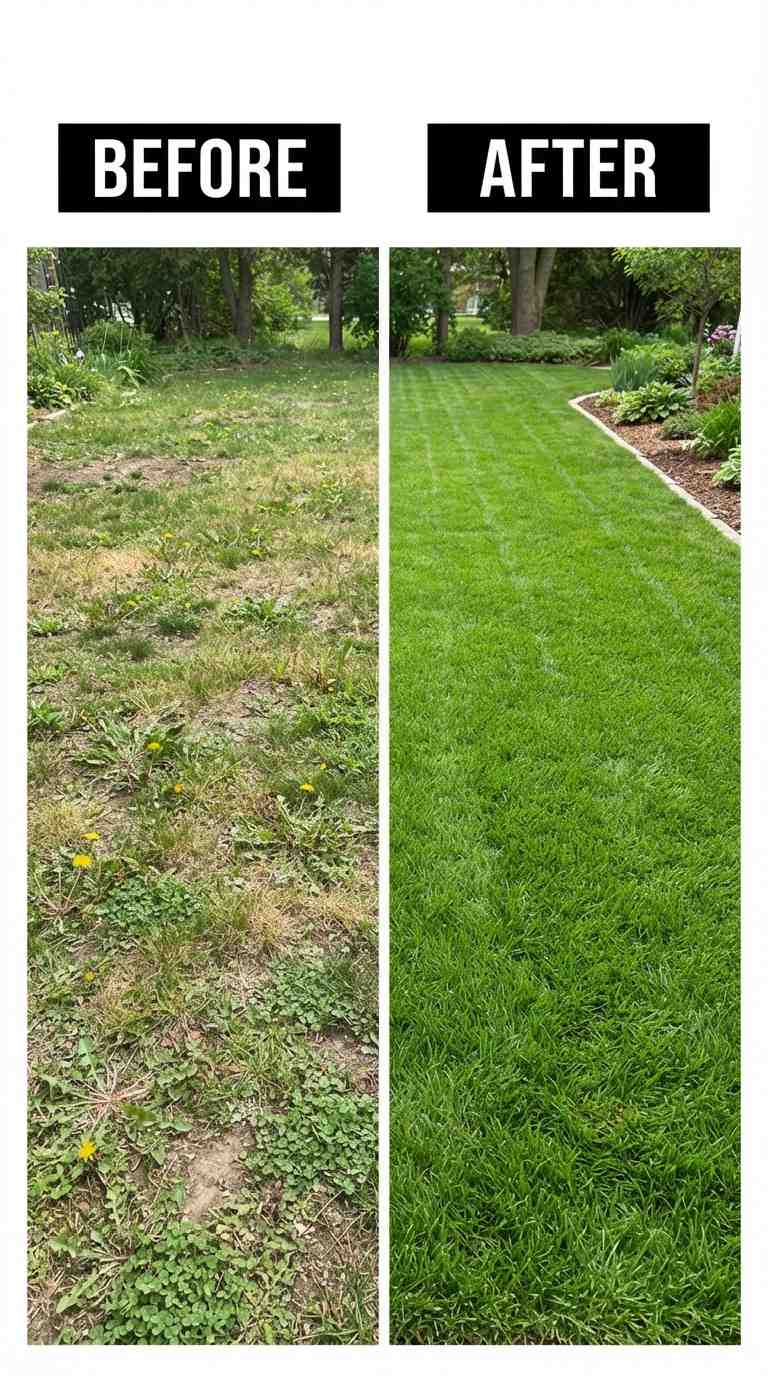
The before-and-after image showcases a dramatic makeover where a weed-ridden, patchy lawn transforms into a uniformly lush, green expanse.
This dramatic contrast demonstrates what consistent, correct herbicide use can achieve, blending weed eradication with turf revitalization.
While Quinclorac may show quicker grubgrass and broadleaf weed die-off, Tenacity’s slower, greener recovery often produces a more comprehensive lawn improvement including moss control.
User patience and adherence to guidelines yield these results.
Looking beyond marketing claims, inspecting real-world transformations clarifies expectations and guides your choice, highlighting that persistence and correct application timing are as important as product selection.
Choosing and Handling Equipment

The success of weed control not only depends on the herbicide but also on the quality and maintenance of your application equipment.
Proper sprayers deliver consistent dosage and coverage, key factors in maximizing the herbicide’s effectiveness.
In the detailed shot showing Quinclorac and Tenacity containers on a weathered workbench surrounded by tools and equipment, the setting emphasizes preparation and organization.
This image conveys the behind-the-scenes care required,clean nozzles, calibrated pumps, and properly stored chemicals all contribute to efficient weed control.
Neglecting equipment hygiene or storage can cause clogging, uneven spraying, or chemical degradation leading to poor results or safety hazards.
Always measure liquids precisely and clean gear post-application.
Investing effort into equipment readiness protects both the lawn and the applicator, ensuring the herbicide performs as intended without contamination or wastage.
Environmental and Safety Considerations
Herbicides like Quinclorac and Tenacity require responsible use to avoid harming non-target plants, animals, and nearby ecosystems.
Reading and adhering to safety protocols protects your household and neighbors as well as beneficial insects and surrounding flora.
Consider runoff potential after rainfall, avoid application near water bodies, and observe buffer zones to prevent chemical migration.
Both products carry safety warnings about skin and respiratory exposure, emphasizing the need for gloves, masks, and avoiding inhalation.
Miscalculating dosage or ignoring weather conditions can lead to off-target damage, resistance buildup, or environmental contamination, so educate yourself fully before treatment.
Taking these precautions preserves your lawn’s health, enhances community safety, and ensures legal compliance, strengthening your overall lawn care strategy with conscientious stewardship.
Common Mistakes and How to Avoid Them
Several common pitfalls undermine the success of Quinclorac and Tenacity in lawn weed control.
Overapplication can scorch grass, while underapplication leaves weeds unharmed, encouraging resistance.
Applying during dormancy or extreme weather often reduces uptake, making treatment ineffective.
Neglecting to calibrate sprayers or mixing incorrectly dilutes performance and wastes product.
Failing to identify weeds properly may lead to selecting an unsuitable product, prolonging problems and increasing costs.
Timing errors like post-mowing applications or insufficient drying time compound these issues.
Combining treatments with incompatible fertilizers or pesticides can also pose risks.
A practical advice is to follow label guidelines rigorously, conduct spot tests, and maintain a lawn calendar coordinating mowing, fertilization, and herbicide applications to avoid these expensive mistakes and optimize lawn health.
Integrating Quinclorac and Tenacity into a Lawn Care Routine

For sustained weed management, integrating Quinclorac and Tenacity with sound cultural practices is essential.
Healthy mowing heights, proper irrigation, and balanced fertilization enhance grass competitiveness, reducing weed establishment.
Scheduling herbicide treatments during peak weed growth, coupled with overseeding bare patches, supports turf resilience.
Rotating between products like Quinclorac and Tenacity can prevent resistance and capitalize on their complementary weed control spectrums.
Maintaining soil health through aeration and organic amendments further improves lawn vigor, amplifying herbicide impacts and minimizing recurring infestations.
A holistic, adaptive approach combining these herbicides with best cultural practices not only keeps your lawn weed-free but promotes long-term sustainability and aesthetic appeal.



Leave a Reply