
A lush, green lawn is a prized outdoor sanctuary, yet fungal diseases can quickly undermine its health.
This guide offers a deep dive into the best fungicides, how they work, and essential lawn care strategies to keep your turf vibrant and disease-free all season long.
Understanding Lawn Fungal Diseases
Lawn fungal diseases are caused by various pathogens that attack grass blades, roots, and crowns, leading to weakened turf and unsightly damage.
Knowing how these fungi spread and thrive on your lawn is the first step toward prevention.
Moisture, poor drainage, and weather fluctuations create ideal conditions for fungal spores to germinate and inflict harm.
Different fungal diseases manifest differently; for instance, some cause brown patches, while others create powdery or moldy growth.
Recognizing symptoms early allows you to select tailored treatments rather than relying on generic solutions that may not be effective.
Keeping an eye on the subtle changes in your turf’s texture and color helps you catch issues before they escalate.
The key takeaway is that fungal diseases don’t develop in isolation but rather due to environmental imbalances.
Addressing these foundational factors greatly enhances the impact of fungicides and long-term lawn health.
The Role of a Healthy Turf Root System

A strong root system is the foundation of a resilient lawn capable of fighting off fungal infections.
The roots absorb nutrients and water efficiently, supporting vigorous growth above ground.
Deep roots allow grass to withstand stress from heat, drought, and diseases.
Photo 1 features a cross-section of turf with vivid green blades and dense root penetration showcased within a transparent container.
The soil is rich and moist, and white roots spider through it, highlighting the vitality required for disease resistance.
This visible root structure emphasizes the importance of nurturing roots through proper aeration, watering, and fertilization.
Ensuring your lawn’s roots remain healthy reduces dependency on fungicides by minimizing disease susceptibility.
When roots are weak or shallow, fungal pathogens easily take hold, but thriving roots form a natural defense barrier.
Types of Lawn Fungicides and Their Mechanisms

Fungicides vary by formulation and mode of action, from systemic products absorbed into grass tissue to contact fungicides that protect surface blades.
Deciding which type to use depends on the disease targeted and lawn conditions.
Systemic fungicides can prevent disease from advancing internally, while contact types serve well in early outbreak control.
Photo 2 shows an assortment of fungicide bottles and bags lined neatly on a rustic wooden shelf inside a garden shed.
The array of vibrant labels and diverse packaging sizes conveys the complexity of choosing the right product.
Knowing how each product works ensures you apply the most effective fungicide for your specific issue without overuse or misuse.
Understanding the balance between preventive fungicides and curative treatments improves lawn outcomes.
Misapplication often leads to resistance or environmental harm, so thoughtful selection and timing are crucial.
Symptoms and Identification of Common Turf Diseases

Identifying fungal diseases early requires familiarity with common symptoms such as discolored patches, thinning grass, or fungal growth.
Diseases like brown patch and dollar spot are notorious for damaging cool and warm season grasses alike.
Misidentification often leads to ineffective treatment and prolonged recovery.
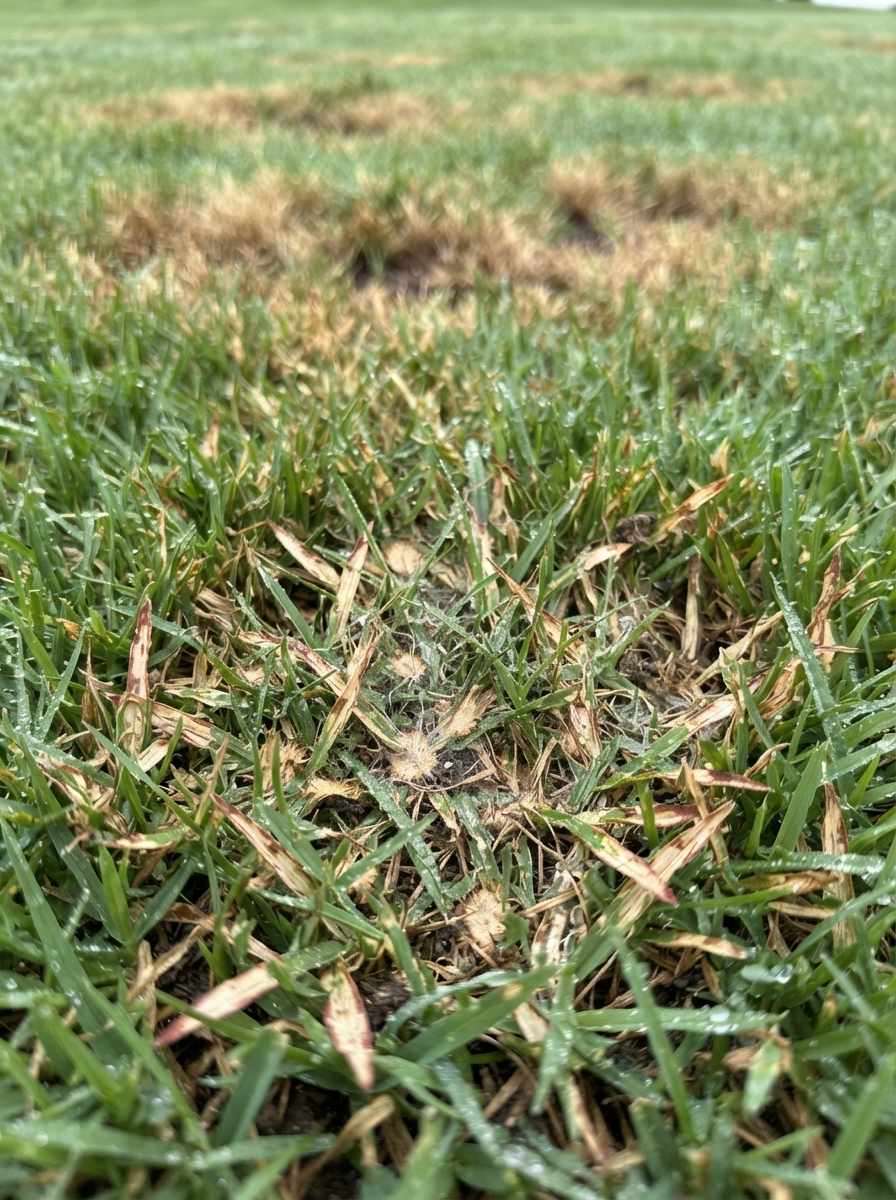
Photo 6 captures a patch of grass with visible inhibitory fungal spores spread across brownish blades in contrast with the surrounding green turf.
The close-up focus reveals the mushroom-like fungal growth structure, which signals active infection.
This visual serves as a practical reminder that detailed observation is critical before choosing a fungicide.
Early detection paired with accurate disease identification is essential to avoid wasting resources.
Consider consulting local extension services or lawn health experts if you are unsure about symptoms.
Preventive Lawn Care Practices
Prevention minimizes the need for fungicide applications and supports overall lawn vitality.
Key practices include maintaining proper mowing heights, watering early in the day to allow foliage to dry, and improving soil drainage to avoid fungus-friendly conditions.
Aeration and overseeding also reinforce turf density and reduce disease susceptibility.
Although fungicides are critical tools, these cultural practices create a balanced ecosystem less hospitable to fungal pathogens.
A well-maintained lawn keeps diseases at bay and typically requires fewer chemical interventions.
Regular soil testing helps tailor fertilization schedules, ensuring nutrient availability supports strong growth without excesses that encourage fungi.
Taking these preventive steps forms the groundwork for effective disease management.
Proper Application Techniques for Fungicides

Applying fungicides correctly is paramount for their efficacy and safety.
Overlapping evenly during spray application avoids missed spots or excessive concentrations that damage turf.
Using the right sprayer nozzle and pressure settings ensures droplets distribute uniformly across grass blades.
Photo 3 depicts a person wearing gloves and utilizing a hand-pump sprayer labeled ‘Fungicide Garden Pro 5L’ to treat an outdoor lawn.
The green foliage under a diffuse afternoon light shows a consistent spray mist in transit, highlighting good coverage technique.
This scene illustrates preparation and care required to protect both the lawn and applicator during chemical use.
Following label recommendations precisely, including dilution ratios and timing, prevents resistance buildup in fungi and lowers environmental impact.
Proper application maximizes benefits while minimizing risks.
Choosing the Right Fungicide for Your Lawn
Selecting an appropriate fungicide depends on your lawn grass type, prevailing diseases, and environmental conditions.
Some fungicides are broad-spectrum, suitable for several fungi but may be harsher on grass and beneficial organisms.
Specialized products target specific pathogens more safely but require accurate diagnosis.
Careful consideration of residual activity and safety profiles helps pick products that fit your lawn’s unique characteristics.
Avoiding over-reliance on a single fungicide class reduces the chance of resistance, making integrated disease management more effective.
Consult product reviews, local extension agents, and technical data to match fungicides with your lawn’s needs precisely, ensuring the best results with minimal risks.
Spreader and Sprayer Tools for Effective Coverage

Equipment choice impacts fungicide distribution uniformity, crucial for controlling patchy fungal infections.
Broadcast spreaders disperse granular fungicides evenly across large areas, while pump sprayers excel at applying liquid formulations to targeted zones.
Selecting and calibrating your tool increases product efficiency and labor ease.
Photo 5 presents a green Scotts Pro spreader dispersing fine granular particles across a sunlit lawn.
The close-up view highlights the spreader wheels and the scattering of particulate matter on the trimmed turf beneath clear blue skies.
This imagery conveys the precision and reach attainable with good equipment.
Maintaining spreaders and sprayers clean ensures consistent output and prevents clogs or uneven dosing.
Regular calibration according to the manufacturer and adjusting to wind conditions further reduce waste and runoff.
Environmental Factors Affecting Fungicide Performance
Weather and soil conditions influence fungicide absorption and persistence on your lawn.
Rain shortly after application can wash chemicals away, reducing effectiveness, while dry, windy days may cause drift or incomplete coverage.
Soil pH and organic matter content also impact fungicide bioavailability.
Adjusting your treatment schedule based on forecasts and measuring soil health guides optimal timing and product choice.
Avoiding applications during extreme heat or drought stress promotes turf recovery and fungicide uptake.
Being mindful of environmental constraints while applying fungicides protects beneficial insects and neighboring plants, supporting an overall healthy garden ecosystem.
Restorative Care Post-Fungicide Treatment
Following fungicide treatment, enhancing lawn recovery prevents recurrent infections and supports long-term health.
Reseeding affected patches, aerating compacted soil, and supplementing with appropriate fertilizers stimulate new growth and root development.
Attention to watering practices balances moisture without encouraging fungal proliferation.
Tracking treated areas and adjusting future care plans based on results help maintain resilient turf, reducing the need for frequent chemical use.
Patience during the recovery phase ensures full restoration of the turf canopy and root systems.
Implementing holistic care after fungicide use maximizes your investment and contributes to vibrant, disease-free grass.
Visualizing the Healthy Lawn Lifestyle

A thriving lawn complements your outdoor living space, creating an inviting environment for family and nature alike.
The well-manicured green portrayed in Photo 4 exhibits a cozy backyard at twilight with soft string lights, lush flower beds, and a playful dog, symbolizing a disease-free lawn’s aesthetic and functional value.
This image reinforces the payoff from diligent fungicide use combined with comprehensive lawn care: balanced beauty and resilience.
It illustrates how a healthy lawn enhances your home’s ambiance and recreational potential.
Maintaining such a setting requires consistent effort but rewards with enjoyment and neighborhood pride.
Fungicides serve as essential tools within this broader pursuit of lawn wellness.
Common Mistakes in Fungicide Use

Misapplication of fungicides often stems from failure to identify disease accurately, incorrect dosing, or poor timing.
Overuse can lead to resistance in fungal populations or damage beneficial microflora essential to soil health.
Neglecting protective gear and ignoring label safety precautions risks personal harm.
Relying solely on fungicides without cultural practices fosters dependency and superficial results.
Chemistry alone cannot sustain a healthy lawn if underlying causes like drought stress or improper mowing persist.
Avoid these pitfalls by coupling fungicide use with observation, research, and integrated lawn care strategies to achieve balanced, sustainable results.


Leave a Reply