
Lavender is a beloved garden staple known for its calming scent and beautiful purple hues, but choosing the right companions can truly transform your space.
Discover how 33 unique plants bring color, texture, and vitality when planted alongside lavender, creating vibrant, thriving garden beds you’ll adore.
Why Choose Companion Plants for Lavender
You should think of lavender not only as a solo star but as a versatile partner that benefits from surrounding companions that enhance its growth and showcase its beauty.
Companion plants can add contrasting colors, textures, height variations, and even help with garden health by attracting pollinators or deterring pests.
I find that combining plants with different bloom times and structures creates dynamic garden beds that provide interest throughout the seasons.
I love how companion plants expand lavender’s charm, making any garden look more lush, balanced, and inviting.
1. Fiery Red Hot Pokers

This image shows a vibrant display of lavender nestled alongside striking red hot pokers (Kniphofia).
The tall, torch-like orange flowers offer a bold contrast to lavender’s soft purple tones.
Their vertical form breaks the lavender’s low mound shape, adding impressive height and drama to the garden bed.
You can recreate this pairing in well-draining soil with full sun exposure.
Red hot pokers tolerate heat and dryness just like lavender, making them low-maintenance companions that attract hummingbirds while disrupting the monotony of purples.
2. Delicate Baby’s Breath Filler

Here, we see clusters of pure white baby’s breath (Gypsophila) softening and brightening beds of deep purple lavender.
This combination creates a dreamy, romantic effect with the cloud-like texture of baby’s breath balancing lavender’s spiky flowers.
You should use baby’s breath as a gentle filler plant in the middle or edge of lavender beds where its airy stems can sway in the breeze.
It thrives in similar conditions and helps enlarge the visual impact without competing for attention.
3. Silver Sage’s Elegant Silhouette

This garden scene highlights the cool contrast between lavender and ornamental silver sage.
The luxuriant, frosted silver foliage frames the purple blossoms, amplifying their color vibrancy.
The combination plays beautifully with subtle textures.
You should prune silver sage regularly to keep a neat shape and plant it close to lavender for the reflective leaves to pop.
They thrive in well-drained soils with full sun, creating a chic Mediterranean aesthetic.
4. Bright Lime Euphorbia Boost

Lavender is paired with lime-green Euphorbia here, creating a refreshing color splash.
The round clusters of Euphorbia’s chartreuse flowers stand out amid the lavender’s cool purple, introducing light and vitality.
For a successful pairing, you should plant Euphorbia on lavender’s sunny side to preserve its vibrant color.
Both enjoy dry conditions, making them drought-tolerant bedmates that add visual texture and modern appeal.
5. Blue Globe Thistles and Lavender

This image shows dramatic globe thistles (Echinops) dotted among dense lavender.
The spherical steel-blue flowers echo lavender’s hue but with a distinct spiky texture and bold form.
You can add globe thistles for sculptural interest and diversity in flower shape.
They are hardy, sun-loving, and deer-resistant, complementing lavender’s rugged character and attracting pollinators.
6. Sunny Marigolds Bright and Cheerful

Lavender rows share space with radiant orange and yellow marigolds here, creating a joyful palette.
The compact marigold blooms contrast with lavender’s spikes and introduce warmth to the garden’s cool tones.
Plant marigolds alongside lavender in raised beds or borders.
Their pest-repellent properties additionally protect lavender from harmful insects, making this pairing both pretty and practical.
7. Soft Russian Sage Whisps

Russian sage’s fuzzy blue-grey foliage and delicate spikes appear soft beside robust lavender.
Their similar hues merge while the Russian sage’s airy habit brings softness.
You should plant Russian sage to trail or frame lavender clusters, creating layered textural effects.
Both are drought-tolerant and suited to Mediterranean-style gardens.
8. Magenta Penstemon for Vertical Impact

This garden bed features standing spikes of deep magenta penstemon flowering next to lavender mounds.
The tall, tubular flowers add vertical layers and a splash of rich pink that enlivens the purple.
You can use penstemon to build height and contrast in your lavender beds.
They thrive in sun and well-draining soil and attract hummingbirds for added wildlife interest.
9. Classic Tall Alliums Bloom

Towering above lush lavender are large ornamental alliums with perfect purple spheres.
Their structural precision contrasts with lavender’s fuzzy flower spikes, while sharing harmonious color.
Plant alliums in early spring bulbs among lavender to extend seasonal interest.
They require sunny spots and well-drained soil, and their presence deters pests to benefit companion plants.
10. Romantic Pink and Yellow Roses

Lavender makes a dreamy foreground to pink and soft yellow roses climbing a trellis.
The mix creates a classic cottage garden look with pastel blooms and lush foliage.
You should integrate climbing or bush roses near lavender in sun-soaked borders.
Combining longer-lived shrubs with perennials brings structure, scent, and color variety.
11. Energetic Black-Eyed Susans

Bright yellow Black-eyed Susans rise alongside lavender in a lively, pollinator-friendly bed.
Their cheerful blooms and dark centers add striking complement and height.
Pair Black-eyed Susans with lavender to attract butterflies and bees.
Both thrive in sunny spots and are drought resistant, making this a sustainable combo for wildlife gardens.
12. Evergreen Bay Laurel Accent

Robust glossy leaves of a bay laurel shrub give bold greenery next to low lavender, creating solid form contrast and depth in the garden.
Plant bay laurel near lavender to add year-round texture and some architectural interest.
It also can be harvested fresh for cooking, adding edible value.
13. Spiky Blue Eryngium Thistles

Distinct spiny, silvery-blue eryngium thistles tower amid lavender clusters, adding unique color and structural contrast with their globe-like flower heads.
You can use eryngium to break monotony and create focal points.
Their tough nature complements lavender’s drought tolerance for a garden that resists heat and pests.
14. Bold Red Salvia

Brilliant red salvia stalks add punch to a lavender border, providing vivid color with an elongated flower spike texture akin to lavender’s.
You should plant red salvia to attract hummingbirds and add energy to more muted lavender beds.
Prune after flowering to encourage repeat bloom and keep plants tidy.
15. Textural Lamb’s Ear Ground Cover

Soft, fuzzy silver lamb’s ear spreads as an elegant ground cover beside lavender, extending the silver-grey palette and soothing texture contrast.
You should use lamb’s ear for soil-hugging, silvery foliage that highlights lavender’s flowers.
Both thrive in dry, sunny spots and are deer-resistant additions.
16. Long-Lived Lemon Balm

Bright green, soft-edged lemon balm leaves grow beside lavender spikes, offering fresh citrus aroma with a leafy texture that complements purple flowers.
Interplant lemon balm with lavender in sunny spots where you want pollinators attracted.
Keep lemon balm in check as it can spread aggressively by regular pruning.
17. Eye-Catching Orange Blanket Flower

Fiery orange and red gaillardia blanket flowers bring energetic warmth and vibrant daisy-like blooms alongside lavender’s cool purple tufts.
Plant blanket flowers where you want bright summer and fall color.
They tolerate dry, sunny conditions like lavender and provide long-lasting flower display.
18. Textured Blue Fescue Grass

Neat clumps of cool-toned blue fescue grass form compact mounds beside lavender, heightening the garden’s silvery blue palette and adding fine, spiky texture.
Use blue fescue as a neat edging or in mass plantings near lavender.
It prefers full sun, well-drained soils, and minimal watering , ideal companion conditions.
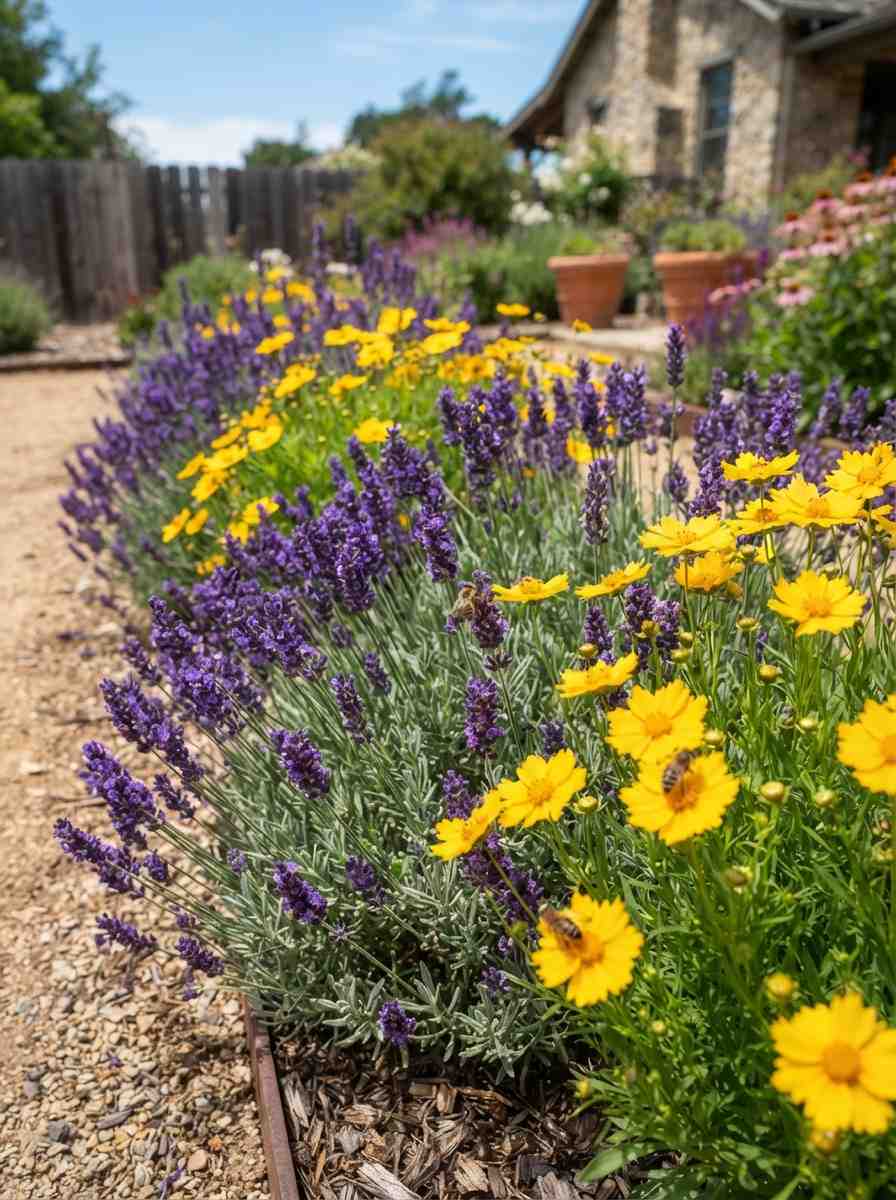
19. Sunny Yellow Coreopsis

Golden-yellow coreopsis blooms cheer alongside waving lavender spikes, their daisy-like flowers brightening the landscape with vivid warmth and light.
Plant coreopsis in borders or garden fronts with lavender to extend summer and early autumn interest.
The low care and heat tolerance make this an excellent drought-friendly partner.
20. Vibrant Purple Geraniums

Deep purple cranesbill geraniums bloom densely beside lavender, layering rich violet tones and rounded petals that contrast with the narrow lavender flower spikes.
You should add perennial geraniums next to lavender to gain longer bloom cycles and toughness.
They thrive in full sun with well-draining soil and help suppress weeds beneath taller plants.
21. Lush Lamb’s Ear in Silver

This focused photo displays soft lamb’s ear leaves quilted in silvery warmth next to lavender’s green-grey stems and flowers, emphasizing texture and color harmony.
Plant lamb’s ear spreading near lavender edges, where their softness invites touch and visual calm.
They enjoy the same conditions: full sun, dry soil, and good air circulation.
22. Trailing Nasturtiums with Lavender

Bright orange and yellow nasturtium flowers spill vibrantly from raised beds beside lavender, their round leaves and profuse blossoms contrasting with upright floral forms.
Use nasturtiums as an edible companion in vegetable or herb gardens with lavender.
Their flowers attract beneficial insects, and leaves add a peppery flavor to salads.
23. Mediterranean Olive Tree Accent

A compact olive tree stands in a sunny corner bordered by purple flowering lavender and other Mediterranean-style plants, emphasizing a drought-tolerant, sun-loving garden style.
You should incorporate olive trees to add height, shade, and architectural interest alongside lavender.
Both thrive in hot, sunny, and well-drained conditions and reinforce a Mediterranean vibe.
24. Fresh Green Oregano Borders

Lush oregano plants border neat rows of lavender, their vibrant green foliage contrasting with muted grey-green lavender stems in this tidy garden bed.
Plant oregano near lavender to create edible, fragrant borders that thrive in sun and dry conditions.
Oregano attracts pollinators and can be harvested throughout the growing season.
25. Pollinator Haven with Scabiosa

Soft lavender and blue scabiosa flowers intermingle with lavender spikes in a buzzing, bee-friendly border full of pastel hues and varied flower shapes.
You should combine scabiosa to extend bloom color and attract pollinators beyond lavender’s peak.
They prefer sunny, well-drained soils and require regular deadheading for long bloom periods.
26. Durable Rosemary and Lavender Pairing

Tall, upright rosemary with shiny evergreen leaves forms a strong, aromatic partner to low, spreading lavender plants, perfect for herb and Mediterranean gardens.
Plant rosemary and lavender side by side for an all-purpose culinary garden that thrives under similar dry, sun-drenched conditions and well-drained soil.
Both are drought-tolerant and attract pollinators.
27. Compact Sage and Lavender Bed

A tidy bed combines compact sage plants with flowering lavender spikes, mixing soft greenish-gray leaves with deep purple flowers for textural depth.
You should plant sage and lavender together where you want low-maintenance, airflow-friendly borders.
Both require good drainage and shed pests with their aromatic oils.
28. Sunshine Yarrow and Lavender Mix

Clusters of yellow yarrow blooms provide a cheery counterpoint to lavender’s lavender spikes, mixing dwarf shrubs with perennial herbaceous plants for layered color.
Yarrow thrives in hot, dry environments alongside lavender, attracting beneficial insects and butterflies.
You can plant yarrow in raised beds or as edging to create textural interest.
29. Sedum and Lavender Harmony

The image shows dense, round sedum clusters next to lavender beds, their succulent leaves and soft blooms contrasting textures and supporting drought tolerance.
Plant sedum near lavender for additional succulent greenery and late-season blooms.
Both require minimal water, making this duo perfect for rock gardens or sunny slopes.
30. Colorful Yarrow and Lavender Path

Bright orange and yellow yarrow flower heads bloom alongside abundant lavender in a sunny garden path setting, offering bold color and an appealing scent profile.
Plant yarrow with lavender where you want butterflies and a summery garden look.
Their shared preference for dry, sunny conditions creates a harmonious, sustainable landscape.
31. Fragrant Bees Around Bee Balm

Soft purple bee balm blooms sway near lavender shrubs, buzzing with pollinators.
The vertical flower spikes contrast beautifully with lavender’s own form.
Use bee balm in sunny spots adjacent to lavender for enhanced pollinator diversity and heightened fragrance.
Be aware bee balm prefers moist soil slightly more than lavender but tolerates dry periods once established.
32. Calming Pink and Purple Hues

A garden path edged by blooming lavender alongside soft pink and purple flowers creates a serene, pastel-colored space immersive in tranquil charm.
Combine pastel pink flowers such as phlox or geraniums with lavender for a calming garden feel.
Both thrive in sunny, well-drained areas and provide contrast in petal shape and plant height.
33. Mulched Aromatic Herb Bed

This image captures a lush bed featuring lavender alongside different herbs beneath a fresh mulch layer, enriching soil health and moisture retention.
You should mulch your lavender and companion plants to suppress weeds, conserve water, and enhance soil quality.
Choose organic mulch and refresh it annually for best results.

Leave a Reply