
Outdoor kitchens have evolved from simple grill stations to fully integrated extensions of your home, blending style, functionality, and comfort.
Discover design trends that elevate your patio experience, from innovative materials to clever layouts that accommodate everything from casual meals to year-round entertaining.
Mastering Outdoor Kitchen Design for Every Space
Creating an outdoor kitchen involves balancing aesthetics, practicality, and durability while responding to varying climates and lifestyles.
The best designs solve challenges like weather exposure, limited space, and integrating nature without sacrificing kitchen performance or style.
Before choosing a concept, consider your available outdoor area, budget, climate conditions, and how you’ll use your kitchen,whether for intimate dinners, family gatherings, or entertaining large groups.
Understanding these will help you select materials, appliances, and layouts that perform well and stay beautiful season after season.
1. Seamless Indoor-Outdoor Flow with Glass Walls

Creating year-round usability starts with blurring boundaries between indoor and outdoor spaces.
Incorporating expansive metal-framed glass walls and bi-fold doors allows you to open or close the outdoor kitchen as weather dictates, ensuring comfort and connectivity.
The dual-tone cabinetry pairs warmth with modernity, while the concrete waterfall island doubles as a social hub, inviting guests to gather.
Large, light gray pavers extend the living area naturally, and densely planted privacy hedges frame the space, combining visual openness with seclusion.
To replicate this functional openness, choose durable, weather-resistant materials and consider integrating large operable glass panels to capitalize on your outdoor views and airflow.
2. Vertical Herb Gardens for Small Spaces

Maximize limited outdoor area by integrating vertical herb gardens into your kitchen walls.
Using pocket planters or modular felt systems encourages upward growth, providing fresh culinary herbs right at your fingertips without sacrificing floor space.
This method also enhances the ambiance with rich greenery, optimizing light and airflow around the kitchen.
Mounted on a vertical wood panel under a pergola, the herb garden thrives with gentle filtered light.
For practical success, select hardy, low-maintenance herbs like rosemary, thyme, oregano, and mint, and ensure irrigation through drip systems or manual misting.
This approach helps urban or compact patios seamlessly blend gardening with cooking.
3. Rustic Wood-Fired Pizza Ovens for Authentic Flavor

Incorporating a wood-fired pizza oven elevates outdoor cooking by bringing traditional methods into contemporary design.
Positioning the oven on a reclaimed wood base with open firewood storage maximizes usability and rustic appeal.
Pairing with a dark stone or concrete countertop and a modern black sink offers a balance between heritage and function.
Flagstone flooring enhances the organic setting and helps drainage, while overhead string lights extend usability into evening hours.
When installing, ensure proper clearances for safety, and use fire-resistant materials around the oven.
This blend of textures and function invites casual yet sophisticated entertaining.
4. Stone and Wood Blend for Timeless Durability

Combining natural stacked stone with warm wood elements provides a robust yet inviting outdoor kitchen.
A large L-shaped concrete countertop accommodates multiple cooking and prep zones, while woven seating encourages social interaction.
Incorporating high-end stainless steel appliances alongside built-in entertainment such as weatherproof TVs integrates outdoor cooking with hospitality.
The overhead wooden pergola with recessed lighting and a fan addresses climate control, allowing year-round comfort.
To replicate this, source quality stone that withstands freeze-thaw cycles and use sealants to prevent staining.
Thoughtful lighting and airflow design keep your outdoor kitchen functional in diverse weather conditions.
5. Desert-Ready Design with Xeriscape Landscaping

For arid climates, creating an efficient, low-maintenance kitchen hinges on drought-tolerant landscaping and durable materials.
Using stacked stone veneer and textured stamped concrete in warm earth tones blends your kitchen seamlessly into desert surroundings.
Installing multiple types of grills like stainless steel and ceramic kamado diversifies cooking options.
Xeriscape plants such as agave, barrel cactus, yucca, and desert grasses conserve water and provide natural screening.
Gravelly soil ensures excellent drainage and reduces irrigation needs.
Prioritize shade through simple pergolas and use materials that minimize heat absorption to keep the kitchen comfortable during hot seasons.
6. Integrated Technology Enhances Outdoor Entertaining

Designing an outdoor kitchen with built-in technology like LED strip lighting and wall-mounted TVs elevates both usability and ambiance.
U-shaped layouts with stacked stone bases and polished concrete counters maximize prep and seating without overcrowding.
Using LED lighting beneath countertop edges improves nighttime visibility and creates mood lighting that’s both functional and stylish.
Consider incorporating energy-efficient fixtures and weatherproof materials to extend the life span of electronics outside.
Strategic placement of lighting and entertainment zones ensures everyone stays engaged, breaking traditional separations between cooking and social spaces.
7. Rooftop Kitchens Maximize Urban Outdoor Living

Rooftop patios require compact and efficient kitchen designs due to limited space and exposure.
A linear layout featuring stainless steel grills, sinks, and mini-fridges optimizes workflow while preserving open areas for seating or movement.
Wood plank flooring adds warmth against urban backdrops, and glass railings maintain unobstructed city views.
String lights soften harsh roofline edges, creating a cozy atmosphere after sunset.
To succeed, choose corrosion-resistant materials and ensure proper drainage and ventilation.
Adding potted herbs and ornamental grasses introduces calming green accents that buffer the urban environment and freshen the air.
8. Greenhouse Integration for Year-Round Fresh Herbs

A greenhouse extension adjacent to the outdoor kitchen creates an all-season source of fresh herbs and plants.
Installing weathered wood cabinetry and mixing it with rustic elements such as brick and copper adds warmth and character.
Hanging copper pots serves both functional and decorative purposes while complementing natural tones.
Light gray stone and gravel flooring balance aesthetics and drainage.
Incorporating flowering climbers like white roses softens hard surfaces and enhances privacy.
When including greenhouses, ensure adequate ventilation and consider automated watering to maintain plants with minimal effort, making fresh produce accessible regardless of season.
9. Multi-Use Furniture Maximizes Small Patio Functionality

Incorporate benches with cushions and throws alongside minimalist cooking stations to create cozy dining zones, perfect for compact outdoor kitchens.
Open shelving allows easy access to cooking essentials while maintaining clean lines.
String lights strung overhead provide warm ambiance without cluttering sightlines.
Selecting natural materials such as wood helps blend cooking and dining spaces with the surrounding setting.
Mixing textures like sheepskin throws and potted ferns adds depth and softness.
To extend use beyond daytime, layer lighting sources including overhead and task lighting for flexibility and comfort.
10. Sustainable Energy Solutions for Efficient Outdoor Kitchens

Incorporating solar panels into pergola roofs supports eco-friendly energy use while powering lighting and appliances.
Combining this with compact L-shaped kitchens featuring under-counter refrigerators and built-in grills helps optimize small spaces.
Rustic wood panels juxtaposed with dark textured cladding create modern contrast and durability.
To maximize solar gain, angle panels correctly and avoid shading from nearby trees or structures.
Routinely maintain plants lining counters to maintain airflow and prevent overgrowth.
This sustainable setup solves common energy concerns while keeping outdoor kitchens stylish and functional.
11. Coastal Inspiration with Weathered Woods and Nautical Colors

Blend functionality with relaxed coastal aesthetics by using weathered gray wood cabinetry paired with durable stone countertops.
Incorporate navy and white striped cushions and blue woven chairs to reinforce the seaside theme.
Combining stone pavers and wooden decking engages both texture and color for a harmonious floor design.
Partial pergola shading with string lights allows you to prolong outdoor cooking and dining into pleasant evenings.
Use Mediterranean herbs such as rosemary and lavender in pots to subtly scent the patio and thrive in salty coastal air.
This approach balances durability and comfort in beachside outdoor kitchens.
12. Farmhouse Elements with Wood-Fired Ovens

Utilizing a farmhouse-style apron-front sink with matte black fixtures introduces an enduring rustic charm to outdoor kitchens.
Positioning a brick wood-fired pizza oven with firewood storage maximizes function while enhancing character.
Irregular flagstone flooring complements natural material choices and aids water drainage.
Terracotta and ceramic pots for herbs provide traditional cohesive accents, while string lights suspended under pergola beams extend cooking and social hours.
Covering the kitchen partially protects equipment without sacrificing airflow.
Selecting weather-resistant cabinetry materials helps maintain the authentic look over time.
13. Space-Saving Urban Balcony Kitchens

Small balconies demand clever design solutions such as fold-down tables and tuck-away stools that optimize usability without crowding.
Combining stainless steel grilling stations with storage and small sinks caters to compact cooking needs.
Gray composite decking and glass railings maintain an open, modern feeling.
Adding vibrant potted plants like Boston fern or dwarf citrus trees injects freshness and breaks up hard surfaces.
For best results, use foldable or multi-functional furniture to adapt your outdoor kitchen on demand.
Consistent maintenance of plants and surfaces ensures longevity under urban pollution and weather.
14. Concealed Outdoor Kitchens with Sliding Barn Doors

Integrating outdoor kitchens behind sliding barn-style doors allows flexible concealment, protecting appliances when not in use and preserving visual harmony.
Recessed setups with vaulted wooden ceilings enhance the sense of space while blending rustic and modern elements.
Using neutral tones for cabinetry and stone flooring anchors the design, encouraging relaxation.
Soft string lighting adds warmth without overwhelming the patio aesthetic.
Including hardy potted herbs creates functional greenery and encourages fresh flavor in meals.
This approach solves common storage challenges and makes outdoor kitchens adaptable for multiple occasions or seasons.
15. Dark Concrete Counters with Matte Black Cabinets

Dark concrete countertops contrasted with matte black cabinetry provide a contemporary, industrial-inspired workspace that’s both durable and sleek.
Integrating stainless steel grills and modern gooseneck faucets boosts practicality for precise cooking and cleaning.
Hanging string lights suspended from wooden pergolas introduce inviting evening illumination to outdoor spaces.
Using stamped concrete flooring extends the textured aesthetic and withstands outdoor conditions well.
Incorporate small potted culinary herbs nearby for easy access.
Maintain counter cleanliness to prevent staining and consider sealing concrete surfaces regularly for durability.
16. Emerald Green Cabinets with Marble Accents

Bold colored cabinetry like emerald green paired with light marble or quartz countertops introduces personality while retaining weather resistance.
A white marble backsplash with gray veining adds elegant contrast behind grills, protecting walls and enhancing aesthetics.
Large neutral-toned stone tile flooring offers durability and understated style.
Complement wood pergolas with woven rattan dining chairs for texture diversity.
Ensuring cabinets are finished with outdoor-grade coatings prevents fading and moisture damage.
Position potted herbs near the prep area for freshness.
This combination balances glamour with practicality in outdoor culinary environments.
17. Mid-Century Modern with Patterned Tile Backsplashes

Incorporate geometric tile backsplashes in muted earth tones to inject visual interest and define the cooking zone.
Slatted natural wood cabinetry adds texture and mid-century modern charm while concrete countertops provide a sleek but resilient surface.
Pendant lighting focuses illumination on workspaces, enhancing safety and ambiance.
Using easy-care plants such as snake plants and ferns softens rigid lines and improves air quality.
Floor selection of smooth concrete resists outdoor wear and is easy to clean.
Balance aesthetic detail with durable finishes for a kitchen that performs under weather stress and style demands.
18. Integrating Mature Trees Into Kitchen Design

Preserving existing mature trees within outdoor kitchens ensures a unique connection to nature and natural shading.
Building islands around tree trunks maximizes space without removing valuable greenery.
Polished concrete countertops paired with wood and industrial-style stools deliver a modern, cohesive look.
Selecting open railings keeps sightlines clear and blends the kitchen into the forested backdrop.
Incorporate covered roofs that allow light while protecting from rain.
This approach requires attention to root protection and accommodating growth but results in a highly personalized and sustainable outdoor living space.
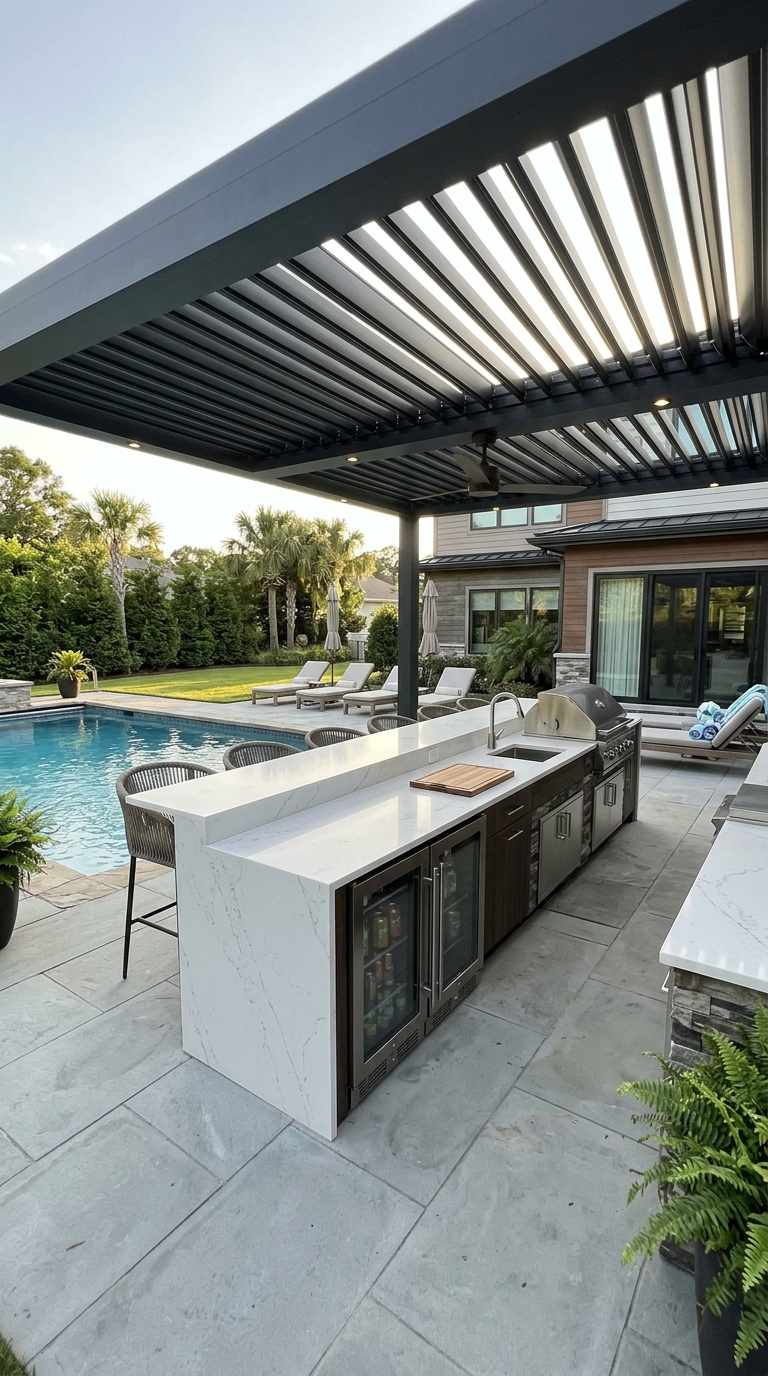
19. Poolside Kitchens with Adjustable Pergolas

Installing a louvered pergola with adjustable slats provides precise control over sunlight and ventilation, essential for poolside outdoor kitchens.
Marble countertops exude luxury and withstand moisture while integrating stainless steel appliances for extensive cooking options.
Light gray stone tiles coordinate with sleek kitchen finishes and are slip-resistant, enhancing safety.
Position lounge furniture and tropical plants like palms to create a resort vibe.
Combining leisure spaces with cooking zones invites continuous social engagement.
Maintenance includes regular cleaning of aluminum pergolas and sealing stone surfaces to prevent staining.
20. Stone-Focused Kitchens with Integrated Seating

Using natural stone for kitchen bases and surrounding seating zones creates a timeless, cohesive look that meshes durability with earthy texture.
Incorporating fire features like stone-filled fire pits adds warmth and extends outdoor usability into cooler seasons.
Wooden pergolas with climbing vines promote vertical greenery and soften the structure’s edges.
Arrange cushioned benches for comfort and to encourage intimacy.
Selecting weather-rated cushions and furniture reduces upkeep.
To replicate this, allocate space for both cooking and social zones while using consistent materials to unite disparate functions of the patio.
21. Mediterranean Style with Mosaic Pizza Ovens

A mosaic-tiled dome pizza oven perched on beige stucco counters ties Mediterranean charm with functionality.
Using terracotta tiles and pots enrich the warm palette and provide heat resistance.
Incorporating climbing bougainvillea adds lush color and dappled shade, blending hardscape with soft planting.
Large wooden dining tables with metal-framed chairs facilitate alfresco dining experiences.
Ensure oven placement allows safe firewood storage nearby and protects wood from moisture.
This style encourages combining cooking features with abundant greenery to enhance atmosphere.
22. Water Features Create Calming Outdoor Kitchens

Integrating water elements like koi ponds adjacent to cooking zones introduces soothing sensory dimensions seldom seen in outdoor kitchens.
Using bamboo-slatted pergolas filters sunlight naturally and creates a dappled illumination ideal for hot climates.
Selecting plants like Fargesia bamboo, ferns, and water lilies enhances the peaceful, garden-like atmosphere.
Ensure waterproofing around cooking fixtures near water and plan for mosquito control.
Positioning natural stepping stones adds an organic, tactile element.
This strategy solves spatial constraints by merging leisure and cooking spaces, maximizing the patio’s sensory potential.
23. Industrial Meets Natural with Concrete and Wood

Blending industrial materials such as thick concrete countertops with warm vertical wood slats creates a balanced and tactile kitchen island.
Extending cooking counters to integrated wooden bar seating zones maximizes social interaction without compromising workspace.
Horizontal pergola slats filter light gently, maintaining openness and shade.
Selecting ornamental grasses and young maples around patios softens the hard edges with natural textures.
Achieving a cohesive palette that balances warm and cool tones maintains inviting energy in the space.
When replicating this design, seal concrete surfaces properly and use weather-resistant wood finishes.
24. Natural Stone and Water for Tranquil Kitchens

Using stacked stone structures evocative of grotto formations integrates outdoor kitchens into woodland settings, creating an immersive natural atmosphere.
Incorporating flowing waterfalls enhances sensory appeal, provides gentle cooling, and drowns ambient noise.
Surrounding planting with ferns, hostas, mosses, and ivy softens rugged stone surfaces and blends the kitchen with its environment.
Choosing flagstone patios improves drainage and sitting comfort.
Rustic bar stools maintain a cohesive natural aesthetic.
This design answers challenges of maintaining functional outdoor kitchens while fostering serene retreats that harmonize with garden landscapes.

Leave a Reply