
Tackling outdoor garbage storage doesn’t have to mean sacrificing curb appeal or functionality.
With smart designs, you can keep bins neatly tucked away, protect them from the elements and wildlife, and even incorporate greenery to harmonize with your outdoor space.
Explore practical ideas that bring tidy, durable, and attractive waste storage solutions to your yard or driveway.
Why Smart Garbage Storage Matters Outdoors
Proper outdoor garbage storage keeps your property tidy, avoids unpleasant odors, and deters animals or pests from rummaging through trash.
It also prevents bins from becoming eyesores that detract from your home’s aesthetic and curb appeal.
Before choosing a storage solution, consider the size of your bins, available space, local climate factors like rain or heat, and whether you want the storage to blend with your landscaping, match your home’s architecture, or stand out as a design statement.
1. Garbage Storage with a Green Roof for Dual Functionality

Incorporating a rooftop garden on top of your garbage enclosure brilliantly combines waste concealment with added greenery.
This design uses horizontal wooden slats for ventilation and a sleek metal frame for durability, enabling airflow which reduces odors and moisture buildup.
The lush rooftop planted with perennials like Echinacea and Rudbeckia not only improves aesthetics but also supports local pollinators.
The side drawer for birdseed cleverly adds wildlife engagement without compromising bin access.
When selecting plants, choose hardy perennials suited for your climate to minimize maintenance.
This integration transforms a necessary eyesore into a beneficial garden feature.
2. Desert-Inspired Vertical Slat Enclosure for Hot Climates

Using vertical wooden slats set in a metal frame creates a strong, ventilated enclosure ideal for arid, hot environments.
The slender, evenly spaced slats allow for effective airflow, crucial in dry climates to prevent overheating or trapped odors.
Placing the unit on a concrete slab stabilizes it and simplifies cleaning.
Surrounding the structure with native desert plants like barrel cacti and agave harmonizes the design with its environment while minimizing water use.
I’ve seen that choosing heat-tolerant woods or composites avoids cracking and warping under intense sun, extending the enclosure’s lifespan.
3. Modern Frosted Glass and Metal Cube for Privacy and Light

This minimalistic cube-shaped enclosure uses frosted tempered glass panels combined with a black metal frame to hide garbage bins completely while allowing natural light diffusion.
Integrated vertical LED lighting enhances nighttime visibility and adds a contemporary touch that boosts curb appeal.
Durable, weather-resistant materials like metal and tempered glass protect bins while also being easy to clean and maintain.
Magnetic or latch door closures ensure waste stays secure.
For urban or suburban settings craving a sleek, polished look, this is a functional and hygienic option that also conceals odor effectively.
4. Composite Material Cabinet on Gravel for Clean and Simple Storage

Utilizing weather-resistant composite material for an outdoor garbage cabinet offers a low-maintenance, animal-proof solution that resists warping and fading.
The cabinet’s clean white finish and simple vertical handles reduce visual clutter and create a tidy appearance.
Installing the unit on a gravel base rather than soil improves drainage and prevents mud accumulation, essential for maintaining cleanliness around the bins.
I’ve learned that combining gravel with landscaping fabric beneath inhibits weed growth while maintaining airflow and ground stability.
This straightforward design suits suburban homes wanting an easy yet elegant bin concealment method.
5. Multipurpose Planter-Topped Gray Slatted Bin Storage

Combining garbage concealment with greenery, this storage box uses horizontal slats for air circulation and a sturdy lid doubling as a planter brimming with trailing ivy and ornamental grasses.
The plants soften the container’s clean lines and boost your yard’s natural vibe.
Incorporating cascading plants that tolerate part shade ensures year-round greenery that doesn’t require constant trimming.
I often suggest considering irrigation availability to sustain planter health without adding maintenance hassles.
The placement near pine trees and minimalistic hardscaping makes this a subtle yet effective addition to a modern yard.
6. Rustic Wood and Corrugated Metal Shed for Desert Durability

Using weathered wood framing paired with corrugated metal panels delivers a rugged, low-maintenance outdoor garbage shed suitable for harsh desert climates.
The flat metal roof efficiently shields bins from sun and sporadic rain, while the compact design minimizes environmental footprint.
Materials like corrugated metal resist sun damage and are easy to clean, and the enclosed shed protects against animal intrusion.
I’ve found rust-prone metals can be beneficial in desert environments where rugged texture blends naturally, but ensure proper sealing prevents debris build-up.
This approach balances practicality with integration into sandy, sparse landscapes.
7. Compact Urban Alley Enclosure with Composite Wood Slats

Fitting garbage storage into tight urban spaces requires maximizing the footprint while keeping bins hidden and accessible.
Vertical composite wood slats paired with a strong metal frame create a durable enclosure that withstands wear and weather-related stress.
The use of recycled plastic or composite wood is especially smart where moisture and vandalism risks are higher.
On an aged concrete base, the enclosure benefits from stability and easy cleaning despite sparse landscaping.
I recommend positioning storage in alleys or side yards where curb appeal isn’t a priority but orderliness still is.
8. Chevron-Patterned Wooden Bin Enclosure for Ventilation and Style

A wood bin enclosure with a chevron pattern offers a modern twist while providing effective airflow through the diagonal slat arrangement.
Selecting durable wood species like cedar or redwood resists weathering and insect damage, ensuring longevity.
Securing access with a simple latch makes the enclosure functional and easy to use, while positioning amid dense garden foliage improves privacy and helps the structure blend with natural surroundings.
In my experience, attention to wood grain direction and spacing in the chevron pattern also helps shed rainwater quickly, reducing moisture exposure.
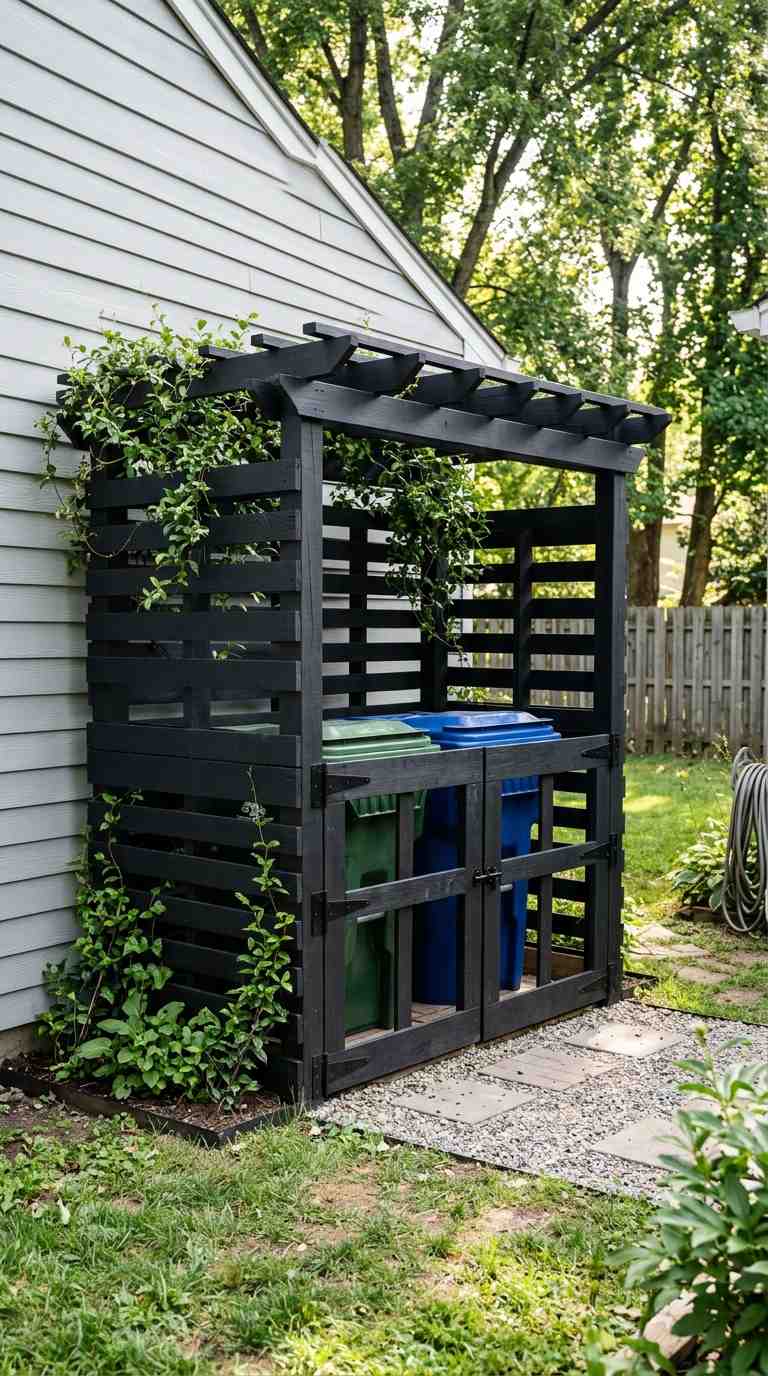
9. Pergola-Topped Slatted Wooden Enclosure with Climbing Plants

Integrating a pergola-style top with cross beams on a horizontal slatted bin enclosure encourages climbing plants like honeysuckle or jasmine, which visually soften the structure and provide natural ventilation.
The combination of spacing between slats and plant coverage reduces visual clutter without compromising airflow.
Using gravel underfoot supports drainage and curbs mud accumulation.
Including pavers for access paths adds stability and ease of movement.
This technique enhances the enclosure’s aesthetic appeal while dampening odors and deterring pests, especially useful in green, shaded backyards.
10. Built-In Stone Bin Storage with Wooden Hinged Lids

Embedding garbage bins within natural stone compartments topped with wooden lids creates a permanent and elegant outdoor storage solution.
Stone provides durability and weather resistance, while wooden lids bring warmth and ease of access.
Attaching heavy-duty metal hinges and latches adds security and functionality.
The seamless integration with stone-paved courtyards and surrounding greenery results in an upscale but practical setup.
I suggest selecting rot-resistant woods and periodically treating lids to maintain longevity and prevent water damage.
11. Lockable Metal Cabinet with Ventilation for Secure Storage

Metal cabinets with front ventilation slats offer secure, tamper-resistant outdoor garbage storage ideal for communal or urban settings.
A padlock ensures bins are protected from animals, unauthorized access, and wind scattering debris.
Painting the metal surface, such as navy blue, helps protect against rust and improves visual integration with surroundings.
Positioning the cabinet against brick walls maximizes structural support.
I recommend choosing powder-coated steel for enhanced durability and confirming door ventilation to maintain airflow, which reduces odor buildup inside.
12. Hillside Concrete Bunker with Sliding Steel Door

Embedding a garbage enclosure into a hillside using raw concrete creates a discreet, low-visibility storage solution that naturally insulates bins from weather extremes.
A steel sliding barn door with matte black finish adds industrial charm, functionality, and protection from wildlife.
Surrounding the structure with dense vegetation like ferns and English ivy softens the edges and helps it blend with the landscape.
My experience shows that sloping terrain and organic mulch help with runoff management and reduce erosion risks, ensuring a stable, tidy bin area that stays hidden but accessible.
13. Brick-Walled Arched Wooden Doors for Classic Concealment

Integrating garbage storage behind arched wooden doors set into a thick brick wall offers a traditional, durable solution that conceals bins effectively.
Black wrought iron hardware enhances the rustic style and provides sturdy access points.
The surrounding moss and climbing ivy add softness to the hard masonry, improving integration with garden pathways.
Cobblestone and gravel bases around the structure facilitate drainage and keep the area mud-free.
I’ve found that maintaining the wood’s finish with weatherproof sealants prolongs service life and keeps doors smoothly functioning.
14. Vertical Succulent Garden Concealing Roof-Top Trash Unit

Disguising a rooftop garbage cabinet with a dense vertical garden of succulents creates a space-saving, odor-reducing, and visually appealing solution for urban environments.
Succulents like Echeveria and Sedum thrive in limited soil and require minimal watering, making them ideal for this application.
Glass or acrylic panels support the plants while obscuring the bin interiors.
Surrounding wood decking and gravel keep the space neat and organized.
Implementing drip irrigation or rainwater catchment can maintain plants with minimal effort.
In my rooftop setups, vertical planting drastically improves air quality around bins and reduces unwanted pests.
15. Under-Deck Hidden Bin Storage with Hinged Access

Building a hidden bin compartment flush with composite wood decking saves yard space and keeps the area visually clean.
The hinged lid opens upwards, offering convenient access to two separate bins for waste and recycling.
Composite decking ensures weather resistance and color uniformity with surrounding outdoor features, which is vital for seamless integration.
Position this solution near outdoor kitchens or patios to minimize trash handling distance.
Proper sealing around the compartment edges prevents water ingress, a key detail I’ve noted to avoid rot or mold inside adjacent decking layers.
16. Wooden Storage Shed with Metal Roof for Forest Settings

A compact shed made with vertical wooden panels and a sloped metal roof provides sturdy, all-weather protection for garbage bins in forested or rainy climates.
Ventilation slats near the roofline promote airflow that keeps odors and moisture in check.
Sitting on a stone foundation and bordered by gravel paths ensures dry, firm footing even during wet seasons.
Using natural wood trim contrasts with dark paneling, creating a balance between blending in and standing out.
I’ve found that tight-latching black metal hardware is critical for preventing animal access while facilitating easy bin removal.
17. Modern Metal and Wood Roller Shutter Enclosure

Incorporating a roller shutter door into a compact metal and wooden outdoor enclosure offers secure, weather-resistant garbage storage for urban residential buildings.
The horizontal wooden planks stained warm brown contrast attractively with the black metal frame.
Short bollards positioned in front guard against accidental vehicle damage.
The roller shutter provides quick and space-efficient access compared to traditional swinging doors.
In situations where space is limited, this design is highly functional, and maintaining the shutter’s track free of debris ensures smooth operation and longevity.
18. Recessed Stainless Steel Driveway Bin Storage

Concealing garbage bins beneath ground level with a stainless steel, flush driveway storage unit economizes space and hides unsightly trash.
A keypad lock offers controlled access, enhancing security and preventing animal interference.
Embedding the unit within concrete slabs ensures a seamless hardscape appearance and durability.
The unit’s narrow frame prevents trip hazards and maintains a clean pavement line.
For proper function and odor control, regular cleaning of the unit’s interior and ventilation is essential, alongside ensuring the access panel’s weather seals remain intact.
19. Weather-Resistant Resin Wicker Bin with Coastal Vibes

Using a resin wicker storage bin combines outdoor durability with a stylish texture that complements coastal decks or patios.
The hinged lid and lockable double doors secure bins from wildlife and wind, while maintaining neatness.
The natural wood decking and terracotta pots with agave and ornamental grasses tie the bin into the surrounding environment, preventing it from feeling like an eyesore.
I’ve observed that choosing UV-stabilized resin wicker eliminates fading and brittleness caused by sun exposure, extending the bin’s attractive lifespan.
20. White Horizontal Slat Enclosure Matching House Exterior

Building a garbage enclosure with white wooden slats harmonizes the structure with a farmhouse’s board and batten siding, creating a unified, unobtrusive look.
The rectangular shape provides just enough space for standard bins without excess bulk.
Placing the unit on decorative stones enhances drainage and cleanliness, reducing mud tracking.
Surrounding hostas and daylilies soften the base and add subtle interest.
Color matching storage to house exteriors is a highly effective technique to reduce visual disruption, especially in open yard spaces where bins can otherwise dominate.
21. Frosted Polycarbonate Shed for Light Diffusion and Privacy

Frosted corrugated polycarbonate panels paired with a natural wood frame yield a compact garbage storage shed that affords privacy while allowing soft daylight inside.
This material choice protects bins from rain and animals without appearing bulky.
Installing the shed on gravel provides drainage and stability, minimizing mud and moisture issues.
Black metal hinges and simple latches offer reliable closures.
For woodland or shaded yards, frosted panels also reduce moss or algae growth compared to fully transparent materials, lowering maintenance demands.
22. Vertical Slat Fence Enclosure for Moist, Forested Areas

A vertical slat fence of dark-stained wood or composite creates a ventilated garbage storage area suitable for rainy, forested environments.
The design balances concealment with airflow, crucial for preventing trapped moisture and lingering odors under damp conditions.
A concrete slab base ensures stability and protects bins from ground moisture and mud.
The slats’ partial visibility facilitates monitoring contents without fully exposing them, aiding in pest control.
This approach integrates well with natural exterior finishes and dense greenery typical of Pacific Northwest climates.
23. Minimalist Concrete Bin Storage Blending with Landscape

Using smooth gray concrete with three vertical handle-less doors creates a minimalist garbage enclosure that elevates outdoor waste management with durable, weather-resistant construction.
The seamless integration alongside a natural wood privacy fence balances warm and cool tones in the garden.
Light-colored concrete pathways combined with dark river rocks enhance drainage around the unit and keep the area clean.
Ornamental grasses and shrubs add texture without distracting from the enclosure’s sleek lines.
This design suits homeowners seeking a permanent, low-maintenance solution that harmonizes with contemporary landscaping.
24. Artistic Metal Enclosure with Geometric Cutouts in Urban Alleys

Metal enclosures with abstract cutout panels combine security with artistic flair, transforming utilitarian garbage storage into a neighborhood design feature.
Powder-coated steel enhances durability, while cutouts allow airflow and safe partial visibility to deter misuse.
Warm internal lighting adds safety in dim alleys and highlights the enclosure’s sculptural quality.
The concrete slab base promotes cleanliness and accessibility.
I’ve noticed designs like this boost resident pride and reduce vandalism, making them ideal for shared spaces where both security and style matter.
25. Dark Wood Lattice Upper Panels for Ventilated Unit

Incorporating lattice panels above solid wood lower doors creates ventilation without compromising privacy or concealment of bins.
The rich dark stain resists weathering and visually anchors the unit amidst green shrubs and large deciduous trees.
Fitting the enclosure on a concrete slab prevents moisture damage and levels the surface for easy access.
Such multi-compartment units aid in sorting waste streams efficiently.
Regularly inspecting lattice integrity is important to avoid sagging or splitting in high-moisture climates.
26. Stone-Filled Gabion Walls for Robust Forest Bin Storage

Utilizing gabion cages filled with natural stones provides a highly durable, animal-resistant enclosure that harmonizes with rugged woodland environments.
The heavy stone mass also stabilizes the structure against wind or wildlife interference.
Capping the top edges with wood softens the look and matches cabin architecture.
Ground cover of pine needles and small rocks prevents erosion and blending into the natural forest floor.
This technique offers a secure, low-maintenance solution when harsh weather and wildlife are concerns.
27. Stacked Stone Base with Angled Wooden Lid for Woodland Areas

Constructing a garbage bin enclosure from local stacked stone and an angled wooden lid provides robust protection against wildlife and weather while integrating naturally into a temperate forest setting.
The sloped lid promotes water runoff, helping to keep contents dry.
Heavy iron hardware secures the lid and aids in access.
Placement on damp soil and moss requires durable materials resistant to decay.
When replicating this design, selecting stones local to your region reduces transport costs and ensures material compatibility with the environment.
Leave a Reply