
Understanding how long quinclorac takes to control tough grassy weeds like crabgrass is crucial for effective lawn care.
This comprehensive guide dives into the timelines, application methods, and visual indicators to help you confidently manage your lawn with quinclorac.
Introducing Quinclorac and Its Purpose
Quinclorac is a selective herbicide widely used for controlling difficult grassy weeds such as crabgrass in lawns.
Unlike broad-spectrum herbicides, quinclorac targets specific weeds without harming desirable grass species, making it a favorite among homeowners and lawn care professionals.
Understanding what quinclorac does is essential before considering how long it takes to work.
Quinclorac acts by disrupting the weed’s growth hormones, leading to gradual damage and eventual death.
Its selective nature means application timing and proper lawn conditions significantly influence results.
Misusing or misapplying quinclorac can reduce effectiveness and potentially harm your lawn’s health.
Employing quinclorac is particularly beneficial during the crabgrass season, usually late spring through summer, when weeds are actively growing.
Knowing how this herbicide functions lays the groundwork for recognizing its progress and managing expectations around treatment timing.
The key to successful lawn care with quinclorac is patience and adherence to application guidelines.
This guide will equip you with the information to make informed decisions and achieve optimal control of grassy weeds.
How Quinclorac Works: Chemical Mechanisms
Quinclorac operates as a systemic herbicide, absorbed through the foliage and roots of weeds.
Once inside the plant, it alters hormone regulation, specifically affecting cell elongation and growth processes.
This disruption causes abnormal growth, leading to the weed’s eventual death, often visible through discoloration and wilting.
The action of quinclorac is not immediate; it requires the weed to be actively growing to uptake and translocate the chemical effectively.
Environmental factors such as soil moisture, temperature, and sunlight play crucial roles in how quickly the herbicide acts.
For instance, dry or stressed weeds absorb quinclorac less efficiently.
Because quinclorac targets only certain types of grass weeds, it preserves desirable lawn grasses, allowing healthy turf to outcompete invasive species post-treatment.
Understanding this mechanism helps manage expectations regarding the time frame and visible symptoms after application.
Recognizing the biochemical pathway helps explain why visual signs of quinclorac’s effects emerge over several days to weeks rather than instantly.
This knowledge primes you to look for specific signs rather than expecting immediate die-off.
Timeline Expectations for Visible Results
Typically, quinclorac begins showing effects within one to two weeks after application, though this varies depending on weed maturity and environmental conditions.
Early signs usually include yellowing or browning of leaf tips and edges, followed by progressive wilting and tissue death.
During this period, weeds like crabgrass shift from vibrant green to patchy yellow or brown, eventually drying out completely.
This gradual progression can test patience but is a reliable indicator of successful treatment.
Prematurely reapplying the herbicide before this process completes may cause lawn damage or unnecessary chemical buildup.
Weather conditions such as rain shortly after application can delay efficacy by washing quinclorac off treated foliage.
Conversely, warm, sunny weather accelerates herbicide uptake, shortening the timeline.
Monitoring your lawn’s response during this window is essential to judge whether follow-up treatments are necessary.
Accepting this natural delay between application and visual results ensures a more informed and effective weed management strategy, reducing over-application risks.
Visual Progress: Before and After Quinclorac Treatment

Observing the visual transformation of weeds after quinclorac application helps gauge treatment success and timing.
The photo in Image 2 perfectly illustrates the timeline of crabgrass control, showing vibrant green, dense crabgrass transitioning to dry, dead, brown tissue over one to two weeks.
This side-by-side contrast conveys the herbicide’s effect vividly, where initially healthy, widespread weed clusters gradually shrivel and lose vitality.
The ‘Before’ state highlights dense clumps requiring control, while the ‘After’ side confirms successful herbicide action with complete tissue dieback.
This clear visual timeline is beneficial for homeowners to set realistic expectations.
It underscores that the complete transition from healthy to dead weed tissue takes time and patience.
Misinterpreting early slight discoloration as failure or success prematurely can lead to improper lawn care decisions.
Relying on such visual benchmarks alongside your location and weather conditions assures you are tracking quinclorac’s progress accurately and can plan subsequent lawn maintenance accordingly.
Timing Your Quinclorac Application for Best Results
For quinclorac to work effectively, the timing of your application is critical.
Applying it when weeds are young and vigorously growing maximizes herbicide uptake.
Typically, this means targeting crabgrass in early summer before it matures and seeds.
Applying quinclorac during periods of drought or extreme heat often reduces its efficacy because stressed weeds absorb the chemical poorly.
Ensuring adequate soil moisture around application time enhances herbicide absorption and distribution within the weed.
Avoid overlapping quinclorac use with other lawn treatments unless confirmed safe, as some chemicals can interfere with its action or damage grass.
Reading product labels and following specific instructions regarding timing, temperature, and rainfall is essential.
A well-timed quinclorac application sets the stage for timely visible results and controls weed spread before seeds mature, minimizing future infestations and improving lawn health over the season.
Proper Application Techniques and Tools

How you apply quinclorac greatly influences how quickly and effectively it works.
Using a handheld sprayer or hose-end applicator ensures even coverage over targeted weeds while minimizing runoff or overspray onto desirable grass.
The photo in Image 1 shows a close-up of a sprayer nozzle targeting dense green weeds surrounded by healthy turf, emphasizing precision in application.
The water droplets visible on the leaves highlight the importance of coverage and the role of moisture for absorption.
Calibration of application equipment is crucial.
Too strong a concentration can harm turfgrass, while too weak won’t effectively control weeds, extending the timeline for visible results.
Always measure and mix herbicide according to product instructions.
By carefully following application techniques and using the right tools, you maximize quinclorac uptake in weeds and shorten the duration before symptoms appear, leading to more successful weed control.
Signs of Quinclorac Taking Effect on Weeds

Identifying when quinclorac begins affecting weeds frees you from guessing and unnecessary treatments.
Early symptoms include leaf curling, browning edges, and a gradual loss of green vibrancy.
The plant’s growth slows visibly as cellular processes disrupt.
Image 0 captures a young crabgrass plant developing early damage: curled, wilting tips with yellowing edges contrasted against surrounding healthy green blades.
This stage typically appears within a week of application and confirms herbicide activity.
While early signs indicate the herbicide is working, total weed death can take longer depending on weed size and environmental factors.
This phase demands patience, letting chemical processes complete rather than rushing to reapply.
Recognizing these early visual cues confirms you are on the right treatment path and helps avoid unnecessary chemical use that can stress your lawn.
Potential Lawn Damage and Recovery Timelines

One common concern with quinclorac use is potential damage to surrounding turfgrass.
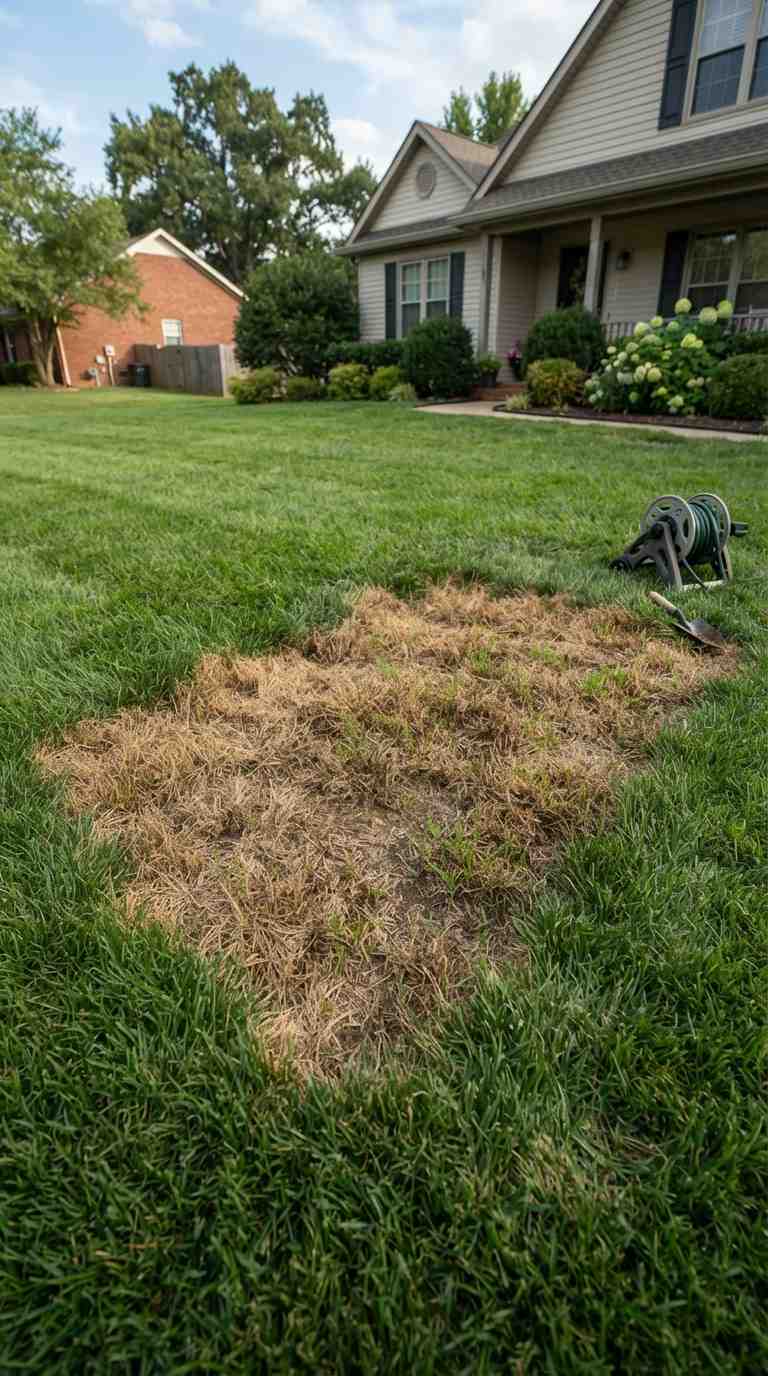
While selective, improper application or timing can cause brown, dead patches in your lawn.
Understanding what lawn injury looks like and how long recovery takes is essential.
Image 3 illustrates the aftermath of a concentrated spot where quinclorac caused a complete dieback of grass leaves, turning them brown and dry.
However, the surrounding turf remains healthy green, indicating selective damage localized to the treatment area.
Recovery depends on grass species, season, and lawn care post-treatment.
Generally, affected patches recover gradually as new shoots emerge over weeks to months.
Good lawn maintenance practices like watering, aeration, and fertilization support faster repair.
Knowing that temporary browning is normal and recovery requires time prevents unnecessary worry and promotes patient lawn restoration following quinclorac use.
Understanding Complete Weed Death and Lawn Appearance

When quinclorac has fully done its job, the treated weeds will appear blackened, shriveled, and completely lifeless.
This stage is a clear sign no regrowth can be expected from the dead plants.
Differentiating this state from partial damage helps inform next steps in lawn care.
The stark imagery of Image 4 shows fully desiccated, blackened weed matter collapsed on the soil among dormant grass, exemplifying a successful herbicide kill.
This contrasts with earlier yellowing or browning stages, which may still contain living tissue.
Recognizing this endpoint means it’s time to remove dead weed debris to prevent pest attraction and support healthy lawn regeneration.
Proper cleanup and reseeding of bare patches speed the restoration process.
Being able to distinguish complete weed death visually ensures efficient post-treatment lawn management and reduces the risk of mistreating or prematurely retreating your lawn.
Tips for Monitoring Post-Treatment Progress

Careful monitoring after quinclorac application allows you to track treatment effectiveness and decide if follow-up actions are needed.
Regularly examining weed color changes, growth patterns, and overall lawn health provides valuable feedback.
Image 5 captures a broader lawn view showing a rectangular patch of dead grass surrounded by lush green turf, illustrating how treated areas develop clearly defined symptoms.
This helps homeowners differentiate treatment effects from unrelated lawn issues.
Keeping a lawn diary or photographic record of treated areas over weeks helps visualize progress and prevents misinterpretation of normal herbicide timelines.
It also aids in planning subsequent fertilization or overseeding efforts.
Active post-treatment monitoring supports informed decision-making and ensures that quinclorac use delivers its promised results while maintaining lawn vitality.
Common Mistakes to Avoid When Using Quinclorac
One frequent error is applying quinclorac during extreme weather conditions such as drought, heavy rain, or intense heat, which respectively reduce absorption or wash away the herbicide.
Such timing mistakes lengthen the visible results timeline or cause treatment failure.
Another pitfall is over-application, either using too high a concentration or reapplying before seeing results, which may damage lawn grasses and disrupt soil health.
Following label instructions precisely prevents these issues.
Failing to identify the weed species correctly before treatment can result in ineffective use of quinclorac, as it is targeted mainly against grassy weeds like crabgrass, not broadleaf species.
Proper weed identification is essential.
Avoiding these common mistakes ensures quinclorac works within its expected timeframe, protecting both your lawn’s health and your budget.
Enhancing Quinclorac Effectiveness with Lawn Care Practices
Complementing quinclorac applications with good lawn care practices accelerates weed control and improves turf recovery.
Maintaining adequate watering schedules before and after application ensures herbicide absorption and reduces plant stress.
Mowing your lawn appropriately, avoiding excessively short cutting, preserves grass vigor to outcompete treated weeds as they die off.
Fertilizing after quinclorac’s active period supports healthy regrowth and patch filling.
Aerating compacted soil improves chemical penetration and root zone oxygenation, boosting grass health.
Applying these cultural practices in harmony with chemical treatment creates an integrated approach for long-term weed management.
Understanding that quinclorac is one piece of successful lawn care encourages holistic maintenance, shortening the timeline for visible improvements and sustaining a vibrant turf.



Leave a Reply