
Foxtail can quickly transform a healthy lawn into a prickly, unsightly patch.
This guide offers a deep dive into understanding, identifying, and successfully removing foxtail from your yard.
Learn the best practices, prevention tips, and thoughtful maintenance strategies to ensure your lawn stays pristine and foxtail-free.
Understanding Foxtail and Its Characteristics
Foxtail, scientifically termed Setaria viridis, is a common grass weed notorious for its spiky seed heads that resemble a fox’s tail.
These seed heads are covered with bristles that easily stick to fur, clothing, and even lawn equipment, making it a persistent nuisance.
The plant’s adaptive nature allows it to thrive in various soil and climate conditions, often invading areas that are less maintained.
The plant progresses through distinct stages, starting as a young sprout, then growing into a mid-sized plant before maturing with seed heads that release seeds to infect new areas.
Recognizing these stages is critical for effective intervention.
Foxtail’s seed head, visually unique, is designed for efficient seed dispersal, often aided by animals.
The key to managing foxtail starts with identification.
Its bristly and elongated seed head, combined with a tall, grass-like structure, differentiates it from desirable lawn grasses.
Understanding its biology prepares you to interrupt its life cycle and stop seed propagation before spread intensifies.
Identifying Foxtail Early and Accurately

Identifying foxtail in its early growth stages offers the best chance for eradication.
The plant’s young sprouts appear as slender green shoots around four inches tall, which might be mistaken for healthy grass if not carefully examined.
As it advances to a mid-sized plant, approximately 14 inches high, it becomes clearer with more prominent leaves and the beginnings of bristly seed heads.
By the time the foxtail reaches about 26 inches and fully matures, the seed heads are unmistakable,dense, bristly spikes protruding upward.
It is important to distinguish foxtail from other grass species because treatment options and approaches differ.
Often, suburban lawns with mixed species require careful observation.
Early recognition is enhanced by comparing foxtail’s various growth stages side-by-side, which can clarify confusion about its appearance.
Accurately spotting foxtail before seed develop means removing the plant before it spreads seeds, reducing invasion risk exponentially.
The Dangers Foxtail Poses to Pets

Foxtail can present serious hazards not just to your lawn but also to your pets, especially dogs that explore outdoor spaces.
Its spiky seed heads easily embed themselves into animal fur, ears, noses, and paws, causing irritation, infection, or more severe injuries if untreated.
You may find your pet scratching excessively or limping, both signs of foxtail infestation in their coat or skin.
Managing foxtail isn’t just aesthetic; it’s a protective measure for your furry family members.
The photo depicting dense clusters of foxtail spikelets clinging to a dog’s golden fur highlights how these seeds can readily attach and become lodged in hidden areas.
Prompt removal of foxtail from your property can prevent such painful encounters.
Awareness and vigilance, including checking your pet after outdoor play, are crucial.
Preventing foxtail exposure is ideal, but routine grooming and controlled lawn maintenance remain essential defense tactics.
Being proactive reduces the risk of serious medical issues while keeping your lawn safer for all.
Recognizing Foxtail Infestation in Lawns

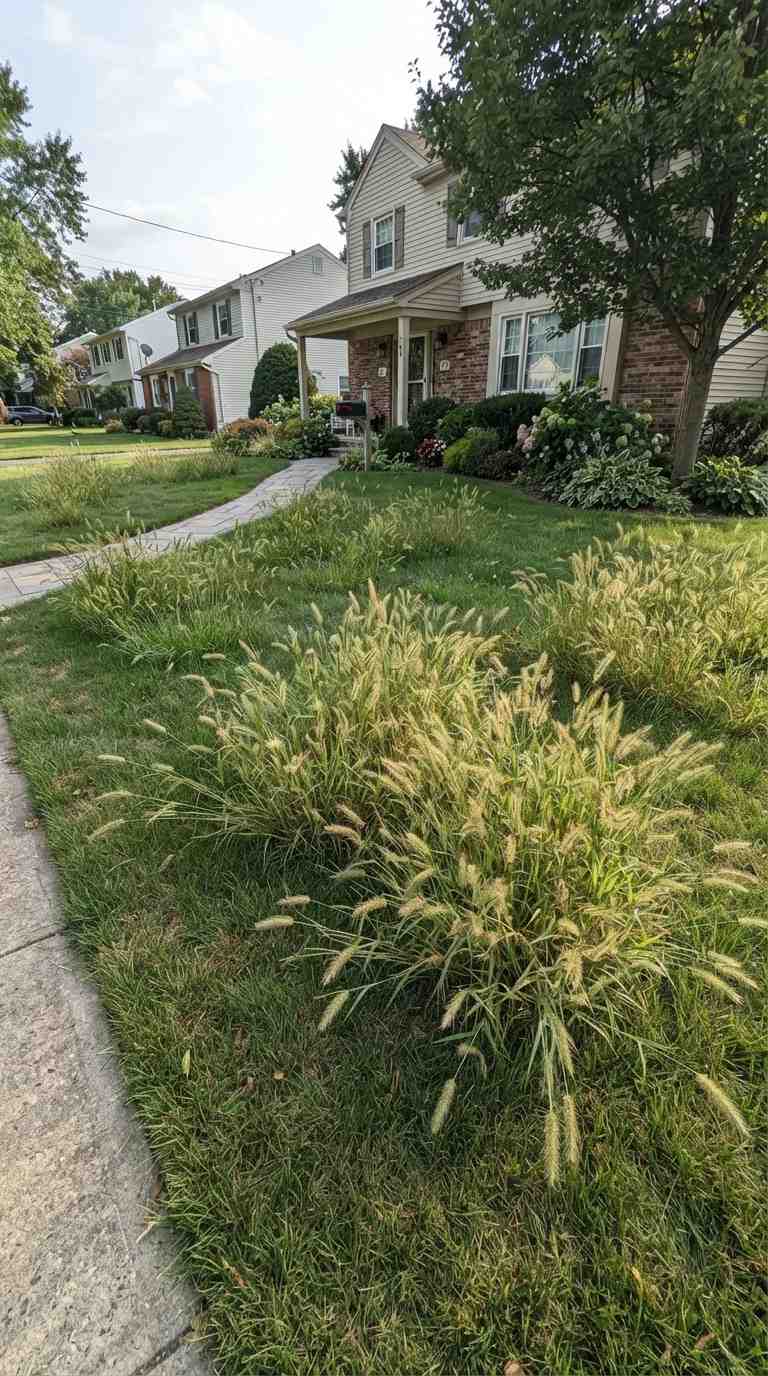
Distinct from a healthy, well-tended lawn, a patch where foxtail has become dominant shows a disorganized, scruffy texture covered with spiky seed heads.
The plants cluster closely, often overtaking native grasses and creating an uneven, prickly landscape.
Neighborhood fronts or sidewalks are common invasion zones due to foot traffic and soil disturbances.
A photograph revealing an urban lawn heavily invaded by foxtail shows the sprawling infestation contrasted with the predictability of a well-kept turf.
This visual highlights how unchecked foxtail growth compromises lawn aesthetics and usability.
Such patches invite more weed seeds to establish, perpetuating a cycle hard to break without intervention.
Early detection of these invasive formations is necessary to apply control methods when they are most effective.
Visual cues of foxtail takeover include patchy grass, elongated seed heads, and an overall tangled growth pattern.
Timely corrective action can shift the balance back to a healthy lawn ecosystem.
Manual Removal Techniques and Best Practices

One of the most straightforward approaches to handle foxtail is physically uprooting the plants.
This method is most effective when the soil is moist, enabling easier extraction of the entire root system.
Using gloves and a garden trowel helps prevent injury from the prickly seed heads and reduces the chance of seed spread during removal.
The image of hands carefully pulling foxtail from soil exemplifies proper technique,targeting the base and roots ensures the weed does not regenerate.
Manual removal is especially useful for small patches or initial infestations before seed heads have formed.
Neglecting roots often results in regrowth, so thoroughness is essential.
Consistency is key; repeated removal every few weeks during the growing season prevents foxtail from seeding.
Disposing of extracted weeds responsibly, away from the lawn, stops seeds from contaminating compost or mulched areas.
Manual removal helps prevent herbicide use, supporting organic lawn care preferences.
Chemical Control Options and Cautions
While natural efforts are valuable, chemical herbicides may become necessary for moderate to severe foxtail infestations.
Selective herbicides that target grassy weeds without harming lawn species offer the most balanced approach.
Knowing the right timing,ideally early growth stages before seed set,optimizes herbicide efficacy and minimizes environmental impact.
Application during cool, calm weather reduces drift and maximizes absorption into foxtail foliage.
It is critical to follow product label instructions precisely to avoid damaging desirable turf or contaminating nearby plants.
Overapplication or misapplication can lead to resistant foxtail populations or lawn stress.
Integrating herbicide treatments with cultural practices like proper mowing and watering boosts overall control success.
Chemical interventions should also consider pet safety, applying in their absence and allowing sprays to dry completely before re-entry.
Lawn Maintenance to Prevent Foxtail Growth

A robust, thriving lawn resists weed invasions like foxtail by occupying space and resources, outcompeting weaker plants.
Essential maintenance includes regular mowing to heights that preserve grass health, ideally around 3 inches, which shades out foxtail seedlings and reduces seed head formation.
Mowing not only inhibits foxtail maturation but encourages turf density.
Fertilization tailored to the grass type and soil conditions nourishes lawn vigor, making it less hospitable to foxtail.
Overseeding bare or thinning spots re-establishes strong grass coverage before foxtail can colonize.
The careful use of aeration improves root growth and nutrient absorption, fostering competitive turf.
Avoiding overwatering helps since foxtail thrives in disturbed, moist soil patches.
Consistent, balanced watering schedules combined with diligent lawn care practices create an environment where foxtail struggles to gain a foothold.
Restoring Your Lawn After Foxtail Removal

Successfully removing foxtail is only part of reclaiming your lawn.
To restore a healthy, uniform turf, it’s important to reseed affected areas or overseed the entire lawn for balanced growth.
The photo showing a bright, lush green lawn with neat edging and flowerbeds exemplifies the end goal,an inviting, weed-free outdoor space.
Maintaining consistent watering and fertilization during recovery encourages new seed establishment and prevents bare patches vulnerable to future weed invasion.
Using a high-quality seed mix compatible with your local climate ensures resilience.
Over time, proper mowing and soil care consolidate turf strength.
Periodic monitoring after removal helps catch new foxtail threats early, preventing another infestation.
Lawn rejuvenation requires patience but yields long-term rewards,healthy turf that resists weed incursions and enhances overall curb appeal.
Common Mistakes in Foxtail Management
A frequent misstep is waiting until foxtail is fully mature before treatment, allowing seeds to spread and complicate eradication.
Many homeowners also mistakenly pull only the visible parts without removing roots, enabling regrowth.
The seeds’ sticky nature means they can be unintentionally spread by foot traffic, mower blades, or pet fur if care is not taken.
Another error involves overreliance on herbicides without addressing underlying lawn health; weak lawns remain susceptible to reinfestation.
Ignoring proper disposal of pulled weeds can contaminate compost or surrounding areas, negating removal efforts.
Premature mowing or improper timing reduces treatment effectiveness and wastes resources.
By avoiding these pitfalls,early targeting, thorough root removal, combined control methods, and careful cleanup,foxtail management becomes more manageable and sustainable.
Educating oneself on these common mistakes leads to better outcomes and less frustration.
Seasonal Timing for Effective Foxtail Control
The season in which you tackle foxtail greatly influences success rates.
Because foxtail emerges and seeds during warmer months, spring and early summer are optimal intervention periods.
The plant is still young and vulnerable during these times, giving you a window for targeted action before flowering and seed production.
Late summer and fall treatments often require more diligence as the plant is mature and seeds disperse readily.
Removing seed heads mechanically or applying herbicides shortly after flowering can reduce spread but require patience and persistence for complete control.
Winter dormant phases present an opportunity to plan and prepare for the upcoming growing season.
Understanding this cycle helps schedule mowing, manual removal, and chemical applications for maximum impact.
Keeping a seasonal calendar aligned with foxtail’s growth stages enhances prevention and long-term lawn health.
Strategies to Protect Pets and Family
Because foxtail seeds cling easily, it’s essential to adopt protective behaviors for those spending time outdoors, especially pets.
Preventing contact with infested areas minimizes seed attachment, while regular grooming removes any seeds that bypass this barrier.
Outdoor play areas may need periodic inspection and cleaning.
The sharp, barbed seeds can become embedded, causing painful wounds or infections, which means time-sensitive removal is critical at the first sign of seed attachment.
Using pet-safe lawn care products and avoiding treatment when pets are present also reduce exposure risks.
Providing an alternate play zone free of weeds gives pets safer options.
Education about foxtail dangers fosters attentiveness to pet health.
By incorporating protective lawn practices and regular monitoring, you can effectively safeguard your family and pets from the hidden hazards foxtail poses.
Integrating Foxtail Control into Overall Lawn Health
Foxtail management is most successful when done as part of a comprehensive lawn care strategy rather than isolated treatments.
This includes improving soil quality, managing water and nutrients, and fostering strong turf growth that outcompetes weeds naturally.
Integration minimizes the need for harsh chemicals and reduces recurring infestations dramatically.
Combining manual removal with preemptive care, including regular mowing and overseeding, creates resilience against foxtail and other invasive plants.
Using mulches in garden beds prevents seed migration while preserving moisture and soil structure.
Community coordination in neighborhoods can further reduce neighborhood-wide weed pressures.
A well-rounded plan calls for vigilance, patience, and commitment.
Lawn owners who view foxtail control as an ongoing element of lawn health enjoy more consistent results and a more attractive, durable lawn year-round.
Recognizing Foxtail Seed Head Appearance

The foxtail seed head is a distinctive, cylindrical cluster of bristly spikes tapering slightly at the tip.
It typically features a greenish hue when immature, transitioning to a brown or tan color upon maturity.
These seed heads are covered in fine, stiff hairs that trap onto surfaces with ease, aiding in seed dispersal over wide areas.
A close-up photograph capturing a single green foxtail seed head indoors reveals the sharp details of its prickly texture and the dense arrangement of seeds within.
This visual aids in early recognition during field scouting.
Knowing the seed head’s look helps avoid confusing it with other lawn grasses or weeds, especially when seeds are ready to drop.
The seed’s barbed nature varies between foxtail species but generally irritates skin and fur alike.
Identifying these paper-thin yet tough bristles allows for careful handling when removing or monitoring infestations.
Recognizing seed heads early can mean the difference between controlling foxtail effectively or facing widespread lawn invasion.




Leave a Reply