
When designing a home theater, prioritize soundproofing and understand the STC rating, which measures sound reduction capabilities. High STC ratings are essential for minimizing noise disturbance in surrounding areas.
Hi, I'm Adarsh. I'm an audio enthusiast, songwriter, and music producer. I've worked as an audio engineer, editor, and music marketer in professional roles. My educational background is in Electronics and Media. Here, I share my learnings, research, and expertise in audio, acoustics, and music-related areas I interact with daily.
Home theater design faces soundproofing challenges, as traditional materials like MLV and soundboards fail modern acoustic standards, necessitating advanced damping solutions.
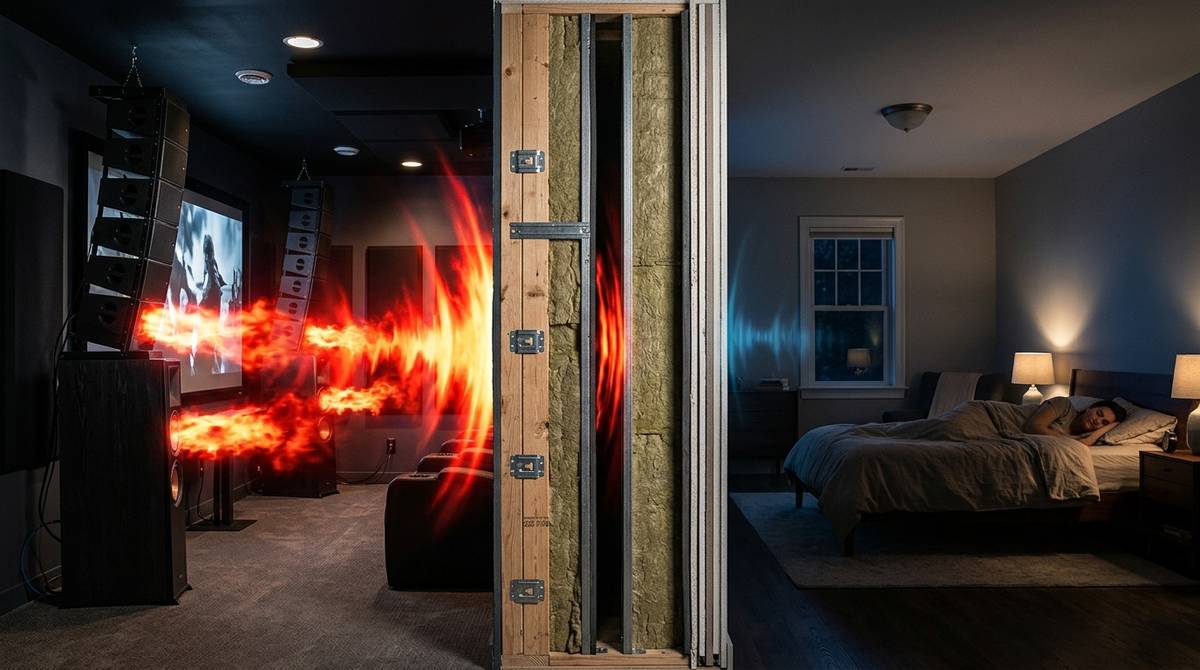
Standard walls fail to contain home theater noise due to their design, leading to disruptive sound leakage and ineffective DIY solutions.
Building a home theater requires advanced techniques to manage low-frequency bass, which traditional soundproofing methods often fail to control.
To build an exceptional home theater, prioritize room design and sound isolation over electronics, emphasizing THX benchmarks for optimal acoustic performance.
Achieving effective sound isolation in home theaters is crucial, with viscoelastic damping outperforming traditional mass-loaded barriers significantly.
To achieve effective sound isolation in a home theater, combine constrained and unconstrained layer damping technologies for optimal noise control.
When creating a home theater, prioritize acoustic engineering over equipment; using extra drywall is ineffective for soundproofing, worsening bass transmission instead.
Designing a home theater involves overcoming sound containment challenges; modern solutions favor viscoelastic damping over the outdated Mass Law for effective soundproofing.
