
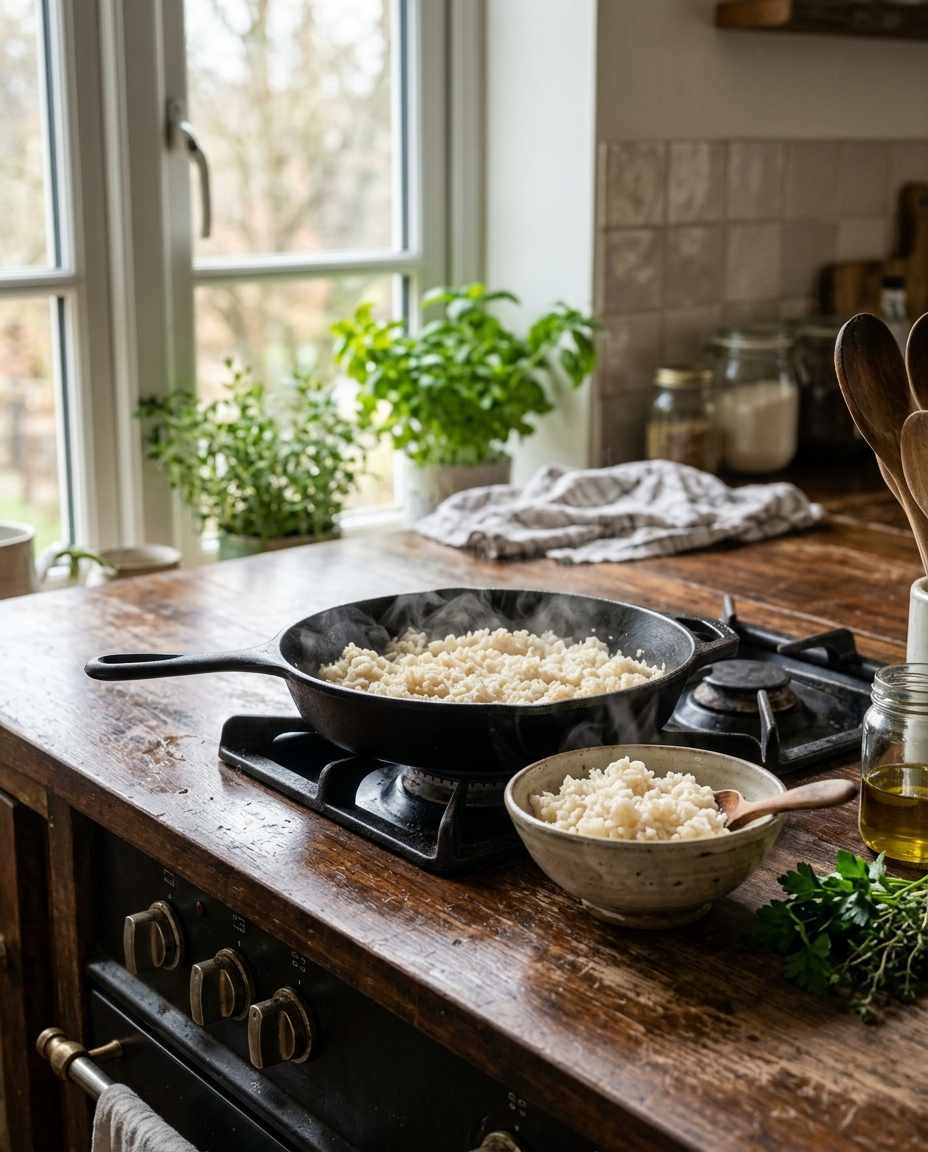
I stood at my stovetop, a cold bowl of leftover rice on the counter, wondering how to revive its fluffy texture without the convenience of a microwave.
The challenge isn’t just about reheating; it’s about restoring that perfect balance of moisture, warmth, and flavor without turning the grains into a mushy clump.
This guide dives deep into every method I’ve tested, perfected, and lived through, so you never settle for soggy or dry rice again.
Understanding Rice’s Moisture and Texture Challenges
Reheating rice is tough because its grains are naturally porous with retained moisture trapped after cooking, and improper heat causes uneven drying or sogginess.
Rice left at room temperature loses moisture steadily through evaporation, and reheating concentrates or redistributes this moisture unevenly, either drying the grains or clumping them excessively.
The underlying principle is controlling moisture balance while applying gentle, even heat to revive pliability without overcooking.
In my early reheating attempts, I noticed the difference between jasmine rice and basmati—the former’s stickier starch profile means it clumps more aggressively when over- or under-heated.
The subtle differences in starch viscosity and water adsorption impact which reheating method suits each rice type best.
Sticky Japanese short grain calls for more careful moisture reintroduction compared to fluffy long-grain, which tolerates drier heat.
A common mistake is reheating rice directly over high heat without adding moisture, creating dry, chalky grains or a burnt crust at the pan’s bottom.
This happens because starchy rice heats rapidly and unevenly; the outer grains dry out while inside may stay cold.
To master reheating, your takeaway is to add measured moisture precisely—about 1 tablespoon per 150 grams of rice—and use moderate, indirect heat.
This rehydrates without steaming grains into mush, preserving subtle textures that define perfectly fresh rice.
Stovetop Steaming Method for Fluffy Rice

The stovetop steaming technique makes use of gentle indirect heat, mimicking original cooking conditions to soften rice without sogginess.
I typically add 2 tablespoons of room-temperature water per cup of leftover rice in a nonstick skillet with a tight-fitting lid.
Setting the burner to low heat (roughly 120–130°C or 250–265°F) maintains a moist environment without drying grains out or scorching them.
In practice, I preheat the pan with a teaspoon of neutral oil lightly coating the bottom to slightly insulate, preventing rice from sticking or burning.
The lid traps steam, evenly rehydrating grain surfaces, and the indirect heat slows the reheating pace to avoid rapid moisture loss or grain damage.
This approach is ideal for day-old rice, particularly medium to long-grain types.
Many first-timers panic and crank the flame to speed reheating, causing drying and unpalatable grain texture.
The key error is failing to keep steam inside the pan; always use a close-fitting lid and avoid lifting it for the first 3 minutes.
Disrupting the steam cycle compromises uniform heating.
Your takeaway: treat your skillet like a mini rice cooker by controlling heat precisely, adding measured water, and sealing moisture overnight.
This keeps rice grains separate and fluffy, with creamy, tender interiors achieved in 5–7 minutes total.
Reheating Rice in a Steamer Basket

Steaming rice in a dedicated basket over boiling water recreates professional restaurant conditions for reheating without the drying risks of direct heat.
I start by bringing about 2 centimeters (3/4 inch) of water to a rolling boil in a pot while fitting a bamboo or stainless-steel steamer basket above.
Transferred into a single-layer spread within the basket, rice grains receive gentle, rising steam that gradually restores moisture and temperature over roughly 7 to 10 minutes.
This method is particularly effective for sticky or sushi rice variants because the constant moist environment protects delicate starch structures from collapsing.
A pitfall I encountered using this technique was overcrowding the basket, which traps condensation unevenly and leaves cold patches.
Distributing rice evenly and allowing airflow beneath the basket’s perforated base is essential for consistent results.
For best outcome, spread rice no deeper than 2 centimeters (about 3/4 inch) and cover loosely with a clean kitchen towel to catch water droplets.
This approach yields fantastically fluffy grains with excellent bite, avoiding mushiness common in microwave reheating.
Oven Reheating: Controlled Dry Heat Revival
Using an oven to reheat rice offers evenly distributed dry heat that can bring back fluffy texture in larger batches without overcooking.
Proper technique requires placing rice in a heat-safe ceramic or glass dish with a tightly sealed lid or aluminum foil cover to trap steam generated from added water.
I usually add 2 to 3 tablespoons of warm water per cup of cold rice and cover the dish tightly.
Then I set the oven temperature between 160°C and 175°C (320°F to 350°F).
This moderate temperature prevents a dried-out crust forming while heating rice through evenly in about 15 to 20 minutes.
In my early oven attempts, I made the mistake of using a low, slow temperature (less than 150°C) without covering the dish properly.
This led to dry, tough rice as moisture evaporated.
The key is creating a sealed moist microclimate that reheats without turning rice into paste.
When reheating more than 3 cups of rice, oven method shines due to its stability and capacity.
The takeaway: always cover your container tightly, use medium heat, and stir gently halfway through reheating to expose plumper grains for uniform warmth.
Pan-Frying Rice for Texture and Flavor
Pan-frying rice, often used for fried rice dishes, is a powerful reheating strategy that transforms leftovers into an entirely new meal.
The dry heat combined with a small amount of oil crisps the rice’s exterior while gradually raising temperature, enhancing both texture and flavor.
When I apply this method, I heat a cast-iron or heavy stainless-steel skillet on medium heat (around 175°C), then add 1 to 2 teaspoons of neutral oil such as canola or vegetable oil.
Spread 1–1.5 cups of rice in an even layer across the pan’s surface, letting it brown undisturbed for 2 to 3 minutes before stirring or flipping sections.
A frequent beginner mistake is using cold rice straight from the fridge without breaking up clumps, which results in uneven heating and patches of cold, dense rice.
Proper technique involves fluffing rice with a fork or breaking clumps manually before the pan goes on heat.
The takeaway is to think of this as dry reheating with a crispy twist.
Adjust heat thoughtfully to avoid burnt spots and add aromatic ingredients like garlic or scallions mid-way to elevate your reheated rice into a flavorful side.
Using a Double Boiler or Bain-Marie Setup

A double boiler or bain-marie uses steam indirectly to heat rice gently without direct contact with water or flame, ideal for delicate grains that lose structure easily.
I set a medium saucepan with simmering water and nest a heatproof bowl containing rice on top, ensuring the water level stays below the bowl’s bottom.
The steam’s indirect heat raises temperature gradually, preventing dry patches or scorching.
This method mimics professional warming trays used in catering and is well-suited for sticky rice varieties or risotto leftovers that require gentle warming.
One error I initially faced using this approach was letting the water boil vigorously, resulting in rapid steam that caused condensation to drip excessively into the rice, making it watery.
The trick is maintaining a steady simmer rather than a rolling boil.
You’ll want to maintain the bain-marie for 8 to 12 minutes, stirring every 3 minutes to redistribute moisture evenly.
This precise, gentle reheating ensures the rice retains its original texture without sogginess or dryness.
Key Safety Considerations When Reheating Rice
Reheating rice safely is critical because improperly stored or rewarmed rice can harbor Bacillus cereus bacteria causing food poisoning.
This bacteria survives cooking and can multiply if rice sits at room temperature too long before reheating.
I always stress reheating rice to an internal temperature above 74°C (165°F) to kill bacteria effectively.
In my experience, cooling rice quickly post-cooking—within one hour—and storing it in sealed containers in the fridge at or below 5°C (41°F) is essential to minimize bacterial growth before reheating.
Never leave rice out for extended periods or reheat multiple times; each reheating cycle raises risk.
Many people make the mistake of reheating only until rice feels warm, but fridge-cold rice can hide cold spots where bacteria may survive.
Using a food thermometer to verify homogenous reheating eliminates this risk and assures safety.
Takeaway: the best methods won’t matter if you don’t cool and store rice properly before reheating.
Always refrigerate leftovers promptly, reheat thoroughly, and consume reheated rice within 24 hours for both flavor and food safety.




Leave a Reply