
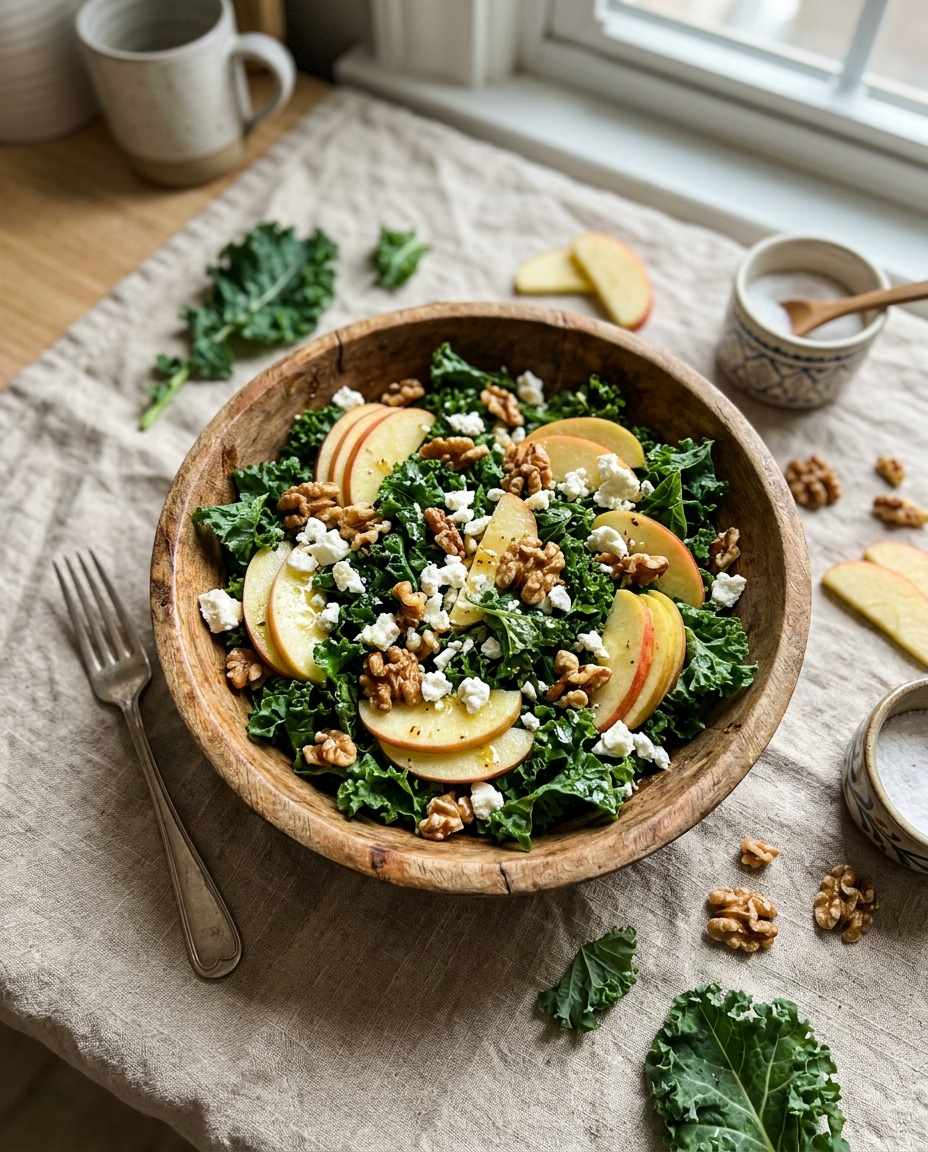
The first time I tossed kale and sliced apples together, the textures clashed wildly and the dressing overwhelmed.
It took several kitchen experiments before I crafted a kale apple salad that perfectly balances crunch, sweetness, and earthiness.
In this article, I will share every nuanced step that turns humble ingredients into a vibrant, nutritious masterpiece.
Choosing the Right Kale Variety
Not all kale is created equal when it comes to salads.
I tested curly kale, lacinto (Tuscan) kale, and baby kale, and the difference is palpable.
Curly kale offers the most bitterness and a coarse texture, great for hearty, rustic dishes, but challenging in a fresh salad.
Lacinto kale is darker green with a smoother, more tender leaf and less bitterness, which is optimal for raw preparations like salads.
An important technical detail is the leaf’s thickness and vein structure.
Lacinto kale’s thinner leaves and softer veins mean it requires less massage and yields a more delicate texture, whereas curly kale demands vigorous massaging to break down the fibrous cell walls.
Baby kale, harvested earlier, is milder and tender but less visually striking on the plate.
A common mistake is assuming the easiest kale to find will work best raw.
I once prepared a salad with mature curly kale without massaging it enough, resulting in a tough, chewy mess.
This error usually stems from overlooking the leaf’s need for mechanical breakdown.
My takeaway is to use lacinto kale for a balance of texture and flavor, especially if you want to keep prep simple.
If you use curly kale, plan for at least 5 minutes of massage and trimming thick stems.
Baby kale offers a mild, tender option for quick salads but lacks the boldness and structure some prefer.
Selecting and Preparing Apples for Optimal Flavor

Apple selection is critical; sweet, tart, and crisp balance the kale’s earthiness beautifully.
I conducted taste tests using Granny Smith, Honeycrisp, Fuji, and Pink Lady apples, and Pink Lady emerged as my top choice for salad.
It combines a firm crunch, moderate tartness, and a honeyed sweetness that enlivens the kale.
The chemical reason behind this is the malic acid level and sugar balance.
Granny Smith apples, for example, are high on acid with lower sugar, which can overpower the salad and make the dressing taste flat.
Honeycrisp offers sweetness but is sometimes too soft for raw textures.
Fuji apples can be cloyingly sweet and mushy when sliced thin.
A common practical mistake is slicing apples too thickly or using apples that brown quickly.
When I sliced apples thicker than 5 mm, their texture felt clumsy against the shredded kale.
Also, acidulated water dips help prevent browning by slowing enzymatic oxidation, a step I initially skipped and regretted, watching my salad’s visual appeal diminish.
You should slice apples thinly,around 3 mm,to achieve a light crunch that integrates seamlessly with the salad.
Immediately toss the slices in 1 tablespoon lemon juice mixed with 1 cup water to preserve color and brightness.
This prevents browning, preserving both visual appeal and freshness.
Mastering the Art of Massaging Kale
Massaging kale is pivotal in transforming rough leaves into a tender base for salad.
The physical mechanism involves breaking down cellulose in kale’s cell walls, softening the leaf fibers and reducing bitterness.
I experimented with olive oil versus lemon juice massage and found that lemon juice’s acidity does a superior job of breaking down fibers.
In practice, I place torn kale leaves in a large bowl and use my fingertips to gently rub and squeeze for 3 to 5 minutes.
The leaves darken, become glossy, and their volume reduces by nearly 50 percent.
This technique releases chlorophyll and phenolic compounds, which also mellows kale’s naturally aggressive bitterness.
A common misconception is that massaging kale is optional or just to mix ingredients.
Without proper massage, kale remains tough and can cause jaw fatigue.
I personally learned this when serving unmassaged kale salads to guests who declined to eat it due to texture.
My advice is to adopt the 5-minute lemon juice massage for raw kale salads as standard practice.
Use about 1 tablespoon of lemon juice per 4 cups of torn kale leaves, massaging until leaves feel soft but not mushy.
This creates a salad that feels light, tender, and flavorful.
Crafting the Perfect Dressing: Balancing Acidity and Sweetness

A kale apple salad dressing must counterbalance earthy bitter greens and crisp acidic apples with sweetness and umami.
I created and discarded over a dozen variations before settling on a Dijon mustard vinaigrette with honey and apple cider vinegar that blends complexity with brightness.
The purpose of Dijon mustard is twofold: it acts as an emulsifier, binding oil and vinegar into a stable mixture, and adds sharpness that cuts through kale’s palate weight.
Apple cider vinegar complements apple slices thematically and adds fruity acidity, while a teaspoon of pure honey harmonizes tartness and rounds the flavor.
A frequent error is overdressing the salad, which overwhelms the fragile apple slices or masks kale’s freshness.
Earlier, I doubled the dressing quantities trying to intensify flavor, only to ruin the salad’s crispness and cause wilting.
Measure your dressing carefully: 2 tablespoons apple cider vinegar, 1 teaspoon Dijon mustard, 1 teaspoon honey, and 4 tablespoons high-quality extra virgin olive oil for 6 cups of salad.
Whisk vigorously or shake in a jar before adding slowly in two batches, tossing gently.
Adjust salt and pepper to taste.
Incorporating Textural Contrast with Nuts and Cheese
The kale apple salad elevates with texture contrast from toasted nuts and crumbled cheese.
I tested walnuts, pecans, almonds, and pumpkin seeds, and walnuts paired best with the apple’s sweetness and kale’s earthiness.
Toasting the nuts enhances their flavor through Maillard reactions, releasing oils and deepening nuttiness.
Using walnuts raw results in a bland crunch and sometimes astringency that diminishes enjoyment.
Toast nuts briefly in a dry skillet over medium heat for 3 to 5 minutes until fragrant and golden, stirring constantly to avoid burning.
After cooling, chop them coarsely to maintain crunch and avoid overwhelming the salad.
Cheese adds a creamy, salty dimension that balances sweetness and bitterness.
I prefer using a tangy crumbly goat cheese or feta, adding about 50 grams for 6 cups of salad.
Avoid overly sharp or hard cheeses which can dominate the flavor profile.
For best results, toast nuts immediately before serving to maximize aroma, and crumble cheese just prior to mixing for freshness.
The interplay of crunchy nuts and creamy cheese accentuates the salad’s layered mouthfeel, making each bite multidimensional.
Advanced Preparation Tips for Make-Ahead Kale Apple Salad

Prepping kale apple salad in advance requires foresight to maintain texture and flavor integrity.
I discovered that massaging kale early, but delaying apple addition, yields the freshest-tasting salad when served.
Because apples oxidize and soften quickly, waiting until just before serving to mix them with kale preserves crispness and visual appeal.
Storing massaged kale in an airtight container in the fridge overnight allows flavors to meld and bitterness to mellow further without wilting.
However, if left longer than 24 hours, kale textures degrade noticeably due to enzymatic action and moisture loss.
A common pitfall is tossing all ingredients together hours ahead, which causes the salad to become soggy and visually unappealing due to apple juice and dressing.
This mistake happens when one underestimates fruit oxidation and kale’s capacity to absorb moisture.
My recommendation is to prepare and massage kale entirely in advance and keep it chilled.
Keep sliced apples in lemon water until 10 minutes before serving, then drain and toss them into the salad with dressing and nuts.
This sequence safeguards texture and flavor for impressive make-ahead meals.
Customizing Seasonal Variations and Ingredient Swaps
Adapting the kale apple salad to season and dietary needs opens new flavor avenues while maintaining core textures.
Adding roasted butternut squash cubes in fall introduces caramelized sweetness and softness that contrasts kale’s chew.
In spring, swapping apples for thinly sliced pears or radishes can freshen the salad’s crispness.
When customizing, consider ingredient moisture content and how it interacts with kale’s fibrous leaves.
For example, juicy pears release more liquid that can quickly wilt kale, so serve pears separately or add just before eating.
Nuts such as pecans or toasted sunflower seeds substitute well for walnuts if allergies or preferences exist.
Ignoring these trade-offs leads to compromised texture or flavor imbalance.
I once replaced apples with oranges in winter without adjusting dressing acidity, resulting in a sour, loose texture.
Addressing these factors helps the salad’s balance remain intact,
My tip is to think of the salad like a flavor and texture equation: roughly 40% kale, 30% fruit, 15% crunchy nuts, 10% creamy cheese, and 5% dressing.
Adjust ingredients seasonally within this framework and taste frequently to fine-tune sweetness, acidity, and crunch.




Leave a Reply