
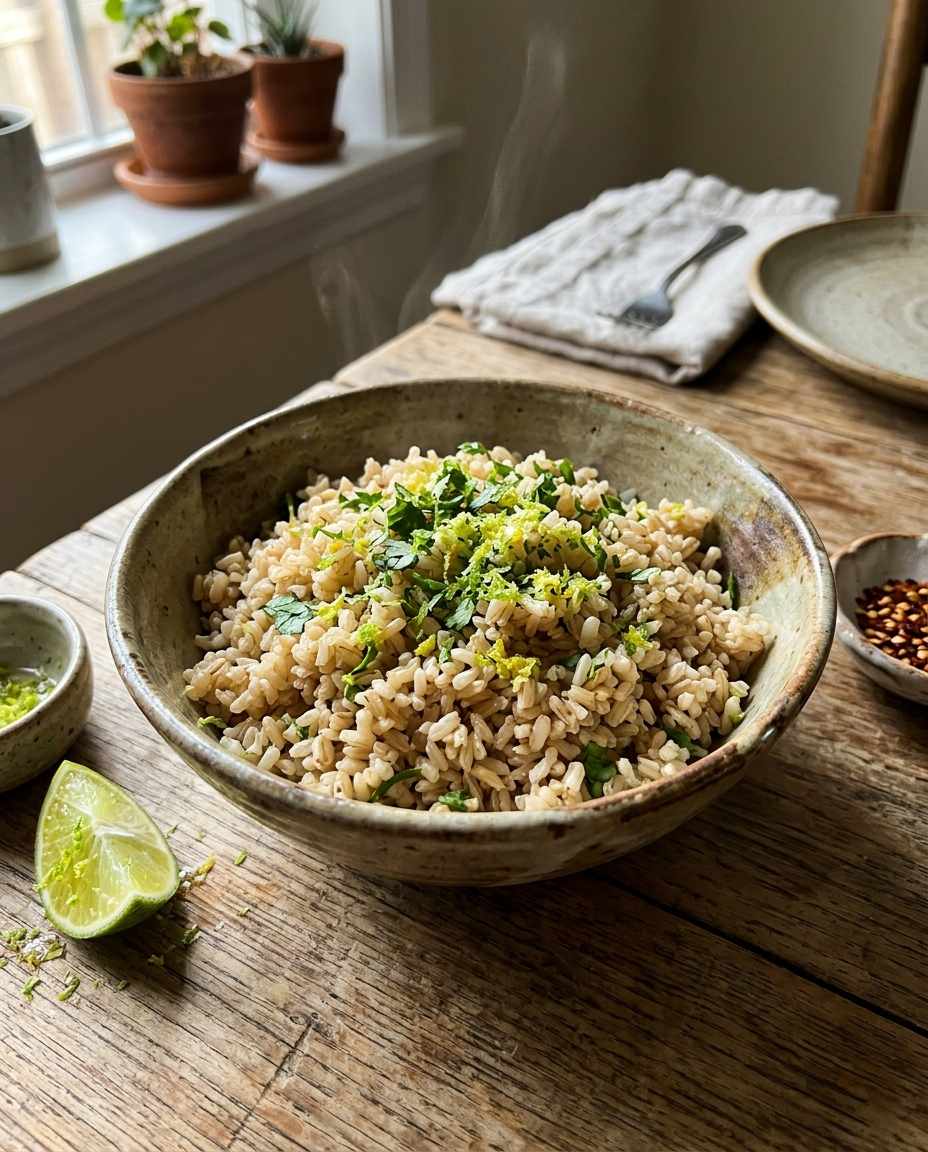
I remember the moment I first unlocked Chipotle’s secret brown rice flavor at home.
The fragrant steam rose from the pot, punctuated by a subtle lime tang and just the right balance of seasoning.
Recreating this deceptively simple but nuanced staple in your own kitchen demands precision, patience, and attention to every detail—from rice selection to seasoning ratios.
Choosing the Right Brown Rice Grain
Not all brown rices are created equal, and the foundation of authentic Chipotle rice lies in selecting the correct grain type.
Chipotle uses a medium-grain brown rice, which offers a tender bite without becoming mushy or overly chewy.
Long-grain brown rice, which commonly appears in supermarkets, tends to be more fibrous and separates too easily, losing that cohesive, fluffy texture essential for this recipe.
The difference lies in starch content and grain shape.
Medium-grain brown rice carries ideal amylopectin levels, helping it stick together lightly without clumping.
This gives the rice a pleasantly chewy mouthfeel and allows the seasoning to adhere well.
I once tried a short-grain brown rice substitute, which cooked into a gooey consistency that completely missed the mark.
Many novice cooks opt for quick-cook brown rice packages to save time, but these varieties are often pre-steamed and have compromised texture and scent.
Authentic preparation demands raw, unprocessed whole-kernel brown rice: look for brands specifying ‘medium-grain’ on the label or buy from specialty bulk bins.
When you pick your rice, aim for 1.5 to 2 cups per batch, rinsing it thoroughly under cool water until the runoff runs clear.
This removes excess surface starch, preventing gummy rice and improving the final mouthfeel.
If you neglect rinsing, the rice can turn sticky, obscuring the bright lime and cilantro notes that define Chipotle’s version.
Mastering the Soaking and Rinsing Process

Soaking brown rice before cooking is a controversial step, but it makes a tangible difference in evenness of cooking and texture.
Brown rice retains the bran layer, which slows water absorption and lengthens cooking time.
I initially skipped soaking out of impatience, leading to unevenly cooked grains, with some crunchy centers.
Soaking for 20 to 30 minutes in cool water softens the bran slightly, decreasing cooking time by about 10 minutes and yielding fluffier results.
This technique also aids in releasing surface starches, enhancing rice separatedness.
However, over-soaking can lead to overly soft grains that break apart during simmering, not typical of Chipotle rice.
After soaking, draining thoroughly is essential.
Excess water left in the rice results in overly wet rice once cooked.
I recommend using a fine-mesh sieve for draining.
Additionally, a final rinse after soaking under cold water removes residual loose starch and impurities.
If you’re pressed for time, rinsing alone without soaking is acceptable, but you must extend cooking time by 5-7 minutes and stir cautiously to distribute moisture.
Either way, soaking or no soaking, cleanliness of rice ensures bright white grains when cooked—not dull or greyish, which signals nutrient degradation.
The Science of Perfect Cooking Liquids
Chipotle’s brown rice owes much of its distinct flavor to the precise composition of its cooking liquid.
The base is not water alone but a broth infused with citrus and seasoning, marrying acidity with umami.
Using just plain water results in dull, one-dimensional grains.
To replicate the authentic taste, I recommend cooking the rice in a homemade chicken or vegetable broth, low sodium to maintain control over saltiness.
Adding fresh lime juice and zest during cooking brightens the flavor and mimics Chipotle’s signature tang.
The ratio I use is about 2 1/4 cups of broth per 1 cup of rice, with the juice of one large lime per batch.
Including aromatics like crushed garlic cloves and a small cinnamon stick during simmering subtly layers complexity without overwhelming the clean profile.
In early experiments, I overdid the spices, turning the rice into a savory stew base rather than a fresh side.
Balance is key.
If broth or fresh lime are unavailable, a light dilution of low-sodium stock cubes with water and bottled lime juice works, though flavor purity suffers.
The takeaway: controlling the cooking liquid with fresh ingredients elevates the dish beyond ordinary rice.
Precise Cooking Techniques and Equipment

Consistency in cooking times, temperatures, and equipment can mean the difference between rice that resembles Chipotle’s and a disappointing attempt.
I’ve tested stovetop, rice cooker, and Instant Pot methods, each offering pros and cons.
A heavy-bottomed saucepan with a tight-fitting lid is ideal for stovetop cooking.
This setup ensures even heat distribution and prevents steam escape, critical for fluffy rice without drying or burning.
Bring the broth to a boil, then reduce to very low heat and cover without lifting the lid, cooking for exactly 45 minutes.
Rice cookers simplify the process but beware: many default brown rice settings overcook the grain, turning it mushy.
Opt for models with programmable settings allowing manual control over cooking duration, or add broth and aromatics after an initial pre-cook cycle.
Pressure cookers like Instant Pots offer speed but require precise water ratios; too much leads to soggy rice, too little results in undercooking.
I settled on 1 cup rice to 1.2 cups broth under high pressure for 22 minutes, followed by natural pressure release.
If you rush release, the texture suffers.
Mastery comes from patience and careful measurement.
Seasoning Balance: Salt, Lime, and Cilantro
Chipotle’s brown rice strikes a delicate balance: bright acidity from lime, subtle herbaceousness from cilantro, and just the right saltiness to amplify flavors without overwhelming the palate.
Achieving this at home requires measured seasoning additions and layering.
Salt is the backbone yet too much can mask the fresh tones.
I use 1 teaspoon of kosher salt per cup of raw rice when cooking in broth that contains some sodium.
After cooking, I adjust salt to taste with small increments, tasting between additions, to avoid oversalting—a common error.
Fresh lime juice is added twice: initially in the cooking broth for aroma, and finally stirred in after cooking for fresh brightness and a slight tang.
The juice of one medium lime per 2 cups cooked rice works well, but adjust to your preference.
Avoid bottled lime juice for this step; fresh juice contains volatile aromatics that bottled juice lacks.
Finishing with finely chopped cilantro is non-negotiable.
Add it off-heat to preserve its bright green color and fresh, pungent flavor.
Use about 1/4 cup cilantro per 2 cups cooked rice, and always remove thick stems, which impart bitterness.
Neglecting this step dulls the rice’s vibrancy.
Common Pitfalls and Troubleshooting Tips
Even with all the right ingredients, many stumble during preparation due to subtle but impactful errors.
One widespread issue is soggy or gummy rice, often caused by excess liquid or incomplete rinsing.
I fixed this by precise liquid measurements and meticulous rinsing routines.
Another frequent mistake is insufficient cooking time leading to crunchy grains.
Brown rice requires a longer simmer than white rice to fully soften the bran layer; rushing will sacrifice tenderness.
A timer is your best friend here—avoid guessing.
Overcooking or stirring excessively while cooking causes broken grains and a sticky texture.
Patience is vital—do not lift the lid or stir during the simmer.
When experimenting with new equipment like pressure cookers, test small batches first to dial in settings.
For flavor, omitting the cilantro or lime after cooking results in blandness, while adding these too early dulls their freshness.
As you gain experience, you’ll learn precise timing and seasoning amounts to tailor the rice to your taste or dietary needs.
Serving and Storage for Maximum Freshness

Brown rice is best enjoyed fresh but leftovers are inevitable, so proper storage and reheating are crucial to maintain texture and flavor.
Chipotle rice stored improperly becomes dry and tough.
I learned to refrigerate cooled rice promptly in an airtight container.
When cooling, spread rice on a shallow tray to bring temperature down quickly, minimizing bacterial growth.
Store in the fridge within one hour of cooking, ideally consuming within 3 days for best quality.
Avoid freezer storage as brown rice tends to lose moisture and develop freezer burn easily.
Reheating can revive rice if done gently.
For stovetop reheating, sprinkle a few tablespoons of water over rice and cover with a lid on low heat to steam grains back to life without drying.
Microwave reheating should be done covered with a damp paper towel to trap steam, in 30-second bursts.
For serving, chipotle brown rice works as a standalone side or as a base for bowls.
You can add warmed black beans, grilled meats, or fresh salsas for a complete meal.
Garnishing with extra cilantro and fresh lime wedges right before serving brightens the dish wonderfully.




Leave a Reply