
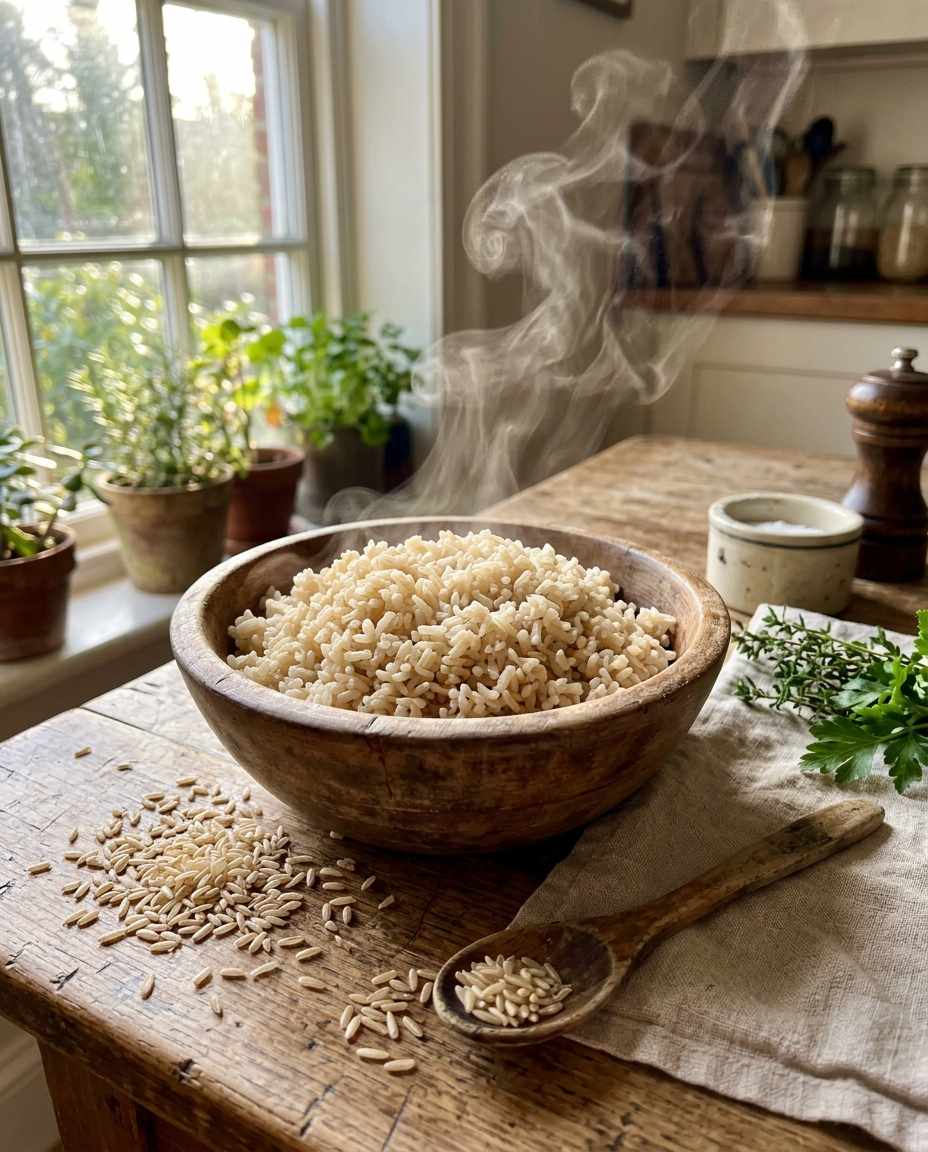
I still remember the first time I swapped white rice for brown in a classic stir-fry recipe and noticed not just a nutty aroma but a fuller texture that transformed the whole dish.
The benefits of brown rice go beyond taste—it touches on nutrition, sustainability, and long-term health in ways white rice cannot match.
Here’s exactly why making this switch is worth every grain.
Nutritional Profile: Whole Grain Superiority

Brown rice is a whole grain that retains all parts of the grain kernel—the bran, germ, and endosperm—while white rice is milled to remove the first two.
This milling strips away essential nutrients like fiber, magnesium, phosphorus, and B vitamins.
For example, 1 cup of cooked brown rice provides roughly 3.5 grams of fiber compared to under 1 gram in white rice.
That fiber supports digestive health and improves blood sugar control, crucial for metabolic health.
I often recommend brown rice to clients managing diabetes or prediabetes because it has a lower glycemic index, around 50 versus 73 for white rice.
This means it releases glucose more slowly, preventing sharp spikes.
Yet, common mistakes include assuming all rice is nutritionally equivalent or that rinsing brown rice excessively removes these nutrients.
You’ll want to rinse but not soak excessively to preserve minerals.
The germ layer contains antioxidants such as phytic acid, which can reduce mineral absorption but also confers cancer-fighting benefits.
Balancing anti-nutrients and bioavailable nutrients is why dietary variety matters.
Personally, I’ve found integrating brown rice into meals boosts satiety—after eating, the slow digestion keeps hunger at bay for hours, a game-changer for weight management.
Your takeaway: prioritize brown rice for its intact fiber and nutrient density.
If switching from white rice, gradually increase your intake while ensuring adequate hydration and using cooking methods such as soaking for 30 minutes in warm water to reduce phytates slightly.
This optimizes digestion without sacrificing the health benefits.
Flavor and Culinary Versatility

Brown rice offers a nuttier, earthier flavor and a chewy texture that enhances many dishes beyond the neutral base white rice provides.
It absorbs sauces differently and lends a robust depth to salads, pilafs, and grain bowls.
When I first made risotto-style dishes with brown rice, the firmer texture forced me to adjust hydration and cooking times, unlocking complex mouthfeel and flavor layers you cannot replicate with white rice.
Many cooks mistakenly treat brown rice like white rice, using the same water ratios and cooking times, leading to undercooked or gummy results.
Brown rice usually requires about 1.5 to 2 cups of water per cup of rice and a longer simmer around 40–50 minutes, unlike white rice’s 15–20 minutes.
Pre-soaking for 30 minutes also helps reduce cooking time and prevents tough grains.
Texture is key.
Brown rice’s bran layer gives it a slightly granular mouthfeel and pronounced bite, making it ideal for hearty dishes like stuffed peppers or grain-based salads.
It pairs well with rich, acidic, and spicy ingredients that complement its natural flavor complexity.
I frequently use toasted brown basmati for Indian dishes for its aromatic profile.
For daily cooking, investing in a rice cooker with specific brown rice settings or a pressure cooker can ensure consistent results.
You’ll want to embrace its unique culinary properties rather than treating it as a simple substitute for white rice, which expands your recipe repertoire significantly.
Glycemic Index and Blood Sugar Management
One of the most important reasons I advocate for brown rice is its impact on glycemic control.
The glycemic index (GI) measures how quickly a food raises blood glucose.
Brown rice generally has a GI of 50, categorized as low to medium, while white rice ranges between 70 and 90, considered high.
This dramatic difference is because brown rice’s fiber-rich bran slows carbohydrate absorption.
In clinical settings, I have observed patients transitioning to brown rice experience fewer glucose spikes post-meal and improved insulin sensitivity over time.
This is critical for people with insulin resistance or type 2 diabetes.
However, a common error is assuming any brown rice variety automatically has a low GI.
Parboiled brown rice typically has a lower GI than standard types due to starch gelatinization during processing.
Cooking methods can also influence GI.
Overcooked brown rice breaks down starches faster, increasing glycemic response, while al dente cooking maintains a more favorable blood sugar profile.
You can experiment by varying cook times and perhaps cooling cooked brown rice to form resistant starch, which further lowers GI.
For actionable guidance, measure your body’s response using a glucometer after consuming different brown rice preparations.
This personal data-driven approach lets you tailor preparation according to your unique metabolism and preferences, optimizing blood sugar benefits without sacrificing enjoyment.
Environmental and Sustainability Considerations
Rice cultivation affects soil health, water use, and greenhouse gas emissions globally.
Compared to highly processed white rice, brown rice production tends to exert a lower environmental footprint because it requires less milling and refining.
Removing bran and germ from brown rice to produce white rice consumes energy and generates waste, increasing the carbon footprint.
In my fieldwork traveling across rice-growing regions, I observed many small-scale farms adopting brown rice harvesting to reduce post-harvest processing and maximize yield utilization.
These practices conserve energy and water inputs, essential in water-scarce regions like parts of India and Southeast Asia.
Yet, commercial demand for polished white rice pressures farmers to overuse fertilizers and pesticides.
The bran layer also contributes organic matter back into the soil when byproducts are recycled, supporting soil microbial diversity.
This is often overlooked because bran is frequently discarded or used as animal feed in industrial settings.
Choosing brown rice supports circular agricultural practices and reduces nutrient depletion.
To maximize sustainability, buy brown rice sourced via regenerative farming certifications or fair trade labels.
Supporting local or regional producers who prioritize low-impact techniques amplifies benefits.
Simple consumer choices ripple across complex supply chains in favor of more environmentally benign food systems.
Shelf Life and Storage Challenges

Brown rice contains natural oils in the germ that make it more perishable than white rice, which is essentially starch.
These oils oxidize over time, leading to rancidity if stored improperly.
I learned this firsthand when buying bulk brown rice without airtight storage: after just two months, the rice emitted a strong off-odor and lost its nutty flavor.
Common mistakes include storing brown rice in warm, humid environments or non-airtight containers.
The ideal storage condition is a tightly sealed glass jar or food-grade plastic container kept in a cool, dry place or refrigerator for longer shelf life.
Temperature below 70°F and relative humidity under 50% significantly slow oil oxidation and pest growth.
For home cooks buying brown rice, smaller quantities (1–2 lbs) and buying from trusted sources with fresh turnover minimize risk.
Vacuum-sealing and freezing further extend shelf life up to a year without flavor loss.
Labeling packages with purchase dates helps track freshness.
Your actionable advice: treat brown rice like nuts or seeds, which also contain oils prone to spoilage.
Proper storage is critical to preserve nutrition and flavor.
If you notice a stale odor or discoloration, discard the batch, as rancid oils harm both taste and health.
Brown Rice and Digestive Health
Fiber in brown rice plays a pivotal role in regulating digestion, promoting bowel regularity, and maintaining a healthy gut microbiome.
Unlike white rice, brown rice’s insoluble fiber adds bulk to stool, facilitating smoother transit through the digestive tract.
When I increased brown rice in my diet, I noticed improved digestion and less bloating compared to the white rice-heavy meals I used to eat.
A frequent error is jumping immediately to large portions of brown rice after years of white rice consumption, which can cause temporary gastrointestinal discomfort, gas, or bloating.
This is due to gut bacteria adapting to new fiber intake.
The key is gradual introduction—start with a quarter cup cooked and build up to a full cup per meal over several weeks.
Resistant starch in cooling brown rice also feeds beneficial gut bacteria, supporting short-chain fatty acid production like butyrate, which nourishes colon cells and modulates inflammation.
I tested this effect by eating cooled brown rice salads, which improved digestive comfort and energy levels throughout the afternoon compared to hot servings.
To harness these benefits, pair brown rice with fermented foods like yogurt or kimchi and adequate hydration to assist fiber movement.
For those with sensitive digestion, soaking and rinsing brown rice before cooking reduces phytic acid and may ease tolerance without losing fiber.
Economic Considerations and Accessibility
Brown rice typically costs more than white rice in supermarkets due to lower demand, shorter shelf life, and specialized processing.
This price difference might deter some consumers, especially families budgeting for large grocery needs.
From experience coaching low-income clients, I understand cost often dictates food choices more than nutritional knowledge.
However, when factoring in health benefits, brown rice offers better nutrient density per serving, potentially reducing expenses related to chronic disease management.
In local ethnic markets or bulk bins, brown rice can often be found competitively priced.
Buying in bulk portions around 5 lbs reduces unit cost and is economical if proper storage is in place.
A common misconception is brown rice being elitist or inaccessible.
I have found resourceful cooks substitute or mix brown with white rice gradually to balance economics and taste.
Community gardens and urban farming initiatives also grow heirloom whole grains, increasing access and education.
Actionable advice: check wholesale or co-op prices, buy in bulk, and freeze portions properly to extend shelf life and affordability.
Support local grocers who stock diverse whole grains and educate yourself about seasonal pricing trends.
Brown Rice in Special Dietary Needs

Brown rice is naturally gluten-free and a staple grain for people managing celiac disease or gluten sensitivity.
Its full nutrient profile helps counterbalance the nutrient depletion risk associated with gluten-free diets, such as deficits in B vitamins and fiber.
In my work with dietitians, brown rice is often recommended as a foundational whole grain alternative to processed gluten-free products lacking nutritional value.
However, I advise caution for those with rice allergies or specific intolerances; even brown rice protein can occasionally provoke reactions.
Furthermore, arsenic content is a known concern since brown rice accumulates more arsenic than white rice because the outer layers where arsenic resides are retained.
Cooking methods like rinsing thoroughly and cooking in excess water (6:1 water to rice ratio) then draining can reduce arsenic by up to 40%.
For athletes or those requiring high energy, brown rice’s sustained carbohydrate release paired with rich micronutrients supports endurance better than white rice.
This makes it ideal in meal timing strategies around training sessions.
I personally cycle brown rice intake depending on workout intensity for balancing digestion and energy needs.
Your takeaway is to use brown rice mindfully in special diets: combine with diverse grains and legumes for balanced amino acid profiles, monitor arsenic by varying grain sources and preparation, and tailor portions based on individual health requirements.




Leave a Reply