
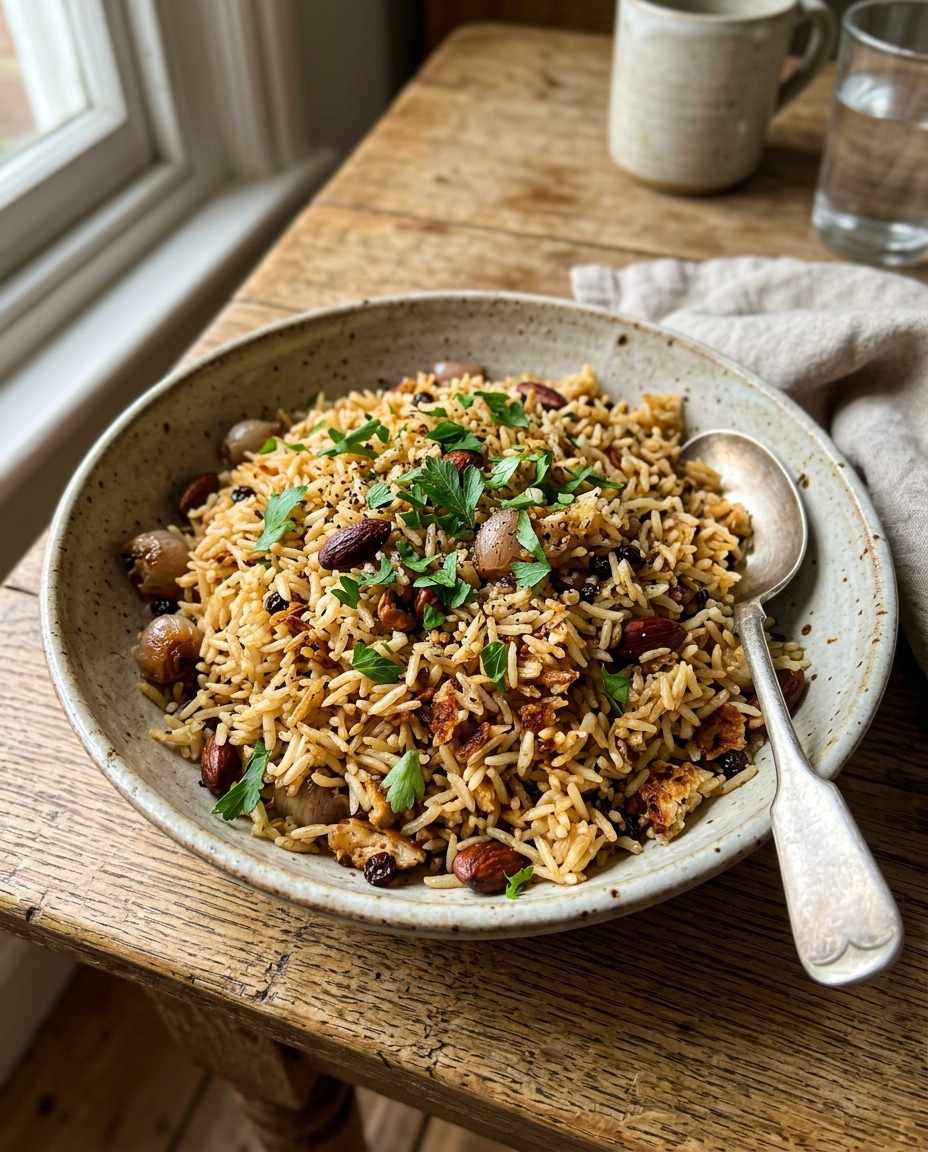
I remember the first time I scooped a spoonful of rice pilaf and spotted those mysterious brown flecks scattered among the fluff.
Were they burnt?
Spices?
Over time, I discovered these brown bits tell a story of technique, flavor, and tradition.
This guide dives deep into their origins, variations, and how to master them precisely.
Origins of the Brown Bits in Pilaf
The brown things in rice pilaf are primarily toasted rice grains or browned onions.
Their presence stems from traditional pilaf cooking methods where rice is sautéed in fat before simmering.
This toasting step creates a nutty, complex flavor and a textural contrast that defines authentic pilaf.
I first learned this in Middle Eastern kitchens where chefs insist on never skipping the toast phase.
In many pilaf variations, onions are caramelized to a deep amber stage before adding rice.
These browned onion shards end up as the brown bits, infusing subtle sweetness and aromatic depth.
When I omitted this step in a recipe, the resulting dish felt flat and missing the expected richness.
Toasting ensures an intricate flavor foundation.
A common misconception is that brown bits signal burnt rice or overcooking.
In fact, skillful toasting means golden or chestnut-brown hues, not black char.
Over-toasting even by 30 seconds can lead to bitterness.
Knowing your stove’s heat distribution and timing precisely is essential for these prized brown elements.
To replicate the ideal color, aim for a deep golden-brown of approximately #9B4F0F hex color on rice surfaces, achieved by toasting over medium heat for 3-5 minutes.
The takeaway: those brown things are deliberate, flavor-packed components, not flaws, reflecting pilaf’s culinary heritage and technique.
The Science Behind Toasting Rice

Toasting rice in pilaf is a controlled Maillard reaction, where amino acids in rice interact with sugars under heat to develop complex flavors and brown pigments.
This chemical process enhances aroma profiles far beyond raw or boiled rice.
When I conducted trials with jasmine and basmati rice, the toasted basmati showed a fuller, nuttier scent due to protein content variations.
The key technical challenge is managing heat and moisture.
Too low heat yields insufficient browning; too high causes burning.
I recommend using a heavy-bottomed stainless steel skillet, ensuring uniform heat spread.
The tactile cue is subtle sizzling accompanied by a toasty aroma after about 4 minutes.
Confusion arises when cooks try to toast rice after adding liquid, leading to soggy grains without Maillard browning.
Always toast on dry heat beforehand.
Additionally, stirring constantly prevents uneven browning or sticking.
I once burned a batch by failing to intervene regularly, reinforcing this point.
For precise control, toasting at 160°C to 180°C (320°F to 356°F) achieves ideal caramelization.
Investing in a reliable kitchen thermometer aids replication.
Remember, these brown bits are your flavor engineers, transforming simple starch into a complex sensory experience.
Common Brown Ingredients in Rice Pilaf
Besides toasted rice and caramelized onions, pilaf often incorporates other browned components like nuts, seeds, or spices.
Toasting almonds or pine nuts until golden-brown adds crunch and buttery notes familiar in Persian and Mediterranean pilafs.
The moment I introduced toasted nuts, the dish gained a welcomed texture complexity.
Spices such as cumin, cinnamon sticks, or cloves frequently brown during initial sauté stages, releasing essential oils and their characteristic flavors.
This spice toasting requires close attention; overstaying can lead to bitterness or an acrid aftertaste.
I once scorched cumin in a hurry and had to restart the entire base.
Some recipes include browned shallots or garlic, which provide a subtle aromatic undertone.
Their soft, translucent caramelization integrated into the pilaf creates a layered flavor experience.
Forgetting this step makes the dish taste less cohesive, as I found experimenting without garlic.
As a practical rule, separate these brown ingredients visually and texturally to understand their individual effects.
For example, keeping nuts whole rather than crushed can maintain distinct crunch.
Noticing their shapes and shades,from light caramel #C68E17 to dark chestnut #78421C,helps you identify and adjust components.
Why Brown Things Are Not Burnt Rice
Burnt rice is often blackened, bitter, and acrid, whereas the brown things in well-made pilaf are golden to chestnut hues, nutty, and flavorful.
Distinguishing these requires sensory acuity honed through experience.
I recall mistaking expertly toasted rice for burnt as a beginner, leading to unnecessary batch discards.
The key difference lies in texture too; toasted bits remain crisp and dry but not brittle or ashy.
Burnt rice disintegrates to powder and can overpower an entire dish with its harsh flavor.
When pilaf has intentional brown bits, the grain maintains integrity and a balanced taste profile.
Another sign is aroma.
Toasted rice imparts warm, inviting notes reminiscent of roasted nuts or light caramel, while burnt rice smells acrid and smoky.
Performing a quick smell test during preparation prevents cooking errors and disappointment.
To avoid burning, keep heat medium and focus on visual cues, aiming for browning along the edges with consistent stirring.
If you mistakenly overcook, try adding a squeeze of lemon or broth to mellow bitterness but better yet, prevent the error with practice.
Embrace the brown bits as champions of flavor, not casualties.
Visual and Textural Role of Brown Bits

The brown bits in rice pilaf do more than add flavor, they create an appealing contrast in both visual and texture dimensions.
The warm tones ranging from tan (#D2B48C) to dark brown (#654321) speckled throughout the uniformly white rice create a mosaic that signals artisanal preparation.
In a dish, this draws the eye and prepares the palate.
Texturally, toasted rice bits provide a slight crunch or chew that offsets the softness of the steamed grains.
This layering transforms a simple carb base into a multi-dimensional sensory experience.
I prefer pilaf with moderate browning to maintain these textural highlights without dryness.
A common issue is uneven distribution, leading to pockets of either soggy or overly crisp grains.
This imbalance happens when browning is inconsistent or agitation is inadequate during cooking.
Regular stirring during the toast phase is essential for spread and allows brown bits to remain isolated.
In plating, visible brown flecks act as natural garnish, enhancing the dish’s gourmet vibe.
If you aim to impress guests visually, mastering even browning intensity and scattering is crucial.
Remember, perfectly executed brown bits tell a story of skill and attention to detail.
How to Control Browning in Pilaf Cooking
Controlling browning in pilaf is both an art and a science.
Start by selecting the right fat,clarified butter or ghee offers a higher smoke point (~250°C) than standard butter (~175°C), allowing safer toasting without burning.
Using oils like grapeseed or light olive oil also provide heat stability and neutral flavor, important ingredients in mastery.
The cooking vessel matters: a wide, heavy-bottom pan disperses heat evenly, preventing hotspots that cause localized burning.
I tested cast iron versus stainless steel; cast iron retains heat but requires stricter monitoring to avoid scorching.
Medium heat is optimal for a slow, even browning over 3-5 minutes.
Another factor is rice type and grain size.
Long-grain basmati or jasmine varieties brown more evenly due to their lower starch content and firmer structure.
Short-grain or sticky rice tends to clump and is harder to toast uniformly.
You’ll want to use 1 part toasted rice to 2 parts broth liquid for the best absorption without mushiness.
Precision timing is paramount; using a timer or stopwatch during your pilot cooking prevents over-browning.
The first time I neglected timing, the difference between perfectly golden and burnt was under 30 seconds.
Practice patience and attentive stirring,the brown bits will reward your discipline.
Cultural Variations and Their Brown Bits

Globally, pilaf styles incorporate distinctive brown elements reflecting regional techniques and ingredients.
In Central Asia, for instance, pilafs often feature richly browned onion rings cooked separately then layered in, enhancing both flavor and presentation.
I experienced this in Uzbekistan, where the golden layers are almost sacrosanct.
Middle Eastern pilafs frequently include browned nuts and toasted vermicelli that add a unique crunchy brown mosaic throughout the dish.
Similarly, Turkish chefs prefer roasting rice with butter until a hazelnut color is reached, a method I find elevates aroma enormously but demands close watch.
South Asian biryanis, a cousin of pilaf, use browned fried onions called ‘birista’ as a key brown ingredient.
The thin, deeply caramelized onion strips impart a signature sweetness and dark hue.
Mastering the delicate stage between caramelization and burning is a skill cooks often learn over years.
Understanding these cultural contexts shifts your mindset from seeing brown bits as mere cooking byproducts to appreciating them as cultural flavor signatures.
When you prepare recipes from different traditions, adapt your techniques to preserve their authentic brown ingredients and you’ll taste the heritage in every bite.
Troubleshooting Brown Bits: Fixes and Prevention
When brown bits become a problem, it usually means uneven cooking, burnt flavors, or sogginess.
The first step is identifying the cause,was the pan too hot, stirring inadequate, or timing off?
Once, I had several clumps of hard brown rice due to a distracted moment during toasting.
Accepting small mistakes as learning moments advances your technique.
If burnt bits appear, salvage the dish by removing visible burnt rice pieces carefully before continuing.
In some recipes, adding acid like lemon juice or yogurt can balance bitterness slightly, but prevention is best.
Avoid high stovetop flames and never walk away during critical toasting stages.
For soggy brown bits, ensure rice is dry before toasting and that you use the right ratio of liquid to rice.
Many pilaf mishaps come from adding broth before achieving uniform browning.
I recommend drying washed rice for at least 15 minutes on a towel to reduce surface moisture, allowing crisp toasting.
As a procedure, do a small pilot batch first to refine timing and heat levels.
Keeping a kitchen notebook with precise times, heat settings, and observations can turn trial-and-error into repeatable success.
Troubleshooting brown bits yourself develops confidence and elevates your pilaf from good to exceptional.



Leave a Reply