
Orchardgrass can be a stubborn and unsightly weed in your lawn, but you don’t have to settle for patchy, uneven grass.
With the right techniques and a little patience, you can reclaim that lush, green yard you’ve been dreaming of.
Here’s how to get rid of orchardgrass with proven, effective steps.
Understanding and Tackling Orchardgrass
You should start by identifying orchardgrass early and learning why it thrives in your lawn to effectively control it.
This perennial grass has a distinctive clumping growth habit and outcompetes desirable turfgrass if left unchecked.
Knowing the problem is half the solution when planning your approach.
I find that combining mechanical removal with strategic lawn care yields the best results against orchardgrass.
I love how addressing both the visible weed and repairing the lawn underneath helps prevent its return.
You can improve soil health and promote dense turf to keep your lawn looking vibrant and weed-free.
1. Spot-Treating Orchardgrass With Herbicide

This photo shows a gardener carefully applying a herbicide with a fine foam brush directly onto orchardgrass leaves.
The person wears gloves and applies the chemical precisely to avoid damage to surrounding grass.
The close-up view highlights the importance of targeted treatment for effective weed control.
Spot-treating orchardgrass with herbicide works because it limits collateral damage to your lawn while delivering enough chemical to kill the tough weed.
You get better control over the application, preventing widespread harm to desirable grass.
Using a selective herbicide designed for grassy weeds is essential.
When recreating this method, take your time and cover all the leaves thoroughly for absorption.
Avoid spraying on windy days to prevent drifts.
Always read and follow label instructions carefully, as misuse can harm your lawn or the environment.
The green, healthy turf visible around the weed contrasts with the targeted weed treatment area to emphasize controlled, precise action.
I recommend combining this with other methods to ensure deep-rooted orchardgrass doesn’t survive the season.
Spot applications also reduce chemical use overall, which is great if you want a more environmentally conscious lawn care routine.
This kind of precision is a smart first step in your orchardgrass removal plan.
2. Hand-Removing Orchardgrass Clumps

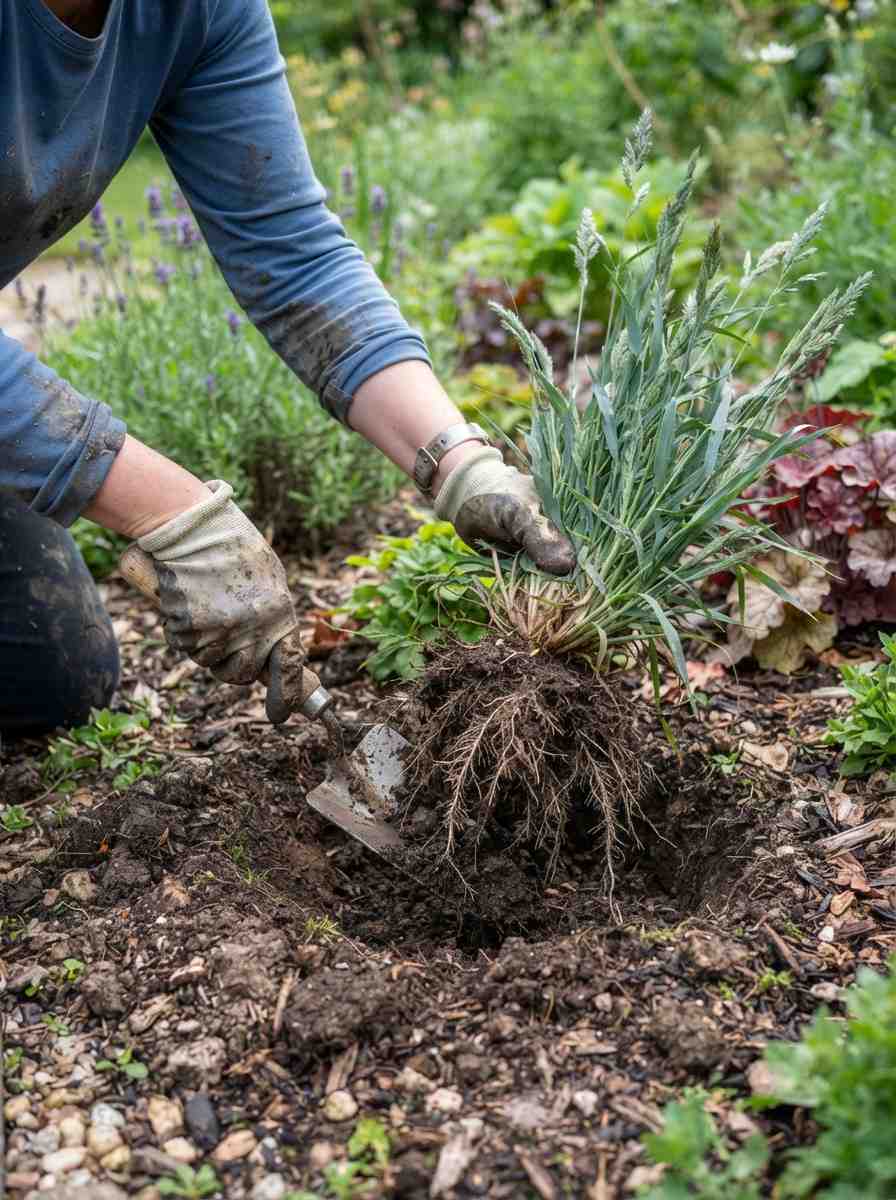
This image captures a gardener in action, using a small digging tool to dig out a full clump of orchardgrass, roots and all.
The soil looks rich and dark, with surrounding garden plants providing a lush backdrop.
The person is kneeling, wearing gloves and working carefully to ensure the entire root mass is removed.
Hand-pulling orchardgrass is crucial because its stubborn root system allows it to regrow if left behind.
You should dig deeply to avoid regrowth from root fragments.
This labor-intensive method is highly effective for isolated plants or smaller patches.
I love how the tactile approach lets you see exactly what you’re removing, reducing guesswork.
You also avoid herbicides when doing this, great for organic lawn care.
This method works best when the ground is moist, making root extraction easier.
When removing orchardgrass, target both the crown and extensive roots.
Leaving parts behind will cause the weed to reestablish quickly.
Having quality garden gloves and a sturdy hand tool improves precision and comfort during this task.
Hand-removal combined with later lawn restoration steps ensures you eliminate the unhealthy patch and restore your lawn’s appearance and vigor.
3. Relying on Overseeding to Repair Lawn

This photo shows someone spreading grass seed on a freshly prepared patch of soil.
The ground is bare and textured, contrasting with the surrounding thick turf.
The seed bag is visible and the person wears gloves, highlighting a thoughtful, deliberate reseeding process.
Overseeding is essential after removing orchardgrass to repair bare spots and boost grass density.
A thick, healthy lawn is your best defense against weed invasion.
You should use a grass seed blend suited to your climate for optimal results.
I find that lightly raking the soil before seeding promotes good seed-to-soil contact and improves germination.
Even watering afterward keeps the soil moist without washing seeds away.
Frequent watering in the early weeks greatly helps young grass establish.
Using quality seed products and following label instructions maximizes success.
Choose turf builder seeds designed for resilience and weed suppression.
Incorporate overseeding into your routine lawn maintenance after orchardgrass removal for long-term success.
This method helps the lawn fill in evenly, preventing opportunistic weeds like orchardgrass from regaining a foothold.
4. Achieving a Vibrant, Orchardgrass-Free Lawn

This image depicts a wide, beautifully manicured lawn with rich, green grass free of visible orchardgrass or bare patches.
The lawn is framed by flower beds and shrubs, with a stone patio and a spacious home in the background.
The sunlight enhances the lush texture and uniformity of the grass.
A vibrant lawn free of orchardgrass speaks to successful weed control and diligent lawn care practices.
You get the benefit of a healthy yard that’s both aesthetically pleasing and durable against pests and weeds.
Consistent mowing, watering, and fertilizing play a huge role here.
I personally recommend establishing a mowing routine that keeps turfgrass at the recommended height for your grass type, preventing weeds from getting the sunlight they need to thrive.
Proper irrigation also keeps lawn roots strong while avoiding overwatering, which can encourage weeds.
This photo exemplifies the result you’re aiming for: a smooth, uniform, and well-maintained lawn that naturally deters orchardgrass.
Weed-free turf also supports outdoor activities and enhances curb appeal.
Establishing a nourishing care routine after removal treatments completes your orchardgrass battle and keeps your lawn lush and inviting through every season.
5. Spotting Orchardgrass for Early Action

The photo zooms in on a single orchardgrass plant rising stark green against a dense, dark green lawn.
The long, narrow leaves with a slightly lighter hue and the tufted growth habit stand out from the tighter turf grass blades.
The grass blade texture looks coarse and a bit spiky compared to surrounding grass.
Identifying orchardgrass early is critical because it allows you to intervene before it spreads aggressively.
You should learn to recognize its distinctive leaf shape, growth pattern, and coloration compared to your lawn grass.
Early detection reduces effort and damage.
I find that regularly inspecting your lawn in spring and fall makes spotting weeds easier.
Look for these clumpy, coarser patches rather than smooth lawn growth.
This helps you target your treatments only where needed, preserving the health of your lawn.
Knowing what orchardgrass looks like enables tailored interventions from selective herbicide to manual removal or overseeding as needed.
This foundational knowledge saves time and effort in your weed management.
Spotting and acting early prevents orchardgrass from establishing itself extensively , the cornerstone of an effective lawn care strategy against this persistent weed.


Leave a Reply