
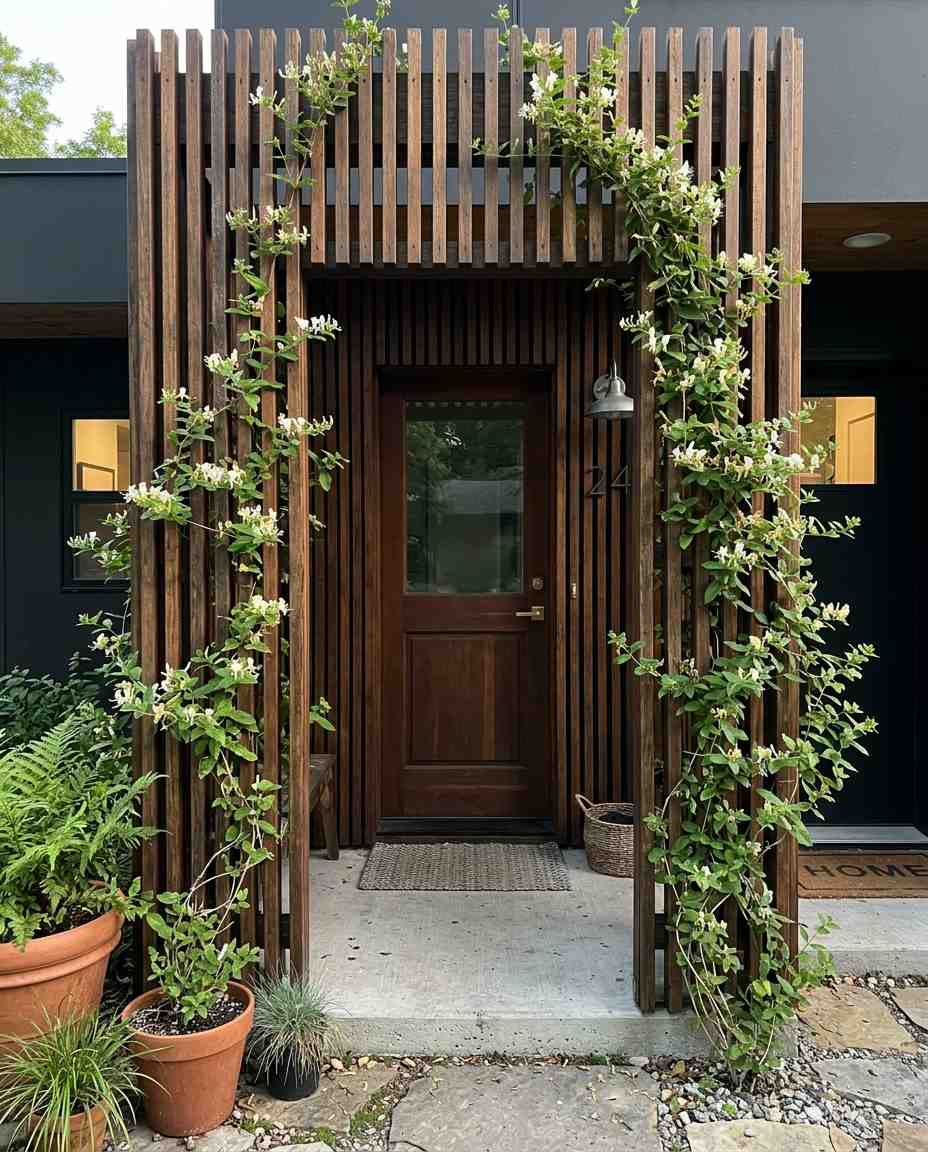
When my neighbor asked me to install a trellis to conceal an unsightly AC unit, I realized how transformative these structures can be for curb appeal.
These 16 trellis ideas on the front of your house will inspire you to blend beauty and function effortlessly.
You get stylish outdoor charm that increases your home’s welcoming vibe instantly.
Why Trellis Fronts Work
You should think of trellises as versatile architectural elements that add vertical interest and texture to your home’s facade.
They create a canvas for climbing plants that softens hard surfaces and brings seasonal color right to your doorstep.
I find that using quality materials like cedar or powder-coated metal ensures your trellis stays beautiful and sturdy over time.
I love how the right trellis design can highlight a front porch entrance or frame a window with charm and dimension.
1. Classic Wooden Lattice

A classic wooden lattice trellis never goes out of style.
I personally recommend using cedar or redwood because they resist rot and weather gracefully without overpowering your home’s look.
The natural wood finish adds warmth and complements most exterior paint colors.
You can mount this lattice loosely against the wall to allow climbing roses or ivy to weave through the grid, creating a lush, romantic front.
I love how the square pattern catches shadows beautifully throughout the day.
For an upscale touch, finish the wood with a semi-transparent stain to enhance the grain while protecting it from sun damage.
This look feels authentically timeless and approachable.
I find that adding planter boxes at the base encourages greenery spillover and balances the vertical lines nicely.
2. Modern Metal Grid

If you prefer sleek and contemporary, a powder-coated metal grid trellis offers clean lines with exceptional durability.
I recommend black or dark graphite finishes to contrast boldly against lighter home exteriors.
You get a minimalist backdrop perfect for climbing vines with fine textures like sweet peas or morning glories.
I love how the metal glints subtly in sun and rain, adding a modern gleam.
This style works well when you want to create sharp architectural interest without clutter.
The metal’s thin profile doesn’t compete with other design features, but quietly elevates your front facade.
You should install it flush and secure for a crisp, polished look that will last years without rusting or fading.
3. Rustic Reclaimed Wood

For a warm, lived-in feel, rustic reclaimed wood trellises bring character and history to your home’s entrance.
I love using salvaged barn wood for its natural weathering and varied grain.
You can combine vertical and horizontal boards unevenly spaced to let nature peek through.
This imperfect pattern feels cozy and handmade, perfect for cottage-style houses.
I personally find this approach high-end because each piece is unique, inviting tactile exploration and storytelling through texture.
This makes your entry truly one-of-a-kind.
Seal lightly with matte exterior varnish to preserve the patina while protecting from moisture and pests.
4. White Painted Panel

A white painted panel trellis is a fresh, clean choice that brightens any front facade.
I recommend using rot-resistant pine or cedar primed and painted with glossy outdoor enamel for an impeccable finish.
You get a structured, almost architectural look, perfect for traditional or Cape Cod style homes.
The crisp white frames greenery beautifully and contrasts with colorful blooms.
I find that flat panels with small inset squares create subtle shadow play, adding depth without distraction.
It’s an elegant way to emphasize entranceways or window areas.
You should make sure the paint is maintained regularly to keep that high-end sheen, especially in rainy climates.
5. Copper Accented Trellis

Incorporating copper accents into your trellis instantly ups the luxury factor.
I recommend framing a wooden lattice with thin copper strips or using copper connectors between panels.
You get a stunning contrast between warm metal and natural wood that evolves beautifully, developing a verdigris patina over time.
I love how this adds dynamic color variation to your front facade.
This approach pairs well with natural stone or brick exteriors, complementing earthy tones.
The copper highlights catch the sun in the afternoon, creating a soft glow.
You should ensure copper pieces are sealed to avoid staining adjacent materials initially.
6. Arch Top Trellis

An arch top trellis adds charming curves to soften rigid architectural lines.
I personally recommend using finely sanded white pine or aluminum painted white for this style.
You get a graceful silhouette that frames doorways, pathways, or even windows like a welcoming gateway.
I find this shape especially effective with trailing sweet peas or wisteria.
The curved top adds dimension and invites your eyes to follow the vine’s flow upward.
It feels romantic and stately all at once.
You should install it a few inches from the wall to allow airflow and ease of plant maintenance.
7. Mixed Material Trellis

Combining wood and metal creates a layered, sophisticated trellis look I find incredibly versatile.
I recommend warm teak or cedar vertical slats paired with black steel horizontal braces.
You get texture contrast and color depth that elevates the visual interest without overwhelming your facade.
This style suits modern farmhouse or industrial chic homes.
I love how you can customize mix ratios for delicate or bold expression.
The metal adds sleek toughness, while the wood keeps it approachable.
You should finish wood components with teak oil and powder-coat the metal for longevity.
8. Geometric Pattern

A geometric pattern trellis transforms your home exterior into an artistic statement.
Look for pre-cut trellises with repeating diamonds, hexagons, or chevrons made from composite wood or metal.
You get a graphic design element that doubles as a plant support, perfect for climbing bougainvillea or trumpet vines.
I recommend neutral colors like charcoal, gray, or soft taupe for a modern look.
I find that geometric trellises feel surprisingly high-end even when budget-friendly, thanks to their bold visual rhythm.
You should align the pattern thoughtfully with architectural details to avoid clashes.
9. Vertical Slat Trellis

Vertical slat trellises offer a sleek look that visually lifts your front facade.
I personally prefer smooth hardwoods like ipe or cumaru finished with a clear, matte outdoor sealer.
You get long, uninterrupted lines perfect for fast-growing vines like honeysuckle or clematis.
The wood grain adds natural texture without any bulky decoration.
I find vertical designs especially flattering on narrow spaces beside entrances or garage doors, creating height illusion.
Install the slats with uniform spacing for a refined, custom-built appearance.
10. Shaped Cutout Trellis

Shaped cutout trellises bring a playful or elegant vibe depending on your pattern choice.
Popular motifs include quatrefoil, hearts, or star shapes laser-cut into wood or metal sheets.
You get a decorative focal point that doubles as functional support for delicate vines like sweet peas or jasmine.
I love how the pattern’s negative space casts beautiful shadows.
This style feels artistic and custom, perfect for craftsman or eclectic homes.
You should use powder-coated steel or marine grade plywood for long-lasting durability outdoors.
11. Trellis with Planter Boxes

Anchoring your trellis with built-in planter boxes extends greenery at eye level and anchors the design visually.
I recommend cedar or composite wood planters with a water-resistant finish for longevity.
You get instant flowering color or greenery spilling naturally downward, which softens the trellis’s geometry.
I love how this creates a lush, welcoming environment.
This setup is perfect for urban front yards where space is tight but impact needs to be high.
You should choose drought-tolerant plants if your porch receives a lot of sun to reduce maintenance.
12. Freestanding Trellis Screen

Freestanding trellis screens add privacy and architectural interest when mounted near front patios or beside doorways.
I personally love cedar or teak screens with clean, modern grid patterns.
You get a movable element that can adapt to your changes in landscape design or homeowner preferences.
I find freestanding screens especially useful for corner lot homes aiming to frame entry spaces.
They provide soft visual barriers while allowing light and air circulation, balancing privacy with openness.
You should ensure your base is sturdy enough to withstand weather and wind pressure.
13. Painted Color Pop

Painting your trellis in a bold color is a fun way to make a statement.
I suggest using high-quality outdoor paint in hues like deep teal, mustard yellow, or coral for a cheerful pop.
You get a striking contrast against neutral home colors and create a unique visual anchor beside entrances or windows.
I personally find this adds personality that elevates curb appeal dramatically.
The colorful trellis pairs perfectly with bright flowering vines such as mandevilla or bougainvillea.
You should prep wood surfaces thoroughly for maximum paint adhesion and longevity.
14. Ladder Style Trellis

Ladder style trellises combine casual charm with easy maintenance.
I recommend using natural wood or painted wood in simple horizontal rungs spaced evenly along vertical posts.
You get ideal vertical plant support for beans, peas, or morning glories that can easily be trimmed or managed.
I love how the ladder form feels inviting and approachable.
It’s especially practical for small front yards or tight porch corners needing vertical greenery without bulk.
You should anchor it securely to prevent wobbling in the wind.
15. Black Steel Frame

A black steel frame trellis conveys strength and modern sophistication.
I suggest using powder-coated steel for resistance to rust and a matte finish for a refined look.
You get a slim and sturdy structure ideal for graphic visual impact with less bulk.
I find this style works with industrial or minimalist homes seamlessly.
Paired with climbing vines like ivy or jasmine, the dark frame sharpens greenery while adding an urban edge.
You should weld joints carefully and fix mounting points securely for maximum stability.
16. Round Lattice Panels

Round lattice panels add softness and visual interest through curved shapes rather than the usual squares or rectangles.
I personally recommend white painted cedar or composite wood for longevity.
You get an elegant and feminine touch perfect for Mediterranean or coastal cottage exteriors.
The round shapes break up harsh angles beautifully.
I love pairing these with vines like passionflower or honeysuckle for a whimsical, storybook effect.
You should reinforce the panel edges to avoid warping in humid climates.
Leave a Reply