
Achieving a healthy, green lawn is a goal for many homeowners, but fungal diseases can easily undermine these efforts.
This guide will walk you through everything you need to know about using propiconazole fungicide effectively, from understanding its purpose to applying it safely and maintaining your lawn’s health afterward.
Understanding Propiconazole and Its Role
Propiconazole is a systemic fungicide widely used to protect lawns from various fungal diseases such as brown patch, dollar spot, rust, and powdery mildew.
Unlike contact fungicides, it penetrates plant tissues, providing prolonged protection by inhibiting fungal growth at a cellular level.
This biochemical approach makes propiconazole highly effective for preventive and curative treatments.
Understanding how propiconazole works is crucial for optimal lawn care.
It disrupts ergosterol biosynthesis, a key component of fungal cell membranes, thereby halting the development of fungal infections early.
This mode of action makes it a reliable choice for stubborn diseases and complex lawn conditions.
Propiconazole’s versatility allows for use on different grass types and ornamental plants, making it a flexible solution for home gardeners and lawn professionals alike.
However, correct usage and timing are critical to maximizing its benefits without risking damage to the turf.
Your success with propiconazole begins with recognizing when to act and how to use the product responsibly.
Grasping these fundamentals sets the foundation for stronger, healthier turf resilient against fungal threats.
Identifying Common Lawn Fungal Diseases
Before treating your lawn, properly identifying the fungal disease is paramount.
Diseases like brown patch create irregular brown rings or patches on the grass, often surrounded by a darker green ring, while dollar spot appears as small, circular bleached spots that can merge into larger dead areas.
Rust diseases show up as orange or yellow powdery spores on grass blades, and powdery mildew manifests as a white, powder-like coating.
Misdiagnosing lawn issues as fungal problems when they stem from cultural or environmental stresses leads to ineffective treatment and wasted resources.
For example, drought stress or nutrient deficiencies can mimic fungus symptoms but require different remedies.
Understanding disease cycles and environmental conditions favors timely intervention.
Fungi thrive in warm, humid conditions, so recognizing weather patterns conducive to outbreaks helps prevent severe infections.
Familiarity with these diseases prepares you to select the right fungicide strategy and avoid common pitfalls that cause recurring problems or overuse of chemicals.
Safe Storage and Selection of Propiconazole Products

Choosing the right propiconazole product involves balancing concentration, formulation type, and lawn size.
Available in concentrates and ready-to-use sprays, products differ in ease of application and potency.
Concentrates require dilution before use, while ready sprays offer convenience but may serve smaller areas.
Proper storage of fungicides is critical to maintain product integrity and safety.
Store propiconazole in a cool, dry place away from direct sunlight and out of reach of children and pets.
Exposure to extreme temperatures can degrade the compound, reducing efficacy.
Reading the label for active ingredient percentages and recommended uses ensures you select a product suited to your turf type and the diseases you want to combat.
Avoid expired or damaged containers as their contents might not perform as expected.
Investing time in selecting the right product gives you confidence in application and supports responsible lawn care practices that protect both your turf and the environment.
Preparing and Mixing the Fungicide Solution

Properly preparing propiconazole for application requires accurate measurement and dilution to ensure efficacy without over-application.
Using a measuring cup marked with precise increments helps in mixing the exact amount of concentrated fungicide with water.
The photo reveals a close-up of a clear plastic measuring cup with bright blue liquid inside, sitting on a weathered wooden surface surrounded by garden tools and lush greenery.
This setup emphasizes the importance of precision and care during preparation.
The color contrast between the blue liquid and the rustic tabletop conveys careful preparation in a tranquil garden environment.
Mixing instructions on the label must be followed to achieve a balanced solution that penetrates the turf effectively without causing damage.
Over-concentrated mixtures risk burning grass, while too weak a solution might fail to control fungi, wasting effort and money.
Accurate mixing is a fundamental step toward successful lawn fungicide application, reinforcing the need for careful measurement and adherence to product guidelines for the best possible results.
Proper Application Techniques for Maximum Effectiveness

Applying propiconazole fungicide correctly is as important as mixing it properly.
The goal is to achieve even coverage without puddling or runoff, ensuring the fungicide reaches all the leaf surfaces vulnerable to infection.
A detailed image shows a close-up of a nozzle dispersing a fine, wide mist onto vivid green turf.
The hand operating the sprayer is gloved and positioned attentively, highlighting protective measures and precision in application.
The background softly fades into a neat garden setting, reinforcing careful stewardship of plants.
Spraying during calm weather without wind prevents drift, protecting non-target areas and maximizing fungicide efficacy.
Consistency in spray speed and overlapping strokes helps avoid missed patches, a common error that encourages disease persistence.
Mastering application technique reduces chemical waste and strengthens disease control, ultimately contributing to a healthier, more resilient lawn while safeguarding your garden’s broader ecosystem.
Equipment Choice and Maintenance

Selecting appropriate equipment such as sprayers and measuring tools greatly impacts the success of your fungicide application.
Handheld pump sprayers balance portability with capacity, making them ideal for small to medium lawns, while backpack or wheeled sprayers suit larger areas.
The photo of a mature gardener wearing protective gloves and safety goggles pouring liquid from a small bottle into a 5-liter manual pump sprayer reflects the importance of safety and precision.
The wooden garden table is cluttered with measuring cups and gloves, illustrating preparedness and care in setting up equipment.
Sunlight filtering through vibrant foliage enhances the sense of a well-organized lawn care routine.
Regular spraying equipment maintenance ensures even spray patterns and prevents clogging from dried residues.
Rinsing sprayers immediately after use and checking seals prolongs equipment life and ensures safe handling.
Prioritizing equipment quality and upkeep optimizes fungicide delivery, protecting your investment and promoting consistent, reliable lawn health outcomes.
Timing Treatments for Optimal Results
The timing of propiconazole application is critical to intercept fungal development before significant damage occurs.
Applying fungicides too early or late can reduce effectiveness, allowing diseases to spread or causing unnecessary chemical exposure.
Identifying environmental triggers such as warm, humid weather patterns that favor fungal growth helps establish treatment windows.
Preventive applications in early disease seasons or curative sprays at initial signs of infection generate better results than reactive measures after severe outbreaks.
Understanding your grass species’ growth cycle aids in scheduling treatments to avoid stress periods like dormancy or peak heat.
Moreover, repeatedly applying fungicides on strict intervals without observing lawn conditions can lead to resistance or unnecessary costs.
Careful treatment timing aligns with disease biology and lawn growth phases, maximizing the benefit of each application while minimizing chemical use and environmental impact.
Recognizing Lawn Health Improvements

Visible improvements after propiconazole treatment indicate successful disease control and underpin lawn care satisfaction.
Look for uniform green color, absence of brown patches, and overall turf density as signs of recovery.
An aerial view from above captures a neighborhood lawn with pristine, evenly mowed grass arranged in bold striped patterns, bordered by flower beds and paved areas.
The high-angle perspective showcases the scale of effective lawn management and fungicide success, emphasizing how proper treatment contributes to curb appeal and property value.
While results may vary depending on severity and weather, healthier grass resumes growth faster after fungal threats are quelled.
Monitoring lawn response confirms fungicide effectiveness and guides follow-up care decisions.
Celebrating these improvements motivates ongoing lawn maintenance, reinforcing the importance of integrated practices beyond just chemical treatments for sustained turf vigor.
Maintaining Lawn Health After Fungicide Use

Fungicide application is one component of a holistic lawn care program.
To sustain improvements from propiconazole treatments, incorporate cultural practices such as proper mowing height, regular watering, aeration, and balanced fertilization.
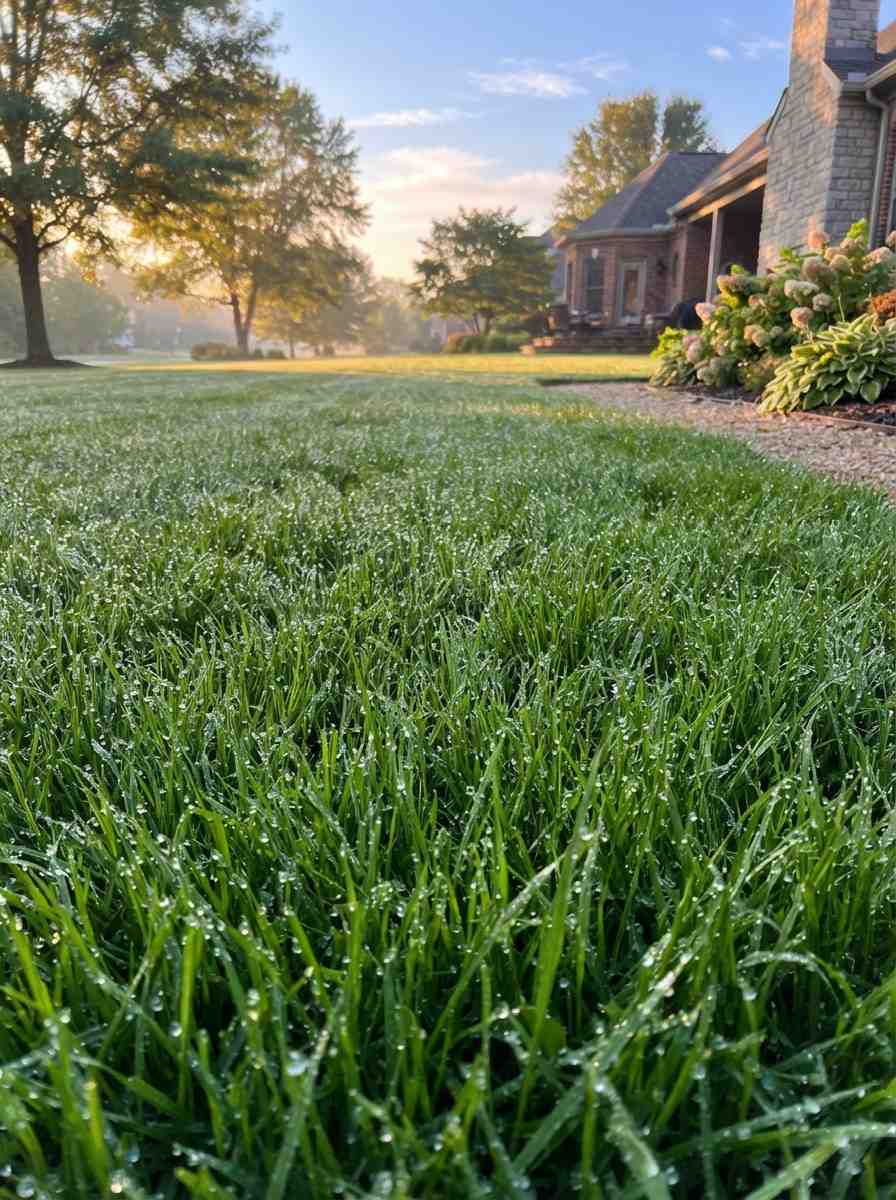
The morning dew sparkling on lush, green grass blades in the photo illustrates a well-watered, vigorous lawn environment.
The warm sunrise lighting, garden flowers, and stone-clad home in the background evoke a serene and healthy landscape that reflects good lawn stewardship beyond fungicide use.
Avoiding excessive nitrogen fertilization immediately after fungicide treatment prevents creating a favorable environment for fungal pests.
Instead, support turf strength gradually to build natural disease resistance.
Adopting comprehensive maintenance ensures your lawn remains robust against future threats, making fungicide interventions part of a sustainable and effective lawn management strategy.
Common Mistakes and How to Avoid Them
Over-applying propiconazole or using it indiscriminately without accurate disease identification are common mistakes that waste product and can harm turf health.
Misapplication risks phytotoxicity, chemical resistance, and environmental contamination.
Ignoring label instructions regarding mixing rates, application timing, or pre-watering lawn can nullify treatment benefits and cause lawn damage.
For instance, applying fungicide to already damaged or stressed turf may compound stress rather than alleviate it.
Another pitfall is neglecting personal protective equipment such as gloves and goggles, which protect users from harmful chemical exposure.
Furthermore, failure to clean spray equipment properly can result in clogging or cross-contamination.
Avoiding these missteps requires diligence, respect for product guidelines, ongoing observation of lawn condition, and commitment to safe handling practices to maximize propiconazole’s potential and safeguard your lawn ecosystem.



Leave a Reply