
Steep backyard hills can feel like a challenge, but with the right landscape design, they become your most stunning feature.
From serene terraces to daring decks, these 30 ideas showcase how to make your hillside work for you,maximizing space, beauty, and functionality.
Transforming Hillsides Into Functional Beauty
You should embrace the slope of your backyard, seeing it as an opportunity rather than a limitation.
Clever landscaping techniques like terracing, retaining walls, and meandering pathways can stabilize your hill while creating charming spaces for relaxation and play.
I find that blending natural elements into the hillside help the landscape feel organic and inviting.
How you layer plants, build seating, and incorporate hardscape details can make a dramatic difference in turning a steep hill into a tranquil retreat or vibrant garden oasis.
1. Embrace Natural Dry Creek Beds

This photo shows a naturalistic dry creek bed winding along a hillside surrounded by native shrubs and grasses.
The rounded, mixed-size stones create a textured, organic path that mimics natural water flow, controlling runoff and preventing soil erosion.
You get a beautiful functional solution that doubles as a landscaping feature.
To recreate this, observe how natural waterways look in your region and use locally sourced rocks arranged loosely to allow water passage.
Pair with drought-tolerant plants on the banks for an eco-friendly hillside drainage system that adds visual interest all year round.
2. Modern Succulent Terraced Planters

This hillside uses rusted metal planters set into terraced steps, filled with a variety of agave and cacti.
The sharp geometric shapes contrast the desert landscape, while the rich rust tones echo the earth beneath.
It creates both order and drama on a steep slope with minimal water use.
For practical implementation, metal or corten steel planters provide structure and durability for desert or drought-prone gardens.
Using succulents reduces maintenance, and the terraced design facilitates easy care on a slope without soil erosion.
3. Cozy Hammock Deck with Mountain Views

Two sturdy trees anchor an elevated wood deck that hosts a hammock, a side table, and rustic stools.
Overlooking serene rolling green mountains, this setup invites relaxation while making the steep slope accessible.
The natural wood deck blends seamlessly with the forest surroundings.
Building a small platform like this breaks up steep grades and offers flat functional space.
Anchoring hammocks between mature trees provides comfort, and placing seating elements encourages you to linger in your hillside nature escape.
4. Zigzag Gravel Woodland Trail

A zigzagging path of gravel lined with narrow wooden borders cuts through a lush green forested hill covered in ferns.
The trail’s sharp turns slow foot traffic for safety on the steep grade and create a sense of mystery as it disappears into the woods.
When designing hillside trails, switchback or zigzag patterns reduce slope steepness, making hikes easier.
Using gravel keeps the path well-drained, and natural wood edging complements woodland textures.
This method balances functionality and aesthetic harmony in forested backyard hills.
5. Serene Japanese-Inspired Garden Bridge

This hillside features a charming red wooden footbridge arching over a stone-lined creek.
Surrounding it are lush mossy rocks, deep green hostas, Japanese maples, and ornamental lanterns creating a calming Zen atmosphere.
The gravel paths and stone stairs lead the eye upward naturally.
Incorporate bridges and water features as focal points on sloped gardens to give charm and tranquility.
Use native shade plants to preserve moisture and soften stone hardscapes.
Maintaining balance between hard and soft textures is essential for serenity in hillside Asian-inspired landscapes.
6. Fun Slide Next to Stone Steps

A grassy hillside is transformed into a play area with a long concrete slide running down beside a set of irregular stone steps.
The natural stone and lush greenery soften the modern slide design, making this space both whimsical and practical for families.
Adding recreational features like slides on slopes can make uphill yards engaging for kids.
Pairing slides with adjacent steps ensures safety and accessibility.
Using native plants alongside helps stabilize the soil and adds year-round color around play zones.
7. Steep Vineyard Rows on Hillside

This vineyard is planted along a steep hillside with neat tightly spaced rows climbing sharply upwards.
The neatly trellised grapevines contrast against the dry hill backdrop, showcasing how agriculture can thrive on slopes with smart row orientation and support.
If you have the right climate, terracing hill vineyards face the sun and maximize drainage, essential for grape growing.
Reinforced trellises keep vines tidy and accessible for harvesting.
Even steep plots can become productive with strategic agricultural landscaping.
8. Stone Pavilion with Outdoor Kitchen

Perched on a hillside with sweeping forest views, this sturdy stone pavilion covers an outdoor grill and wood-fired oven.
Rustic wood furniture and stone flooring create a cozy yet elegant entertaining space that fits naturally into the landscape.
Building well-supported structures on slopes allows you to enjoy elevated views and fresh air.
Solid materials like stone anchor the pavilion while blending with natural surroundings.
Incorporate covered cooking and seating areas to maximize year-round outdoor living on hills.
9. Tropical Mist-Cooled Stone Steps

A shady hillside garden uses stone steps lined with lush tropical plants like ferns, philodendrons, and bromeliads.
Mist spray systems pour gentle clouds of moisture, exemplifying how to keep humid microclimates ideal for tropical growth on slopes.
If you want a jungle vibe on a hill, incorporate automatic misting for heat relief and plant diversity.
The stone steps provide firm footing while integrating with the natural rockiness.
Use hardy moisture-loving species to achieve a cool, tropical retreat even on sunny slopes.
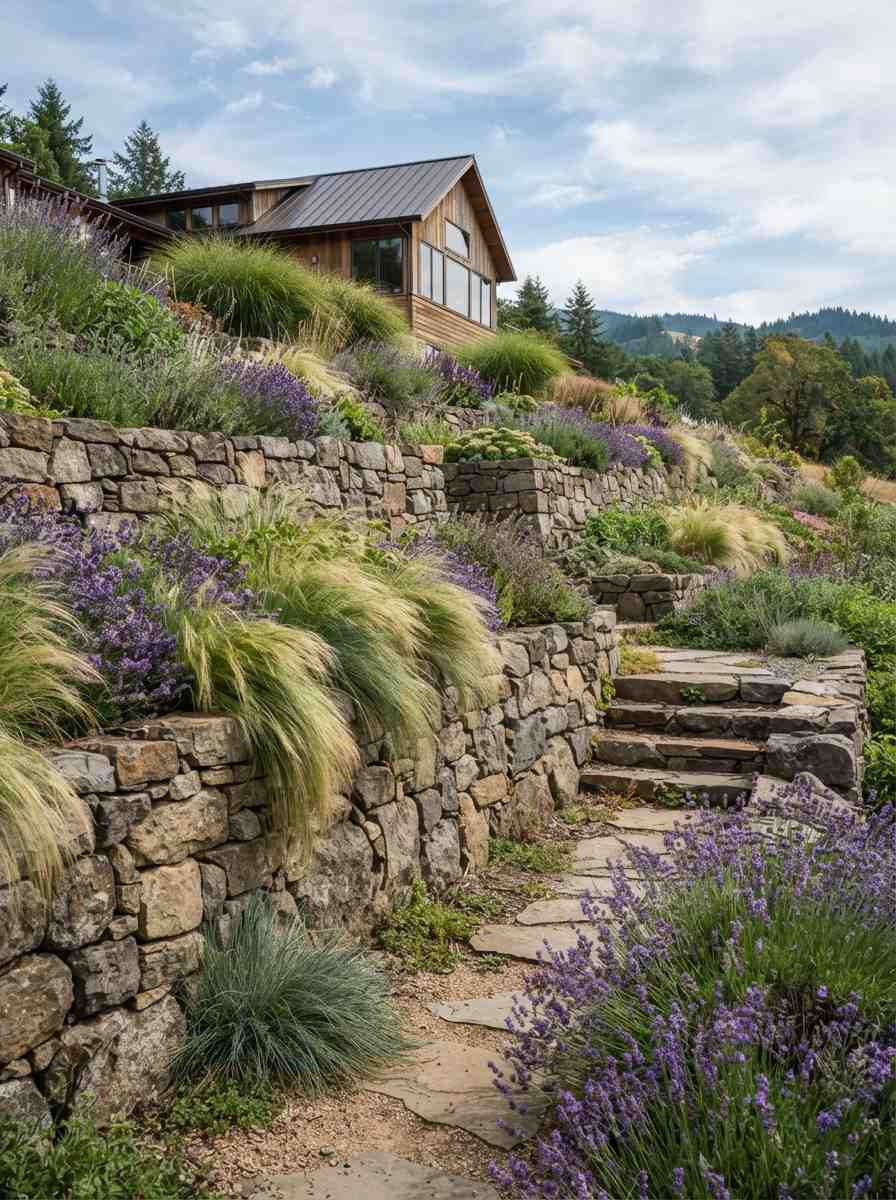
10. Lavender and Ornamental Grass Terraces

This hillside features multiple dry-stone terraces filled with swaying lavender, ornamental grasses, and low shrubs.
The light purple blooms and golden grass heads echo the soft hues of the stone, creating a soothing Mediterranean effect.
Terracing on hills prevents erosion and enables diverse plant groupings.
Lavender’s drought tolerance makes it perfect for sunny elevated spots, while grasses add movement and texture.
Building terraces of varying sizes and shapes adds depth and color rhythm to hillside gardens.
11. Stone Circle Fire Pit Retreat

A secluded circular stone patio sits nestled on a forested hillside, surrounded by tall evergreens.
Four modern chairs encircle a fire pit, inviting conversation in this private natural nook.
The rough stone flooring and wall blend with the organic forest textures.
Creating flat terraces or pads on a sloped site maximizes usability.
A fire pit is a timeless gathering spot, encouraging year-round outdoor connection, especially on cool evenings.
Natural stone on steep wooded hillsides integrates social spaces without disrupting the landscape’s flow.
12. Succulent Rock Garden Paths

This rocky slope incorporates winding gravel paths and natural stone steps set among a palette of low-water succulents and cacti.
The houses in the background sit elevated, giving this dry garden a perched look that feels both rugged and cultivated.
Choosing native succulent plants that cling to hillsides minimizes upkeep and water needs.
Gravel paths with irregular flagstone steps maintain natural drainage and erosion control.
This style is perfect for arid mountain settings where rock and plant work in durable harmony.
13. Urban Living Wall Hillside

A large hillside urban space is covered with multiple living wall systems packed with vibrant greenery and succulents, offering a vertical garden spectacle.
Curved concrete walkways guide visitors alongside this innovative green feature that softens the cityscape.
Living walls are a smart solution for steep urban yards with limited flat areas.
Choose drought-tolerant and low-maintenance plants to reduce irrigation.
These walls also help cool the environment and increase habitat in dense neighborhoods.
Combine with accessible pathways for a future-forward ecological hill design.
14. Natural Waterfall and Pond Steps

A cascading waterfall flows down a stone staircase into a peaceful pond surrounded by lush green vegetation on a hillside.
Purple irises and lily pads add points of color while the natural stonework channels the water beautifully.
Water features on slopes take advantage of gravity to create sound and movement.
Building steps alongside allows visual access and safe passage up steep hills.
Choose native aquatic plants to complement the pond and use stone carefully to blend engineered water with wild landscape.
15. Rustic Woodland Stump Stairway

This hillside stairway is crafted from cut tree stumps set at varying heights, connected by creeping groundcover plants.
The path leads up through dense forest with natural materials that enhance the woodland vibe and prevent runoff.
Using stump steps is a sustainable method to navigate steep wooded slopes without industrial materials.
Supplement with low-growing mosses or groundcover to fill gaps and soften edges.
This creates an inviting forest trail with minimal landscape disturbance that ages beautifully over time.
16. Wildflower Path on Gentle Slope

A narrow gravel path gently curves uphill through a dazzling wildflower meadow in full bloom.
Bright blues, yellows, and oranges of lupine, poppies, and daisies contrast with the soft green hillside backdrop, creating a painterly natural setting.
Planting wildflowers is a delightful way to cover steep slopes simply and ecologically.
Use native or well-adapted wild species for drought resilience and pollinator support.
The gravel pathway helps navigate and define the area while enhancing the informal garden mood.
17. Elevated Boardwalk Through Woods

A long wooden boardwalk zigzags up the forested hill, supported by sturdy posts to level the path and provide safety on steep inclines.
Railings give security, and multiple lookout platforms let you pause and absorb the views.
For steep wooded hills, elevated walkways protect the forest floor from heavy foot traffic and erosion.
Wood materials warm the green setting, while gentle switchbacks reduce steepness.
Lookout decks create destination points that encourage breaks and connect users more deeply to nature.
18. Tiered Lawn Amphitheater

This hillside landscape is transformed into a terraced lawn amphitheater with neat green grass seating rows separated by gravel walkways.
Natural stone steps and retaining walls frame the space, blending functionality and aesthetics.
Building a stepped amphitheater on a slope provides excellent viewing for outdoor concerts or gatherings while maximizing usability in steep yards.
Use grass or low-maintenance turf varieties for comfort, and integrate well-planned stone or concrete work for structure and access.
19. Putting Green Playground Terrace

A playful backyard features a mini putting green on terraced artificial turf, bordered by stone retaining walls and complemented by a pergola and outdoor seating area.
The elevated setting overlooks sprawling hills and neighborhoods.
Introducing recreational features like putting greens is a clever way to activate steep slopes for all ages.
Artificial turf provides consistent playing surfaces with less maintenance than grass.
Combine with adjacent social spaces like pergolas to boost functionality and fun in hillside landscapes.
20. Multi-Level Orchard Terraces

This hillside uses stone retaining walls to create multiple tiers each supporting rows of fruit trees, forming a compact orchard.
A curved gravel path winds through, maintaining access and organic flow between levels.
Terracing with strong retaining walls maximizes productive use of steep land for edible landscapes.
Selecting tree varieties suited for your climate and soil ensures healthy growth.
Paths between tiers improve access for maintenance and harvesting while dividing the orchard into manageable sections.
21. Clean Minimal Concrete Terraces

Sharp, modern concrete terraces step up the slope, each housing drought-tolerant plants and minimal seating areas.
The smooth grey surfaces contrast beautifully with the green agaves and native grasses planted between.
Concrete terraces allow precise control over steep hillside planting, creating structured, reusable spaces with a contemporary look.
Pairing with hardy succulents minimizes irrigation.
Built-in benches boost functionality without cluttering the terraced slopes, perfect for sleek urban or modern mountain settings.
22. Raised Vegetable Garden Beds on Slope

Raised wooden beds are neatly aligned on a mostly natural hill, growing vegetables and herbs with irrigation drip lines installed.
The tailored design keeps soil in place and plants healthy on the incline.
Raised beds stabilize soil and make downhill gardening easier to manage, especially important for steep slopes that may erode.
Adding drip irrigation reduces water waste and ensures balanced moisture.
Choose crops that suit your elevation and sun exposure for best harvests.
23. Infinity Pool Overlooking Canyon

A striking rectangular infinity pool sits at the edge of a steep rocky hillside, offering panoramic views of deep valleys and distant ocean.
The clean tile and glass railing enhance the sense of openness and calm.
Incorporating an infinity pool maximizes hillside vistas, blending water reflections with scenic backdrops.
Proper engineering is vital for safety and stability on slopes.
Neutral finishes keep the design elegant and ensure the focus stays on the natural surroundings, creating a luxurious hillside oasis.
24. Well-Lit Nighttime Staircase

A wide concrete staircase ascends a dark hillside illuminated by built-in step lights and uplighting on trees.
Sleek metal handrails add safety, while the warm glow creates drama and ambiance.
Lighting hillside stairs is critical for both safety and atmosphere, especially on steep or narrow paths.
LED step lights embedded in treads provide functional illumination without glare.
Combining with tree uplighting creates layered effects that enhance landscape features after sunset.
25. Hidden Stone Grotto Entrance

This ancient-looking stacked rock wall curves around a small arched doorway embedded in a forest hillside.
Rough hewn stairs lead up past moss-covered stones and greenery, evoking mystery and seclusion.
Integrating hidden features like grottos or storage caves within hillside retaining walls creates whimsical points of interest.
Use natural stone for durability and aesthetic harmony.
This adds a touch of fantasy and function, making even steep slopes feel like enchanted escapes.
26. Concrete Waterfall Wall Feature

A smooth concrete retaining wall showcases a wide waterfall feature, with water pouring evenly into a shallow pool lined with river stones.
Drought-tolerant plants soften the sleek modern look on the hillside.
Waterfalls on steep terraces add soothing sound and kinetic energy to yard elevations.
Concrete walls provide clean geometry and long-lasting structure.
Incorporate native grasses or succulents around pools to transition between hardscape and soft landscape for balance.
27. Multi-Level Timber Deck Over Lookout

Three stacked timber decks perched on steel posts rise from a forest hillside, each with planters and seating overlooking dense greenery and distant water.
Cable railings keep views unobstructed.
Elevating decks in layers on slopes opens multiple outdoor living zones while maintaining natural ground below.
Use corrosion-resistant supports and decks to withstand hillside conditions.
Open railings and integrated planters create airy, garden-filled spaces that merge built structures with the environment.
28. Zen Rock Garden with Glass Railing

A minimalist Japanese rock garden balances smooth gravel swirl patterns with large stones and small bonsai trees on a concrete terrace.
Beyond the stone wall, a glass guardrail reveals sweeping forest valley views.
Rock gardens are excellent hillside options requiring minimal water and maintenance.
Combining traditional elements with modern materials like glass provides a fresh aesthetic.
Glass railings improve safety while preserving the openness and connecting the garden to expansive landscapes.
29. Soft Curved Lawn Terraces

Curvilinear stone walls create smooth sweeping terraces planted with bright green lawn and colorful perennials next to a modern home.
A gravel pathway winds along the perimeter linking the levels.
Smooth, flowing terraces on hills diffuse the sharpness of slopes, providing gentle, usable green space.
Mixing lawn with flowering borders softens structural walls and adds seasonal interest.
Rounded forms encourage movement and recreation across hillside properties with an inviting, natural feel.
30. Dramatic Cliffside Viewing Platform

A long wooden observation deck extends precariously over a cliff edge, glass guardrails maximizing panoramic views of dense pine mountains under a bright sky.
The natural wood hues blend with the rocky outcrop.
Cantilever decks exploit steep edges to create breathtaking viewpoints.
Strong engineering and safety rails are critical, but can be elegantly designed to maintain visual openness.
Natural wood materials warm otherwise harsh rocky sites, inviting exploration and awe on rugged hillsides.
Leave a Reply