
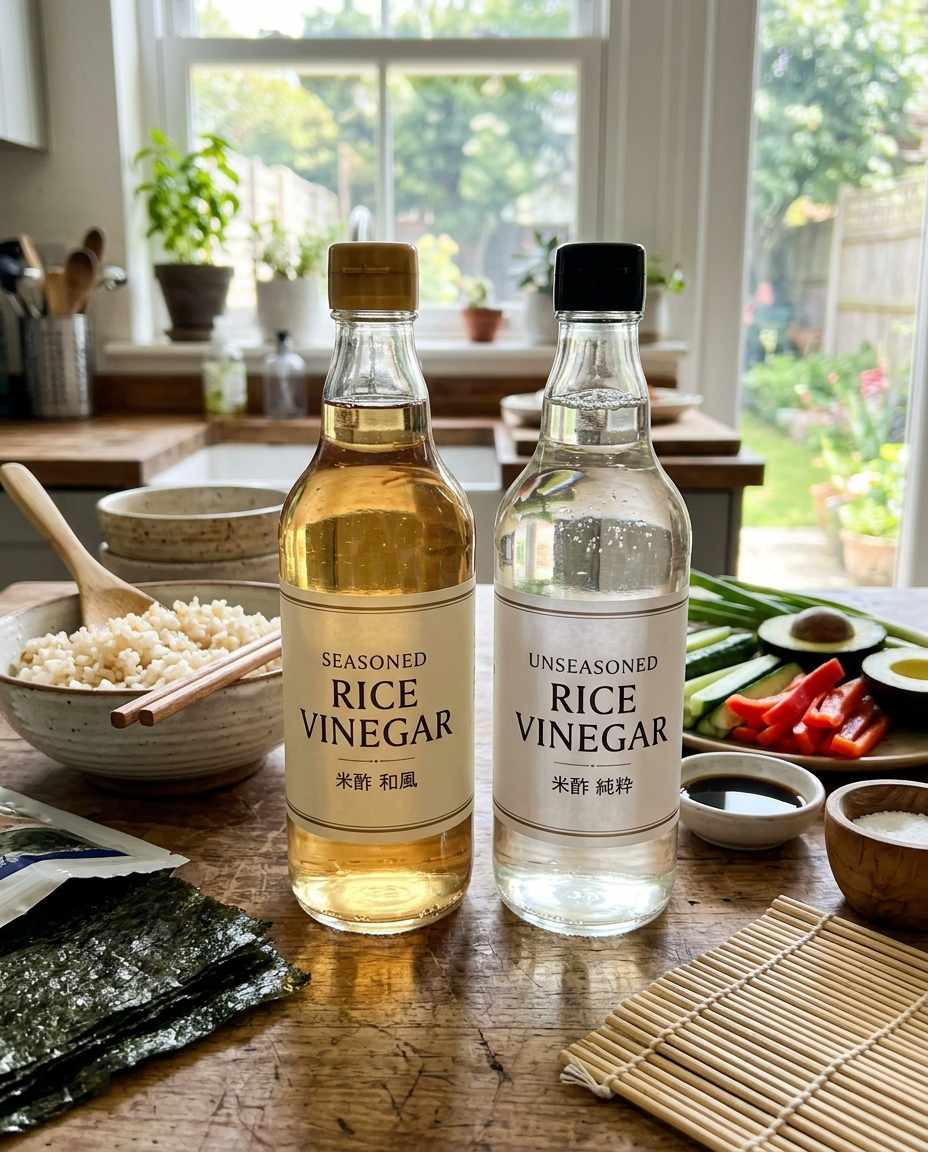
The moment I realized rice vinegar isn’t one-size-fits-all changed my cooking game.
Seasoned or unseasoned—each brings a unique punch.
Choosing the right one can elevate your dishes from bland to brilliant.
Let’s break down their differences so you know exactly when to use each.
Understanding Rice Vinegar Basics
Rice vinegar is a staple in Asian cuisine, made through fermenting rice into alcohol, then converting alcohol into acetic acid.
The degree of acidity usually ranges from 4% to 5%, significantly lower than Western vinegar variants like white distilled vinegar with 5-7% acidity.
This milder acidity is part of rice vinegar’s charm, lending a subtle tang without overpowering dishes.
I remember the first time I substituted rice vinegar with white vinegar in sushi rice; the balance was off, leaving an overly sharp bite.
This taught me that even small acidity differences affect final flavor profiles dramatically.
Seasoned rice vinegar typically adds sugar and salt, balancing acidity for ready-made use in specific dishes, unlike unseasoned that demands additional seasoning.
A common oversight is using seasoned vinegar where unseasoned is needed, or vice versa, resulting in recipes that are either too sweet or unexpectedly flat.
You’ll want to match the vinegar type thoughtfully depending on your taste goal and dish complexity.
As a guiding principle, always check labels for acidity and ingredient lists; the unseasoned variety will usually be just rice vinegar and water, whereas seasoned includes sweeteners and salt.
This distinction determines its culinary role, making rice vinegar far more nuanced than just mild vinegar.
Seasoned Rice Vinegar: Composition and Culinary Role

Seasoned rice vinegar combines rice vinegar with added sugar, salt, and sometimes mirin or sake, designed to serve as an all-in-one seasoning.
Typically, the sweetness content ranges from 8 to 12 grams of sugar per 100 milliliters, with salt adding about 1 to 1.5 grams.
This blend creates a harmonious sweet-sour-salty profile ideal for vinaigrettes, dipping sauces, and especially sushi rice.
When I first made sushi rice with seasoned vinegar, I saved time from separately mixing sugar and salt, achieving consistent flavor results every time.
This reliability explains why seasoned vinegar has become a favorite for home cooks and commercial kitchens alike.
However, it’s crucial not to double-salt or sugar your dishes unknowingly.
The key misstep cooks make is treating seasoned rice vinegar as interchangeable with unseasoned in recipes that call for precise quantification of sweeteners or salts.
For instance, using seasoned vinegar in a salad dressing recipe already containing sugar can overly sweeten the dish.
Understanding your recipe’s seasoning balance is critical.
My takeaway: use seasoned rice vinegar when you desire convenience and a balanced flavor out-of-the-bottle, especially in sushi rice applications.
But always adjust additional seasoning to avoid clashing and overpowering sweetness or saltiness in your dish.
Unseasoned Rice Vinegar: Versatility and Control
Unseasoned rice vinegar is the pure distilled form, containing only fermented rice and water, with acidity levels between 4.0% and 4.5%.
Without added sugar or salt, it offers a clean, tart tang that serves as a blank canvas for culinary customization.
This purity allows chefs and home cooks to control sweetness, salt, and other flavor dimensions precisely.
In my professional kitchen experience, unseasoned vinegar is indispensable for recipes requiring nuanced flavor development, like pickling vegetables, delicate sauces, and broths.
I tested pickling short cucumbers using unseasoned rice vinegar and tailored my sweet-salty brine exactly, avoiding the uniform sweetness found in seasoned versions.
The biggest pitfall with unseasoned vinegar is under-seasoning due to unfamiliarity with its sharper acidity.
Beginners may mistakenly treat it like seasoned product, resulting in uneven taste.
The key is measuring and supplementing the correct amounts of sugar and salt suited for your dish.
If you crave flexibility and don’t mind the extra mixing step, unseasoned rice vinegar is ideal.
Always start with small incremental tastings after seasoning adjustments to dial in the perfect balance based on your personal preference and recipe complexity.
Flavor Profiles: How They Shape Your Dishes

Seasoned rice vinegar brings a ready-made sweet and salty complexity that instantly complements sushi rice and quick pickles, offering a rounded, mellow acidity.
The sugar and salt soften the natural sharpness of vinegar, smoothing edges for a uniform flavor landscape.
This balance suits palates seeking consistent, crowd-pleasing outcomes.
In contrast, unseasoned rice vinegar delivers a brighter acidity with prominent tartness and subtle rice flavors.
This punchier profile can elevate dishes like vinaigrettes or marinades where acidity’s brightness is a driving force.
For example, I crafted a ginger-lime salad dressing with unseasoned vinegar that burst with uplifting crispness unmatched by seasoned versions.
The mistake many make is overlooking how seasoned vinegar’s additional elements mask rice vinegar’s distinctive nuances.
If your dish aims for clean acidity clarity or slow fermentation benefits, seasoned vinegar’s complexity may interfere.
Knowing your intended flavor target helps decide the right base.
Your takeaway: consider the final dish purpose before choosing.
If you want a precise acidic highlight or room to customize seasonings, pick unseasoned.
If a balanced, quick-use approach is preferable without tweaking, seasoned rice vinegar will deliver dependable results every time.
How to Choose for Specific Recipes
Sushi rice fundamentally requires seasoned rice vinegar, a blend usually consisting of rice vinegar, sugar (10-15%), and salt (1-1.5%).
This formula ensures the rice achieves the characteristic glossy shine, gentle sweetness, and balanced acidity signature to authentic sushi.
I learned this when a batch made with unseasoned vinegar tasted too sharp and dull.
For pickling applications, choice depends on complexity.
Quick-pickling summer vegetables can use seasoned vinegar for time-saving sweeter brines, but long fermentation pickles benefit from unseasoned vinegar’s pure acidity to avoid unwanted bacterial growth or off-flavors.
Wort fermentation labs recommend an acidity threshold no lower than 4% for safe pickling.
In salad dressings, unseasoned vinegar allows you to tailor tanginess precisely, often paired with olive oil, soy sauce, or citrus.
Using seasoned vinegar here could complicate the balance by adding unexpected sweetness or salt.
My experimental Mediterranean dressings only hit their mark after substituting seasoned with unseasoned vinegar.
The key actionable advice is reading each recipe carefully and recognizing vinegar’s role within it—use seasoned vinegar when a recipe assumes its salinity and sweetness, and unseasoned when the vinegar is a base ingredient inviting further flavor building.
Storage and Shelf Life Differences
Both seasoned and unseasoned rice vinegar have impressive shelf lives due to their acidic nature, typically lasting 1-2 years when unopened and stored in cool, dark places.
The real difference appears after opening; seasoned vinegar, with its sugar content, can sometimes ferment further or grow sediment over time, especially if improperly stored.
I once found an opened bottle of seasoned vinegar developing cloudiness, indicating slow secondary fermentation.
Unseasoned rice vinegar is inherently more stable post-opening due to the absence of sugar, though it may crystallize slightly if refrigerated or exposed to cold temperatures but remains safe to consume.
This crystallization, known as ‘vinegar flower’ or ‘mother,’ is harmless and can be strained out.
A recurring mistake is neglecting tight sealing and refrigeration for seasonally opened bottles, which accelerates quality degradation.
Use dark glass bottles and airtight caps to minimize exposure to oxygen and light, both accelerating oxidation and flavor loss.
To maximize freshness, label your opened bottles with date and use seasoned vinegar within 6 months once opened while unseasoned can be kept up to a year if unopened.
Always smell and taste before use; a sharp off-odor signals spoilage even in acidic environments.
Cost and Availability Considerations

Seasoned rice vinegar generally costs more per fluid ounce due to added ingredients and convenience factors, often retailing at $6-$8 for a 12-ounce bottle in North American markets.
Unseasoned options, meanwhile, fall between $4-$7 for the same size, depending on brand authenticity and import origin.
I have noted premium unseasoned vinegars from Japanese brands command higher prices but offer visibly clearer, purer liquid.
Access can also vary geographically; in Western supermarkets, seasoned rice vinegar is widely stocked for sushi enthusiasts and casual cooks, while unseasoned forms may require Asian grocery stores or online specialty suppliers.
This availability influences choice for hobbyist cooks in remote areas.
Some cooks mistakenly buy whichever is cheaper without account for recipe suitability, resulting in unsatisfactory dish results that seem unrelated to vinegar type at first glance.
Understanding this helps justify the extra expense or effort needed to source the correct vinegar.
My advice: factor in your usage frequency and recipe demands before purchase.
For occasional sushi makers, seasoned bottles provide value through time saving, but for home chefs diversifying dishes, investing in unseasoned rice vinegar opens possibilities without overspending repeatedly on multiple seasoning components.
Expert Tips and Final Recommendations
After years of testing both seasoned and unseasoned rice vinegars, I recommend seasoning sushi rice exclusively with seasoned rice vinegar for authentic texture and flavor balance.
In contrast, reserve unseasoned vinegar for dressings, pickles, and recipes where you control every seasoning variable, enhancing layered complexity.
Always measure quantities by volume rather than guessing, as seasoned vinegar’s sugar and salt content can vary by brand or batch, impacting sweetness or saltiness more than anticipated.
For example, a tablespoon of one seasoned vinegar could contain 12 grams sugar, while another brand has only 8 grams, affecting calibration.
Avoid cross-applying these vinegars without adjustment.
If a recipe calls for unseasoned and you only have seasoned, reduce or omit salt and sugar elsewhere and taste frequently.
The reverse applies when substituting unseasoned for seasoned vinegar; be prepared to mix sugar and salt manually and test.
Finally, shop for opaque or dark bottles to reduce light degradation, and store both vinegars between 50°F and 70°F.
Refrigeration is optional but can prolong peak freshness, especially for seasoned varieties.
Mastering your rice vinegar selection elevates every dish you create.




Leave a Reply