
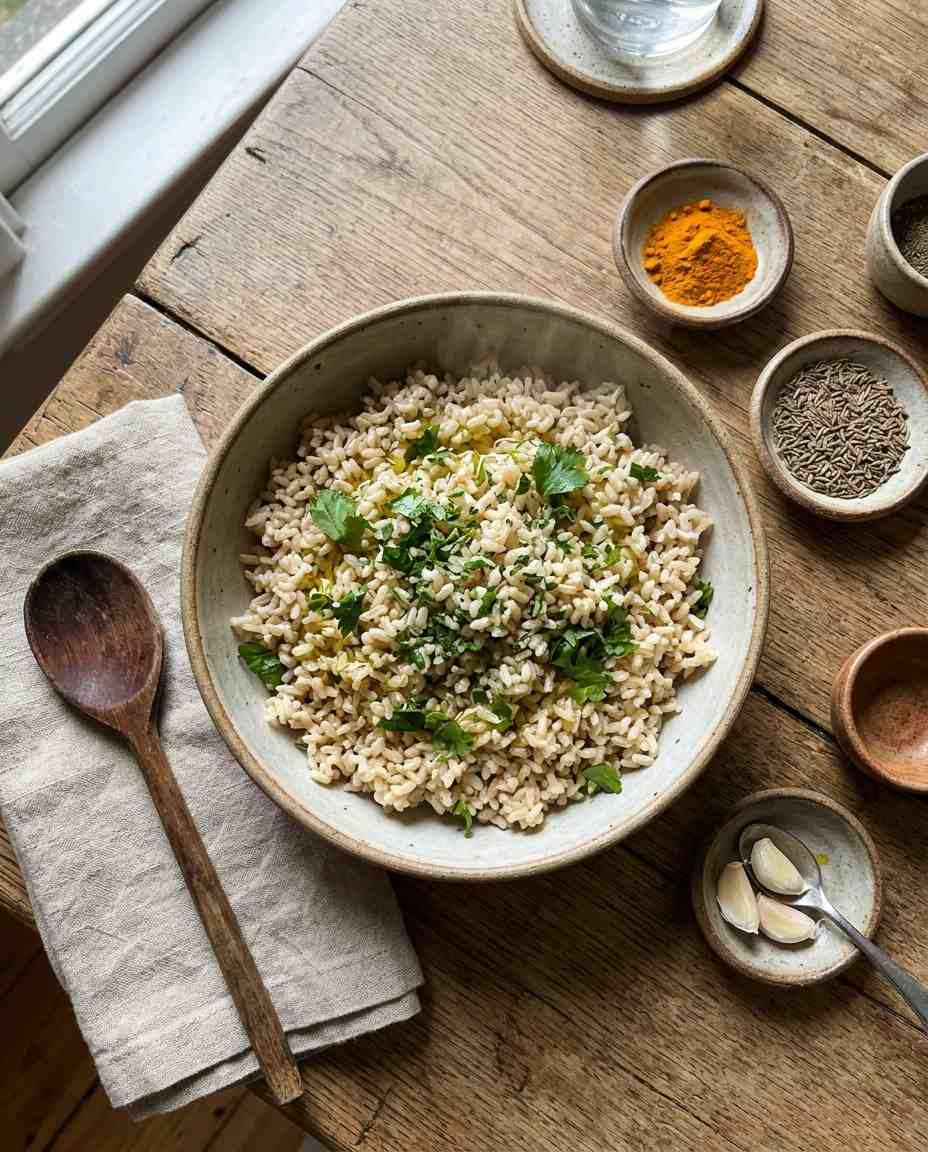
I remember the first time I cooked brown rice that tasted anything but bland—it was late evening, and the kitchen smelled warmly of toasted spices and simmered garlic.
That simple yet transformative moment showed me how seasoning brown rice properly elevates an often-overlooked grain to a centerpiece.
This guide unlocks those techniques, so your brown rice is never just filler but a beloved dish.
Understanding Brown Rice’s Flavor Profile
Brown rice carries a naturally nutty, slightly grassy flavor due to its intact bran layer, which also influences its chewy texture and longer cooking time compared to white rice.
This intact bran contains oils that can oxidize if improperly stored, sometimes causing a stale or bitter taste that undermines seasoning efforts.
For instance, once I used expired brown rice and the spices never seemed to counter its off-flavor no matter how much I tried.
Storing rice in an airtight container in a cool, dark place—or refrigerating it in humid climates—preserves freshness and receptive flavor.
The principle of seasoning brown rice effectively hinges on understanding this robust base flavor and the texture that seasoning methods must complement rather than mask.
Nutty flavors from toasted spices or fragrant herbs marry beautifully without overpowering the rice’s intrinsic character, whereas heavy sauces or excessive salt can quickly overwhelm or obfuscate its finer notes.
When you cook brown rice, expect the seasoning to highlight its earthiness and chew.
The bran layer also slows moisture penetration, so seasoning timing differs from white rice; the best phase to introduce flavors is during cooking or immediately afterward, not only as a garnish.
For example, I have found that adding aromatics like bay leaves or cardamom pods during simmering yields an infused undertone permeating every grain, contrasting with sprinkling salt post-cook, which often feels superficial.
When seasoning brown rice, balance is key—too little flavor makes the grain dull, too much buries its quality.
Expect to engage in subtle layering of taste and texture to elevate it.
Start by appreciating brown rice’s unique flavor profile, store the grain properly, and plan your seasoning steps to complement its natural grit and nuttiness.
Choosing the Right Cooking Liquid

Cooking brown rice in just water often results in bland grains lacking complexity.
Using a flavorful cooking liquid, like broth or seasoned stock, is a foundational way to season rice from within.
For example, I replaced plain water with homemade vegetable broth infused with onion skins and celery trimmings and noticed the subtle savory depth that elevated each bite.
Select broths with moderate salt levels (generally around 300-500 mg sodium per cup) to avoid oversalting, letting you control seasoning balance later.
The cooking liquid’s temperature and pH also influence rice texture and taste.
Slightly acidic liquids—such as those enriched with a tablespoon of tomato juice or a squeeze of lemon—can brighten the nutty flavor without deteriorating the rice’s grain integrity.
In one test, cooking brown rice in mildly acidic broth improved fluffy separation and imparted a fresh zing, whereas highly alkaline water made the grains too mushy and oversoft.
Avoid overly salty broths or those rich in sugars which can caramelize and alter the grain’s natural flavor in undesirable ways.
A classic mistake is using canned broth with excessive sodium and additives, which masks brown rice’s nuance and leads to an unbalanced palate.
When using broth, taste it first, then dilute or adjust seasoning accordingly.
An actionable takeaway: for every cup of brown rice, use approximately 2.5 cups of low-sodium broth, infuse with whole spices like cinnamon sticks or cumin seeds before cooking, and avoid boiling aggressively to preserve texture.
This approach integrates seasoning deeply, making brown rice a flavorful centerpiece.
Toasting and Blooming Spices Before Cooking
Toasting spices before incorporating them into brown rice cooking water or oil releases essential oils, dramatically amplifying their aroma and flavor.
I tested the difference between dry-toasting cumin seeds and adding them raw; the toasted version gave a warm, smoky nuance that carried through the rice, while raw seeds felt flat and somewhat harsh.
Whole spices such as cardamom pods, cinnamon sticks, and bay leaves respond best to dry toasting over medium heat for 1 to 2 minutes—the moment they start to pop or become fragrant—taking care not to burn and impart bitter notes.
After toasting, blooming spices by sautéing ground or crushed seeds in a tablespoon of ghee or neutral oil softens their bite and binds flavor molecules into lipids, improving rice absorption.
The first time I skipped this step, the seasoning tasted one-dimensional because the rice absorbed water-soluble elements insufficiently.
Using mustard seeds or coriander powder in oil before adding liquid infuses warmth and depth.
You can bloom spices like turmeric or smoked paprika in oil as well, which enhances their color to rich golden or brick red, visually enhancing the rice too.
The key trade-off is timing; spices toasted or bloomed too early will lose volatility, while adding them too late results in underdeveloped flavor.
For me, toasting on a dry pan and then immediately transferring to oil for blooming strikes this perfect balance.
Be mindful that fragile spices like dried herbs or garlic powder can burn easily, so add these after the initial spice bloom to maintain integrity.
Your takeaway: invest 3–5 minutes pre-cook for toasting whole spices on medium heat until aromatic, then bloom ground or crushed spices in 1 tablespoon of oil or ghee to lock in flavor.
This technique layers seasoning in a way that plain sprinkled powders cannot match, bringing brown rice to life.
Incorporating Aromatics for Depth

Aromatics like garlic, onion, ginger, and fresh herbs form the building blocks of seasoning that translate the brown rice’s womb to a finished dish brimming with complexity.
When I began adding roughly 1/2 cup finely minced onion and 2 cloves of crushed garlic sautéed until translucent before simmering the rice, the resulting flavors carried a satisfying savory background that plain rice lacked.
The choice of aromatics depends on the cuisine style—fresh lemongrass and kaffir lime for Southeast Asian flair, or rosemary and thyme for Mediterranean profiles.
Aromatics release flavor compounds containing thiols, terpenes, and phenols, which infuse the rice during cooking when added at the right time—typically just before you introduce the liquid.
Adding aromatics at the start of cooking in oil forms flavor bases through the Maillard reaction and steam infusion, enhancing both fragrance and taste.
However, adding delicate fresh herbs directly into simmer water often leads to flavor loss due to heat degradation, so they are better added at the end.
A frequent error I encountered is overcrowding or overcooking aromatics alongside the rice, often resulting in bitter or stringy results.
For example, garlic added too early can scorch, imparting acrid bitterness rather than a sweet, mellow undertone.
To avoid this, sauté aromatics gently over medium heat and monitor texture and color carefully to ensure caramelization without burning.
Practical advice: finely chop or crush your aromatics for maximum release, sauté them in 1 to 2 tablespoons of oil or butter until soft and fragrant, then add your pre-measured cooking liquid and rice promptly to optimize infusion.
Finish with fresh herbs like parsley, scallion, or cilantro stirred in immediately post-cook to lift aroma without losing brightness.
Balancing Salt and Acid for Flavor Enhancement
Salt plays a critical role in seasoning brown rice by enhancing natural taste and reducing bitterness from the bran, but its application requires precision.
I found that adding about 1/2 teaspoon of kosher salt per cup of dry rice during cooking produces balanced seasoning that doesn’t overwhelm.
Adding salt too late misses the opportunity for grains to absorb it evenly, leading to unevenly salted results.
Conversely, too much salt early can tighten rice texture by encouraging water loss in grains.
Using forms of salt also makes a difference; fine sea salt dissolves faster than kosher salt, which can cause sudden salinity spikes if not measured accurately.
The consistency of salt crystals—generally 0.5 to 2 mm diameter— influences both dissolution rate and perceived saltiness.
For everyday cooking, I prefer kosher salt for its forgiving texture, but always weigh or accurately measure it.
Acids like lemon juice, apple cider vinegar, or a splash of rice wine vinegar can brighten and balance the hearty notes of brown rice, especially in grain bowls or salads.
Acids also affect texture by slightly breaking down bran fibers during cooking.
Be cautious, as too much acid (over 1 teaspoon per cup of rice) can render the grains mushy with prolonged cooking.
A common pitfall is adding acid too early, causing uneven texture; instead, stir it in gently after cooking to maintain integrity and freshness.
For practical application, add salt to cooking liquid before simmering for uniform distribution.
Introduce acid post-cook, adjust to taste starting with 1/2 teaspoon per cup of cooked rice.
This layering intensifies brown rice’s taste profile, delivering seasoned yet balanced grains.
Using Fat to Carry and Enhance Flavors
Incorporating fats such as olive oil, ghee, or coconut oil dramatically upgrades the flavor profile and mouthfeel of brown rice.
Fats absorb and distribute aromatic compounds like fat-soluble turmeric or saffron pigments, enriching both color and taste.
I recall using 1 tablespoon of extra-virgin olive oil for every cup of dry rice, which added a silken texture that counterbalanced the chewiness of brown rice and carried subtle herb infusions elegantly.
The choice of fat depends on your desired flavor direction and cooking method.
Ghee offers a nutty depth and subtle caramel notes from its milk solids, ideal for Indian-inspired dishes featuring cumin and cloves, whereas coconut oil imparts tropical richness excellent for Thai or Caribbean styles.
Neutral oils such as grapeseed allow spice aromas to shine without interference.
Experience taught me not to exceed 2 tablespoons per cup of rice, as excess fat can create greasy, clumpy textures.
Adding fat early—such as blooming spices in it before rice or stirring it into rice just before cooking—provides the best flavor transfer and grain coating.
Adding fat only at the end often results in uneven distribution, and the rice may feel dry.
If you prefer calorie-conscious options, using a modest 1 teaspoon with toasted nuts or seeds as garnish can simulate richness without overwhelming.
To sum up, fat is a vital seasoning carrier—select one that complements your flavor profile, add it during spice blooming or cooking, and measure precisely to avoid texture issues.
This transforms plain brown rice into a luxurious, flavorful experience.
Finishing Touches: Herbs, Nuts, and Mix-Ins

The concluding step in seasoning brown rice involves adding fresh herbs, toasted nuts, seeds, and other complementary mix-ins that add texture, color, aroma, and final flavor polish.
When I started folding in toasted slivered almonds and chopped fresh cilantro immediately before serving, my brown rice dishes gained layered crunch and verdant brightness that transformed a humble grain plate into a vibrant entree.
Fresh herbs like parsley, mint, basil, or dill brighten the flavor, but their delicate essential oils degrade quickly in heat.
It’s best practice to sprinkle herbs just as you remove rice from warmth and toss gently to distribute.
Avoid herbs with tough stems or fibrous leaves unless finely chopped to prevent gritty texture.
Toasted nuts or seeds, such as pine nuts, pumpkin seeds, or sesame seeds, provide crunch and roasted flavor notes that contrast with rice’s chewiness.
Toast these dry over medium heat for 3–5 minutes, stirring constantly, until golden brown but not burnt—for example, aiming for a surface color of around Pantone 15-1248 (Tigerlily) for almonds indicates optimal roasting.
Over-toasting produces bitterness and is a common error overlooked in rushed kitchens.
Other suitable mix-ins include dried fruits like raisins or chopped apricots, sautéed mushrooms, or caramelized shallots for additional umami and sweetness.
The key is to balance contrasting textures and flavors while ensuring they harmonize with your chosen spice profile.
Finish your rice with these touches for elevated presentation and taste complexity.
Troubleshooting Common Seasoning Challenges
Despite best efforts, seasoning brown rice sometimes falls short with common pitfalls including blandness, bitterness, or uneven flavor distribution.
One typical issue is insufficient absorption of seasonings into the grains due to rushed cooking or incorrect water ratios.
I once followed a recipe with 1:1.5 rice-to-water ratio and undercooked the rice, making seasoning taste insipid because the bran layer remained tough and impermeable.
The fix is ensuring a minimum 1:2.5 ratio for long-grain brown rice with well-timed simmering and resting to allow full hydration.
Over-seasoning is another frequent error, seen when salt or strong spices overwhelm brown rice’s subtle nuttiness, sometimes compounded by using pre-seasoned broths or sauces in addition to added spices.
Assess all seasoning sources before cooking and start lean, adjusting at finish.
Using fresh herbs post-cooking is a safer way to add flavor without risking overpowering taste.
Inconsistent texture following seasoning efforts can arise from adding seasonings too late or unevenly stirring.
I encountered gritty rice with pungent raw garlic chunks because they were added at the end rather than sautéed in oil.
Use even stirring techniques during cooking and stagger seasoning additions—for example, bloom spices first, salt next, acids last, then fresh herbs after cooking—to optimize harmony.
The actionable takeaway: respect rice-to-liquid ratios, integrate seasonings during early and middle cooking phases, taste frequently, and finish with gentle tosses of fresh ingredients.
These methodical practices resolve most seasoning frustrations.
Advanced Flavor Pairings and Regional Inspirations
Drawing regional inspiration can elevate brown rice seasoning from routine to memorable, such as combining Middle Eastern zesty sums with toasted pine nuts or incorporating South Asian complex masalas with ghee and golden turmeric.
I experimented with a Moroccan-inspired blend of ras el hanout—cardamom, cinnamon, coriander, and cumin toasted and bloomed in olive oil—to coat the rice, resulting in a fragrant, harmonious dish that tastes layered and rich with history.
Regional accents guide not just spices but complementary ingredients such as pomegranate seeds adding tartness in Persian-style rice or nori flakes and sesame oil in Japanese-influenced brown rice bowls.
Understanding the cultural context helps balance seasoning proportions—for instance, the pronounced umami of Japanese dashi broth requires lighter salts and subtle citrus like yuzu.
Ignoring these nuances leads to disjointed flavor clashes or heavy meals lacking finesse.
For example, adding heavy Indian garam masala to a Mediterranean lemon herb rice can feel confusing rather than exciting.
Research and assembling seasoning components from recipe origins ensure authenticity and flavor synergy.
To apply these insights, select a regional flavor profile first, build seasoning layers by toasting spices native to that cuisine, add matching aromatic bases and fats, then finish with signature garnishes.
This thoughtful approach transforms brown rice into a culinary exploration rather than a side dish.




Leave a Reply