
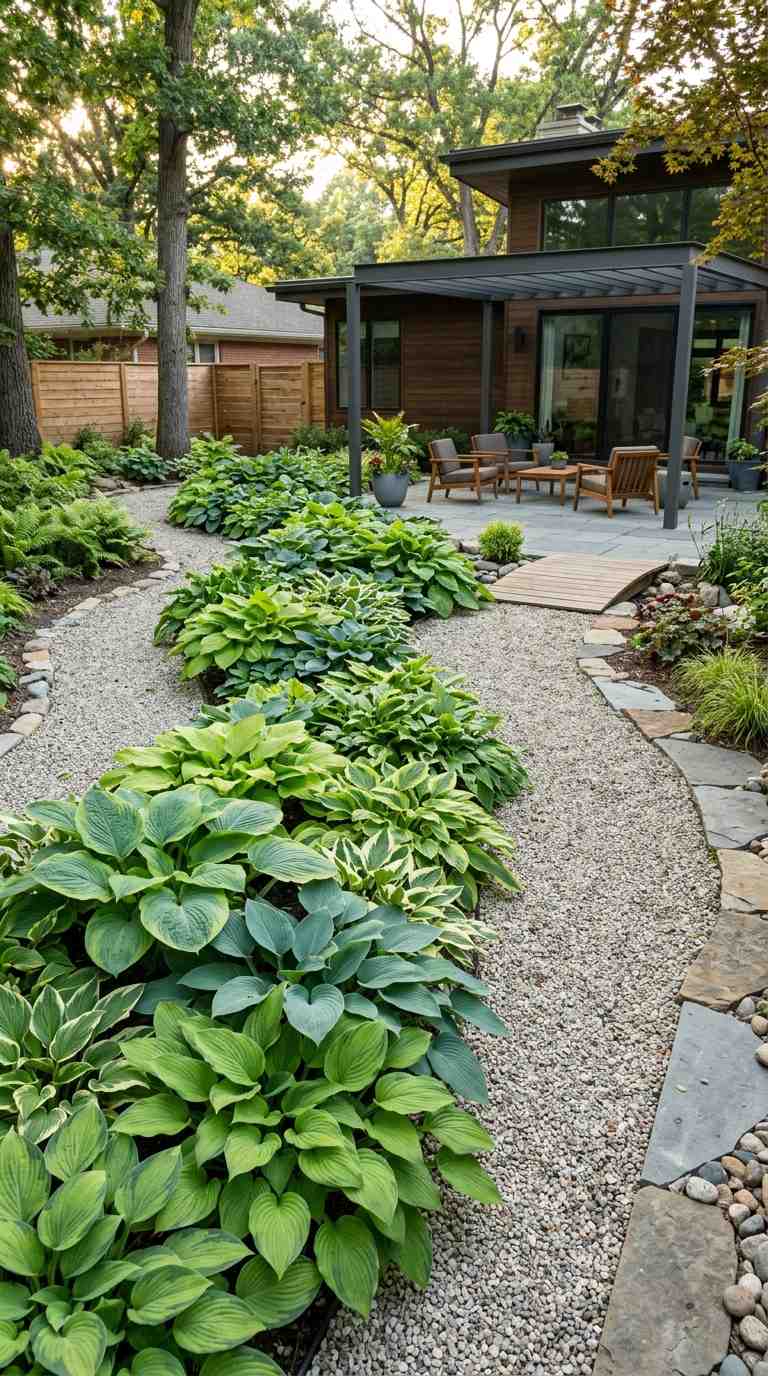
Hostas are a versatile and stunning addition to any garden, creating lush textures and beautiful shades of green.
This list showcases 37 inspired ways to use hostas throughout your backyard for style, shade, and serenity.
Discover fresh ideas that blend nature with design for a vibrant outdoor space.
Why Hostas Are Garden Game-Changers
You should consider hostas for nearly every part of your garden because they thrive in shade and offer an array of leaf colors, shapes, and sizes that bring depth to your green spaces.
Their hardiness and low maintenance make them a reliable choice to elevate your garden’s beauty year after year.
I find that hostas can function both as focal points and soft background companions in garden design.
I love how their expansive leaves create a lush, tropical vibe without demanding much sunlight or effort.
They’re especially effective when paired with rocks, water features, or pathways to establish inviting and tranquil retreats.
1. Curvy Garden Pathway Lined with Hostas

This garden path features long, curved stone slabs bordered by perfectly spaced variegated hostas.
The lush greenery contrasts beautifully with the dark mulch and adds softness to the winding walkway.
You get a balanced mix of texture and structure here that’s visually compelling and functional.
The curve gently invites you forward, making the hostas guide your movement.
The shade-loving plants thrive here beneath leafy trees, adding peaceful shelter to this space.
This is a perfect idea for integrating hostas along garden paths to create natural flow.
I recommend planting a mix of different hosta varieties with contrasting leaf colors and edges to keep this walk interesting all season.
The mulch not only keeps weeds down but highlights the plant shapes for maximum effect.
2. Hostas Nestled in Rock Garden with Pebbles

Hostas planted among large boulders and surrounded by round pebbles create a serene and modern rock garden scene.
The round pebbles brighten the space while allowing the leaves’ blue and green tones to stand out.
This setup feels both natural and curated.
The use of rocks complements the soft textures of the hostas, adding permanence and grounding the lushness.
It’s an excellent way to add dimension and focal interest while keeping maintenance low.
The nearby deck provides a nice human-scale contrast to the plants and stones.
Try using rocks of varied sizes and colors to build depth, and place hostas so they appear to cascade over rocks organically.
This offers a nice blend of natural form and intentional design.
3. Small Hostas Cluster in Mulched Garden Bed

A close-up of a small garden bed filled with bright green hostas framed by rich dark mulch highlights simplicity and lushness.
The rounded leaf shapes and vibrant green hues bring freshness and life to this compact corner.
Mulch enhances the vibrancy of the hostas while suppressing weeds and conserving soil moisture.
It’s a practical yet visually appealing way to keep hostas looking their best.
The rich earth tones balance the greenery effortlessly.
This approach is perfect for people seeking easy-to-maintain but impactful plantings.
You can surround hostas with bark or stone mulch to keep things tidy and emphasize the natural shapes.
4. Geometric Container Garden with Varied Hostas

A faceted rust-colored metal planter holds an array of hosta varieties, showcasing a mix of blue-gray, green, and variegated leaves.
The angular pot contrasts beautifully with the organic shapes of the leaves, making a striking garden focal point.
Container gardening is a brilliant way to use hostas in small spaces or patios.
This container combines earthy textures with vibrant greens, perfect for elevating a corner or entryway.
The metal’s warm rust tones add a modern twist.
When planting hostas in containers, choose a mix of sizes and leaf colors to maximize visual interest.
Use well-draining soil and water regularly, especially in sun-exposed spots.
5. Hostas Flanking a Poolside Patio

Hostas densely border the edge of a sleek pool deck, softening the hard edge of concrete with their rounded, lush leaves.
The varying shades from chartreuse to deep green add color contrasts and depth.
The setting feels luxurious and calming.
This planting technique visually anchors the pool area while creating an inviting green oasis.
Hostas work great beside pools because they thrive in filtered light and don’t need full sun, unlike many other plants.
Pairing hostas with ornamental grasses, as seen here, enhances texture and movement.
This example shows how to use hostas for both form and function around aquatic features.
6. Tiered Concrete Beds Filled with Hostas

Three raised concrete beds stepping down from a patio are filled with neat rows of hostas in different shades of green.
The minimalist hardscape contrasts beautifully with the hosts’ soft, bold leaves, creating a contemporary garden vibe.
This terraced design makes excellent use of vertical space while making hostas a star planting.
The gray concrete acts as a neutral backdrop that emphasizes hosta diversity.
It feels clean, structured, and perfect for modern garden styles.
For similar effect, choose hosta varieties with striking leaf differences and keep beds well-edged.
This setup works especially well on sloped properties where tiered planting is needed.
7. Hosta-Lined Pathway with Modern Lighting

A straight stone path curves toward a cozy seating spot, flanked by lush hostas and illuminated by sleek black path lights.
The lighting accentuates the bright foliage against the dark mulch, enhancing nighttime ambiance and safety.
Lighting paired with hostas elevates garden pathways and ensures your yard stays inviting after sunset.
The soft glow combined with natural shapes creates a magical feel.
This technique bridges practical outdoor design with natural beauty.
Lighting design tip: space lights evenly and choose warm color temperature bulbs.
Keep hostas trimmed to avoid blocking the pathway or the lighting effects.
8. Sunken Firepit Surrounded by Hostas

This cozy sunken seating area is bordered by lush hostas lining stone walls and steps that lead down.
The dense greenery softens the stone and adds a feeling of privacy and comfort around the firepit.
Hostas work perfectly to attract attention to this intimate garden nook.
Their large leaves temper the rugged stone, making the area feel both wild and inviting.
It’s a smart way to use plants to define outdoor living spaces.
When designing firepit surrounds, use low-maintenance plants like hostas that tolerate occasional foot traffic and shade.
Their seasonal fullness makes the area look vibrant for months.
9. Hostas Under a Large Shaded Tree

A peaceful sitting area with a simple bench nestles under a majestic oak tree surrounded by scattered hostas and mulch, creating a tranquil retreat.
The dappled sunlight and large leaves add coolness and shelter.
Hostas naturally thrive in shady areas, so planting them under mature trees produces an effortless, elegant groundcover effect.
The bench invites you to enjoy this shady sanctuary filled with lush leaf texture.
You can replicate this look by using shade-tolerant hostas and adding simple furnishing like benches or hammocks to create restful garden moments.
10. Hostas Paired with Dark Purple Foliage Plants

Bright chartreuse hostas are paired strikingly with deep purple foliage plants in a shaded garden bed.
The rich contrast adds drama and depth, making this combination pop visually in low light.
Using color contrast with hostas adds dimension especially in shaded or woodland gardens.
The large leaves of the hostas balance the delicate, airy texture of the purple plants, creating visual harmony.
Try pairing light and dark leaf colors, or variegated with solid, to create dynamic beds around patios or entryways.
It works well with both perennial and shrub companions.
11. Hydrangeas and Hostas in Relaxed Border

A garden border lines a house wall with blue-green hostas in front of creamy white hydrangea blooms.
The pairing combines broad leaves and delicate flower clusters for elegant texture and seasonal interest.
Hostas provide greenery and structure beneath hydrangeas, which often bloom mid-summer, ensuring year-round appeal.
This provides both color contrast and layered height variation in flowing perennial beds.
This idea works well for partly shady borders.
Keep plants spaced enough for airflow to reduce disease and create a neat yet natural look.
12. Hostas and Vertical Slate Garden Art

Tall, vertical slate pillars stand dramatically in garden beds lush with medium-sized hostas.
The mix of natural stone and lush greenery creates a striking modern feature that plays with vertical and horizontal lines.
Hostas soften the bold, rigid presence of slate, balancing the linear elements with round leafy forms.
This design elevates a traditional garden bed into an artistic statement.
Use local stone to connect your garden to the landscape and match hosta colors with your stone tones for seamless integration.
13. Hostas Around a Long Reflective Water Feature

A narrow rectangular reflecting pool is bordered symmetrically by lush hostas, adding greenery and softness around the sharp stone edges.
The calm water surface highlights the bright foliage and creates a spa-like atmosphere.
This design creates a stunning balance of water and plants with the hostas acting as serene natural borders.
Their leaf textures contrast with the smooth pool water to activate the space visually.
Use smaller hostas around water features to avoid overcrowding and choose varieties that tolerate moisture well for longevity.
14. Hostas Enhance Modern Black Garden Shed

Bright hostas planted around a sleek black garden shed create a striking color juxtaposition of deep charcoal and vivid greens.
The mulched bed is bordered by natural flagstones to add rustic texture.
Hostas can brighten up dark garden structures and create inviting zones around functional spaces.
Their lush growth softens sharp architectural edges and connects man-made elements with nature.
For best results, choose hosta varieties with different leaf textures and variegations.
Add a stone border or gravel to define the planting area and reduce weed growth.
15. Hosta-Lined Patio with Warm Wood Deck

This backyard seating area is edged by an abundance of medium and large hostas whose textures complement the warm wood deck.
The combination feels earthy and welcoming with subtle tonal contrasts.
Hostas help frame patios without blocking sightlines, enhancing outdoor living areas with natural softness.
Their low upkeep and tolerate shade make them great companions for timber decks.
Try planting hostas with ferns or tall grasses for texture contrast along patios.
Mulch well and trim older leaves for a tidy yet lush appearance during the growing season.
16. Hostas Fill Pathway Flanked by Black Fence

A gravel garden path winds between thick beds of large hostas and a modern black slatted fence.
The linear composition and color contrast create a sleek, refined garden walkway.
Hostas bring a soft edge to sharp garden boundaries like fences or walls, balancing urban or minimalist outdoor spaces.
The natural green tones pop against the black background.
You can achieve this modern look by planting large hosta varieties close together and maintaining clean edges.
Adding gravel maintains clean lines and good drainage.
17. Hostas in Elevated Concrete Planters

A row of tall, square concrete planters contains lush hostas with broad leaves in various greens and yellows.
The planters bring hostas up to eye level, making this a bold container display.
Concrete planters offer an industrial touch while the hostas soften the look with rich natural texture.
This is perfect for small spaces craving greenery with dramatic impact.
Pick hosta varieties that are tough and hold shape well in containers, and ensure good drainage.
Mixing hues of green and variegated leaves keeps the display lively.
18. Hosta Garden with Rusted Wood Sculpture

A striking rusted abstract wood sculpture rises above a bed of healthy hostas, providing an artistic focal point and organic contrast.
The greenery and natural rust tones feel earth-inspired and harmonious.
Combining sculptural elements with hostas creates a dynamic garden scene where natural elements take center stage.
The soft leaf textures soften the hard edges of the sculpture.
Place sculptures near hostas in your garden to add height and visual interest.
Choose art materials and colors complementary to hosta tones for seamless integration.
19. Wooden Boardwalk Swirling Through Hostas

A raised wooden boardwalk curves gently through a thick carpet of hostas, blending rustic garden materials with lush foliage.
The natural wood tones complement hosta greens beautifully.
This elevated path protects the foliage while creating a unique immersive garden experience.
Walking along the boardwalk envelops you in the soft leaf canopy.
It’s a brilliant way to traverse moist or uneven terrain.
Building a garden boardwalk with side railings or lighting ensures safety and highlights the surrounding plants.
Incorporate different hosta varieties for a lively green rug effect.
20. Shady Hammock Spot Surrounded by Hostas

In a peaceful shady backyard corner, sun-dappled hostas surround a woman relaxing in a hammock, creating a private and restful nook.
The hostas provide soft greenery and cooling shade beneath mature trees.
Hostas excel at defining tranquil garden retreats because they thrive in shade and add lush, leafy textures that soothe the eye.
Their presence feels like a natural privacy screen.
To create inviting hammock or seating areas, plant dense hostas and mulch to suppress weeds.
Choose spots near larger trees for ideal shade and comfort.
21. Formal Box Hedge with Hostas Inside

A sophisticated parterre garden uses clipped evergreen box hedges to create geometric rooms planted with various hosta cultivars.
The green shapes bring formality while hostas add texture and color inside.
This design is a great way to bring structure to hosta plantings, elevating them from casual beds to polished garden statements.
The contrast between sharp hedges and soft leaves anchors the space.
Maintain regular trimming of boxwoods for crisp edges and choose diverse hostas for visual variety in leaf pattern and tone.
This approach works well near formal paths and patios.
22. Hostas Along a Rustic Flagstone Walkway

A wide, rustic flagstone path meanders through beds filled with low hostas and other shade-loving plants.
Lantern-style black path lights pepper the edges, enhancing ambiance and safe navigation at dusk.
This classic pathway planting blends hostas with warm stone tones and layered garden lighting for a welcoming effect.
The plants soften the stones and nestle the path into the natural surroundings.
Use irregular flagstones with ample planting pockets and varying hosta colors to create flow.
Add solar or low-voltage lighting to illuminate paths beautifully yet subtly.
23. Hosta Vertical Wall Garden

A vertical garden setup features multiple hosta varieties growing upright against a wire frame, turning a wooden fence into a striking living wall.
The dense, cascading foliage brings vibrant green texture to limited space.
Vertical gardening boosts green coverage where ground space is tight, and hostas’ adaptability suits this innovative approach perfectly.
The lush leaves drip naturally, heightening dimension.
Start with hardy, slow-growing hosta varieties to limit maintenance.
Use quality growing medium and ensure proper irrigation.
This idea is ideal for creating garden privacy or hiding unsightly walls.
24. Lush Hostas Along a Black Fenced Garden Edge

Hostas grow thick and full alongside a neat black fence, with solid and variegated leaf varieties creating a vivid green border.
The mulch bed and stepping stones add neatness and contrast.
This design frames garden edges while adding a natural yet polished look to your fence lines.
The green tones soften the fencing’s structure and integrate plant life harmoniously.
Choose larger hosta leaf varieties for heightened impact, and plant in rich soil with good drainage.
Add groundcover or mulch to reduce weeds and retain moisture.
25. Driftwood with Hostas for Natural Sculpture

An artistic display places hostas around large, weathered pieces of driftwood, creating a natural garden sculpture.
The bleached wood contrasts wonderfully with the blue and green leaf tones.
Using driftwood or reclaimed wood with hostas adds organic interest and a woodland feel.
It’s a great way to introduce texture variety while blending natural elements.
Collect or purchase aged wood pieces and arrange hostas to grow through and around the wood.
Pair with low-growing ferns or moss for authentic woodland effect.
26. Modern Glass Garden Room Surrounded by Hostas

A clean-lined glass garden room sits in a sheltered spot surrounded by lush hostas and airy ferns.
The transparent walls invite natural light and highlight the vibrant greenery outside.
Hostas around outdoor garden rooms soften architectural lines and add lush liveliness.
Their big leaves contrast the delicate glass structure, emphasizing the blend of man-made and nature.
Design outdoor rooms with wide plant borders using hostas and other shade lovers.
This creates visual continuity and a calming atmosphere for indoor-outdoor living.
27. Hostas Beneath a Pergola Dining Area

Below a modern black pergola, graceful hostas curve around a paved dining space, softened by flowering vines climbing the trellis.
The green hosta bed adds texture while complementing the sleek outdoor setting.
Hostas create inviting gardens under pergolas by framing patios with lush greenery that balances strong architectural lines.
Combined with vines, they generate intimate shade and seasonal interest.
Incorporate lighting and climbing plants to soften pergolas further and enrich the sensory experience.
Hostas here do well with indirect light from the structure and the surrounding garden.
28. Succulents and Hostas Blend in Gravel Path

A compact urban garden balances sculptural succulents with lush hostas lining a gravel path.
Both plant types contrast beautifully in texture and height, adding unexpected depth to the restrained layout.
This mix demonstrates hostas’ versatility even in drier, sun-exposed gardens when paired carefully with drought-tolerant companions.
It breaks up monotony and lends seasonal contrast.
Try rattling gravel with clear curves lined by plants of differing water needs separated by edging.
Pick hostas that tolerate more sun and monitor watering for success.
29. Hostas Surrounded by Decorative Grasses

Ornamental grasses mingle with clumps of hostas to give a breezy, naturalized edge around a rural driveway.
The grasses’ soft plumes contrast hostas’ broad leaves, creating a lively garden mix.
The combination brings movement and texture to large landscapes with ease.
Grasses add vertical emphasis while hostas hold the ground visually with their volume.
Select native or climate-appropriate grasses to complement your hostas and pair them in informal clusters.
This idea enhances rustic and country-styled gardens authentically.
30. Hostas Growing Along a Gravel Garden Path

Hostas line a wide gravel garden path leading to a contemporary patio, framed by soft green foliage and mulched beds.
This wide path allows easy access while emphasizing sweeping greenery.
Gravel paths bordered by hostas create low-maintenance, welcoming entrances into patio or backyard zones.
The plants’ full leaves contrast texturally with sharp gravel, enhancing definition.
Use edging strips to keep gravel and mulch separate and hosta leaves clear.
Regular pruning keeps the beds tidy and inviting throughout the season.
31. Hostas Framing a Cozy Patio Seating Area

A comfortable patio seating area tucked beside a house has hostas planted heavily around its border, cushioning the edges with soft blues and greens.
The setting invites relaxation in lush surroundings.
Bright hosta plantings around patios add a welcoming green frame, dampen noise, and soften hardscape materials.
Their size and leaf shape create a nice protective enclosure.
Combine hostas with colorful pots and garden accessories for a personalized patio look.
Include companion plants to add seasonal flowers and dynamic interest.
32. Hostas on a Narrow Backyard Corridor

Hostas fill a long, narrow backyard corridor beside a timber fence, softening an otherwise tight and enclosed space.
Their bold leaves add life where the sunlight filters through.
Using hostas in small, shaded backyard corridors livens difficult planting zones and screens fences effectively.
Their well-defined leaf shapes brighten the tight space.
Plant dense hosta varieties and keep foliage trimmed neatly to avoid encroaching on walkways.
Add gravel or stones for low maintenance.
33. Hostas and Ferns in Woodland Garden Bed

Hostas establish a lush foundation in a shaded garden bed mixed with tall ferns, adding classic woodland garden vibes.
The layered leaf textures create a thick, carpeted effect beneath mature trees.
This classic combination thrives in shade and many soil types, producing a charming garden that requires minimal upkeep.
The plants maintain cool humidity, helping each other flourish.
Use this planting approach for naturalistic shade gardens or to soften wooded landscapes.
Mulch with organic material to retain moisture and enrich the soil.
34. Hostas Flanking Rustic Flagstone Steps

Flagstone steps descend through a garden bordered by variegated and solid green hostas.
The stones’ weathered texture pairs well with the soft foliage, creating rustic charm.
This stone and hosta combination brings tactile richness to garden transitions, inviting exploration between lawn levels or patios.
The plants guard the edges gracefully while adding seasonal interest.
Choose hosta cultivars with varied leaf colors to animate stairs year-round.
Use mulch to protect root systems and maintain neat borders beside walking paths.
35. Hostas with Water Feature Fountain

A stone water fountain feature is surrounded by ample hosta growth, with their large leaves forming a lush border.
The trickling water adds sound and coolness to this shady retreat.
The pairing of dynamic water and lush hostas relaxes the senses, making perfect contemplative garden spots.
You get a natural vibe with simple materials and layered planting.
Place water features with hostas in shady or woodland areas for optimal hosta health.
Keep water moving to avoid mosquito buildup and complement with ferns or mosses for rich textures.
36. Hostas Line Curved Gravel Path to Patio

A gentle gravel path winds past dense hostas toward a cozy patio area, edged with natural stone.
The garden feels layered and inviting, with gentle curves encouraging a slow stroll.
The gravel and hosta mixture forms low-maintenance pathways framed by softness.
This harmony between textures and shapes invites lingering and appreciation of the surroundings.
Use edging stones or metal strips to keep gravel contained and maintain a tidy path edge.
Diverse hostas keep foliage from monotone repetition.
37. Hostas Offset by Deep Red Tree

Bright blue-green hostas sit below a fiery red-leaved maple tree, creating an eye-catching color contrast.
The groundcover under the hostas adds verdant texture, intensifying the layered effect.
Hostas are excellent companions to dramatic shade trees, providing bright bases that highlight bolder canopy colors.
The combination creates a seasonal focal point in any garden.
Choose maple cultivars known for vivid colors and plant sun-tolerant hostas underneath to avoid leaf burn.
Mulch and water regularly to keep plants healthy.

Leave a Reply