
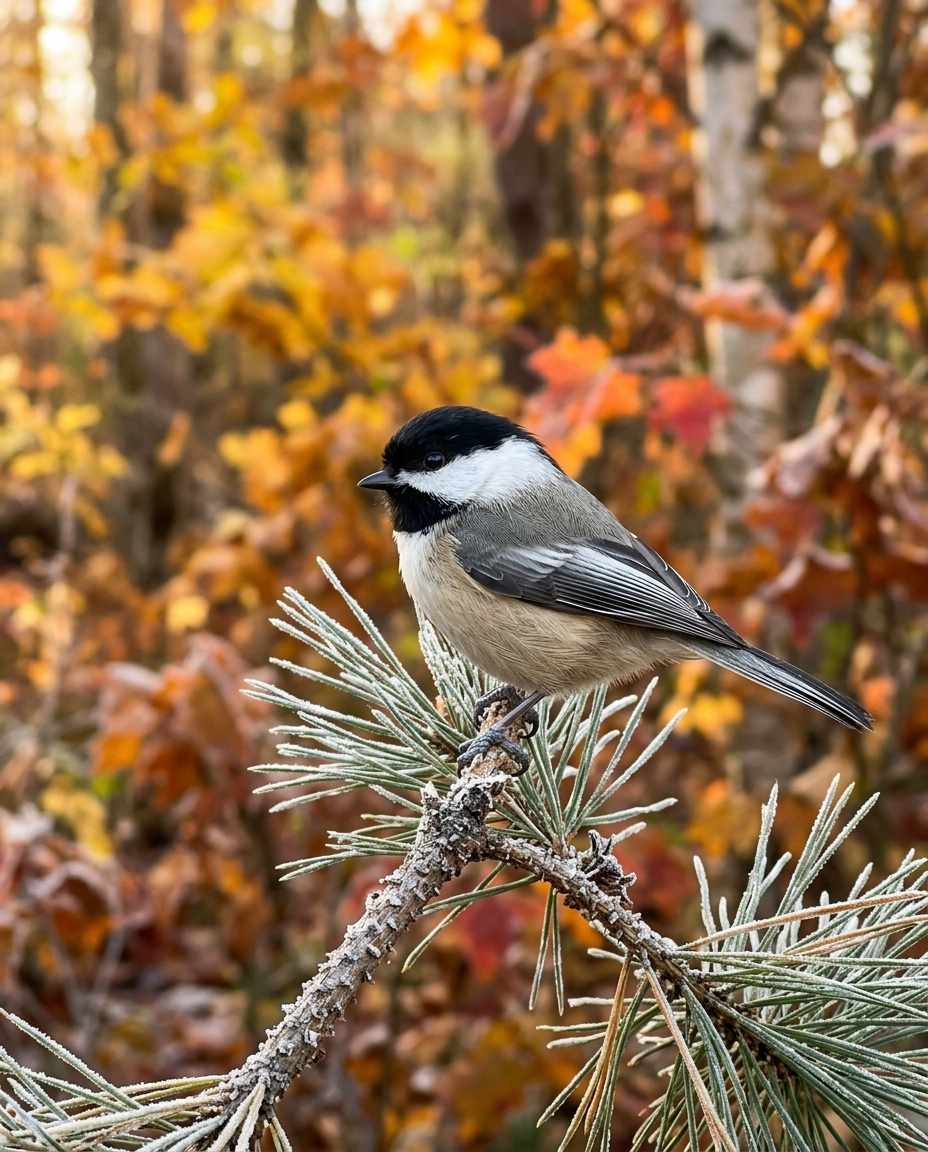
One crisp autumn morning, I knelt quietly beside a backyard feeder as a tiny chickadee flitted effortlessly from branch to branch, its black cap gleaming against fiery red maple leaves.
These small birds hold secrets of resilience and striking adaptability.
Join me as we explore seven captivating species of chickadees, each with its unique traits and ecology.
1. Black-Capped Chickadee’s Winter Adaptation
The black-capped chickadee is a master of surviving harsh northern winters.
One remarkable adaptation is its ability to lower its body temperature during cold nights in a state called torpor, reducing energy consumption by up to 25%.
This physiological trick helps conserve precious calories when food is scarce and temperatures plunge below freezing.
I remember watching a chickadee roosting under dense evergreens during a snowstorm, appearing almost frozen in place, yet perfectly safe.
A common mistake many make is assuming small birds always fluff up to stay warm, but in torpor, their muscles relax, and their heartbeat slows drastically.
Understanding this behavior is key if you want to help overwinter chickadees.
To support your local black-capped chickadees, provide accessible seed feeders filled with high-fat sunflower seeds and suet blocks, installing them at heights no taller than five feet to deter predators.
Using mixed seed blends rich in energy, combined with fresh water sources, will make a real impact during frigid months.
2. Carolina Chickadee’s Distinct Vocalizations

Carolina chickadees stand out not just visually but through their complex vocal repertoire.
Unlike other chickadees, their ‘fee-bee’ song varies in pitch and tempo depending on geographic region.
This nuanced communication plays a vital role in territory defense and mate attraction.
I once recorded Carolina chickadees in southern forests and noticed subtle variations in their calls from one area to another, something easily missed by casual listeners.
Many assume bird calls are uniform, but missing these regional dialects can hinder proper species identification and conservation efforts.
If you want to study or attract Carolina chickadees, consider using playback devices with region-specific call variations to draw them in.
Pair this with native hardwood trees for nesting, as they prefer oak or hickory groves with ample insect prey throughout spring.
3. Mountain Chickadee’s Alpine Habitat Niche
Mountain chickadees thrive at high elevations, often above 4,000 feet, where cold, dry air dominates.
Their survival depends on specialized foraging behavior,they glean insects from conifer needles with uncanny precision, often clinging upside down to reach hidden prey.
I trekked through the Rockies, observing these chickadees in spruce-fir forests where few other birds forage so actively.
A common oversight is underestimating the complexity of their diet; simple seeds won’t sustain them.
Instead, they require abundant insect biodiversity to meet protein needs.
To cultivate an inviting habitat at altitude, plant native conifers like Douglas fir and red cedar, maintaining understory shrubs that support insect populations.
Supplemental feeding with live mealworms can be a short-term boost during lean early spring months.
4. Chestnut-Backed Chickadee’s Coastal Range

Chestnut-backed chickadees occupy the moist coastal rainforests of the Pacific Northwest, favoring dense, moss-laden old-growth trees.
Their rich, chestnut-colored backs provide excellent camouflage against the warm brown bark and tangled epiphytes.
On a foggy morning near the Oregon coast, I saw how effectively they vanished into their surroundings, hopping swiftly along mossy limbs.
Many birders mistake their subtle plumage for other species due to inadequate lighting conditions, missing their unique chestnut hues.
If attracting this species to your garden, think ‘moisture.’ Install drip irrigation to mimic natural humidity and grow thick layers of native ferns and salal shrubs.
Nest boxes designed with deep interiors and shaded entrances replicate their preferred cavity conditions.
5. Mexican Chickadee’s Altitudinal Migrations
The Mexican chickadee exhibits fascinating seasonal altitudinal migrations between 5,000 and 9,000 feet elevations.
Unlike its sedentary northern cousins, it moves downslope in winter to evade severe cold and snow, illustrating unique flexibility.
I tracked a flock moving gradually from pine-oak woodlands down into mixed evergreen forests near the Sierra Madre during fall.
Many assume all chickadees freeze in place come winter, but this species actively balances food needs by shifting elevations.
If you live within its range and want to support them, create vertical habitat layers with conifers at higher elevations and deciduous brush below, offering year-round foraging options.
Supplemental feeders with energy-dense hirundinid mix can encourage winter survival.
6. Boreal Chickadee’s Boreal Forest Secrets

Boreal chickadees inhabit Canada’s vast boreal forests, adapting to long, snowy winters by caching hundreds of tiny food items like conifer seeds and insect larvae.
This meticulous food storage strategy ensures a steady energy supply when the ground is buried under snow.
I once witnessed a boreal chickadee rapidly stuffing sunflower seeds into bark crevices, a behavior that often goes unnoticed by casual observers.
A frequent mistake is offering only accessible seeds, unaware these birds rely on hidden caches scattered across territory.
To aid their survival, plant conifers such as black spruce and tamarack that produce abundant seeds, and avoid clearing underbrush where they typically hide stored food.
Supplemental feeding stations placed near natural cache sites enhance success rates during deep winter freezes.
7. Willow Tit’s Unique Nesting Habit
Though often overlooked, the willow tit shares many chickadee traits but displays one unique behavior,nesting underground in rotted wood or old burrows.
This unusual adaptation provides protection from extreme cold and predators uncommon among cavity nesters.
In a northern wetland, I carefully observed a willow tit disappearing under a mossy log entrance, revealing its hidden nesting site.
Many assume chickadees only nest in tree cavities, failing to recognize the willow tit’s innovative approach, which protects fledglings during harsh winters.
If you want to support willow tits, retain fallen logs and decaying stumps in wetland habitats rather than removing them.
Avoid chemical treatments on wood, and maintain damp understory plants that facilitate natural decomposition processes essential for successful nesting.



Leave a Reply