
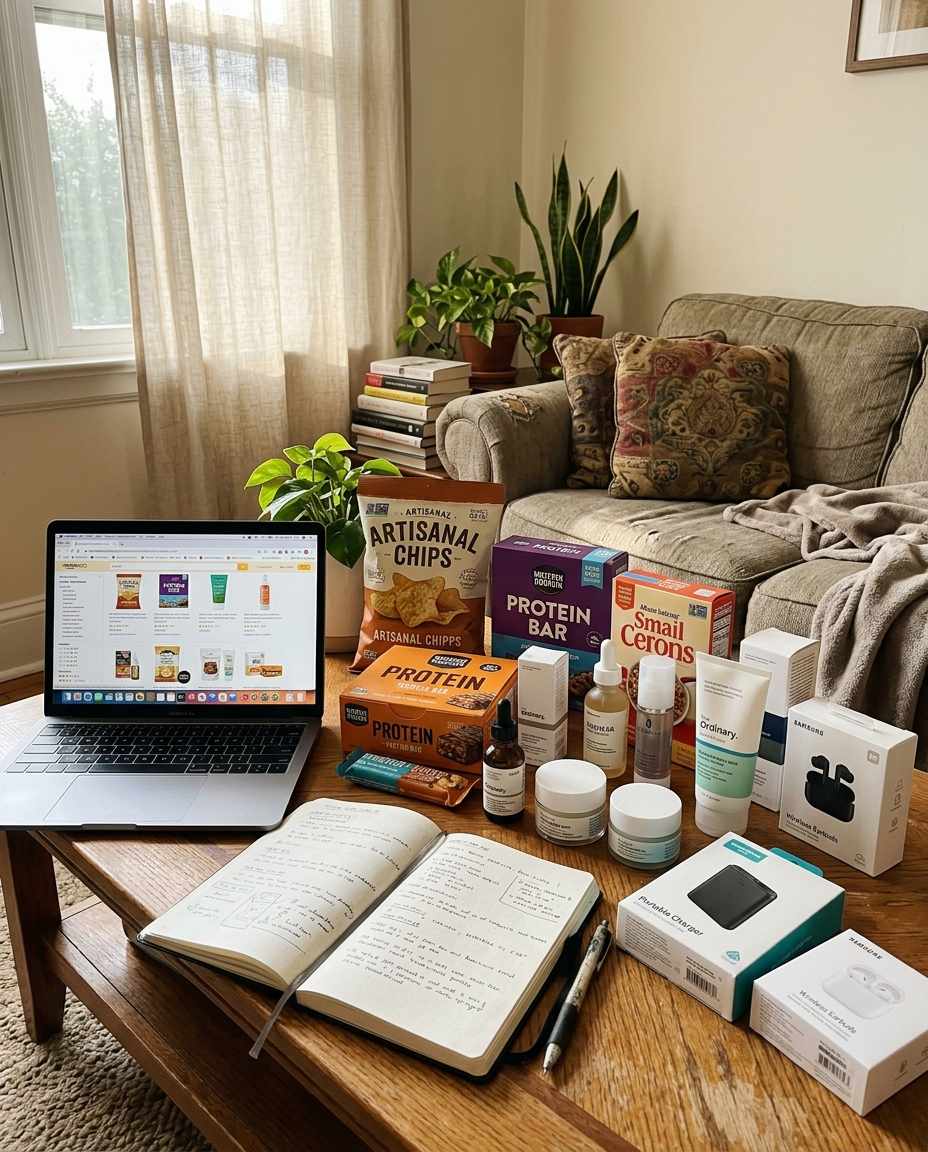
I remember sitting at my kitchen table unpacking a box filled with the newest skincare products, camera hovering over every test phase.
Testing products from home transformed weekend boredom into income-generating adventures.
If you want to turn your couch into a personal lab and get paid for honest opinions, here are 17 well-tested ways to start.
1. Join Specialized Product Testing Panels
Joining exclusive product testing panels is one of the most reliable ways to get paid.
These panels often specialize in specific product categories, from cosmetics to kitchen gadgets, requiring you to share detailed feedback.
The key is to apply through verified platforms like Influenster or Vindale Research where testing is formalized and compensations are tracked.
A common mistake is signing up for every panel indiscriminately, which spreads focus thin and lowers your chances of approval.
Instead, select panels that align with your interests or expertise, such as beauty if you know skincare well.
This focus raises the quality of your feedback and likelihood of invitations.
2. Enroll in Remote Usability Testing for Apps
Testing digital products at home means engaging with usability studies conducted by UX research firms.
These jobs require you to navigate software or websites while vocalizing your experience, often recorded for analysis.
Companies like UserTesting pay per session, sometimes up to $60, depending on test complexity and duration.
Beginners mistake not preparing their testing environment, causing background noise or connection issues that invalidate tests.
Use a quiet room, stable internet, and a high-quality headset for clear audio.
Setting a dedicated test space boosts your reliability and repeat invites.
3. Participate in Food and Beverage Sampling Trials

Food sampling at home combines sensory evaluation with compensation, ideal for foodies and those without allergies.
Brands send curated boxes featuring new snacks, beverages, or meal kits, and you report taste, texture, packaging, and overall appeal.
These structured trials demand notes on specific traits like sweetness levels quantified on a 1 to 10 scale.
Avoid skipping detailed descriptions because testers who provide thorough, consistent feedback get fast-tracked for premium panels.
For example, I once detailed a chocolate’s cocoa intensity as “rich, medium-dark 65% blend with velvety mouthfeel,” which impressed trial coordinators.
4. Review Beauty and Personal Care Innovations
Skincare and haircare companies often seek testers to assess texture, absorption speed, scent family, and lasting effects under real-life conditions.
Samples might include serums, masks, or styling tools.
When testing, track variables such as skin hydration over days using a simple moisture meter or visual logs for clarity and acne changes.
Don’t neglect patch tests or ignore allergies; safety is paramount.
I learned to document baseline skin condition with photos before every trial to provide honest, science-backed progress reports that elevated my credibility with brands.
5. Test Home Cleaning Products Safely
Home cleaning product testing differs because you interact with surfaces and chemical formulas in a practical setting.
Brands want feedback on factors like streak-free finishes, scent fade rate, and residue.
For instance, evaluating a new glass cleaner means timing how long spots vanish and if any haziness remains after drying.
One common error is rushing tests without cleaning identical surfaces for consistency.
I use a 12-inch by 12-inch glass pane clean for each product and take detailed notes on clarity after 10 minutes, providing actionable data companies can trust.
6. Trial and Report on Fitness Devices at Home
Smart fitness devices like pulse oximeters, smart scales, or muscle stimulators require real-world usage data on comfort, accuracy, and usability.
Testing often involves wearing devices during workouts or rest and comparing outcomes to known medical standards or apps.
Many testers overlook controlling variables such as wrist placement or consistent measurement times, which muddle data.
For example, I recorded heart rate over a week at the same morning hour to ensure reproducibility, giving manufacturers quality input to calibrate their algorithms.
7. Evaluate Pet Products with Your Own Pets
If you have a pet, product companies will pay for your detailed insights on toys, food, or grooming gadgets.
Your everyday environment provides natural testing conditions, evaluating durability, ease of use, or palatability.
Include factors like the dog’s size, chewing strength, or sensitivity to certain ingredients.
New testers often forget to note their pet’s temperament or adjusting feeding routines, which skews outcomes.
I track these variables alongside observations of my dog’s reaction, providing nuanced feedback that helps brands improve safety and attractiveness.
8. Participate in Subscription Box Product Reveals
Subscription box companies like FabFitFun recruit testers to preview, open, and review curated product assortments before launch.
This gives insight into consumer reactions to trends across beauty, lifestyle, snacks, and gadgets packed for seasonal delivery.
A pitfall is concentrating reviews on superficial features rather than usability or longevity.
I focus on components like scent fade on soaps or battery life on rechargeable devices to give brands data beyond aesthetics, helping them refine future boxes for satisfaction and product variety balance.
9. Conduct Textile and Apparel Comfort Trials

Getting paid to test textiles means wearing and washing apparel while evaluating comfort factors such as breathability, stretch recovery, and fit retention.
Take notes on fabric weight (in gsm), color fastness over multiple washes, or seam durability to provide brands with actionable product improvement tips.
A common mistake is trying too many garments simultaneously, leading to mixed observations.
I recommend testing one item or fabric type per cycle, logging parameters like 180 gsm cotton blends or polyester mesh airiness for feedback that stands out in clarity and detail.
10. Review Parenting and Baby Gear
Products for infants require highly specific feedback on safety certifications such as JPMA or ASTM compliance, ease of use, and infant comfort.
Testing strollers, bottles, or soothing devices at home lets you assess ergonomics and reliability.
Document elements like adjustable strap tightness or BPA-free plastics in feeding tools.
Many new testers forget to factor in the baby’s developmental stage, which affects usability and comfort.
I create profiles detailing these stages so manufacturers understand how product effectiveness shifts as children grow, giving your input depth.
11. Try Out Green and Eco-Friendly Products
Eco-conscious brands seek tester input on biodegradable packaging, plant-based formulas, or reusable materials.
Evaluating such products often includes lifespan tests and efficacy comparisons to conventional alternatives.
For example, assessing a bamboo toothbrush includes evaluating bristle softness (measured in durometer units) and handle grip texture.
Testers often overlook user experience amid environmental factors.
Document dual-value impressions like durability alongside compostability to guide brands toward sustainable yet effective products that win consumer trust.
12. Become a Remote Consumer Electronics Evaluator
Testing consumer electronics from home can involve evaluating usability, responsiveness, and technical specs such as battery life in mAh or color accuracy on a 100% sRGB display.
You’ll test devices like headphones, smart home equipment, or wearable tech while reporting glitches or performance bottlenecks.
A common oversight is ignoring environmental factors affecting electronics, like room lighting for screen visibility or signal interference for Wi-Fi devices.
I test products in several home spaces to give brands comprehensive performance feedback under real-world conditions.
13. Provide Insight on Artisanal or Craft Goods
Smaller brands producing handmade or limited edition goods need feedback on packaging integrity, craftsmanship, and tactile appeal.
Testing might include ceramics, handmade soaps, or textile weavings where detailing texture, finish smoothness, or scent longevity matters significantly.
Testers who rush through evaluations often miss subtle defects or qualities.
I use magnifying lenses and slow, deliberate assessments to catalog surface irregularities or aroma notes, ensuring detailed reports that artisans find invaluable during product refinement.
14. Evaluate Educational Toys and Games
Testing educational toys requires analyzing engagement, age appropriateness, and developmental impact.
Consider fine motor skill challenges, cognitive puzzles, and safety like choking hazard compliance under ASTM F963 standards.
Testing at home across multiple sessions reveals durability and repeated play value.
Beginners may neglect observing children during play or get biased by uniformity in tests.
I record timed play sessions and solicited child feedback to capture nuanced usability and learning benefits, helping brands optimize educational impact without sacrificing fun.
15. Test Home Office and Productivity Tools

With remote work surging, testing office ergonomics, software integrations, or desk organizers from home is lucrative.
Look for product efficacy in reducing strain like rating lumbar support firmness on a 1-10 scale or measuring click latency on ergonomic mice under 30 ms.
Tester error often arises from unstructured testing environments.
I maintain a consistent 8-hour desk schedule to evaluate comfort and productivity impacts, sharing timed usage insights that lead manufacturers to refine designs for better user retention.
16. Sample and Review Novelty Subscription Food Kits
These kits bring exotic or culturally specific foods to your door, and testing involves evaluating recipe completeness, ingredient freshness, and taste balance.
Producers rely on testers for honest reports, including spice levels quantified on a 0-10 heat scale.
Under-reporting actual cooking or ingredient challenges diminishes feedback quality.
I cook each kit exactly as instructed, noting where preparation was unclear or yielded inconsistent flavors, giving detailed guides back to brands balancing authenticity and simplicity.
17. Provide Feedback on Innovative Sleep Products
Testing mattresses, pillows, or sleep trackers at home involves monitoring comfort levels, material response such as memory foam density (measured in kg/m3), and sensor accuracy over weeks.
Personal sleep logs and temperature measurements create valuable data streams for brands developing better rest solutions.
Novices often rely on initial impressions, but the key is consistent nightly use over at least two weeks.
I track sleep quality fluctuating by room temperature and product conditioning to provide brands with actionable insights grounded in real-world variability.




Leave a Reply