
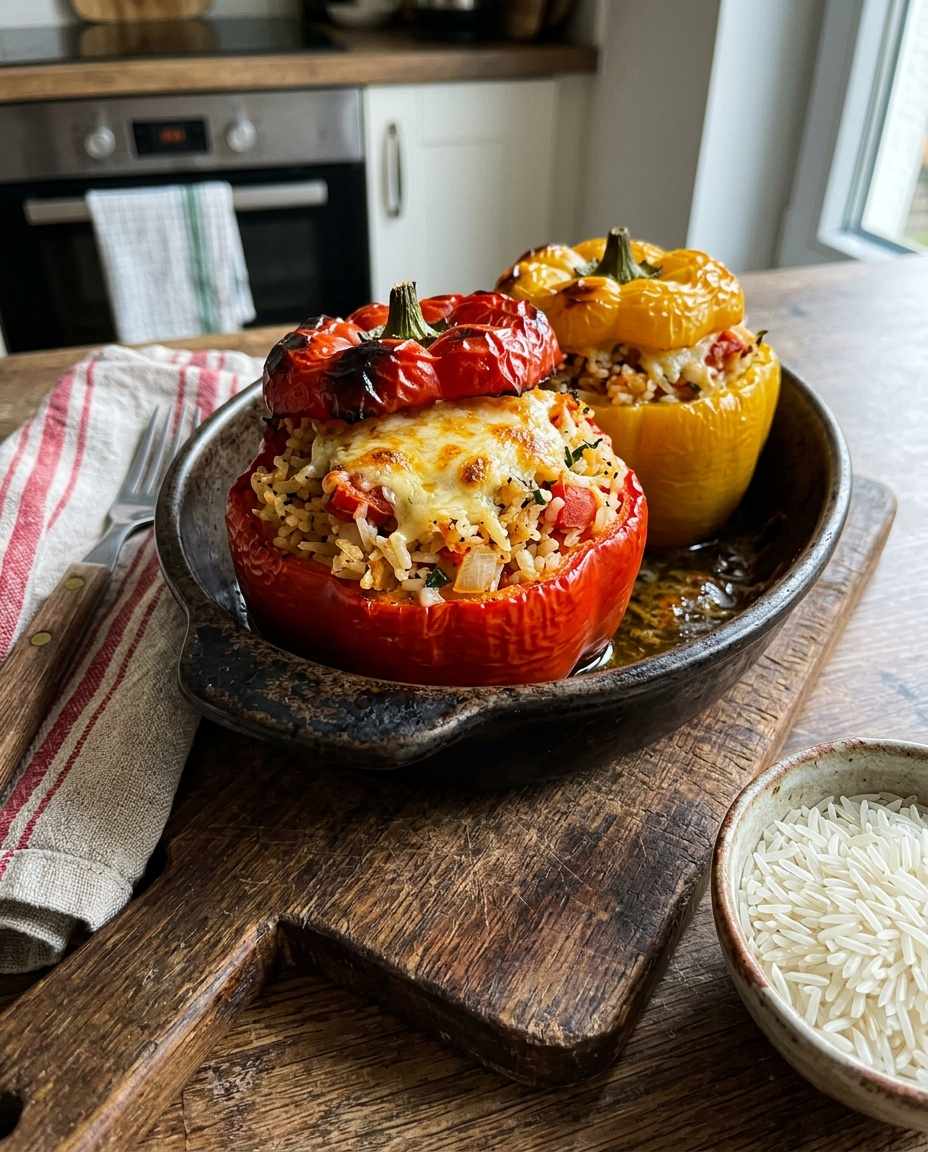
I remember the first time I stuffed bell peppers using uncooked rice and thought the peppers would collapse or the rice wouldn’t cook through.
But with careful technique and timing, that tricky uncooked rice transformed my dish into tender, flavorful stuffed peppers with perfectly cooked rice every time.
This guide reveals the secrets behind that success.
Understanding Rice Varieties and Their Cooking Needs

Not all rice is created equal, and when working with uncooked rice in stuffed peppers, the choice of rice variety profoundly impacts texture and cooking time.
Long-grain white rice, such as Jasmine or Basmati, is most forgiving due to its relatively low starch content and firm, separate grains after cooking.
Conversely, short-grain or sticky rice releases more starch and can become gummy, which risks a gluey stuffing.
Knowing the type of rice you use allows better control over moisture levels and heat application.
As someone who experimented extensively, I learned that parboiled rice, often overlooked, holds an advantage.
Parboiled varieties absorb water efficiently while maintaining grain integrity, reducing the risk of mushy fillings.
For example, one trial with parboiled rice produced a fluffier texture without pre-cooking compared to regular long-grain types.
You want a rice that matches your stuffing’s moisture and flavor profile.
A common mistake is assuming any white rice will work the same.
Many home cooks add uncooked short-grain rice thinking it will cook similarly, often ending with undercooked rice or an inconsistent texture.
This happens because short-grain rice requires more water and a longer cooking time that may not be achievable during baking in a pepper vessel.
Always check your rice package for cooking times and water ratio; these parameters inform your recipe adjustments.
To master uncooked rice stuffed peppers, choose a rice variety with moderate cooking times (about 15–20 minutes on stovetop) and paired with complementary ingredients that add moisture, such as crushed tomatoes or broth.
This synergy ensures your rice cooks through without sogginess or hardness, delivering ideal bite and mouthfeel.
Balancing Moisture: Liquid Quantities and Types

Using uncooked rice means moisture management becomes paramount: less liquid risks crunchy rice, more invites soggy peppers.
The critical principle here is that your rice must absorb sufficient liquid fully during baking.
I found that a filling to liquid ratio close to 1:2 — that is, 1 cup of uncooked rice to around 2 cups of combined liquids — works well inside the sealed pepper walls.
Not all liquids are equal.
Broth or stock adds flavor and slightly increases boiling point due to its mineral content, improving texture.
In contrast, water provides a neutral base but demands stronger seasonings elsewhere.
For instance, I once replaced broth with water and ended with dull, underwhelming rice.
Combining crushed tomatoes with broth brings acidity and moisture, helping to tenderize rice faster and add complexity.
The environment inside the pepper also influences moisture retention.
Thick-walled peppers like bell peppers hold steam effectively, but thinner or overripe peppers may release moisture, leading to a dryer bite or an imbalanced filling.
Peppers that are not waxy or fresh risk water loss, which you can counteract by adding extra liquid or covering the pan tightly.
Avoid the common mistake of eyeballing liquids without measuring, especially when adapting for uncooked rice.
Always weigh or precisely measure your liquids and check filling consistency before baking.
If it feels dry or clumpy, add more broth or tomato juice bit by bit.
Proper moisture balance unlocks the magic that makes uncooked rice fully cook and remain fluffy inside.
Prepping Peppers for Structural Integrity and Even Cooking
Keeping stuffed peppers intact during a longer cooking time required by uncooked rice is tricky because softening can cause them to collapse.
Freshness and thickness of walls are your starting points.
Firm, medium-thick walled peppers with a bright hue (ideally RGB values close to 220,40,40 for reds or 240,210,0 for yellows) withstand the steam bath better.
I’ve repeatedly seen older, limp peppers degrade rapidly, losing shape and making a watery mess.
Parboiling the peppers briefly before stuffing is a traditional fix, but when combined with uncooked rice, you risk over-softening or peeling skins.
Instead, a technique I use involves roasting the hollowed and cored peppers for 5 minutes at 375°F (190°C) to slightly toughen their exterior and remove raw green bitterness.
This seals the surface slightly and helps peppers hold shape during longer baking times without adding moisture prematurely.
Another insider tip is to trim the bottoms slightly, about 3–4 millimeters, so the peppers stand upright, drained of excess water.
Be careful not to create holes as liquids will spill out, destroying the filling’s cooking environment.
If your peppers lean, nestling them snugly in the pan or using crumpled foil wedges stabilizes them.
This is crucial since the dramatic heat cycling during baking can cause shifting and cracked skins.
Many cooks overlook preparation steps or assume fresh peppers alone suffice.
Testing firmness and conducting simple pre-roasting saved me multiple failed attempts.
When using uncooked rice, working with structurally sound, prepped peppers allows the rice to absorb liquid evenly and the filling to finish fully cooked without a floppy pepper shell.
Flavor Layering: Incorporating Aromatics and Spices Before Baking
When using uncooked rice, the long cooking time renders it a neutral base that readily absorbs flavors.
This makes your choice of aromatics and spices critical in elevating the dish.
I personally start with a hot pan sauté of minced onions, garlic, and finely diced celery or bell pepper, releasing volatile oils and softening edges.
This foundation builds depth and prevents raw starchy notes.
Adding dried spices early, such as a teaspoon of smoked paprika, ground cumin, or a pinch of cayenne, provides consistent flavor infusion during the baking process.
For example, layering warm spices into uncooked rice mixtures diffuses flavor better than fresh herbs alone, which tend to dull with heat.
Fresh herbs like parsley and basil, by contrast, should be folded in near the end to preserve brightness.
Another layer to consider is the salt and acid balance.
Salt enhances water absorption in starch and protein components of the filling, making your rice fluffier and richer tasting.
Meanwhile, acid such as lemon juice or vinegar complements sweetness from peppers and balances the starchiness.
I found that starting with just half of the acid you intend to use lets you adjust late in cooking without over-brining the stuffing.
Many cooks skip these careful stages, thinking seasoning after baking suffices.
When working with uncooked rice, flavor integration during prolonged cooking matters immensely.
You want bold, balanced aromatics pre-baked to permeate the rice grains and marry with other ingredients, delivering a vibrant and well-rounded stuffed pepper.
Mastering Oven Temperature and Bake Time for Even Rice Cooking

The oven environment plays an overlooked but crucial role in cooking uncooked rice inside peppers.
I’ve tested fragile, low-heat methods that undercooked rice, leaving a chalky crunch, and excessively high heat that overbrowned the peppers while drying the filling.
The ideal oven temperature hovers between 350°F and 375°F (175–190°C), creating consistent heat penetration without drying surfaces too quickly.
Bake times depend on rice type, liquid content, and pepper size, but a range of 50 to 60 minutes is a practical benchmark.
Checking doneness at about 45 minutes with a thin skewer or probe is a technique I recommend for those uncertain, especially with thicker-walled peppers.
If the rice core remains hard, tent loosely with foil and continue baking in 5-minute intervals.
Placement in the oven matters as well.
I place my baking dish on a middle rack to avoid uneven top browning or bottom scorching.
Avoid convection settings unless you reduce oven temperature by 25°F, as convection dries out the peppers’ exterior too aggressively for the delicate uncooked rice inside.
Moisture retention combined with gentle heat ensures rice grains finish fully plumped and tender.
A frequent error is cranking heat above 400°F (204°C), expecting faster results.
This typically causes burnt skins or super dry, rubbery exteriors before the rice cooks through.
Patience and precise temperature control yield uniformly cooked stuffed peppers with moist, fluffy filling.
Weighing the Pros and Cons of Pre-Soaking vs. Using Dry Rice
Some chefs swear by pre-soaking rice before stuffing to reduce total bake time and ensure softness, but I prefer using dry, uncooked rice directly due to the flavor and texture it yields.
Pre-soaking can soften individual grains before baking but risks watery fillings or uneven cooking if drained insufficiently.
Rinsing too vigorously removes starch that helps bind ingredients.
Using dry rice inside peppers increases bake time but intensifies flavor absorption, producing firmer yet tender kernels that complement vegetables’ bite.
In my experience, direct uncooked rice offers better structure and mouthfeel, reducing mush factor.
On the flip side, it demands exact liquid control and longer baking patience to fully hydrate the rice inside the pepper shell.
The common mistake with pre-soaking is underestimating water retention within rice, resulting in overly wet, heavy fillings that weigh down the pepper or split the skin.
I recall a test where pre-soaked rice created excess juice pooling in the pan, signaling imbalance.
In contrast, dry rice absorbs broth incrementally throughout cooking, allowing you to control texture throughout the bake.
To decide your approach, consider your timing and texture preferences.
If short on time and unbothered by moister fillings, pre-soaking helps.
If texture and flavor nuance matter more, as in my case, use uncooked rice with extra liquid.
Either way, remember the liquid adjustments and baking time extensions necessary for perfect results.
Achieving Optimal Texture: Tips for Fluffiness and Avoiding Sogginess

Fluffiness separates amateur stuffed peppers from a truly polished dish.
When cooking rice uncooked inside, overhydration and prolonged steaming cause gluey, sticky filling that ruins the intended contrast of tender pepper and grain.
I use two key strategies: careful measurement of rice to liquid, and aeration by stirring briefly before stuffing.
After mixing filling ingredients—the uncooked rice, broth, vegetables, and seasonings—I let it rest for 10 minutes.
This brief soak allows the rice to hydrate partially without becoming mushy.
Then, fluffing the mix gently with a fork reintroduces air pockets that bake into light, separate grains inside the pepper cavity.
This intentional step combats common compaction mistakes.
Avoid tightly packing the stuffing into peppers, a frequent error that compresses the rice and hinders steam circulation.
Instead, fill peppers loosely to about 85–90% capacity, leaving room for rice expansion and steam buildup.
This ensures uniform cooking and prevents boil-over inside the oven, keeping the filling dry enough with a slight bite.
Lastly, scatter a thin topping of finely grated low-moisture cheese or breadcrumbs in the last 10 minutes of baking.
This adds a textural contrast with a golden crispness that complements the fluffy interior.
It also absorbs excess surface moisture, helping prevent sogginess and improving overall presentation and mouthfeel.


Leave a Reply