
Discover how everyday coffee grounds, often discarded as waste, can transform your indoor garden through natural nutrient enrichment, soil conditioning, and pest deterrence.
This comprehensive guide explores the myriad benefits and best practices for incorporating coffee grounds into houseplant care, helping your green friends flourish sustainably.
Understanding Coffee Grounds as Plant Nutrients
Coffee grounds contain essential nutrients including nitrogen, phosphorus, potassium, and trace minerals crucial to plant growth.
When properly applied, these nutrients become bioavailable to houseplants, promoting healthy foliage and root development without resorting to synthetic fertilizers.
Notably, the high nitrogen content is beneficial for leafy green growth, making coffee grounds a natural booster for many indoor plants.
However, raw coffee grounds are relatively low in phosphorus and potassium, so they work best as a supplement alongside balanced fertilization.
Excessive use can lead to soil imbalance or acidification, so moderation is key.
Recognizing the nutritional profile helps gardeners decide how and when to integrate coffee grounds for best results.
How Coffee Grounds Improve Soil Structure
One of the less obvious advantages of coffee grounds is their ability to enhance soil texture and aeration.
The fine particles loosen compacted soil, improving drainage and preventing waterlogging, a frequent challenge in potted houseplants.
This aeration also supports vital microbial activity, stimulating nutrient cycling within the root zone.
Incorporating coffee grounds into the potting mix creates a slightly granular, crumbly soil that balances moisture retention with airflow.
Many succulent growers and fiddle-leaf fig enthusiasts benefit from this soil conditioning, avoiding root rot while maintaining steady hydration without over-dampening.
The Benefit of Coffee Grounds in Root Health and Development
Healthy roots form the foundation of thriving houseplants, and coffee grounds can indirectly support root vigor through improved nutrient availability and better soil aeration.
The slight acidity of coffee grounds favors microbial populations that promote root growth, especially beneficial for plants like pothos and monstera with extensive root systems.
Furthermore, nutrient-rich grounds incorporated into compost or directly into potting soil provide essential minerals that encourage fine root hair proliferation.
This results in stronger root networks capable of efficient water and nutrient uptake, vital for indoor plants grown in constrained containers.
Preparing Coffee Grounds for Safe Use
Not all coffee grounds are ready for immediate application.
Freshly brewed grounds should be allowed to dry to prevent mold and compacting beneath the soil.
If grounds are too wet or layered thickly, they can retain excess moisture, causing fungal issues or root suffocation.
Drying grounds on a tray for a few days before adding to your houseplant soil is a simple step.
Additionally, mixing coffee grounds with other organic matter or compost prevents over-concentration and balances their acidic nature.
Avoid using flavored or chemically treated grounds as these may harm sensitive plants.
Identifying Ideal Houseplants for Coffee Ground Application
Coffee grounds work best with houseplants that favor slightly acidic to neutral soil pH, such as African violets, ferns, and philodendrons.
Plants like snake plants and succulents can handle light application, but excessive coffee grounds may disrupt their preferred alkaline or well-drained soil conditions.
Understanding your plant’s specific preferences avoids nutrient overfeeding or soil chemistry imbalance.
For instance, fiddle-leaf figs benefit from the improved nutrient and drainage qualities coffee grounds provide, while acid-sensitive species like some orchids may require avoidance of grounds altogether.
Enriching Soil with Coffee Grounds for Nutrient Boost

Incorporating coffee grounds into the potting soil offers a reliable source of slow-release nitrogen, crucial for plants with robust foliage like fiddle-leaf figs.
Lightly mixing moist coffee grounds into soil improves both nutrient density and soil texture, supporting sustained plant growth over weeks.
The photo above illustrates a workspace featuring fresh, moist grounds ready to be folded into soil near a fiddle-leaf fig’s base.
Notice the use of terracotta pots and well-drained soil that complements grounds without causing water retention issues.
Avoid piling grounds thickly as this can compact soil and reduce oxygen availability for roots.
Using Coffee Grounds in Compost to Enhance Root Growth

Adding coffee grounds to your compost enriches the medium with nitrogen and boosts microbial activity essential for breaking down organic matter.
Compost mixed with coffee grounds creates a fertile substrate for houseplants, promoting vigorous root systems as roots access gradually released nutrients.
The illustrated root development in the glass vessel reveals how mixing coffee grounds into compost supports healthy rooting in pothos.
The stratified soil layers with organic amendments demonstrate how grounds integrate seamlessly, improving soil aeration and moisture retention while nourishing roots.
Surface Application of Coffee Grounds on Succulents

Applying a fine layer of coffee grounds at the soil surface around succulents like jade plants can provide gentle nutrient supplementation without overwhelming these water-sensitive plants.
Succulents require minimal watering, so using dry, thin layers of grounds prevents moisture buildup that would otherwise cause mold.
The picture above shows a jade plant with a light sprinkle of used grounds on the soil surface, balancing texture and nutrient supply.
This method suits slow-growing varieties where gradual nutrient intake supports health without risking root rot.
Ensure even, thin coverage and avoid thick mats that hinder aeration.
Incorporating Coffee Grounds into Potting Mix for Large Houseplants

For substantial houseplants like Monstera deliciosa, integrating coffee grounds carefully into the potting mix adds needed nitrogen and enhances moisture retention while improving aeration.
Using fresh but moist grounds distributed evenly around the root zone encourages nutrient absorption without inviting pests or fungal diseases.
The image captures the attentive troweling of coffee grounds around a Monstera’s base, highlighting the balanced application needed for large, leafy plants.
Avoid over-application and ensure grounds are well-mixed with perlite or other aerators to prevent waterlogging and root suffocation.
Coffee Grounds as Mulch for Moisture Retention and Pest Deterrence

Using coffee grounds sprinkled around the base of fern varieties acts as a natural mulch, retaining soil moisture and cooling root zones.
The slight acidity of coffee grounds can also deter slugs and certain pests that might damage delicate fronds.
The carefully scattered grounds among the emerging maidenhair fern show how a thin mulch layer can enhance both soil quality and plant defense.
Mulching with coffee grounds should remain thin to ensure airflow and avoid compaction, especially around tender new growth.
Supporting Flowering in Plants with Coffee Grounds

Coffee grounds supply readily available nitrogen and trace minerals that can boost flowering in plants like African violets.
Balanced nutrient enrichment from grounds encourages healthy leaf and flower production, given the soil pH is managed.
The pictured African violet thriving in soil enriched with coffee grounds demonstrates how moderate application improves bloom intensity and leaf vibrancy.
Avoid heavy use on acid-sensitive plants and always mix grounds evenly to prevent localized root damage and maintain balanced nutrition.
Diluting Coffee Grounds for Liquid Fertilizers in Succulents

Preparing a diluted liquid fertilizer from coffee grounds offers succulents and other sensitive houseplants a nutrient boost without overwatering or soil buildup.
The infusion delivers trace nutrients in a form easily absorbed by roots without saturating soil or disrupting drainage.
The image of vintage copper watering can pouring coffee ground–infused water onto succulent arrangements highlights a careful approach.
Note the gentle watering and the amber hue of the liquid, which signals dilution and suitability for water-conserving plants.
This method prevents leaf burn or root sogginess typical of concentrated fertilizers.
Revitalizing Struggling Plants with Coffee Ground Feeding

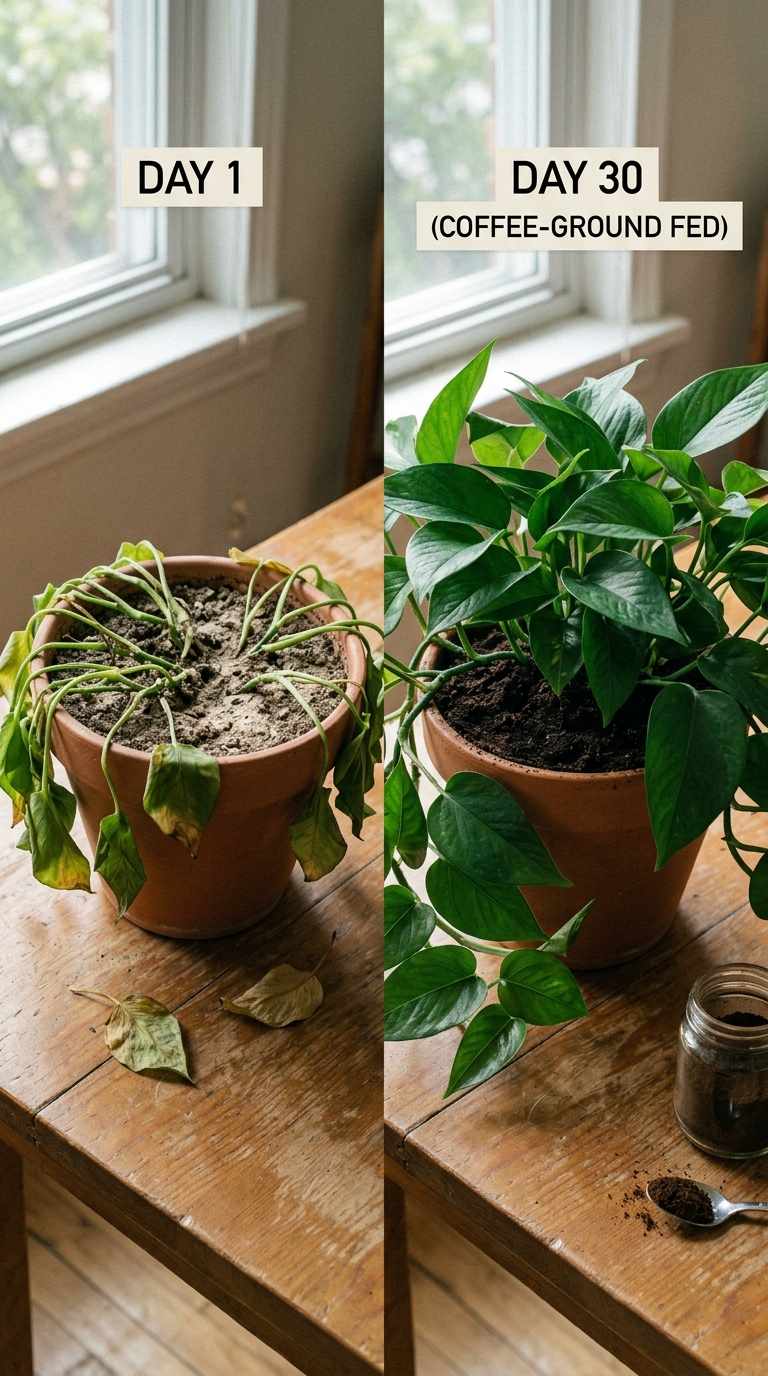
Consistent feeding with coffee grounds can invigorate plants suffering from nutrient deficiencies and drought stress by restoring soil fertility and moisture retention.
Over a month’s application, plants often exhibit deeper green foliage, reduced wilting, and improved vigor.
The side-by-side comparison of a pothos at Day 1 and Day 30 after coffee ground application clearly exemplifies this transformation.
The shift from yellowed and drooping leaves to lush, vibrant growth makes a compelling case for gradual coffee ground integration into care routines for recovering plants.
Proper Application Techniques for Coffee Grounds

Applying coffee grounds in moderation and evenly distributing them over soil prevents issues like mold, acidity spikes, or root clogging.
Light sprinkling by hand or with a spoon, avoiding direct root contact, helps maintain soil health.
The image depicting hands carefully sprinkling coffee grounds on a Golden Pothos demonstrates this hands-on approach.
Notice the balanced quantity and the presence of a wooden spoon and glass mister, tools that encourage mindful, controlled application and complement soil hydration strategies.
Enhancing Moisture Retention Around Plant Roots

A thin layer of coffee grounds gently packed into moist soil retains water near roots longer, reducing frequent watering needs.
This balance is particularly useful for plants like peace lilies that prefer consistently moist but well-drained soil.
The photo of hands pressing coffee grounds into soil around a Peace Lily shows a controlled method for improving moisture retention.
The key is to avoid thick layers which could trap water excessively.
Slight incorporation allows water to seep gradually, supporting root hydration and overall plant health.
Using Coffee Grounds for Succulent Soil Amendments

Succulents require well-draining soil with minimal organic matter to prevent root rot, but small additions of coffee grounds can add nutrients without upsetting this balance.
Mixing dry coffee grounds sparingly into the soil enhances mineral content while maintaining the preferred gritty texture.
The setup featuring a Sansevieria in a ceramic pot adjacent to a bowl of fresh coffee grounds illustrates this practice.
The modest quantity suggests controlled amendment rather than a substitute for specialized succulent soil, an important distinction to avoid water retention problems.
Common Mistakes When Using Coffee Grounds
One frequent error is applying coffee grounds in thick layers, which can lead to mold growth, poor aeration, and root rot.
Overuse also causes soil acidification beyond some houseplants’ tolerance, harming roots and inhibiting nutrient uptake.
Another pitfall involves using flavored or chemically treated coffee grounds that may contain additives harmful to sensitive plants.
Always ensure grounds are thoroughly dried and incorporated thoughtfully to avoid nutrient imbalance or physical soil problems.
How Coffee Grounds Stimulate Beneficial Soil Organisms

Coffee grounds act as an organic food source for earthworms and microbes that improve soil fertility.
These organisms aerate soil naturally, enhance nutrient cycling, and help decompose organic matter, creating a vibrant root environment.
The view of earthworms in soil enriched with coffee grounds expresses how these materials foster biological activity.
Encouraging such life within houseplant substrates leads to healthier plants by creating a dynamic, living soil ecosystem rather than a static medium.
Improving Root Zone Aeration and Moisture Retention

Incorporating coffee grounds into potting soil creates a textured medium that balances moisture retention with air flow.
This is critical in container gardening where compacted soil can suffocate roots or cause inconsistent watering.
The close-up image of robust roots amid gritty soil mixed with coffee grounds illustrates this principle.
This balanced substrate supports root vitality, prevents water pooling, and nourishes the plant with sustained nutrient availability, an essential foundation for indoor gardening success.
Sustainable Integration of Coffee Grounds into Indoor Gardening

Collecting and using coffee grounds as part of a sustainable plant care routine reduces kitchen waste while enhancing indoor garden health.
Setting up a compost corner or dedicated reuse station encourages regular application and controlled storage.
The greenhouse corner featuring a labeled compost area with coffee grounds and related tools shows how organization supports ongoing use.
Such sustainability reduces reliance on chemical fertilizers and fosters an eco-conscious approach to nurturing houseplants organically.
Balancing Soil pH When Using Coffee Grounds
While coffee grounds are mildly acidic, over-application may lower soil pH excessively, affecting nutrient availability and plant health.
Regular soil testing helps monitor changes, guiding amendments with lime or balanced fertilizers to maintain ideal pH.
Adjustments prevent root stress and nutrient lockout common with acidified soils.
Tailoring coffee ground use to plants that prefer acid or neutral soils minimizes risk and optimizes growth outcomes.
Practical Tips for Coffee Ground Application Frequency
Applying coffee grounds too often can build up unwanted soil conditions, so schedules should consider plant growth rates and soil response.
For most houseplants, monthly light applications during active growing seasons suffice, while dormant periods require minimal feeding.
Observe leaf coloration and soil condition to adjust timing.
Combining grounds with other organic fertilizers offers balanced nutrition, avoiding reliance on any one amendment that could disrupt soil dynamics.
Making Liquid Fertilizer from Coffee Grounds

Transforming used coffee grounds into a liquid fertilizer concentrates their nutrients into a form that houseplants can absorb quickly, especially useful during active growth periods.
This method releases nitrogen, phosphorus, and potassium in a balanced solution that energizes foliage development and root health without the risk of over-application tied to dry grounds.
Steeping the grounds in water for 24 to 48 hours is generally sufficient to extract these nutrients.
The photo above illustrates a mason jar filled with this homemade liquid fertilizer, emphasizing practical storage and ease of application.
Using a sealed container allows you to store the fertilizer concentrate in the fridge for up to a week, while a dedicated spoon helps measure dosing accurately.
This precision ensures you avoid nutrient burn commonly seen when pouring unused strong brews directly onto plants.
Some houseplants such as ferns, spider plants, and ivies thrive with regular feedings of diluted coffee ground fertilizer, about one part concentrate to four parts water.
Applying this every two weeks during spring and summer maximizes benefit while minimizing buildup of organic matter that can attract pests or cause root rot.
Dark, leafy plants typically show the most visible response to this type of feeding.
Pay close attention to pH effects since coffee grounds tend to be slightly acidic.
Testing your home’s water or soil periodically helps prevent shifts that could impair nutrient uptake.
For alkaline-preferring species, rinsing soil with plain water between fertilizer applications can maintain balance.
In my experience, alternating this liquid feed with other organic fertilizers broadens nutrient availability and improves overall plant resilience.




Leave a Reply