
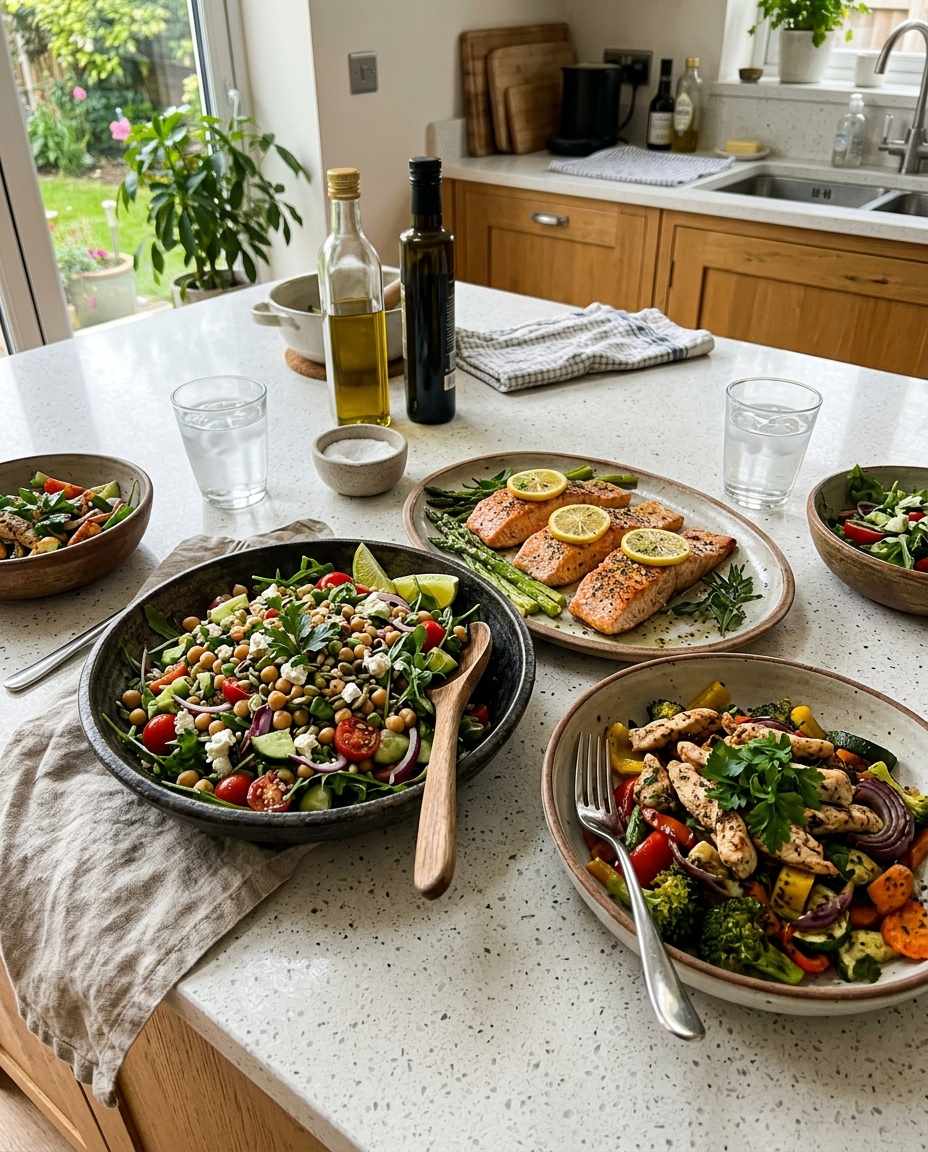
Last Tuesday evening, I found myself staring at a half-empty fridge after a long day.
With energy low and time tighter than ever, I craved a dinner that was fast, satisfying, and packed with protein to recharge.
This list of high-protein meals will transform your hectic weeknights into effortless culinary wins.
1. Spicy Peanut Chicken Stir-Fry
One evening, I tossed sliced chicken breast, crisp bell peppers, and snap peas into a hot skillet with a spicy peanut sauce made from natural peanut butter, soy sauce, and garlic.
The key is cooking the chicken in small batches to get a perfect caramelized crust without steaming.
Many rush this step and end up with soggy meat rather than a flavorful sear.
This dish works beautifully for a quick dinner after work because it comes together in under 20 minutes and packs 35 grams of protein per serving.
To elevate it, use low-sodium soy sauce and fresh lime juice to brighten each bite.
Serve over cauliflower rice for a low-carb twist, ensuring you stay full and fueled without the carb crash.
2. Lentil and Feta Stuffed Peppers
Stuffed peppers often fall short if you just fill them with rice and call it a day.
I swapped in protein-rich lentils cooked with cumin, coriander, and diced tomatoes, mixing in crumbled feta cheese right before baking.
This combo adds about 25 grams of protein per pepper and brings a creamy, tangy finish that complements the slightly smoky pepper flesh.
Many cook the lentils too long, which makes the filling mushy.
I recommend simmering until just tender, about 15 minutes, then chilling before stuffing to maintain texture.
These peppers also reheat wonderfully, making them a practical meal prep recipe for your busy week.
3. Greek Yogurt Marinated Turkey Kebabs
I use thick Greek yogurt mixed with garlic, lemon zest, and oregano to marinate turkey chunks overnight.
The yogurt tenderizes the meat while infusing tangy brightness that keeps the kebabs juicy and flavorful after grilling.
Each skewer delivers approximately 30 grams of lean protein, perfect for those wanting high-quality nutrition quickly.
A common mistake is using low-fat yogurts with added thickeners, which don’t tenderize effectively.
Opt for full-fat plain Greek yogurt and let the meat soak for at least 6 hours.
When grilling, cook over medium heat to avoid drying out the turkey, flipping often for even caramelization.
4. Black Bean and Quinoa Chili Bowl

This chili blends black beans and tri-color quinoa for a plant-based powerhouse with over 28 grams of protein per bowl.
On a dreary winter night, it feels like a hug in a bowl.
The quinoa adds chewy texture and nutty flavor that most bean chilis miss.
The trick is rinsing quinoa thoroughly to remove its bitterness before cooking at a perfect 2:1 water to quinoa ratio.
Many people skip this step, resulting in an off-putting aftertaste.
Throw in smoked paprika and chipotle powder for a smoky heat that deepens the dish’s complexity effortlessly.
5. Seared Tuna with Avocado Salsa
During a humid summer evening, I seared fresh tuna steaks to medium-rare, preserving their buttery texture and deep flavor.
Paired with a refreshing avocado salsa of diced cucumber, red onion, jalapeño, and cilantro, this meal offers about 40 grams of protein while keeping the dinner light and vibrant.
Many novices overcook tuna, turning it dry and chalky.
The key is locking the tuna in the hot pan for 45 seconds each side and letting it rest briefly.
This method maintains moisture and showcases the natural umami.
If you want an even easier option, buy sushi-grade tuna pre-sliced for quick pan-searing.
6. Cottage Cheese and Spinach Stuffed Chicken
I once stuffed thick chicken breasts with a blend of creamy cottage cheese, garlic, and steamed spinach before baking until golden and juicy.
This straightforward filling supplies an extra 20 grams of protein per serving and moistness that prevents dry, tough chicken — a common issue when overcooking boneless breasts.
To avoid the dreaded dry chicken, I use an instant-read thermometer aiming for 160°F internal temperature, letting residual heat finish the cooking.
Butterflying the chicken and securing the filling with toothpicks ensures even cooking and juicy results every time.
Serve with a quick cucumber salad to keep the meal light and nutrient-dense.
7. Edamame Pesto Zucchini Noodles

For a high-protein, low-carb twist, spiralize zucchini into noodles and toss with a pesto made from shelled edamame, fresh basil, garlic, and Parmesan cheese.
This sauce packs around 22 grams of protein per serving and adds a vibrant green color that brightens any dinner table.
People often use dried herbs that don’t burst in flavor like fresh basil does.
I pulse the edamame paste with lemon juice and olive oil until smooth but still textured, avoiding an overly oily finish.
This raw approach keeps cooking time minimal—perfect for hectic evenings when stove use is limited.
8. Baked Salmon with Walnut-Crust
In one of my meal prep sessions, I coated wild-caught salmon fillets with crushed walnuts, garlic, and Dijon mustard before baking.
This crust adds a satisfying crunch and ups the protein content to 38 grams per serving, layering in healthy fats and antioxidants.
A frequent misstep is applying the crust too thickly, causing uneven cooking or sogginess.
I recommend finely chopping the walnuts and pressing the mixture gently before baking at 425°F for exactly 12 minutes, ensuring flaky tender salmon underneath.
Serving with steamed asparagus keeps the plate colorful and nutritious.
9. Chickpea Flour Omelette with Herbs
When eggs aren’t an option, chickpea flour omelets offer 21 grams of protein and a naturally gluten-free base.
I whisk the chickpea flour with water, turmeric, and chopped fresh parsley, then pan-fry it to golden perfection.
Its earthy taste complements Mediterranean-style fillings like roasted red peppers and olives.
Beginners often forget to rest the batter for at least 10 minutes, causing uneven texture and sticking.
Resting allows the flour to absorb moisture fully and results in a fluffier omelet.
This recipe is a game-changer for those seeking plant-based proteins with minimal ingredient fuss.
10. Beef and Broccoli Stir-Fry
A classic that’s anything but basic, I marinate thin beef strips in a soy-ginger sauce to intensify flavor before tossing them with crisp broccoli florets over high heat.
This dish delivers 42 grams of protein per serving, perfect for refueling after a long day.
Many overcook the beef, making it tough and chewy.
Quick cooking over a searing-hot cast-iron skillet ensures tender meat and keeps vegetables brightly crisp.
Use flank steak cut no thicker than 1/4 inch and marinate for at least 30 minutes to maximize tenderness.
11. Tuna and White Bean Salad Wraps
My go-to lunch-to-dinner conversion involves mixing canned albacore tuna with creamy white beans, minced red onion, lemon juice, and fresh dill.
The combo roughly totals 35 grams of protein per serving and fits into whole wheat wraps for easy, portable meals.
A common issue is using tuna packed in oil with strong flavor that overwhelms the salad.
Opt for tuna in water, draining well to prevent sogginess.
Don’t skip rinsing the beans thoroughly to reduce excess starch and promote freshness.
These wraps come together in under 10 minutes, perfect for busy weeknights.
12. Moroccan-Spiced Lamb Meatballs

I discovered that blending ground lamb with warming spices like cumin, cinnamon, and coriander creates meatballs packed with 28 grams of protein per 4-ounce portion, bursting with flavor and moisture.
Serving them over a dollop of Greek yogurt cools spice intensity perfectly.
The notorious pitfall is using lean meat that dries out.
Choose 80-85% lean lamb for balance and gently mix spices without overworking the meat to keep texture tender.
Baking at 375°F for 20 minutes yields juicy, evenly cooked meatballs with a crisp outer crust.
13. Tofu and Kale Coconut Curry
For a vegan protein punch, I simmer firm tofu cubes with chopped kale in a fragrant sauce of coconut milk, ginger, turmeric, and curry powder.
This dish offers about 30 grams of protein per serving and a velvety richness balanced by earthy greens.
Don’t make the mistake of skipping the tofu pressing step—excess water compromises texture and prevents effective flavor absorption.
Pressing tofu with a heavy weight for 20 minutes ensures a chewier bite.
Serve alongside basmati rice or quinoa to soak up the luscious sauce.
14. Eggplant and Chickpea Tagine
On a chilly night, slow-cooked eggplant and chickpeas with tomatoes, preserved lemons, and warm spices make a comforting stew packing 25 grams of protein per serving.
The dish’s complex layers come from a mix of sweet and savory elements that meld beautifully over time.
A usual mistake is overcrowding the pot, which leads to steaming instead of roasting flavors developing.
Use a wide, heavy-bottomed pan and stir gently halfway through cooking at 350°F for an hour.
This recipe is ideal for making in larger batches and enjoying leftovers throughout the week.
15. Shrimp and Cauliflower Grits Bowl
Transforming casual Southern comfort food, I swap traditional grits with mashed cauliflower, topping it with garlicky shrimp sautéed in butter and smoked paprika.
This combination yields over 40 grams of protein and a creamy, satisfying texture without heavy carbs.
Many overcook shrimp, making them rubbery and tough.
Cook in preheated cast iron for no more than 2 minutes per side, just until opaque.
Prepare cauliflower mash by simmering florets until fork-tender, then blending with nutritional yeast for cheesy depth.
This meal looks elegant but takes under 25 minutes.



Leave a Reply