
Understanding the timing and factors that influence how long 2,4-D takes to work is essential for effective lawn and garden care.
In this guide, you’ll learn about 2,4-D’s mechanism, the ideal conditions for application, and how to interpret results with confidence.
Prepare to master your weed control strategy.
Understanding 2,4-D Herbicide Basics
2,4-D is one of the most widely used herbicides globally, specifically designed for controlling broadleaf weeds without harming grasses.
It mimics natural plant hormones, causing uncontrolled growth that eventually kills the weed.
Knowing how this chemical functions at a cellular level helps set expectations for its timing and effects.
Unlike contact herbicides, 2,4-D is systemic: it moves throughout the plant’s vascular system reaching roots and shoots.
This systemic action means that visible weed damage might lag behind treatment as the chemical works internally.
Patience and proper understanding of this process prevent premature re-application and wasted effort.
When applied correctly, 2,4-D targets unwanted plants while preserving your lawn’s desirable grasses.
However, misuse or misunderstanding of its action mechanism often confuses gardeners about how long it takes to see results.
This foundational knowledge is key for interpreting the timing and effectiveness of your herbicide treatments.
Factors Affecting 2,4-D Effectiveness and Speed
Several external conditions influence how quickly 2,4-D works after application.
Weather plays a pivotal role: temperature, humidity, and rainfall can accelerate or delay chemical absorption and translocation within the weed.
Warm, sunny days promote faster uptake, while cold or overcast weather slows its action.
Additionally, the weed species and its growth stage significantly affect response time.
Younger, actively growing weeds readily absorb and translocate 2,4-D, showing symptoms sooner.
Mature or stressed weeds may resist or take longer to succumb.
Soil composition and moisture also impact the herbicide’s root absorption.
Understanding these variables helps set realistic timelines for results.
If you apply 2,4-D in cool, damp weather on mature weeds, expect delayed symptom development.
Knowing these factors reminds you not to rush to conclusions about treatment failure if effects aren’t immediate.
Preparing for Application: Essential Tools and Setup

To maximize 2,4-D’s efficiency, proper preparation is crucial.
The photograph showcases a tidy garden workbench with a 5-liter professional sprayer, sturdy gloves, a hand trowel, pruning shears, string twine, and organic plant feed.
This neatly arranged scene exemplifies readiness and care before tackling weed control.
Using the right spray equipment allows for precise, even application, reducing waste and avoiding damage to desirable plants.
Protective gloves are vital to keep skin safe from exposure.
Tools like shears and trowels ensure you can manage other garden tasks alongside herbicide use efficiently.
By replicating such thoughtful preparation and gear arrangement, you set yourself up for success.
The sprayer’s visible pressure gauge and adjustable nozzle remind you to calibrate settings carefully for uniform coverage, important factors influencing how well and how fast 2,4-D works.
Optimizing Application Timing for Maximum Speed

The timing of applying 2,4-D dramatically influences how long it takes to observe effects.
The active ingredient requires leaves to be dry and free from dew, rain, or irrigation to adhere well.
Photograph two, showing fresh dew droplets clinging to a big green leaf, illustrates a scenario to avoid.
Applying herbicide on wet foliage often causes runoff, reducing effectiveness.
Early morning or late afternoon applications during dry periods are ideal.
This timing allows the chemical to penetrate leaf surfaces during the plant’s natural transpiration cycle.
Additionally, calm weather helps minimize drift, ensuring the herbicide reaches the intended target.
By respecting optimal conditions and avoiding treatments on saturated leaves, you enhance absorption and speed up weed symptom development.
The dew drops in the photo serve as a visual warning: wait for drying before spraying to avoid frustrating delays in seeing results.
Correct Application Techniques and Coverage

Successful herbicide action requires attention beyond simply spraying.
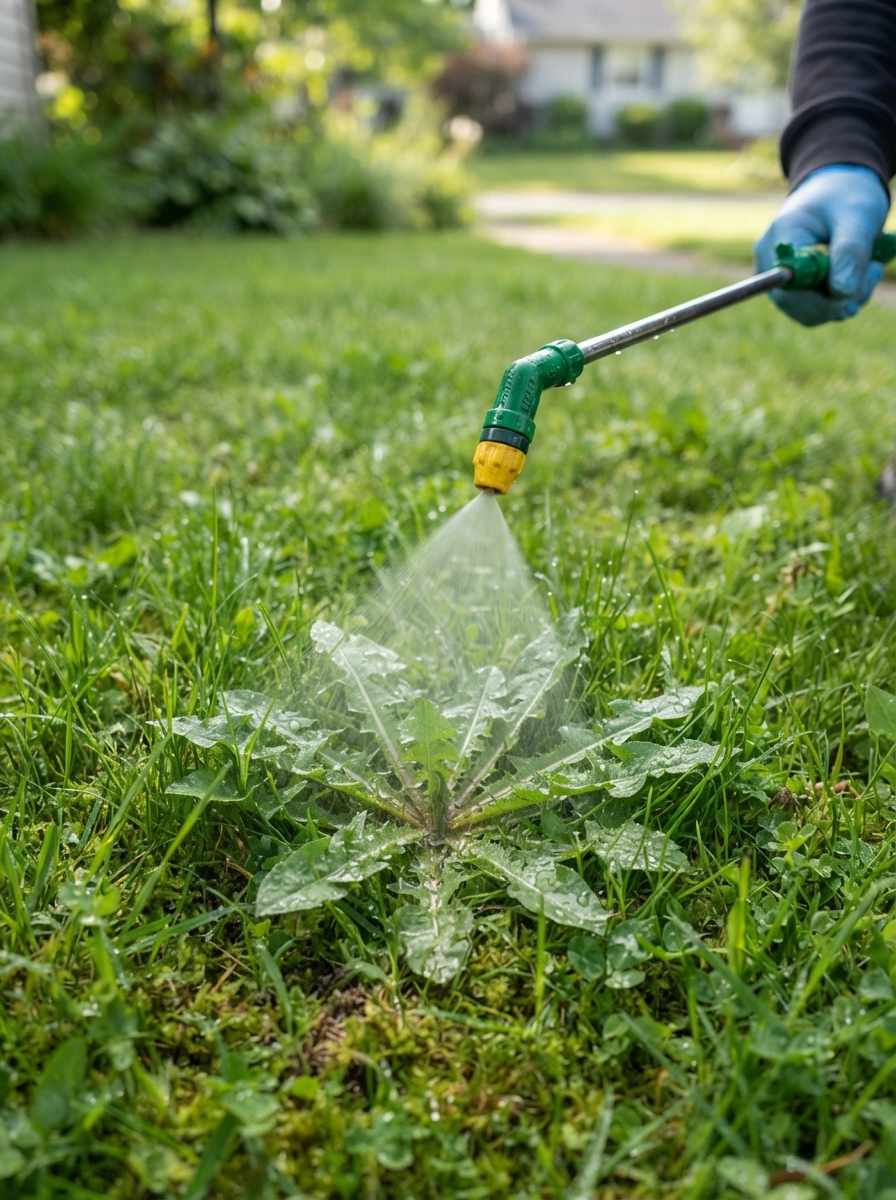
In the third photo, a gardener’s gloved hand directs a precise spray nozzle toward the broad leaves of a dandelion in a sunny lawn setting.
This image captures the moment of careful, controlled application directly onto the weed canopy.
Even coverage without oversaturation ensures 2,4-D is absorbed efficiently through leaves and roots.
Targeting the entire weed ensures the systemic herbicide travels throughout its tissues, accelerating the killing process.
Avoiding overspray on surrounding grass protects desirable plants.
Proper nozzle type, spray pressure, and distance from weeds influence droplet size and distribution,key to effective penetration.
The photograph demonstrates an ideal technique of close-range, steady spraying aimed directly at broadleaf weeds, maximizing herbicide uptake and speeding visible effects.
How 2,4-D Moves Inside the Weed

Understanding the pathway 2,4-D takes inside a weed helps explain varying kill times.
The detailed diagram of a weed root system absorbing herbicide clarifies this movement at a cellular and structural level.
The herbicide application on the soil surface penetrates root hairs and moves upward through epidermis and cortex layers to shoots.
Once absorbed, 2,4-D mimics the plant hormone auxin, triggering unregulated growth that exhausts the weed’s reserves and leads to death.
Root absorption is slower than foliar uptake but ensures total eradication, especially for perennial weeds with extensive root systems.
Knowledge of this systemic action reveals why some symptoms appear only days after application.
Delayed root uptake prolongs the time to visible effects, but is crucial for long-term control.
The image’s clear labels help demystify why herbicide timing varies based on root system interaction.
Recognizing Early Signs of 2,4-D Action

The fourth photo shows a dying dandelion plant with curled, distorted leaves collapsing on patchy, dry soil.
These are classic early symptoms of 2,4-D working: leaf distortion, chlorosis, and wilting.
Usually, weeds begin to show these signs within 3 to 7 days after application, depending on conditions.
Recognizing these symptoms helps you avoid unnecessary re-treatment and confirms that the herbicide is effective.
Symptoms often start in young shoots as abnormal cell growth disrupts vascular flow.
Monitoring treated areas daily during this period improves confidence in the herbicide’s progress.
If no visible changes occur within two weeks, reassessment of application technique or environmental conditions is warranted.
The photo’s stark contrast between distressed weed and normal soil highlights the visual changes you want to spot early.
Full Weed Death Timeline and Lawn Recovery

Complete weed death often occurs between one and three weeks post-application, as root systems collapse along with above-ground tissue.
The fifth photograph underscores this final stage: a dead, browned weed stands in sharp contrast to lush, healthy lawn grass.
The dead weed’s brittle, shriveled state confirms herbicide success.
Allowing this natural progression avoids premature physical removal, which might spread seeds or root fragments.
Meanwhile, your lawn begins to recover from competition, exhibiting healthier, denser growth as shown by the verdant grass patches beside the larvae of decay.
Patience is key: rushing to conclusions that 2,4-D is ineffective before this timeline results in unnecessary reapplications that risk damage.
The photo’s garden bed edge illustrates how treated zones gradually clear and recover, encouraging long-term planning for weed control.
Maintaining a Weed-Free Lawn Post-Treatment

The seventh photo, featuring a pristine, evenly striped lawn bordered by flowerbeds and a well-kept garden, exemplifies the end goal of any 2,4-D treatment regime.
Post-treatment care ensures your lawn remains healthy and resilient against future weed invasions.
Regular mowing, appropriate watering, and feeding strengthen grass that competes effectively with weeds.
Aeration and overseeding help repair soil compaction and bare spots, reducing conditions favorable for weed establishment.
Observing your garden’s health closely allows timely retreatment if new weeds appear.
The image’s serene and well-ordered landscape reminds you that consistent lawn care combined with targeted herbicide use fosters not only immediate weed control but long-term lawn health and beauty.
Common Mistakes That Delay Results
Many gardeners delay results by unintentionally misapplying 2,4-D or misunderstanding its requirements.
Common errors include spraying during or immediately before rain, applying on wet leaves, or uneven coverage.
These factors reduce herbicide absorption and increase runoff, significantly slowing weed death.
Reapplying too soon out of impatience also wastes product and can harm desirable plants.
Ignoring environmental factors such as temperature extremes or drought stress similarly contributes to slow action or herbicide failure.
Avoiding these mistakes by planning application timing carefully, using proper equipment, and following label instructions helps you get the fastest, most reliable outcomes.
Recognizing these pitfalls empowers better herbicide success.
When and How to Reapply 2,4-D Safely
Sometimes reapplication is necessary due to large infestations, environmental wash-off, or resistant weeds.
Waiting at least two weeks before reapplying allows the first treatment to fully act and cuts risks of chemical buildup or turf damage.
If retreatment is needed, adjust spray coverage and avoid overlapping zones excessively.
Use a lower concentration or different formulation as recommended to prevent buildup or resistance.
Always wear protective gear seen in the preparation photo and maintain equipment cleanliness to avoid cross-contamination.
Understanding when and how to safely repeat application ensures continued weed control without harming your landscape.
Patience and strategic reapplication guarantee long-term success with 2,4-D.
Environmental and Safety Precautions
Being aware of environmental impacts and safety precautions safeguards your health and ecosystem. 2,4-D can affect non-target plants, aquatic life, and beneficial insects if not applied correctly.
Avoid treating near water bodies or during high winds to prevent drift.
Wearing gloves and other protective clothing, such as the ones seen on the garden workbench photo, shields you from chemical exposure.
Thorough cleaning of equipment after use avoids residue spread.
Always follow label instructions regarding disposal and storage.
Prioritizing safety and environmental mindfulness ensures effective weed control with minimal risks.
This approach also promotes responsible use, preserving your garden’s long-term vitality.
Integrating 2,4-D Into a Sustainable Weed Management Plan
While 2,4-D is effective, integrating it with other lawn care practices optimizes weed control sustainability.
Combining proper mowing heights, soil health improvement, and overseeding creates competition against weeds, reducing chemical reliance.
Regular monitoring and early spot treatments prevent large infestations.
Organic amendments, like the plant feed visible in the preparation photo, complement herbicide use by strengthening grass health naturally.
This holistic approach minimizes negative environmental impact and maximizes lawn vigor.
Selecting 2,4-D as part of a comprehensive weed management strategy leads to long-lasting, healthy turf.
Understanding its timing and effects within this broader context guides you to smarter garden stewardship.



Leave a Reply