
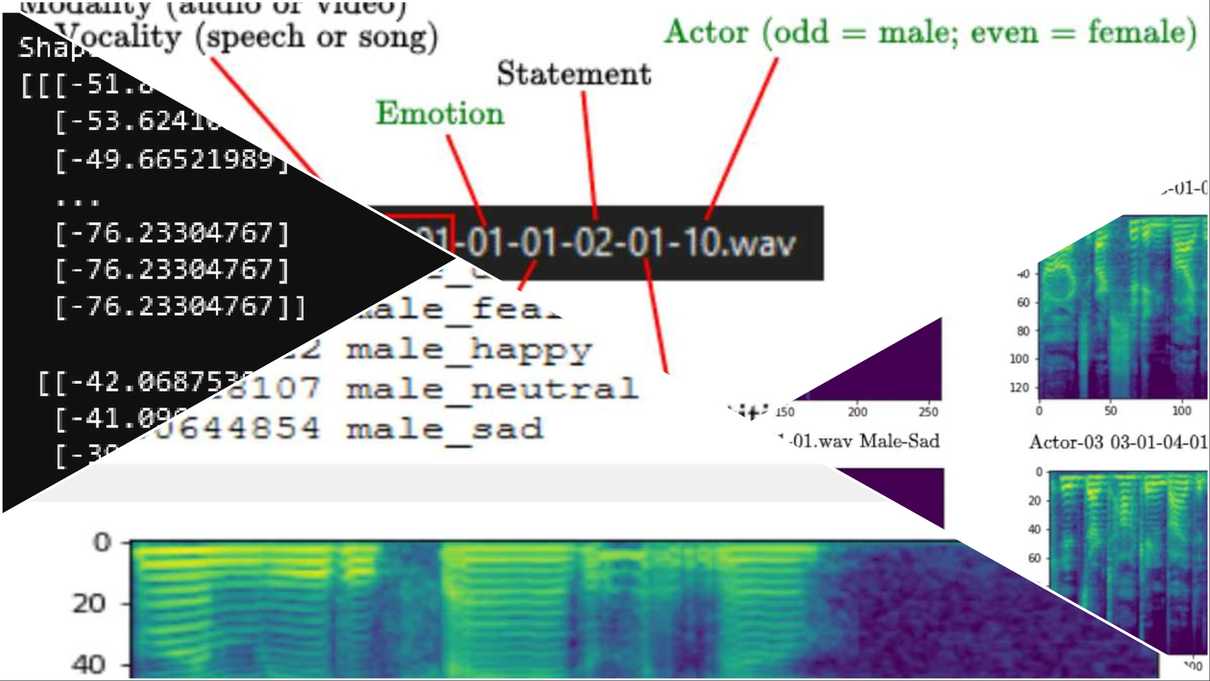
In a breakthrough that merges deep learning, audio engineering, and human-centered design, a new speech emotion recognition (SER) system is reshaping how machines interpret human emotions—just by listening.
Developed by Niketa Penumajji of Kansas State University, the system leverages Convolutional Neural Networks (CNNs) trained on Mel Spectrograms—visual representations of audio frequencies—to accurately detect emotional states in speech.
Unlike traditional speech analysis methods that rely on text, syntax, or facial expressions, this tool bypasses language altogether, reading raw vocal tones and frequencies to identify emotions in real-time.
At its core, this innovation bridges the gap between machine learning and human communication, offering potential applications in education, mental health, accessibility, and beyond.
Transforming Sound Into Sight
Traditional approaches to speech emotion recognition have long struggled to deliver real-world results.
Earlier models based on Gaussian Mixture Models (GMMs) or Hidden Markov Models (HMMs) often fell short in noisy or diverse environments, making them impractical for production use.
This study departs from those limitations by converting raw audio (.wav files) into Mel Spectrograms—a human-centric frequency scale that more closely mimics how we perceive pitch.

Once transformed into these spectrograms, the audio data takes on a visual form, turning the classification problem into an image recognition challenge. Here, CNNs excel.
By using a four-layer CNN architecture with batch normalization, max pooling, and ELU activations, the model learns intricate emotional patterns hidden within these visual matrices.
The result? A real-time system that achieved nearly 69% categorical accuracy on a blind dataset, despite training on just 1,440 labeled audio clips.
Subscribe
Enter your email below to receive updates.
From Algorithm to Accessibility
What sets this system apart isn’t just its technical sophistication—it’s the seamless human-computer interaction.
Penumajji didn’t stop at building a model. She packaged it into a lightweight, intuitive Graphical User Interface (GUI) using Python’s Tkinter, allowing users with zero technical background to test emotions on pre-recorded audio or live recordings.
The tool performs on-the-fly predictions with just a click, instantly returning the detected emotion. It’s minimal, functional, and most importantly, accessible.
This level of usability positions the tool for real-world deployment—not just in labs but in homes, classrooms, and clinics.
A Tool for Neurodiversity and Inclusion
One of the most compelling test cases involved a user with Asperger’s syndrome. Individuals on the autism spectrum often face challenges recognizing and interpreting emotional cues, which can impact social interactions.
Interestingly, when this user tested the system, her own emotional labeling frequently misaligned with the model’s predictions—yet external observers found the model’s classifications more accurate.

This unexpected outcome suggests that tools like this could serve as emotional mirrors for neurodiverse individuals, offering them a clearer lens into social-emotional contexts.
While further validation is needed, it opens new doors for assistive technologies that enhance empathy and understanding.
Under the Hood: The ML Engineering Story
Behind the user-friendly GUI lies a sophisticated machine learning pipeline. The project utilized the RAVDESS dataset, a labeled collection of emotional speech clips.

Audio files were processed using the Librosa library to generate log-scaled Mel Spectrograms, capturing fine-grained pitch and intensity variations.


The CNN was trained over 125 epochs with a batch size of 16, optimized using the Adam optimizer and categorical cross-entropy loss for multi-class classification.
The emotion classes—originally too diverse—were strategically merged to improve model stability (e.g., merging “calm” into “neutral”), boosting overall accuracy.
 (Source: Niketa Penumajji / Research Publication)
Testing was rigorous. In addition to blind dataset evaluation, the model was trialed on real human voices—including non-English clips in Swiss German and German.
It excelled particularly in negative emotions like anger and sadness, often ranking the correct emotion in its top five predictions, even when the primary guess was slightly off.
Subscribe
Enter your email below to receive updates.
The Road Ahead
While the model’s current version is promising, the research acknowledges limitations.
The relatively small dataset, cultural bias in voice samples, and lack of real-world deployment all leave room for future development. But the foundation is strong—and open-ended.
In a world increasingly shaped by voice assistants and human-AI interaction, this research offers a critical leap forward.
Emotion-aware systems could soon help teachers assess student engagement, aid individuals with emotional dysregulation, or simply make our machines more empathetic.
After all, teaching machines to listen—and feel—might just be the next frontier of audio tech.
Source: arXiv:2503.19677, Research PDF




Leave a Reply