
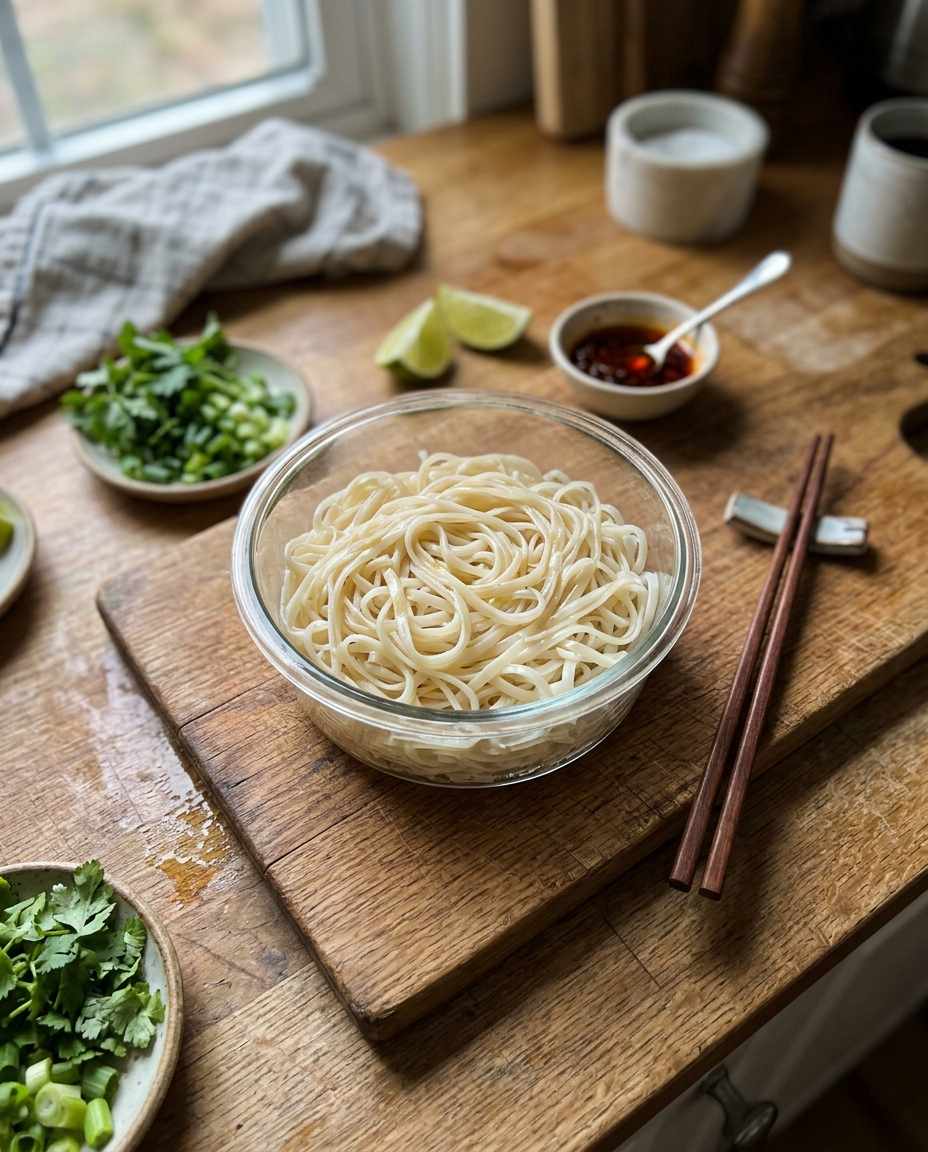
I remember pulling a container from my fridge only to find gluey, clumped rice noodles—an utterly disappointing end to a beautiful homemade pad thai night.
Since then, I’ve mastered the art of storing cooked rice noodles to keep their delicate texture and flavor fresh for days.
This guide dives deep into preserving those slippery strands flawlessly.
Why Rice Noodles Demand Special Storage
Rice noodles differ significantly from wheat-based pasta, with unique starch structures that affect their behavior post-cooking.
These noodles primarily contain amylopectin starch, which interacts with water differently, making them prone to clumping and textural degradation.
As they cool, retrogradation causes starch molecules to realign, resulting in a tougher, sticky mass rather than individual strands.
When improperly stored, absorbed moisture from surrounding air or condensation within containers accelerates this process.
For example, I once left a sealed container too warm in the fridge and returned to a gel-like noodle block.
These textural shifts undermine any subsequent dish’s quality, making understanding rice noodles’ biochemistry essential.
Ignorance of this leads many cooks to simply reheat noodles that end up gummy or brittle.
The traditional practice of rinsing noodles with cold water after cooking works partially by washing away excess surface starch and quenching cooking heat to halt starch gelatinization.
However, it does not suffice for long-term storage without additional measures.
The key takeaway is that rice noodles require careful moisture and temperature control to maintain their ideal al dente texture.
Treating them like wheat pasta or leaving them loosely covered invites moisture imbalance and textural collapse.
This knowledge grounds every storage strategy that follows.
Choosing the Right Container Material and Size

Selecting the proper container is a deceptively important step.
I started with plastic Tupperware but found that some cheap plastics retained moisture and odors, contributing to a soggy noodle outcome.
Glass containers with airtight silicone seals offer a hermetic barrier that limits moisture fluctuations and keep odors from other fridge contents out.
From a practical viewpoint, the container size also matters.
A vessel too large allows noodles to spread thinly and dry out, while too small can compress strands, causing them to stick together.
I recommend choosing an airtight container no deeper than 3 inches but with ample surface area, allowing the noodles to rest uncrushed and gently separated.
Avoid metal containers which might react with residual oils or seasonings; stainless steel bowls are okay temporarily if tightly sealed but less ideal for long-term storage.
Additionally, containers with a wide mouth ease the transfer of noodles and prevent damage from squeezing.
In summary, opt for a glass container with an airtight silicone gasket, sized to hold your noodles in a loosely packed layer about 2 to 3 inches thick.
This form factor achieves a balance of moisture retention and airflow, crucial for preventing clumping without drying.
Optimal Cooling and Pre-Storage Treatment
Cooling cooked rice noodles quickly is a pivotal step I sometimes neglected early on.
Leaving hot noodles in a covered container traps steam, causing excess condensation inside and sogginess.
I learned to immediately rinse cooked noodles in cold water for at least 30 seconds, which stops the cooking process and washes away residual starch that encourages stickiness.
After rinsing, draining thoroughly and spreading the strands on a parchment-lined tray to air dry for 5 to 10 minutes also aids in evaporating surface moisture.
This step is especially important if you plan to store noodles more than a couple of hours.
Excess moisture is the enemy and will cause clumping inside any container.
Some cooks swear by tossing noodles lightly with a small amount of neutral oil at this point.
I tried canola, grapeseed, and even toasted sesame oil, settling on about 1 tablespoon per 200 grams of noodles.
This thin film of oil acts as a physical separator, preventing strands from fusing together during storage or reheating without imparting strong flavor.
In practice, neglecting this cooling step leads to sticky, uneven noodles that require aggressive reheating and rehydration.
By contrast, the controlled cooling and oil toss method baked into my routine ensures each bite remains springy and separate—even days later.
Ideal Refrigeration Settings and Placement

It took several trials to realize that not just refrigeration, but refrigeration specifics influence noodle longevity.
My fridge maintained a 38 °F (3.3 °C) average temperature but placing the noodle container near the back where colder drafts come and go caused them to dry out despite an airtight seal.
Rice noodles stored above 40 °F (4.4 °C) may begin microbial spoilage faster, yet overly cold fridge zones cause textural stress via moisture migration.
I now position my noodle container centrally on the middle shelf where temperature stays most stable around 35 °F (1.7 °C).
Additionally, adjustable humidity drawers are often designed with produce in mind and hold too high humidity for noodles.
Avoid them unless you dry noodles thoroughly beforehand.
I also keep noodles away from strong-smelling foods like fish or onions that may leach odors through container seals, degrading noodle neutrality.
This careful microclimate control inside the fridge is why some batches last comfortably 3 to 4 days with negligible textural loss while keeping noodles near door compartments leads to drying and rapid spoilage.
Control placement and temperature monitoring with a fridge thermometer are key actionable steps.
Freezing Cooked Rice Noodles: Pros and Cons
Freezing cooked rice noodles sounds appealing for long-term storage but comes with major trade-offs.
The freezing process causes water inside noodles to crystallize and rupture cell walls, resulting in mushy, broken strands after thawing.
I froze noodles directly in plastic bags early on, only to find them fragmented and sticky once defrosted.
However, if done with precision, freezing is feasible.
I now portion noodles into single-meal quantities, lightly coat with oil, and freeze flat in vacuum-sealed, BPA-free freezer bags to minimize ice crystal formation.
Thawing slowly in the fridge rather than microwaving preserves texture better.
Freezing also locks in desirable microbial safety but sacrifices some textural integrity.
If noodles are intended for soups or stir-fries where texture degradation is less noticeable, freezing can extend use up to 1 month.
For fresh texture, though, refrigeration with proper care is superior.
Therefore, freeze only as a last resort with tight vacuum packaging, accept a slight softness shift, and prioritize rapid but careful thawing.
Otherwise, stick to refrigeration protocols for optimal noodle mouthfeel and flavor.
Reheating Techniques for Flawless Texture

Reheating rice noodles without ruining their texture is an art I acquired through deliberate testing.
Microwaving often overheats segments, evaporates moisture unevenly, and turns strands rubbery.
Instead, I prefer briefly soaking noodles in boiling water or quickly stir-frying them with a splash of water and oil.
For example, placing noodles in a sieve and immersing in boiling water for 10 to 15 seconds refreshes pliability without overcooking.
This mimics the original cooking environment and reverses some starch retrogradation effects.
I then drain immediately and gently toss with warmed sauce or oil.
Stir-frying leftover noodles also helps rehydrate strands while adding flavor and texture dimension.
Use medium heat and a non-stick pan, stirring constantly for 1 to 2 minutes, and add a teaspoon of water or broth to create steam and soften noodles without clumping.
By following these precise reheating processes, you avoid the mushy or overly hard noodles that plague rushed microwave attempts.
Allow noodles to come naturally back to their ideal chew with gentle agitation and moisture control.
Incorporating Oils and Seasonings for Storage Benefits
Using oils isn’t just about flavor; it has functional storage benefits that change noodle chemistry.
I began mixing sesame oil or peanut oil into my stored noodles, discovering that the right quantity (around 0.5 to 1 tablespoon per 150 grams) creates a hydrophobic barrier that slows moisture migration and starch realignment.
Not all oils perform equally.
Lighter oils like grapeseed or refined sunflower oil impart less saturation and flavor but still protect texture.
Stronger oils, such as toasted sesame, risk overpowering delicately flavored dishes.
The key is balancing storage efficacy with culinary intention.
A common pitfall is adding too much oil, which turns noodles greasy, slick, and more prone to clumping when cold.
Conversely, too little oil loses protective benefit.
I recommend applying oil evenly by tossing noodles in a large bowl with a silicone spatula while gently warming the noodles to improve oil spread.
Additionally, a touch of acidity, such as a teaspoon of rice vinegar, can counteract stickiness by altering surface pH and starch behavior.
Experiment with these additives individually or combined to find the sweet spot for your noodle style and subsequent use cases.
Avoiding Common Storage Mistakes
Mistakes in storing rice noodles stem largely from overlooking subtle factors like moisture control or container ventilation.
Leaving noodles in sealed plastic bags without initial cooling often causes excess condensation.
I witnessed this firsthand by sealing hot noodles and finding a water pool that immediately turned strands into an inedible mass.
Another frequent error is stacking noodles too densely or pressing them down, which eliminates air gaps needed to keep strands separated.
This results in one large, sticky block not unlike overcooked spaghetti.
During meal prep, spreading noodles gently and giving them breathing room prevents this.
Some cooks mistake refrigeration temperature settings or placement, storing noodles in variable-temperature fridge door compartments near warm air exchange zones.
This accelerates spoilage or drying.
Regular temperature checks with digital probes and consistent container positioning avoid such fluctuations.
To avoid these pitfalls, cool noodles fully before sealing, choose appropriate container size, aliquot portions without compressing, and position thoughtfully inside a stable-temperature fridge zone.
These intentional habits make all the difference between fresh and ruined rice noodles.
Best Practices for Transporting Rice Noodles

Transporting cooked rice noodles to picnics or potlucks introduces additional challenges resulting from agitation and temperature swings.
Movement encourages noodle friction, which can cause strands to deform or clump, especially if densely packed.
I started carrying my noodles in insulated lunch boxes with separate compartments to mitigate pressure and shaking.
Pre-oiling and loosely packing the noodles into single-layer, wide containers or resealable silicone bags minimizes compression damage.
Line containers with parchment paper for smoother cable separation, and consider using container dividers or silicone cupcake liners between layers to protect fragile noodles.
Temperature control during transport is critical.
I utilize small ice packs to keep noodles below 40 °F, particularly for journeys longer than 1 hour.
This prevents bacterial growth and texture degradation triggered by heat exposure.
Alternatively, freeze noodles overnight then thaw slowly en route for same-day consumption.
Ultimately, confidence in transport comes from combining adequate cushioning, temperature management, and container design.
These steps replicate best fridge storage conditions while addressing the added variable of travel.



Leave a Reply