
Railroad ties are unexpectedly versatile and bring a unique rustic charm to any outdoor space.
From edging and pathways to creative planters and dramatic water features, these 20+ ideas showcase how railroad ties can elevate your landscape functionally and beautifully.
Elevate Your Garden with Railroad Ties
You should think beyond simple borders when it comes to railroad ties in landscaping.
They provide robust, weather-resistant solutions that cater to various garden styles, including modern minimalism and woodland retreats, perfect for creative planters.
The natural texture and deep grain of aged ties add a tactile warmth you don’t get from synthetic materials.
I find that railroad ties beautifully blend with plants and stones, providing structure without overpowering greenery.
I love how they can be crafted into multi-functional features,from retaining walls and raised beds to creative furniture and even water elements.
Their durability and timeless appeal make them a landscaper’s secret weapon.
1. Rustic Driveway Edging with Plant Beds

This photo shows a gently curved driveway bordered by weathered railroad ties, doubling as raised planting beds filled with decorative gravel and low-maintenance greenery.
The soft greens and pebbly textures contrast perfectly with the deep brown of the ties and the smooth black asphalt.
This setup works well because it clearly defines the driveway while inviting natural elements right to the edge.
For a similar impact, use well-draining soil behind the ties and opt for drought-tolerant plants in your raised planting beds to minimize upkeep.
The curve adds visual interest while the ties’ rugged look withstands vehicle proximity effortlessly.
2. Coastal-Inspired Deck Flooring

Here, railroad ties transform into a wide deck floor along a stunning, cliffside home with sweeping ocean views.
The rich, aged wood planks evoke a sense of history and blend harmoniously with the natural coastal landscape.
Using railroad ties for decking adds a unique, textured surface that’s tougher than traditional wood decks.
You can recreate this look by sealing the ties to prevent excessive weather wear, then pairing them with minimalist outdoor furniture and succulent potted plants for durability in salty air environments.
3. Curved Woodland Steps

This woodland staircase features railroad ties creating each step’s tread and riser, bordered by gravel and winding through dense greenery.
Their dark wood tones complement the mossy, natural forest floor and tangled underbrush spectacularly.
Railroad ties are ideal for uneven, wooded terrains due to their robustness and strong structural integrity.
To replicate this, secure ties firmly in place with stakes and use gravel for drainage and traction.
The gentle curve softens the hardscape, making it organic and inviting.
4. Modern Entryway Steps with Slate

Combining railroad ties with sleek slate stones, this modern home’s front steps create a layered, inviting path.
The ties act as sturdy risers, while the blue-grey slate adds refinement and crisp geometric lines.
This hybrid design works because it balances rustic warmth with contemporary clean lines.
To get this look, carefully measure each step and leave small pebbled joints for natural drainage.
Adding a sleek handrail complements safety while maintaining the organic-industrial aesthetic.
5. Mailbox Planter Box

A practical dual-purpose railroad tie planter doubles as a mailbox base in this suburban setting.
The weathered ties frame flowering plants and ornamental grasses, creating a lush, tactile pocket of greenery at the street edge.
This idea works because it transforms a typically utilitarian mailbox post into a focal point.
Use rot-resistant ties and line the planter with weed barrier fabric.
Choose plants that can handle foot traffic and urban conditions, ensuring year-round interest and low maintenance.
6. Sculptural Garden Pedestal

In this contemporary garden, a vertical railroad tie post acts as a pedestal for an abstract metal sculpture.
The tie’s worn texture contrasts beautifully with the smooth metal, while surrounding greenery softens the installation.
Railroad ties used as vertical sculptures or pedestals add height and a sense of groundedness.
For durability, seal the wood and anchor it securely in gravel or concrete.
This idea elevates garden art by blending natural raw materials with crafted pieces.
7. Wildflower Staircase Through Meadow

A series of railroad tie steps snakes upward through a meadow bursting with wildflowers, including daisies and lupines.
The natural, weathered wood blends seamlessly with the untamed landscape’s colors and textures.
This approach lets you create gentle, non-intrusive pathways in rural or wild settings.
Use untreated ties to let them age naturally, and install the steps to minimize soil disruption.
The ties provide stability while enhancing the rustic beauty of the floral surroundings.
8. Ambient Outdoor Stair Lighting

At twilight, railroad tie retaining walls and stairs are enhanced with built-in low-voltage lighting, casting a warm glow that highlights textures and plants.
The wood’s rich browns absorb the light, creating a cozy, inviting mood along the pathway.
Integrating lighting into railroad tie structures offers safety and ambiance without cluttering the space.
Consider concealed LED strips or spotlights directed downward, and ensure waterproof installation.
This layering of light and wood texture transforms ordinary landscaping into magical evening spaces.
9. Vertical Privacy Fence

An eclectic, modern privacy fence built of vertical railroad tie posts creates a rugged textured backdrop in this urban garden.
The unequal heights and natural splits in the wood add visual rhythm and organic interest.
Using ties upright as fencing delivers a strong statement without feeling harsh.
Secure each post deep into the ground with gravel for drainage.
This approach offers privacy and wind protection while serving as a striking architectural feature blending style and function.
10. Raised Koi Pond Frame

A rectangular raised pond for koi fish is outlined with stacked railroad ties, combining rustic charm and aquatic serenity.
The pond’s clear water teems with colorful fish, set against lush surrounding greenery for a balanced nature sanctuary.
Ties make excellent pond frames due to their resistance to soil moisture and weight-bearing capacity.
Ensure the wood is treated or sealed appropriately and use pond liners to protect the ties.
This elevated pond creates a focal water feature that invites wildlife and provides tranquil sounds.
11. Tiered Vegetable Garden Beds

Three-tiered raised beds use railroad ties to create a multi-level vegetable garden overflowing with vibrant greens and herbs.
Each level provides easier access while maximizing growing space and sunlight.
Layered beds made from ties are perfect for urban gardens or small yards wanting high productivity.
Be sure to line the ties to prevent soil contact and monitor for any chemical treatments if using old wood.
This design enhances yield, organization, and soil control for healthier plants.
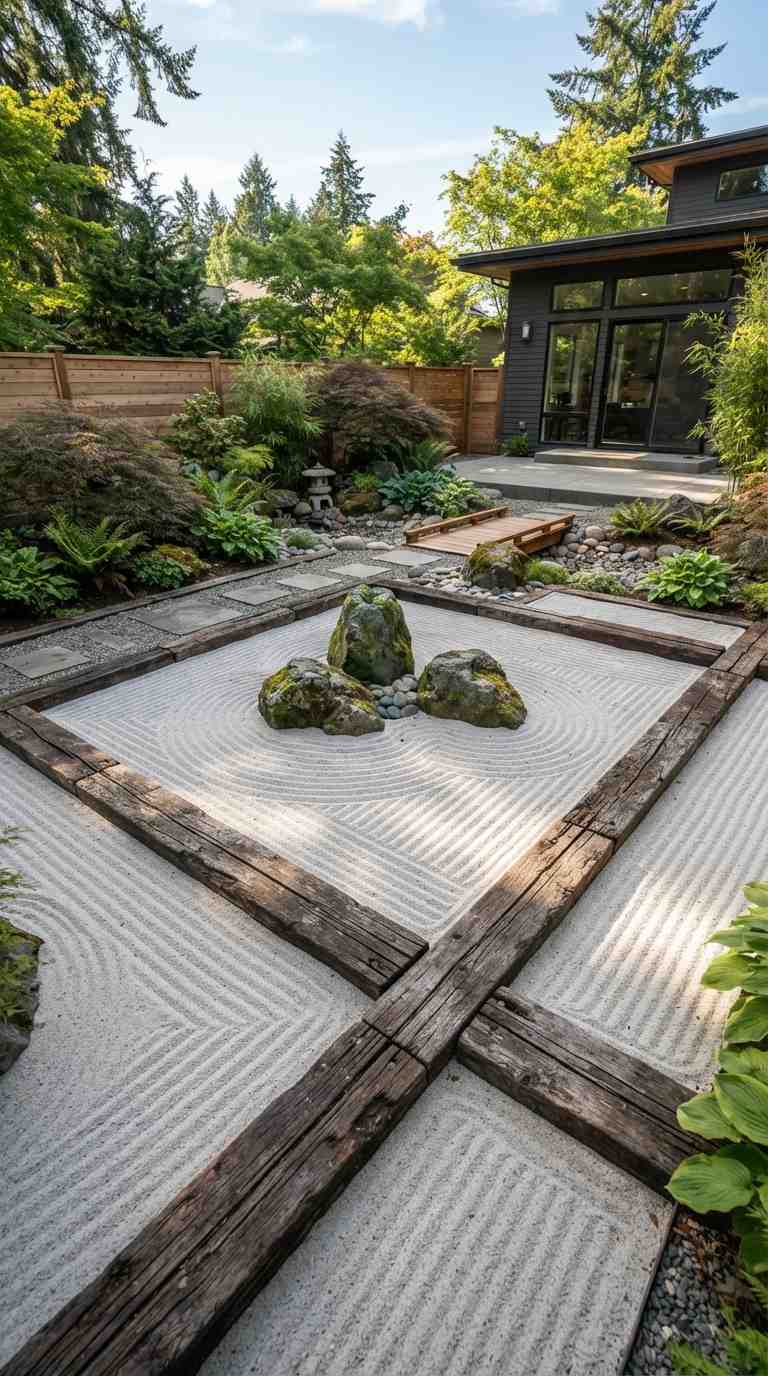
12. Zen Garden Bordering

Railroad ties serve as bold edge boundaries for a minimalist Japanese Zen garden with meticulously raked white sand and accentuating moss-covered stones.
The dark wood juxtaposes the calm sand patterns and green flora.
This combination works because ties create simple, natural geometric frames that emphasize the tranquility of the Zen space.
Position them in a square or grid and maintain clean edges regularly.
The ties bring an earthy warmth that complements the garden’s meditative vibe.
13. Desert Bench and Retaining Wall

In a desert landscape, railroad ties build a low retaining wall doubling as a bench, surrounded by succulents and cacti.
The tough wood holds earth back while offering seating in an arid, sunny environment.
This approach is effective because the ties resist heat and root penetration better than many materials.
To recreate it, use treated ties for longevity and position bench height at a comfortable 18 inches.
Pair with native plants that thrive in poor soils and hot sun for a cohesive dryscape.
14. Organized Square Plant Beds

A series of railroad tie-framed square beds filled with colorful flowers and foliage form a crisp, geometric garden in a suburban backyard.
The well-defined edges and clean gravel paths highlight each planting zone distinctly.
Using ties for modular raised beds promotes easy maintenance and clear division of plant types or themes.
The gravel keeps mud at bay, and the natural wood adds warmth to an otherwise rigid layout.
Apply a rot inhibitor and secure corners firmly for multi-season durability.
15. Mountain Cascade Waterfall Feature

Railroad ties shape multiple levels of a cascading waterfall feature by a mountain lodge.
The water flows over evenly spaced wooden steps into a rocky stream surrounded by native plants and forest greenery.
This layered water feature works because the sturdy ties create naturalized dams while guiding the flow elegantly.
Use untreated or lightly treated ties resistant to water absorption and anchor well into the terrain.
Paired with stones and soft planting, it blends engineering with rustic beauty.
16. Desert Fire Pit Border

A gravel fire pit seating area is edged with linear railroad ties forming a sturdy boundary, surrounded by desert-adapted plants like cacti and agave.
The layout is minimal and functional, creating a desert oasis feeling.
This arrangement works great for ventilation and fire safety while visually grounding the space.
Use ties in their natural weathered state, securing them deep to resist shifting.
The gravel surface increases fire resistance, making this a practical and aesthetic choice for arid climates.
17. Children’s Sandbox Frame

A large square sandbox built from thick railroad ties offers a safe, rustic play area.
The natural wood’s texture contrasts with the fine sand and is surrounded by wood chips and playground equipment, enhancing the outdoor fun zone.
Railroad ties in sandboxes offer durable, weather-resistant framing that lasts through rough play.
Ensure all edges are sanded smooth to prevent splinters and check for chemical treatments before installation for child safety.
This design brings natural charm to children’s areas with functional solidity.
18. Wreath-Like Tree Base Planter

Railroad ties form a multi-sided raised planter encircling a mature tree’s base, filled with shade-loving plants and mulch.
This adds structure and protection while drawing attention to the tree.
This method works well for preventing lawn mower damage and providing a dedicated garden bed around trees.
Secure the ties with bolts to maintain shape and fill with well-draining soil.
The natural wood color beautifully enhances the trunk’s bark, making this both a practical and elegant solution.
19. Stacked Herb Planter Tower

Vertical stacks of railroad ties create a spiral-shaped herb planter, maximizing space on a patio or small yard.
Various fresh herbs spill luxuriously out of each pocket, adding greenery and fragrance.
This vertical garden idea works well for tight spaces and encourages easy harvesting.
Drill drainage holes in the ties, use a quality potting mix, and rotate herbs to ensure even light exposure.
The tower’s weathered wood adds rustic appeal while supporting lush, productive growth.
20. Architectural Front Yard Fence

A front yard fence made of tall, evenly spaced vertical railroad ties creates a striking, textured boundary.
The aged wood tones provide a natural contrast to the contemporary home facade and surrounding plants.
Installing ties vertically for fencing delivers high durability and privacy with a bold architectural statement.
Embed the ties sufficiently deep with concrete footings and seal for longevity.
The organic textures break up urban rigidity, blending nature and design effortlessly.
21. Miniature Wood Waterfalls

A close-up view shows railroad ties sculpted into stepped water channels feeding mini waterfalls into a lush garden pond.
The ties’ rustic grain softens the stone and water’s crisp edges, creating a soothing natural soundscape.
Wooden structures for water features work beautifully here because they mimic natural river erosion lines.
Use sealed or naturally rot-resistant ties and constantly monitor water flow to prevent leakage.
The artistic combination of wood, stone, and water delivers ambiance and woodland charm.
Leave a Reply