
Growing a family-sized harvest is all about smart planning with raised beds that maximize space, sunlight, and accessibility.
From innovative layouts to creative vertical solutions, these garden plans combine beauty, productivity, and ease to help you cultivate enough fresh food for your entire family.
Mastering Raised Bed Gardening for Families
You should prioritize efficient use of space and plant diversity when designing raised beds to feed a family of five.
This often means building beds with sturdy materials, integrating drip irrigation, and including companion planting strategies to maximize yield and minimize pests.
I find that raised beds not only enhance soil quality and drainage but also make gardening accessible and enjoyable.
I love how creating multi-level raised beds or using protective covers can extend your growing season and reduce environmental stress on your plants.
1. Season-Extending Cold Frame Raised Beds

This raised bed features a wooden frame with angled glass panels acting as cold frames, perfect for early spring or fall gardening.
The transparent covers trap heat while allowing light in, creating a controlled microclimate that extends your growing season for cool-season crops.
You get the advantage of protecting seedlings from frost and pests while reducing transplant shock.
To recreate this setup, use sturdy wood and secure metal hinges for easy access.
Make sure the glass or plexiglass panels can ventilate as temperatures rise.
This method works wonders for feeding a hungry family by stretching fresh harvest times beyond typical outdoor planting windows.
2. Protective Hoop Houses with Mesh Covering

A lightweight mesh-covered hoop house surrounds the raised bed, offering protection from insects and harsh weather.
The translucent mesh diffuses sunlight, maintaining ideal growing conditions while keeping pests like cabbage worms and aphids at bay.
The hoop structure is simple to assemble and flexible enough to move with the seasons.
This setup is practical to replicate by securing metal or PVC hoops in your raised bed and draping breathable garden fabric.
It’s especially useful for leafy greens and brassicas, ensuring steady vegetables for a family with less loss to bugs or wind damage.
3. Decorative Melon Arch for Vertical Growth

This raised bed design incorporates a tall metal arch trellis covered in lush melon vines heavy with hanging melons.
It adds an elegant vertical element that expands usable garden space upward, ideal for sprawling vines.
The climbing cantaloupes are easy to harvest and create a natural shaded walkway.
You can mimic this by installing a firm arch over two parallel beds and training vines upward.
Not only do vertical supports reduce soil-borne diseases, but the visual interest encourages kids and adults alike to enjoy and tend the garden regularly.
4. Entertaining Garden Seating Within Beds

These tall, dark-stained wooden raised beds frame a stone patio with cozy Adirondack chairs.
This setup combines gardening with a social or restful space where parents and kids can relax surrounded by edible greenery.
The lush garden beds bursting with sunflowers and legumes add both beauty and bounty.
You should incorporate designated seating areas within or beside your raised beds to create an inviting hub for family interaction.
Using gravel pathways and durable wood beds enhances aesthetics and keeps things organized.
This thoughtful layout promotes routine gardening and enjoying the fruits of your labor together.
5. Compact Herb and Veggie Kitchen Garden

A trio of tiered wooden raised beds packed with fresh herbs like basil, sage, chives, and parsley sit adjacent to a neat flagstone path near a backyard patio.
This layout is ideal for a family aiming to add a burst of fresh flavor to daily meals with easy access and tidy design.
You get the benefit of grouping herbs and vegetables close to your kitchen door, making snipping greens effortless during cooking.
For practical home use, plant high-use culinary herbs and companion plants that repel pests.
The tiered structure maximizes small spaces by stacking beds vertically for a rich harvest of cutting herbs.
6. Multi-Level Step Planter for Space Efficiency

Designed like a staircase, this raised bed stack offers five tiers planted with different leafy greens and herbs.
The untreated wood contrasts beautifully with the lush greens, creating visual height and maximizing garden space in small yards or patios.
It’s an excellent choice for gardeners who want to grow vertically without investing in trellises.
For those wanting to replicate, ensure sturdy construction and good drainage.
This design works well near pathways for easy harvesting and allows planting shade-tolerant crops on lower steps and sun-loving types at the top, optimizing microclimates on each tier.
7. Integrated Flower and Vegetable Raised Bed

Here, raised beds are a riot of color, combining spicy peppers and herbs with vibrant marigold borders.
The marigolds serve a practical purpose by repelling aphids and nematodes that plague vegetable growth.
The rich brown wood frame and fresh mulch help retain moisture and boost soil quality.
You should adopt companion planting techniques like this to protect your vegetable beds naturally.
Use marigolds or nasturtiums around tomatoes and peppers for pest control and pollinator attraction.
This ecosystem approach enhances yields and reduces reliance on chemical pesticides.
8. Efficient Drip Irrigation in Raised Beds

This raised bed is fitted with a precise drip irrigation system delivering water directly to the roots of tomatoes, zucchini, and zucchini flowers.
The visible tubing and emitter valves indicate automated watering, providing consistent moisture needed for larger family gardens.
Surrounding gravel paths limit weed growth and water runoff.
If you want to simplify watering chores and conserve water, installing a drip system is key.
It cuts down evaporation and fungal risks by wetting only the soil around plants.
Pair this with a timer for effortless upkeep, freeing time for you to focus on planting and harvesting.
9. Natural Stone Raised Bed with Herbs

A raised bed built from stacked natural stone creates a sturdy and attractive planter perfect for mixing vegetables and herbs like chives, rosemary, and basil.
The stone blends seamlessly into the surrounding flagstone patio, enhancing the indoor-outdoor living connection and encouraging casual garden snips during meal prep.
Stone beds retain heat well, giving an edge for many heat-loving plants.
This durable garden style requires minimal maintenance, and the natural textures add rustic charm.
Design stone beds close to your home to create a fragrant, edible border that’s as functional as it is beautiful.
10. Trellised Raised Beds for Climbing Crops

Raised beds framed with black-painted wood are enhanced with trellises supporting tomatoes and beans that climb vertically.
Marigolds at the base boost pest management while the gravel pathway provides clean access.
This efficient use of vertical space is ideal when soil area is limited, allowing extensive harvest in a compact footprint.
You can recreate this setup by building strong trellis panels or A-frames attached to beds.
Choose rapid climbers like pole beans and indeterminate tomatoes to maximize yield.
This method prevents sprawling vines from stealing space and makes harvesting easier for busy families.
11. Lush, Mixed Herb and Pepper Bed

A dense raised bed teems with peppers, zucchini, and a variety of herbs alongside vibrant marigolds for pest deterrence.
The natural wooden frame complemented by fresh mulch creates a healthful climate for growth.
The combination of plants encourages biodiversity and enhances overall garden resilience.
Mixing herbs with vegetables like this as companion plants deters pests and attracts beneficial insects.
You should mulch regularly to keep moisture uniform and cool roots in hot climates.
This mixed planting style balances productivity with plant health, ideal for families wanting continuous supply.
12. Abundant Leafy Greens in Rustic Beds

These simple wood-raised beds packed with leafy greens like kale, Swiss chard, and lettuce flourish in a shaded garden corner with rich mulch around to keep soil moist.
The raised height prevents soil compaction and keeps harvest clean.
The beds blend beautifully with natural garden elements like logs and surrounding shrubs.
For gardeners growing large quantities of greens, raised beds with quality soil and shade access are crucial to extending harvest time.
I love how this rustic style connects garden to nature, making every salad ingredient fresh, local, and accessible.
13. Efficient Metal-Sided Raised Beds

Raised beds framed with corrugated metal sides and wood tops create a modern, durable garden setup.
The beds house multiple crops including onions, radishes, carrots, and various greens, with clear pathways between for easy maintenance.
The metal siding increases soil warmth and deters critters.
This industrial-chic design is low-maintenance and long-lasting.
You can replicate it by combining metal panels with wood trim to avoid soil contact with metal.
It is a smart option for family vegetable gardens meant to withstand weather and pest pressure.
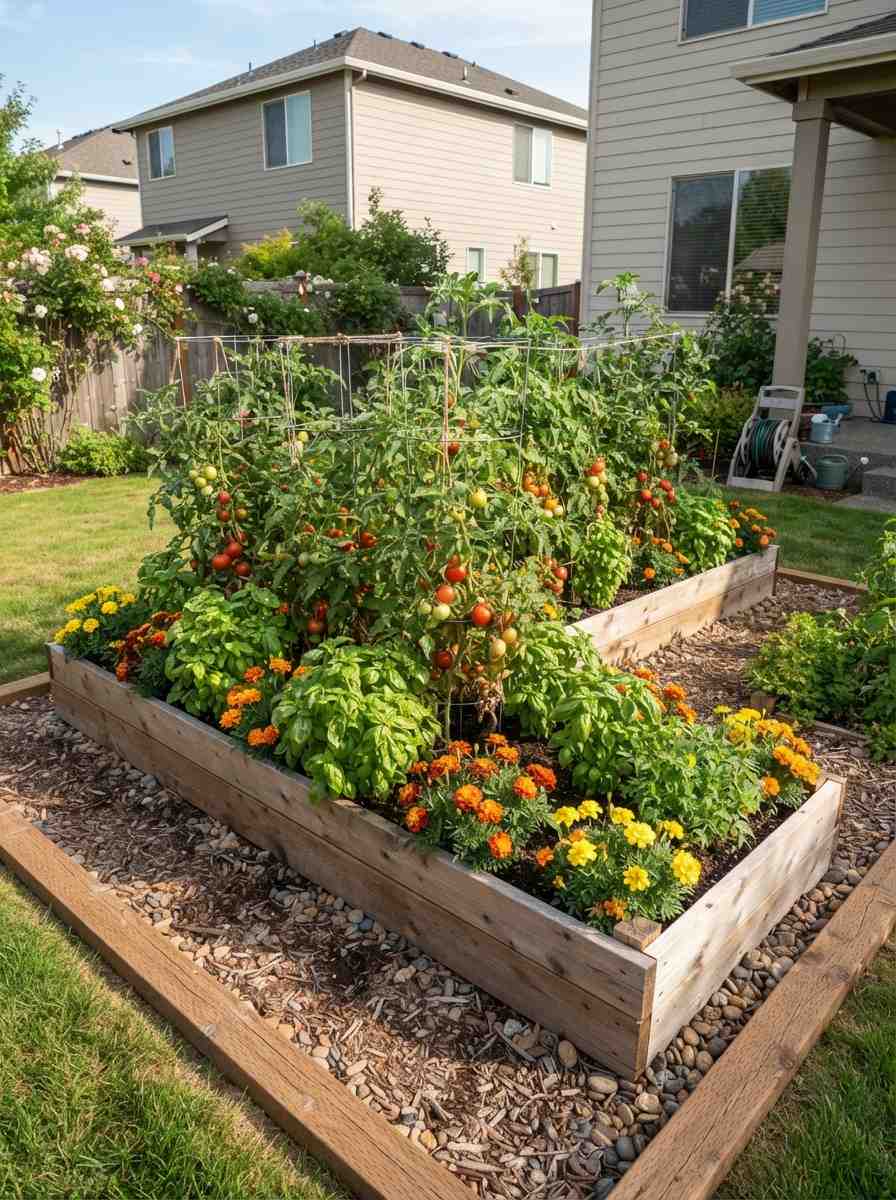
14. Tomato-Centered Raised Bed with Marigolds

A large rectangular raised bed strewn with ripening tomato plants surrounded by marigolds pairs visual vibrance with high productivity.
The wooden bed is lined by wood chip paths for clean, mud-free access.
The marigolds serve to disrupt pest cycles, while the robust tomato plants promise a family feast.
This traditional tomato bed model works beautifully for family-sized growing.
Use deep, rich soil and stake or cage tomatoes to keep fruits off the ground.
Interplanting marigolds ensures natural pest control, reducing spraying and labor throughout the season.
15. Geometric Star-Shaped Raised Bed

A striking raised bed featuring a star or pie-slice design divides its interior into multiple growing wedges filled with color-coded chili peppers and eggplants.
Each section has clear labels, making it super user-friendly for managing different crops.
The cedar wood has a fresh natural look, complementing the backdrop of neatly mown lawn and crown molding hedges.
I recommend this geometric pattern if you want to visually segment your crops for rotation or easy harvesting.
It encourages disciplined planting while creating a bold visual focal point.
Use untreated wood and durable corners to maintain structural integrity in seasonal conditions.
16. Formal Raised Bed Estate Garden Layout

A wide shot of a vast raised bed garden with numerous symmetrical rectangular beds separated by wide gravel pathways in front of a charming farmhouse creates a timeless, organized vegetable garden aesthetic.
Borders of neatly trimmed boxwood frame the beds, adding definition and elegance.
You get the advantage of large-scale food production with easy access for a family to harvest efficiently.
Formal designs like this require initial planning and regular upkeep but reward with high yields, clear paths to avoid soil compaction, and a stately garden presence.
17. Compact Backyard Raised Beds in Rows

A contemporary backyard spot with three parallel cinder block raised beds brimming with a vibrant mix of vegetables, herbs, and flowers.
The beds fill the available narrow space efficiently, bordered by grass and fencing for security while maximizing sun exposure.
This layout suits urban or tight suburban spaces with limited ground area.
Using cinder blocks adds sturdiness and longevity at low cost.
Be sure to add good soil mix and organic matter for best growth, and adopt intensive planting methods to feed a family effectively in small footprints.
18. Wide-Arched Trellis on Raised Beds

Two raised beds connected by an inviting arch trellis provide climbing room for long beans and tomatoes, surrounded by other edible plants and marigolds.
The wood frame is painted black for contrast, while the gravel pathway keeps foot traffic clean.
The arch invites family members into the garden for picking and tending.
This design beautifully integrates vertical structure to increase yield per square foot.
You should build durable trellises to support robust vines and optimize airflow.
The archway also defines garden space aesthetically and doubles as a playful entry point for little helpers.
19. Contoured Raised Beds on a Slope

Raised beds stepped along a hillside contour with neat rows of leafy greens and brassicas make effective use of sloped terrain, preventing erosion and directing water flow.
The sturdy wooden sides hold nutrient-rich soil firmly, while surrounding grass and wild plants soften edges.
If your garden is on uneven land, terraced raised beds prevent runoff and preserve soil health.
I love how this method adds layers and depth to the landscape while providing easy pickings for a family meal.
Mulching on slopes also helps water retention and weed control.
20. Spiral Herb and Vegetable Garden

An aerial view reveals a spiral raised bed garden composed of multiple wooden sections radiating from a circular center filled with aromatic herbs.
The garden is fenced with rustic wood, creating an enclosed sanctuary.
Texture and color vary beautifully between different leafy greens, flowers, and shrubs.
The spiral design maximizes planting variety in a compact area, ideal for diverse family meals and herbal remedies.
You can arrange taller plants in the center with shorter types spiraling outward for sun optimization.
Paths between sections ensure ease of access for planting and harvesting while keeping beds intact.
Leave a Reply