
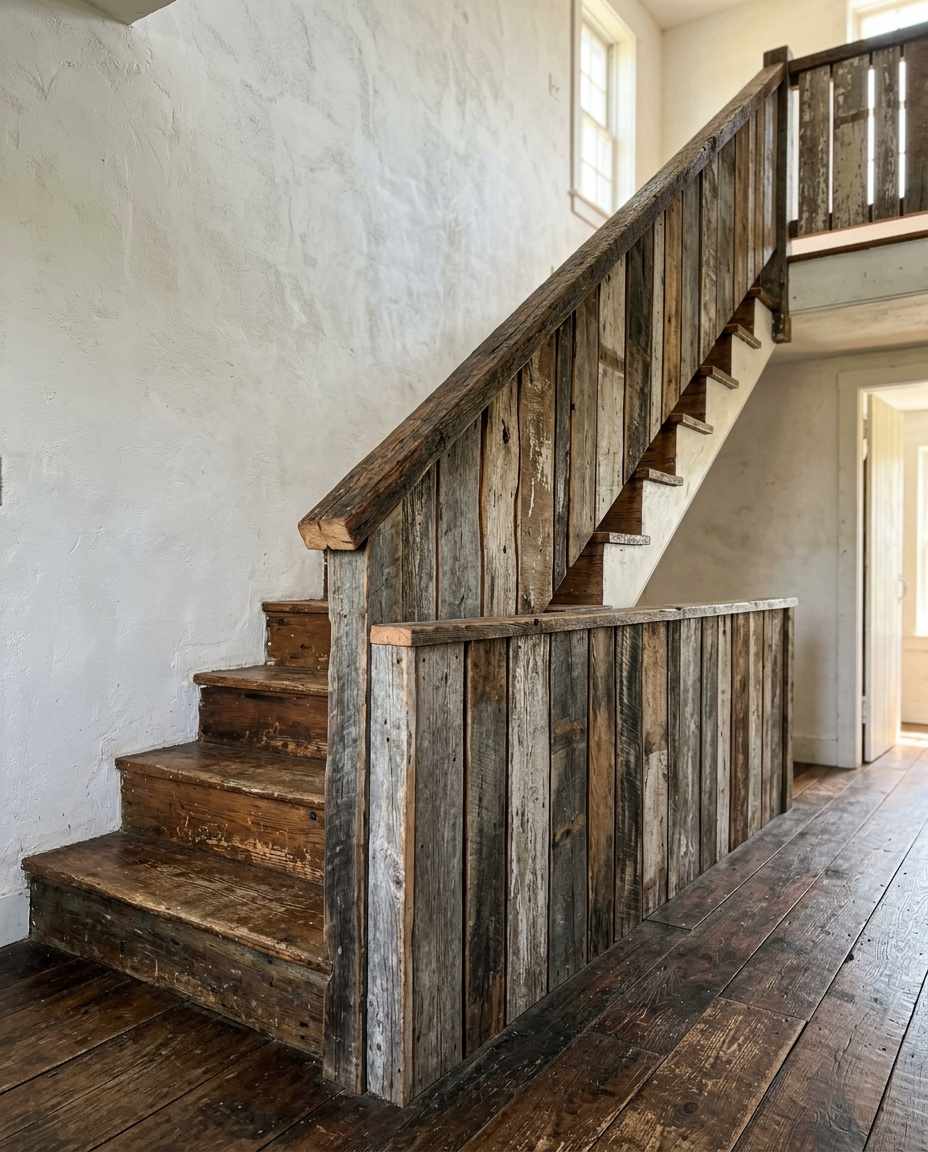
When my neighbor asked me to help design a stair railing for her farmhouse, I realized how much a railing can transform a space. A beautiful, rustic stair railing adds charm and safety while elevating the overall farmhouse vibe. Here are my 13 favorite ideas that bring warmth and style to any stairwell.
Why Farmhouse Railings Matter
You should think of stair railings not just as safety features but as key decor elements that define your home’s personality. Farmhouse railings blend raw, natural materials with craftsmanship, setting a welcoming tone right at the stairs.
I find that farmhouse railings work best when they mix wood textures and metal accents, balancing rustic warmth with a modern edge. I love how a well-chosen railing system can make your entryway or hallway feel inviting and grounded.
1. Classic Wood Spindles

Traditional wood spindles painted white instantly create that timeless farmhouse look. You get clean lines that brighten your stairwell and highlight the natural wood steps or floors underneath. I personally recommend oak or pine for durability and grain richness.
The painted spindles contrast beautifully with stained wooden handrails, offering a warm but refined aesthetic. This combo is easy to maintain and feels classic without ever going out of style.
When done right, this style complements a range of farmhouse interiors, from rustic cabins to modern country homes. It gives you an airy, open stairway that still feels sturdy and safe.
2. Raw Wood Handrails

Raw, unfinished wood handrails bring an organic farmhouse feel that feels very tactile and inviting. You can see the natural grain and knots, which add character often lost in polished finishes. I love this when paired with iron balusters to create rugged warmth.
You should choose hardwoods like maple or oak for raw handrails to balance durability with beauty. Their unfinished texture can be sealed lightly to retain that natural look while protecting against wear.
This style pairs wonderfully with neutral walls and stone flooring to create a truly rustic stairwell that feels connected to the outdoors.
3. Metal Pipe Rails

Metal pipe railings offer a sturdy industrial twist to farmhouse stairs. You get a trendy, handcrafted vibe when using black or dark bronze pipes paired with reclaimed wood handrails. It’s both practical and visually striking.
I find that this blend of rough metal and warm wood adds depth and contrast to otherwise simple stair spaces. Plus, the metal pipes provide lasting strength without heavy visual bulk.
You should consider exposed pipe fittings for a true artisan feel that remains consistent with farmhouse authenticity and DIY charm.
4. X-Brace Panels

X-brace panels on stair railings scream farmhouse charm with a bold, geometric touch. You get a strong visual feature that wraps enclosed spaces beautifully and adds a handcrafted feel. I personally recommend pine or cedar for these panels for softness and warmth.
The crossed wood beams painted white or finished naturally bring balance and contrast to your banister. It’s a statement piece while maintaining open sightlines along the stairs.
This style works best in cottages or farmhouse kitchens, creating cohesiveness that blends the stairwell with interior cabinetry or furniture.
5. Wire Cable Rails

Wire cable railings bring farmhouse stairs an airy, modern edge while preserving rustic appeal. You should choose stainless steel cables with timber handrails to keep durability and warmth in balance. It’s sleek but doesn’t sacrifice the organic feeling.
I love how cable rails offer minimal visual obstruction, making your staircase feel open and spacious. They’re perfect for homes with lots of natural light wanting that clean but grounded look.
This style is especially fitting in farmhouse lofts or open-plan settings, where you want the stairs to blend yet stand out subtly.
6. Beadboard Panels

Beadboard panels incorporated into railings bring classic farmhouse wall texture to stairs. You get charming vertical grooves that add dimension and softness. I always recommend painting the beadboard white or creamy hues to brighten the stairwell.
You can pair beadboard with a simple wooden top rail for a cozy, cottage feel. It’s both decorative and a functional guardrail for kids or pets.
This look fits perfectly in older farmhouse renovations or new builds aiming for that timeless, homey aura.
7. Barn Door Inspired

Barn door-style railings use wide vertical or diagonal planks resembling sliding barn doors. You get a rustic, bold visual that anchors the stairwell with farmhouse authenticity. I love using distressed wood with a weathered finish for real vintage flair.
You can paint or stain the wood to match farmhouse furniture or exterior tones. The sturdy planks offer privacy and safety while turning your stairs into a design focal point.
This design complements open floor plans where the stair railing acts as both a barrier and rustic artwork.
8. Twisted Iron Balusters

Twisted iron balusters add classic artisan craftsmanship to farmhouse railings. You get decorative, intricate curves paired with sturdy wooden handrails for an elegant yet rustic look. I usually pick black wrought iron for contrast and timeless appeal.
You should space these balusters evenly for visual rhythm that draws the eye up the staircase. The texture of twisted iron catches warm light beautifully, adding drama without fuss.
This detail often elevates otherwise simple staircases, giving them an upscale farmhouse vibe that feels authentic.
9. Mixed Metal Accents

Mixing metals like brushed brass and matte black in your railings adds unexpected farmhouse sophistication. You get warm tones combined with industrial edge, creating a layered, high-end feel. I love incorporating brass brackets or bolts with black iron spindles.
You should keep the wood elements simple and natural to let the metallic accents shine. This strategy makes your railing feel like a curated design piece rather than a standard fixture.
Mixed metals also offer versatility; they complement warm wood floors and cooler paint palettes equally well.
10. Repurposed Wood Panels

Using repurposed wood panels for railings brings a fantastic sustainability angle and tells a story. You get unique wood grains, colors, and patina from salvaged pieces that create farmhouse charm no new lumber can match. I recommend sanding lightly to preserve character while smoothing rough spots.
These panels form solid guardrails or decorative inserts that feel tactile and genuine. You can mix boards vertically or horizontally, depending on your stairwell size.
This eco-friendly choice suits rustic farmhouse kitchens and entryways aiming for a warm, lived-in vibe.
11. Simple Rope Details

Incorporating natural rope as stair railing accents adds casual farmhouse charm that’s tactile and organic. You get softness against wood rails and spindles with an unexpected nautical or country vibe. I personally recommend thick jute rope wrapped loosely or knotted for interest.
You can combine rope with raw wood handrails or paint the spindles white for brightness. The ropes catch attention but keep the overall look relaxed and approachable.
This styling works well in coastal farmhouses or cabins where natural fiber details emphasize connection to nature.
12. Slat Wood Railings

Slat wood railings feature evenly spaced vertical wooden slats that offer clean lines and strong farmhouse appeal. You get a fresh, modern take when the wood is lightly stained or painted soft white. I love the symmetry and rhythm these create as you move upstairs.
You should pick smooth, straight-grain woods like poplar or pine for consistent texture. Pairing with a darker wood handrail adds contrast and depth.
Slat railings balance open visibility with safety and are easy to clean and maintain in family homes.
13. Woven Wood Patterns

Woven wood patterns used in railings create an artisanal farmhouse feel that is both textural and eye-catching. You get visual interest through interlacing wooden strips, often in natural tones that highlight craftsmanship. I personally recommend using flexible willow or thin cedar strips.
This intricate technique makes your staircase feel like a bespoke installation rather than a mass product. It’s perfect for cottage-style farmhouses where detail matters.
Woven patterns also soften the hardness of wood, adding warmth and movement to the stair space.
Leave a Reply