
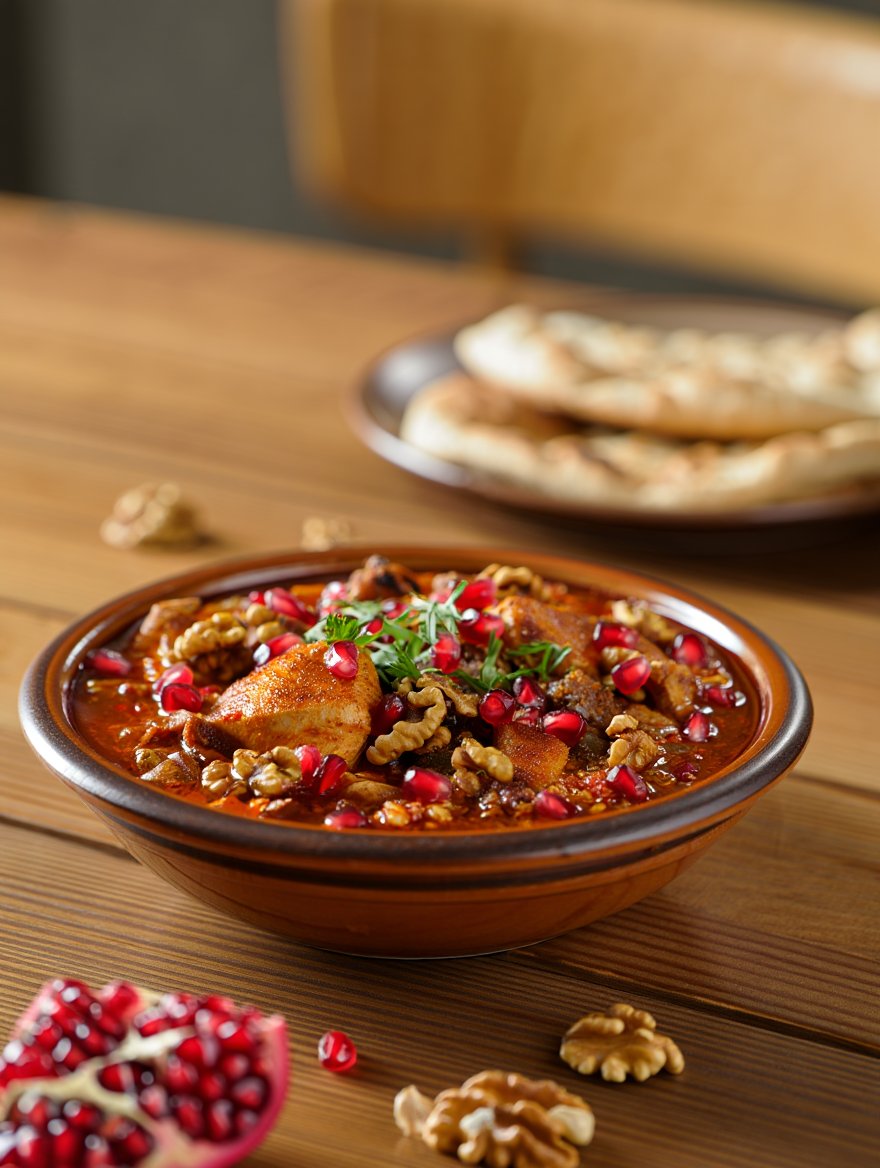
I was frustrated by meals that lacked depth of flavor, until I discovered pomegranate walnut stew, a delightful Persian dish.
This hearty concoction combines rich flavors and a healthy profile, making it a perfect meal for any occasion.
Discovering the Rich Heritage of Pomegranate Walnut Stew
Pomegranate walnut stew, known as Fesenjan in Persian, has origins that stretch back centuries in Iranian cuisine.
It’s frequently served during special occasions and family gatherings, celebrated for its complex flavors and vibrant colors.
The blend of pomegranate and walnuts creates a unique experience that tantalizes your taste buds while nourishing your body.
I first encountered this dish at a local Persian restaurant, and the sweet-sour taste of pomegranate against the earthy richness of walnuts was unforgettable.
Fesenjan is traditionally made with chicken or duck, but many variations exist that cater to different dietary preferences.
I appreciate how this dish showcases the best of Persian culinary traditions in every spoonful.
The flavor profile is truly remarkable: the tartness of pomegranate balances beautifully with the creaminess of ground walnuts.
Meanwhile, aromatic spices elevate the overall experience, leaving you satisfied but not overly full.
To me, every bite of this stew is like a warm embrace from a beloved relative on a chilly day.
For a successful Fesenjan, properly balancing the flavors is key.
Don’t rush the cooking process; allowing the stew to simmer brings out the best notes.
I also recommend using fresh pomegranate juice for a brighter, more robust flavor.
With these insights, you are ready to explore this wonderful dish in your own kitchen.
Gathering Ingredients for a Flavorful Stew

To make pomegranate walnut stew, you’ll need a variety of ingredients that truly complement one another.
Start with 2 pounds of chicken, either thighs or breasts, which will serve as the main protein.
You will also need 2 cups of ground walnuts and 2 cups of fresh pomegranate juice for that signature flavor.
Keep other essentials handy, such as onions, garlic, turmeric, cinnamon, and salt.
For garnishing, you can use pomegranate seeds and chopped fresh parsley to add color and brightness to your dish.
The use of fresh ingredients enhances the overall taste, and I personally recommend selecting the ripest pomegranates you can find.
Also, ensure the walnuts are finely ground for the best texture in the stew; this creates a lovely sauce that envelops the chicken.
Don’t forget to include cooking oil,vegetable or olive oil works well,along with some water for simmering the stew.
You can also enhance the flavors with a touch of sugar or honey if you prefer additional sweetness.
Adjust these ingredients based on your taste preference, but letting the pomegranate juice shine is essential for authenticity.
Finally, to make the cooking experience even smoother, prepare your kitchen tools ahead of time.
You will need a heavy-bottomed pot or Dutch oven for even cooking and a chopping board for prepping your ingredients.
Organizing your space will help speed up your cooking and make the process more enjoyable.
Step-by-Step Cooking Instructions for Fesenjan

Begin by heating 3 tablespoons of oil in your heavy-bottomed pot over medium heat.
Add 2 chopped onions and sauté until they become translucent.
This step builds a flavorful base for your stew, so allow them to cook for around 5 to 7 minutes.
Stir them frequently to avoid burning, ensuring a sweet, aromatic foundation for the dish.
Next, toss in minced garlic,about 4 cloves,and sauté for an additional minute.
The garlic should become fragrant without browning.
This is when you add your chicken pieces and season them with salt, pepper, and a teaspoon of turmeric.
Searing the chicken before adding other ingredients creates a lovely crust that seals in moisture and flavor.
Once the chicken is golden on all sides, pour in the pomegranate juice and then add the ground walnuts, stirring well to combine everything.
Lower the heat, allowing the mixture to come to a gentle simmer.
This is where the magic happens,I like to let my stew simmer for about 45 minutes to an hour, letting the flavors meld together while reducing the liquid to a rich sauce.
After about an hour, taste the stew to adjust seasoning as needed.
If you prefer a sweeter profile, consider stirring in a tablespoon of sugar or honey.
The balance of flavors should be both sweet and tart, with a creamy texture from the walnuts.
At this stage, you are just about ready to enjoy a true taste of Persia!
Plating and Serving the Pomegranate Walnut Stew

Once the stew has developed its rich flavor and thickened appropriately, it’s time to serve.
I love to use a shallow serving bowl to showcase the deep, luscious color of the stew.
You can ladle the Fesenjan into the bowl using a large spoon, allowing the walnuts to float and the chicken pieces to be prominently featured.
To elevate your plating further, sprinkle freshly chopped parsley over the top along with a handful of vibrant pomegranate seeds.
This garnishing not only adds a pop of color but also a refreshing crunch with each bite.
The visual presentation is truly part of the experience and will impress anyone you serve.
Serve the stew alongside fluffy basmati rice, which is a traditional accompaniment.
The rice helps to soak up the flavors of the stew and balances the richness nicely.
A side of sautéed greens or a cucumber and yogurt salad can also complement this dish beautifully, providing contrasting flavors and textures.
I personally enjoy serving Fesenjan at gatherings since it epitomizes hospitality.
You can prepare the stew a day ahead and let the flavors deepen.
When serving, consider offering warm bread, allowing guests to scoop up the stew and enjoy the full experience.
Delicious Variations and Tips for Enjoyment

While traditional pomegranate walnut stew uses chicken, feel free to experiment with other proteins or even go vegetarian or vegan.
Substituting the chicken with mushrooms or eggplant adds a distinct flavor profile while keeping the stew hearty.
You could tweak the recipe further by substituting ground walnuts with finely chopped pecans or almonds for a different nutty taste.
Another variation involves adding a touch of saffron, which introduces a vibrant color and aroma.
For those who are adventurous, consider adding dried fruits like apricots or prunes; they lend a sweet note to the dish that beautifully complements the tartness of the pomegranate.
Experimenting with these variations can lead to delightful discoveries in taste.
If you’re short on time during your weeknight meal prep, this stew reheats well, and in my experience, the flavors develop even more after a day or two.
Store leftovers in an airtight container in the refrigerator, and enjoy it over the next few days.
Just reheat gently to avoid overcooking the chicken.
Lastly, don’t shy away from pairing this dish with wine!
A light-bodied red, such as Pinot Noir, harmonizes beautifully with the stew’s flavors.
Enjoying a warm bowl of pomegranate walnut stew, while reminiscing about the kitchen adventures that brought you there, is something I find incredibly rewarding.




Leave a Reply