
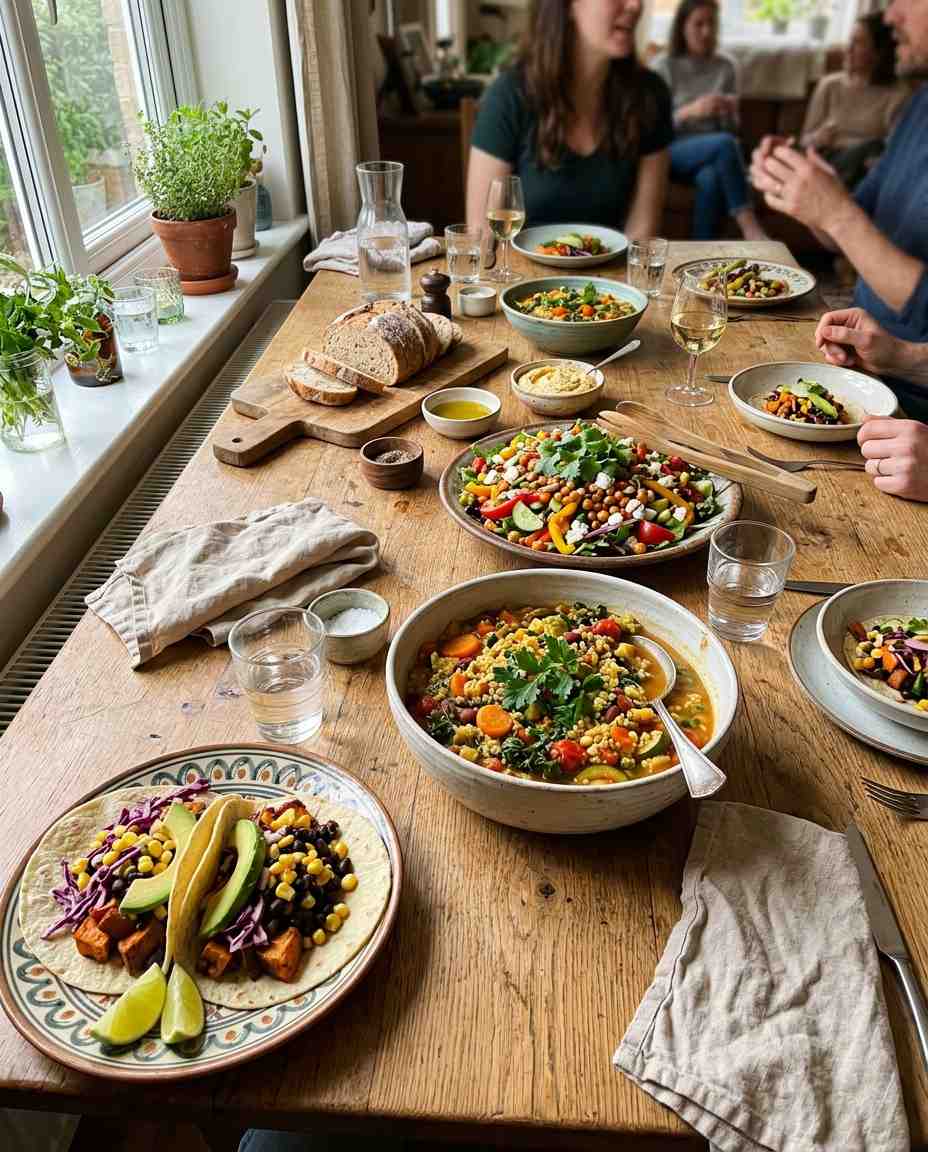
Last Thursday evening, I stood in my kitchen bustling with the aroma of spiced lentils mingling with roasted vegetables.
I realized how these gut-loving, fiber-rich meals transform not only digestion but also my energy levels and mood.
This guide offers inventive gluten-free dinners packed with fiber to nourish your gut and delight your taste buds.
1. Tex-Mex Sweet Potato Tacos
I first swapped traditional taco shells for roasted sweet potato slices to boost fiber without gluten, instantly upgrading both nutrition and flavor.
Sweet potatoes pack roughly 4 grams of fiber per half-cup and a hearty dose of beta-carotene, supporting gut lining health.
Many miss this swap, fearing texture changes, but the key is roasting slices until caramelized yet tender, about 20 minutes at 425°F.
For best results, I layer black beans, avocado, and a homemade cabbage slaw atop these sweet potato ‘tacos’.
A common mistake is overloading toppings that overshadow the natural sweetness and fiber.
Keep portions balanced with ½ cup beans per three slices and a handful of slaw for ideal fiber synergy and a gluten-free dinner that feels indulgent yet gut-friendly.
2. Quinoa and Chickpea Stuffed Peppers
Quinoa and chickpeas are a powerhouse duo offering complete protein and a combined 9 grams fiber per cup, making stuffed peppers a gut-boosting dinner choice.
I first made this dish when craving comfort food that wouldn’t cause bloating, roasting bell peppers until just tender, then filling with quinoa-chickpea mix, herbs, and a sprinkle of feta.
A common pitfall is undercooking quinoa, which reduces digestibility and fiber availability.
You’ll want to cook quinoa to a fluffy texture with a 2:1 water ratio and let it cool before mixing.
This fine tuning ensures you unlock maximum fiber’s prebiotic effects while enjoying a naturally gluten-free, satisfying meal.
3. Soba Buckwheat Noodle Salad

Despite ‘noodle’ in the name, 100% buckwheat soba noodles are gluten-free and a rare grain source high in soluble fiber, supporting gut motility and blood sugar regulation.
I first stumbled on this dish by accident at a Japanese café, then replicated it at home with roasted sesame oil, fresh scallions, and julienned veggies.
The main mistake is buying traditional wheat soba instead of pure buckwheat variety, which defeats the gluten-free purpose.
Look for packages clearly labeled ‘100% buckwheat’.
Served chilled or warm, around 2 ounces uncooked noodles per person deliver roughly 4 grams fiber, pairing great with miso broth or a tangy ginger-lime dressing that aids digestion.
4. Lentil and Spinach Curry
Lentils are fiber champions, with 15 grams per cooked cup, and spinach adds a nutrient-dense green boost, making this warm curry perfect for gut healing.
I first learned this recipe from a friend who swore by its anti-inflammatory benefits and fiber richness.
Cooked with turmeric and ginger, the curry nourishes your microbiome while tantalizing taste buds.
Novices often undercook lentils, leaving them tough, which hinders digestion.
Aim to simmer red lentils for 20–25 minutes until tender and creamy.
Pairing with a side of cauliflower rice keeps it gluten-free and adds subtle crunch without sacrificing fiber intake.
This meal’s spices also promote digestive enzyme activity for a harmonized gut.
5. Cauliflower Rice and Black Bean Bowl
I created this bowl as a fiber-rich dinner alternative when craving Mexican flavors but needing to avoid grains.
Cauliflower rice is low-calorie and gluten-free, while black beans contribute about 15 grams of fiber per cup.
Together they create a gut-friendly base, topped with pico de gallo and cilantro for fresh enzymes and antioxidants.
The common oversight is over-processing cauliflower rice into mush, losing texture that helps satiety and slow digestion.
Use a food processor in quick pulses or buy pre-riced cauliflower labeled gluten-free.
Portion control matters: aim for one cup cauliflower rice and ½ cup cooked beans for optimal balance.
This bowl shows how fiber and flavors make fasting or detox days feel nourishing and filling.
6. Roasted Brussels Sprouts with Walnuts
Brussels sprouts provide insoluble fiber, enhancing gut transit time, while walnuts add omega-3 fats and 2 grams fiber per ¼ cup.
I roast halved sprouts at 400°F for about 25 minutes until caramelized, then toss with toasted walnuts and a drizzle of balsamic vinegar.
This combo satisfies cravings for crunch and earthiness, supporting gut flora diversity.
Many skip nuts due to allergy fears or calorie concerns, but the key is moderation.
Adding precisely a quarter cup enhances texture and boosts fiber without overwhelming.
This simple side can double as a main with a poached egg or grilled chicken, making it flexible for gluten-free, fiber-forward dinners.
7. Chickpea Flour Pancakes with Veggies
Chickpea flour packs over 10 grams of fiber per ¼ cup and is naturally gluten-free, making savory pancakes a clever, filling dinner option.
I first experimented with this during a week-long gut cleanse, adding grated zucchini, spinach, and spices to the batter for extra fiber and micronutrients.
A frequent error is over-thinning batter, resulting in fragile pancakes that crumble.
Maintain a thick batter consistency similar to heavy cream and cook on a non-stick skillet over medium heat, flipping after 3–4 minutes.
Serve with avocado or dairy-free yogurt to balance fiber with healthy fats and probiotics for optimal gut synergy.
8. Millet and Roasted Veggie Medley
Millet is an often overlooked gluten-free grain providing about 2 grams fiber per cooked half-cup and gentle on the digestive system.
Paired with fiber-rich roasted vegetables like carrots, eggplant, and kale, this meal became my go-to for gut-restorative dinners.
Roasting veggies in olive oil at 425°F for 30 minutes deepens flavor and softens fibers for easy digestion.
Beginners sometimes fail to rinse millet properly before cooking, resulting in residual bitterness.
You’ll want to rinse twice and simmer with a 2:1 water ratio for 20 minutes to yield fluffy, palatable grains.
This medley balances insoluble and soluble fiber, offering a colorful plate that aids microbiome diversity and promotes regularity.
9. Baked Falafel Bowl with Tahini Dressing

Traditional falafel is often fried, but baking chickpea-based falafel cuts calories while preserving 8 grams fiber per 3-ounce serving and gut-friendly nutrients.
I bake mine at 375°F for 20 minutes, turning halfway, and nestle them on a bed of arugula and cucumber slices, drizzled with lemon-tahini dressing.
The tahini adds healthy fats and further digestive benefits.
A common misstep is using canned chickpeas directly, which yield mushy falafel with poor texture.
Soaking and cooking dried chickpeas provide denser, fiber-rich results.
The takeaway is to prepare falafel dough a day ahead to allow flavors to meld and ensure structural integrity.
This dinner proves that gut health and indulgence coexist beautifully.
10. Butternut Squash and Black Bean Chili
Butternut squash contributes 6 grams fiber per cup and black beans add a hearty 15 grams, creating a thick, gut-loving chili rich in beta-carotene and resistant starch.
I learned this recipe during a fall cooking class, where slow simmering for 45 minutes melded flavors and softened fibers, improving digestibility.
People sometimes over-spice chili to mask lack of fiber, but the natural sweetness of squash balances heat and soothes digestion.
Simmer low and slow to blend textures and avoid tightening gut muscles.
Serve with a spoonful of Greek yogurt or dairy-free alternative to add probiotics and smooth the palate.
This dish satisfies winter cravings and nurtures microbiome health.
11. Spaghetti Squash Primavera
Spaghetti squash, with about 2 grams fiber per cup, serves as a gluten-free noodle alternative loaded with digestive enzymes.
I roast a halved squash at 400°F for 40 minutes, then toss the strands with sautéed zucchini, tomatoes, and garlic for a light but fiber-rich meal.
The natural sweetness contrasts with the fresh herbs to keep your gut happy.
A common error is undercooking the squash, resulting in tough strings that are hard to digest.
Allow full roasting time or test tenderness with a fork before scraping.
Pairing with olive oil and basil brings anti-inflammatory compounds that support gut integrity.
This dish proves vegetable-centered dinners can be sophisticated and deeply nourishing.
12. Polenta with Mushrooms and Kale
Polenta is gluten-free cornmeal containing about 2 grams fiber per half-cup cooked and acts as a comforting base for fibrous sautéed kale and umami-rich mushrooms.
I slow-cook polenta to creamy texture with almond milk for richness, topping with garlicky kale and shiitake mushrooms, both potent sources of fiber and polyphenols.
Beware of instant polenta varieties that may lack fiber and flavor depth.
Opt for stone-ground cornmeal for better texture and nutrient retention.
Stirring frequently during cooking avoids lumps and enhances creaminess, making this dish a gut-soothing indulgence.
It’s a great way to introduce leafy greens and fungi into your dinner rotation for optimal fiber intake.
13. Eggplant and Lentil Moussaka
Replacing gluten-based layers with thinly sliced roasted eggplant, this moussaka variation layers fiber-rich lentils (8 grams per half cup) and gut-supportive spices like cinnamon and clove.
I discovered this recipe while exploring Mediterranean diets and was amazed at how it feels indulgent yet supports digestion and regularity.
Many try to skip roasting the eggplant, resulting in bitterness and soggy texture.
Instead, roast slices at 425°F for 25 minutes to caramelize natural sugars.
Layer lentils cooked with tomato and herbs, then bake until bubbling.
This dish challenges assumptions that gut health means boring dinners while delivering complex fibers in every bite.
14. Spiralized Zucchini with Pesto and Pine Nuts
Zucchini noodles provide fiber and hydration while remaining gluten-free and low-calorie.
Tossing these spirals with pesto rich in basil, garlic, and pine nuts increases both fiber and digestive enzyme support.
I first embraced this dish as a summer staple, balancing freshness and gut-nourishing fats.
People underestimate the water content in zucchini, leading to watery dishes if not drained properly.
After spiralizing, sprinkle with salt and let sit 15 minutes; then pat dry to maintain texture and prevent sogginess.
Pine nuts add crunch and about 1 gram fiber per tablespoon, supporting satiety.
This dish is a quick, elegant dinner option requiring minimal cooking but maximum gut benefits.
15. Warm Beet and Farro Salad

While farro is not gluten-free, this recipe uses gluten-free sorghum as a substitute, which delivers 5 grams fiber per cooked half-cup and nutty undertones perfect for an earthy beet salad.
Roasting beets and tossing with sorghum, arugula, and toasted pumpkin seeds creates a warm dish rich in prebiotic fibers and antioxidants.
I adapted this recipe after struggling to find gluten-free grains with hearty bite.
The key is cooking sorghum in a 3:1 water ratio for 50-60 minutes until chewy but tender.
A common mistake is draining too early, resulting in hard kernels that challenge digestion.
This salad pairs well with a mustard-citrus vinaigrette to stimulate digestive enzymes and brighten flavors, concluding your dinner with gut-boosting satisfaction.




Leave a Reply