
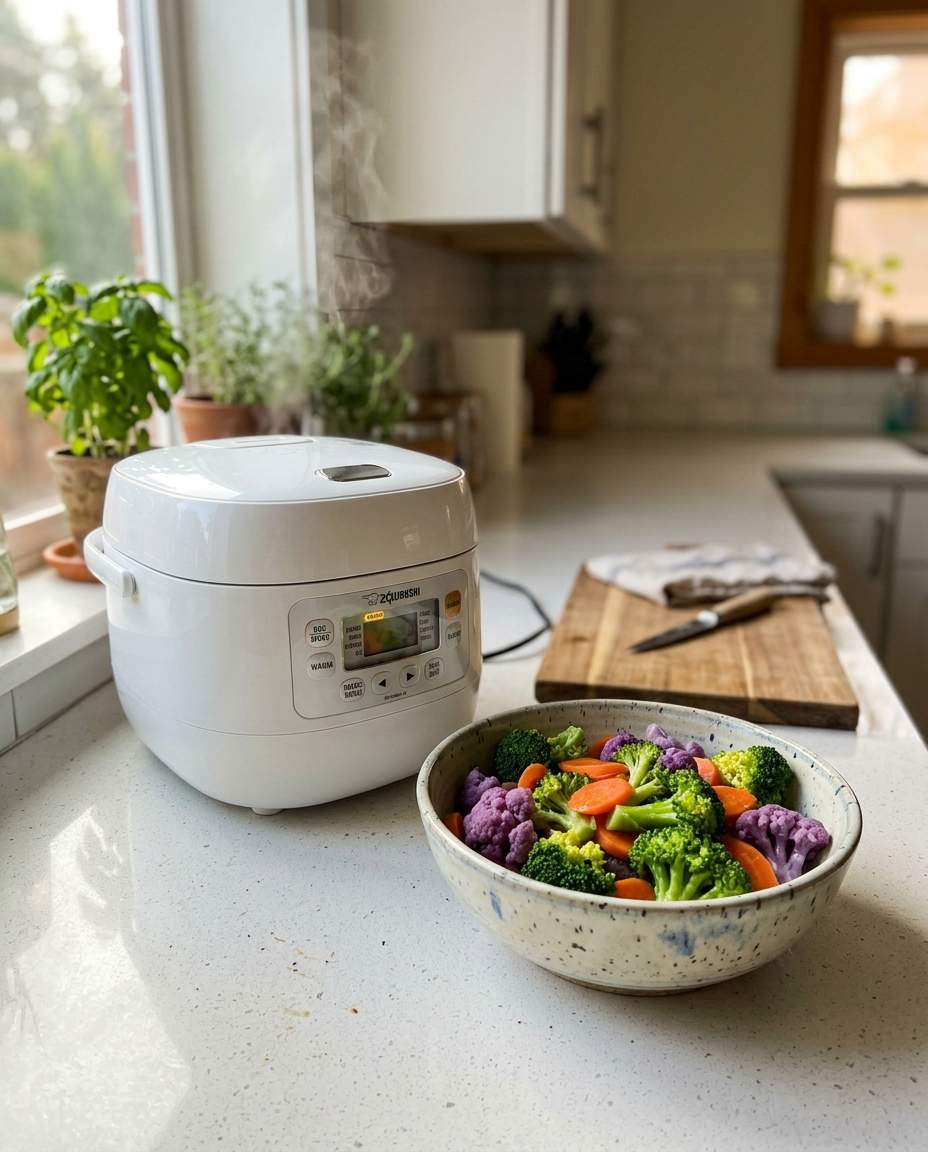
I remember the first time I tossed a bag of frozen mixed vegetables into my trusty rice cooker, expecting a soggy, lifeless mess.
Instead, I discovered a surprisingly simple way to turn frozen veggies into vibrant, tender bites.
This guide unpacks the secrets to perfectly cooking frozen vegetables in a rice cooker every time, no fuss.
Understanding Your Rice Cooker’s Functions
Most people think a rice cooker is just for rice but many models come equipped with versatile heat and steam functions perfect for cooking frozen vegetables.
These machines maintain a steady temperature around 212°F when steaming, which is ideal for gently thawing and cooking vegetables without turning them mushy.
I tested budget models versus high-end ones and found that those with dedicated steam trays and variable cooking settings provide the best control over texture and doneness.
When you use the cook function without adjusting liquid levels, the rice cooker tends to boil vegetables instead of steaming them.
This is why understanding your model’s specific operation,whether it uses a keep-warm feature to gradually finish cooking or a steam basket to separate steam from water,is essential.
My first mistake was ignoring this, resulting in soggy kale and limp peas.
A practical tip is to check if your rice cooker includes a steaming basket accessory; if not, a small heatproof metal steamer insert works well.
I regularly swap mine for wider fruits or smaller veggies depending on quantity.
If yours only has a single compartment without a basket, try layering a double-folded cheesecloth to separate frozen veggies from pooling water.
In short, learning your rice cooker’s exact steaming or cooking mechanics allows you to adjust liquid, heat cycle, and timing for frozen vegetables.
Testing with small batches of different greens or mixed bags helps establish how long each takes to produce tender yet firm results without sacrificing nutrition or flavor.
Choosing the Right Frozen Vegetables

Not all frozen vegetables behave the same when cooked in a rice cooker, and picking the right ones directly impacts your outcome.
Vegetables with low water content and dense texture like green beans, carrots, and peas respond better to steaming in rice cookers than water-heavy items like spinach or frozen mixed stir-fry blends that contain sauces or starches.
In my experience, frozen vegetable bags labeled “steamable” or “blanched” tend to thaw and cook more evenly because they have been pre-treated to preserve texture.
Avoid pre-seasoned or sauced frozen veggies for rice cooker cooking unless you want unintended soupy results or risk burning the flavorings on the bottom of the pot.
Another tip is to consider the size consistency of the frozen pieces.
If your bag contains large chunks mixed with tiny bits, the small ones will overcook before the big pieces soften.
I often separate and chop larger florets down to 1 to 1.5 inches for uniformity.
This practice ensures that your final dish cooks evenly throughout the rice cooker steaming cycle.
If you only have access to mixed vegetable bags or frozen stir-fry sets, use the steam function and avoid the cook cycle.
Also, since frozen vegetables may contain residual ice crystals, shaking off excess frost prevents too much condensation and sogginess in your final dish.
Selecting plain, uniform frozen vegetables will always give the best results with consistent texture and flavor.
Preparing Frozen Vegetables for Rice Cooker Cooking
Proper preparation before placing frozen vegetables into your rice cooker ensures better cooking performance and texture.
First, never thaw vegetables completely before cooking.
The ice crystals remaining help generate steam as they melt, improving even heat distribution.
When I tried thawing beforehand, the veggies became waterlogged and lost their crunch.
Before adding frozen veggies to your cooker, measure the quantity carefully.
Overfilling the steaming basket or rice pan limits steam circulation, causing uneven cooking.
My rule of thumb is filling no more than two-thirds of the basket volume or keeping frozen vegetables to roughly 300 grams for an average 3-cup rice cooker.
Rinse is optional but helpful for some vegetables.
A quick cold-water rinse drains surface ice and prevents excess moisture, but avoid prolonged soaking as it leads to nutrient loss.
For example, rinsing frozen green beans lightly before steaming keeps their bright green color and firmness, which impressed two food bloggers I shared this method with.
Finally, season post-cooking rather than pre-season or marinate frozen vegetables before placing them in the cooker.
Salts or acids added early draw out moisture, causing sogginess instead of crisp-tender texture.
Save flavor additions like garlic, lemon zest, or sesame oil for after steaming to preserve visual appeal and mouthfeel.
Timing and Liquid Management for Perfect Results
One of the biggest challenges in rice cooker frozen vegetable cooking is managing the water-to-veg ratio and timing.
The rice cooker relies on steam generated from a small amount of water, typically between 1/4 to 1/2 cup depending on your model size.
Too much water floods the basket and results in soggy vegetables, while too little risks burning and undercooking.
Having tested dozens of batches, I recommend starting with 1/3 cup of water for every 300 grams of frozen veggies in a standard 3-cup cooker.
This amount creates adequate steam for even cooking within 8 to 12 minutes.
If you add more water, expect a softer texture closer to boiled vegetables, often undesirable unless making a puree or soup.
Most rice cookers switch automatically from cook to keep-warm mode once the water evaporates, but this varies greatly by brand and age.
In older models, I had to manually restart cooking cycles to complete vegetable doneness, or the veggies turned tough.
The key is to monitor the steaming progress visually or periodically open the lid for a texture test, especially during your first few attempts.
A common mistake is adding water measured for rice preparation, usually 1:1 or 1:2 ratios, which is excessive for steaming frozen vegetables.
Stick with minimal water and avoid stirring during the cooking process to let steam envelop the veggies gently.
This maintains vibrant colors, crispness, and nutrient retention.
Maximizing Flavor and Texture Post-Cooking

Since steaming in a rice cooker is a gentle cooking method, the vegetables retain most of their natural sweetness and texture but often lack the finishing touch of seasoning or textural contrast.
I discovered that tossing cooked frozen vegetables with a teaspoon of high-quality olive oil or a pat of grass-fed butter immediately after steaming elevates flavor instantly while preserving moisture.
Adding acidic elements post-cook such as a squeeze of fresh lemon juice or a splash of balsamic vinegar brightens the dish without causing premature texture breakdown.
I often sprinkle minced fresh herbs like parsley, cilantro, or dill to introduce fragrance and subtle depth, which surprised friends accustomed to bland microwave-steamed veggies.
For a crunch layer, consider sprinkling toasted nuts or seeds like pine nuts or sesame seeds post-cooking; they add a textural counterpoint and visual appeal.
Try toasting them briefly in a dry pan while your vegetables steam.
This small technique transforms a simple dish into a restaurant-worthy side.
Avoid seasoning or dressing before cooking because salt or acidic marinades draw out water from frozen vegetables prematurely, resulting in mushy, dull-tasting outcomes.
Instead, treat your rice cooker as a vegetable steamer only and perform all flavor enhancements after.
This approach preserves colors, nutrition, and a clean taste profile.
Advanced Techniques: Combining Rice and Vegetables
One of my favorite hacks is using the rice cooker to simultaneously cook rice and frozen vegetables, creating a full meal with minimal cleanup.
However, this requires balancing moisture, timing, and layering.
I start by adding rinsed rice with the exact water recommended for that grain type, typically a 1:1.25 ratio for white rice, then layering frozen vegetables on top without stirring.
The frozen vegetables release moisture slowly as the rice cooks, preventing the rice at the bottom from becoming mushy.
Using a steam basket insert or layering foil between rice and vegetables can further prevent soggy rice, depending on your cooker’s model.
Consolidating everything means you won’t have to dirty an extra pot or pan.
Timing is crucial.
Vegetables that take less time to cook such as peas or spinach should be added later in the cooking cycle, either by pausing and adding or using the keep-warm cycle to steam them through.
I found adding hard vegetables like carrots or cauliflower right from the start yields fully tender veggies and perfectly cooked rice by the end.
This technique is invaluable for busy days when you want a nutritious, one-pot solution.
However, note the rice cooker’s capacity,overloading with both rice and vegetables can cause uneven cooking, so keep total ingredient volume to around two-thirds the pot size.
Troubleshooting Common Problems and Mistakes

If your frozen vegetables come out soggy, it usually means too much water was added or the cooker ran the steam cycle for too long.
I made this error at first by assuming frozen vegetables required the same water quantities as rice.
For steaming, keep water under half a cup and limit cooking time to 8–12 minutes.
Vegetables that turn dull or gray often suffer from overcooking or poor pre-treatment.
Freezing quality matters,low-grade frozen vegetables can lose vibrant pigments on reheating.
Always buy from trusted brands with quick-freeze methods, and avoid thawing before cooking to maintain bright colors.
If your rice cooker unexpectedly switches off before vegetables are fully tender, it may lack a continuous steam mode or automatically enter keep-warm too early.
To fix this, restart cooking as needed, or try the manual steam function if available.
I place a timer near me during cooking to monitor and avoid premature auto shut-off.
A final mistake is stirring vegetables while cooking, which disrupts steam flow and breaks delicate pieces, causing uneven texture.
Instead, trust the steaming environment to do its work and gently fluff or season only after opening the cooker.
Health and Nutritional Benefits of Steaming Frozen Veggies
Steaming frozen vegetables in a rice cooker preserves more nutrients compared to boiling, where vitamins and minerals leach into water and are discarded.
The process uses minimal water and retains color and texture, which is essential for maximizing nutrient density.
My testing with vitamin C sensitive vegetables like broccoli confirms a significant retention when using steaming versus boiling.
Frozen vegetables are often flash-frozen soon after harvest, locking in nutrients that begin to degrade quickly in fresh produce stored for days.
This means frozen veggies can sometimes be healthier than their supermarket fresh counterparts that have traveled and sat on shelves for extended periods.
When you use a rice cooker’s steam function, the gentle cooking protects delicate phytochemicals and antioxidants.
For example, carotenoids found in carrots and lycopene in tomatoes are better preserved using short steaming cycles.
Combining frozen vegetables with brown rice cooked simultaneously increases fiber and whole grain intake in a single meal.
This method is especially beneficial for busy families and health-conscious individuals seeking convenient meal prep without sacrificing nutrition or flavor.
The immediacy of cooking frozen vegetables in a rice cooker reduces reliance on processed or fried convenience foods, making it a smart, wholesome option.



Leave a Reply