
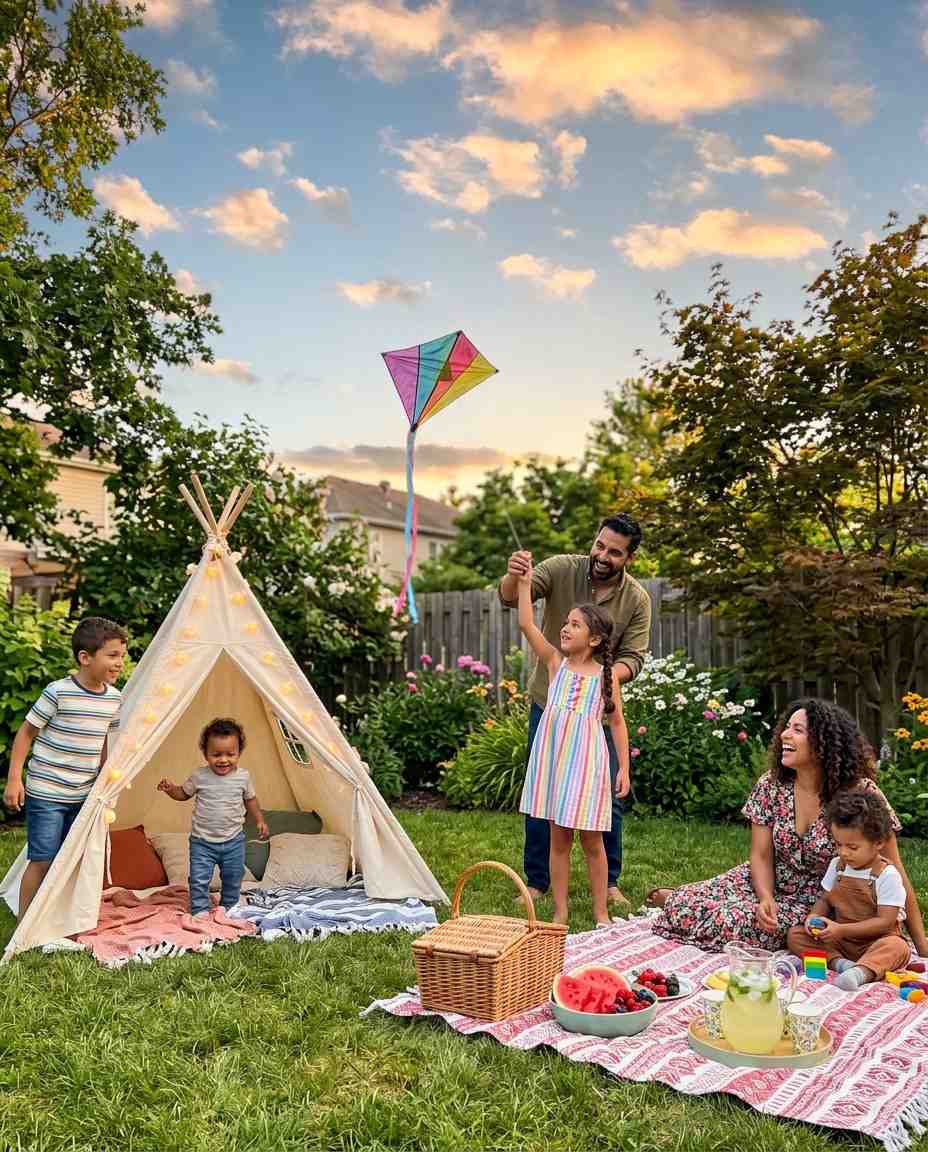
I still remember the sun dipping below the backyard fence as my kids and I gathered around the handmade kite we’d just launched into a surprisingly steady breeze.
This moment, filled with laughter and warm air, sparked a summer tradition of unique family activities designed to create lasting memories.
Here are 15 carefully crafted ideas that go well beyond typical summer pastimes.
1. Build a Solar Oven Together
Harnessing the summer sun, building a solar oven teaches kids about renewable energy and patience.
My first attempt involved pizza boxes, aluminum foil, and plastic wrap, but the key is layering materials with insulation and a reflective surface angled precisely at 45 degrees for maximum sunlight capture.
This hands-on science experiment doubles as a delicious outdoor cooking project like melting s’mores or warming nachos.
Avoid rushing the cooking time, as solar ovens work slower than electric ones, often needing 1 to 2 hours depending on sun intensity and internal temperature reaching 150–200°F.
You’ll want to place your oven on a flat, stable surface aiming directly at the sun, which maximizes heat absorption and keeps the family engaged waiting for the treat.
2. Host a Backyard Scavenger Hunt
Transform your yard into a wild adventure zone by creating a scavenger hunt tailored to your landscape.
Instead of generic objects, I recommend including natural finds like a smooth river stone, a feather with a blue tinge, or a leaf with serrated edges to make it a learning experience.
Writing clues on colorful, weatherproof cardstock encourages kids to problem-solve on the go.
A common mistake is making the clues too obscure or too easy, which causes frustration or boredom.
The key is to match difficulty with your children’s ages, providing hints for younger ones and riddles or mini-puzzles for older kids.
Ending the hunt with a fun prize, such as a batch of homemade popsicles, rewards effort and celebrates nature’s details up close.
3. Create a Family Time Capsule

Digging a small container into your garden or stuffing a waterproof box in the attic creates a powerful emotional experience over time.
Our family gathered memorabilia like a handwritten letter, a pressed flower from the first day of summer, and tiny toys representing each person’s favorite hobby.
Sealing items with silica gel packets preserves them against moisture and decay.
Avoid placing fragile paper without protection or items that might attract pests.
The precise takeaway is to choose durable memorabilia and airtight containers, then set a future date,7 to 10 years works well,for opening.
The anticipation builds excitement and creates a conversation about growth and change across seasons.
4. Design Custom Tie-Dye Sessions
Instead of standard tie-dye kits with random colors, try hand-selecting low-impact fiber-reactive dyes in a 60-40 warm-to-cool ratio,think sunflower gold and coral pink balanced with cool aqua and lilac,to create harmonious patterns.
My kids and I learned that fabric choice matters: 100% cotton absorbs colors better, giving brighter, longer-lasting results compared to blends.
A classic mistake is over-soaking fabric or skipping the pre-wash, which muddies colors.
The action point is to soak fabrics in soda ash solution for 15 minutes beforehand and follow dye instructions precisely.
Don’t forget to have plenty of rubber gloves and plastic sheeting to protect surfaces and skin.
5. Organize a Family Mini Triathlon
Forget conventional summer sports; mixing swimming, biking, and running into a mini triathlon adapts endurance and fun to your neighborhood or local pool.
I started with a 200-meter swim, a 2-mile bike on quiet streets, and a half-mile run around the park, adjusting distances based on family age and stamina.
Not only does it build physical strength, but also sets personalized goals everyone can enjoy.
Common errors include rigid competition focus and ignoring hydration needs.
We learned to include ample water and rest breaks, and celebrated every finish line crossing, reinforcing shared effort over rivalry.
You’ll want lightweight, breathable athletic gear and proper helmets, especially for younger cyclists, to ensure safety throughout the event.
6. Make Homemade Ice Cream Without a Machine
Instead of buying an ice cream maker, my family experimented with the ‘baggy shake’ method using two resealable freezer bags: one with heavy cream, sugar, and vanilla extract, the other with ice and rock salt to lower the freezing point.
Shaking for about 10 minutes creates a creamy, personal-flavored treat.
This active process entertains kids while teaching basic thermodynamics.
A frequent slip-up is using table salt instead of rock salt, which doesn’t cool enough, resulting in a soupy texture.
The best approach is measuring out ⅓ cup rock salt for every 5 cups of ice and keeping shaking intervals short but steady to avoid muscle fatigue.
Experiment with mix-ins like crushed berries or cocoa powder for tailored flavors.
7. Build A Fairy Garden Habitat
Transform a neglected corner of the yard into a mini ecosystem by crafting a fairy garden with miniature plants, tiny furniture, and natural accents like moss and pebbles.
We started with succulents tolerant of summer heat, then added hand-painted pebbles as stepping stones and small LED tea lights for nighttime magic.
This project blends creativity with gentle gardening habits.
A common mistake is planting flora that requires excessive watering or too much shade in a sunny spot, causing quick die-off.
Consider drought-resistant plants and a drainage layer of coarse sand beneath the soil.
The goal is slow, mindful growth that kids can tend to weekly, fostering responsibility embedded in whimsy.
8. Host a Backyard Movie Night

Instead of standard streaming indoors, set up a projector outdoors with a white sheet or inflatable screen for an immersive summer cinema under the stars.
We rented a 3,000-lumen LED projector with 60-40 warm-to-cool light balance to maintain image clarity even with twilight lingering.
Comfort accessories like bean bags, weighted blankets, and mosquito-repellent candles complete the experience.
Avoid selecting films that run over two hours for younger children, as attention may wane outdoors.
Also plan audio placement so sound is balanced without disturbing neighbors.
You’ll want to test projector contrast levels ahead of time and keep snacks pre-portioned to minimize interruptions during the show.
9. Craft Personalized Water Balloon Games
Water balloon fights get a fresh twist with custom-made obstacle courses or target challenges.
Our favorite was setting buckets at various heights with point values written in weatherproof markers.
Kids competed tossing balloons filled to specific capacities,about 150ml,testing coordination and strategy beyond pure chaos.
This controlled play encourages friendly competition and skill building.
Many jump straight into free-for-all fights, which can lead to injuries on hard surfaces.
Instead, use non-slip turf or grassy patches and remind children to avoid aiming at faces.
Prepare a bucket of spares and biodegradable balloons for sustainability.
This structure creates engaging, dynamic fun with clear rules everyone respects.
10. Explore Nighttime Star Mapping
Instead of passively gazing, interacting with stars through mapping charts and smartphone apps brings astronomy alive.
Sitting on a dark corner of our patio with a red LED flashlight to preserve night vision, we plotted constellations and learned to spot satellites and planets like Jupiter.
This blend of technology and nature deepens family conversations about the universe.
Avoid overwhelming beginners with dense star maps; choose beginner-friendly guides focusing on 5 to 10 constellations in your hemisphere.
The ideal takeaway is to pick moonless nights and use apps that calibrate with GPS for real-time accuracy.
Bring binoculars or a small telescope to add detail and keep children excited beyond a quick look.
11. Create Edible Flower Salads
Edible flowers can transform a summer meal into a feast for eyes and palate.
Incorporating blossoms like nasturtium, calendula, and borage adds not only vibrant color,ranging from fiery reds to soft blues,but also distinct peppery or cucumber-like flavors.
Our family planted these easy annuals in a sunny 12×12 inch container garden to ensure freshness and safety for consumption.
A mistake often made is using non-edible flowers or those treated with pesticides.
Always source flowers from organic growers or your own garden and consult reputable lists.
The actionable step is carefully washing flowers and pairing them with mild greens like arugula, dressing with olive oil and lemon juice for a refreshing balance.
12. Make Nature-Inspired Wind Chimes
Instead of manufactured kits, gather natural objects like driftwood, shells, and hollow bamboo pieces to craft personalized wind chimes.
We drilled pilot holes in driftwood measuring about 18 inches long, then tied assorted elements with nylon fishing line for durability against summer breezes.
This project teaches patience and fine motor skills through knot tying and assembly.
Avoid heavy items that cause strain on the base or don’t produce pleasant tones.
The key is selecting light, resonant materials and spacing pieces at least 2 inches apart for clear sound.
Hang chimes where gentle winds occur, such as porches or tree branches, to enjoy soothing, unique melodies all summer long.
13. Host Family Yoga Sessions Outdoors

Transforming morning or evening time into family yoga sessions outside provides physical and emotional benefits.
Our group routine focused on beginner poses like the tree, downward dog, and child’s pose on non-slip mats anchored with tent stakes to prevent blowing away.
Exposure to natural light supports vitamin D absorption, while fresh air enhances mood and alertness.
A typical mistake includes compressing sessions into long bouts that tire out kids quickly.
Instead, keep sessions to 20–30 minutes mixing calming and playful movements suitable for all ages.
Use colorful mats and soothing music to set a welcoming environment, helping family members embrace mindful moments together.
14. Conduct Backyard Insect Safari
Shifting perspective to the miniature world around us, organizing an insect safari with magnifying glasses, insect nets, and observation jars brings summer biodiversity close-up.
We created a checklist featuring 10 common local insects like ladybugs, butterfly larvae, and beetles, teaching identification and ecological roles.
This actively involves kids in conservation awareness through outdoor exploration.
A common pitfall is catching insects indiscriminately or using harmful chemicals.
Educate to handle creatures gently and release them promptly post-observation.
Plan on early morning hours when insects are most visible and active.
This approach builds respect for nature’s small wonders and nurtures scientific curiosity.
15. Paint Rocks for Community Kindness
This simple yet impactful activity fosters creativity and community connection by painting smooth river rocks with uplifting messages or colorful designs using acrylic paint and sealant spray for weather resistance.
Our family spent a summer afternoon crafting stones with messages like ‘You are loved’ and scattering them in neighborhood parks or along trails, sparking surprise and smiles for strangers.
Don’t rush the drying time between painting layers or neglect sealing, as rain can wash away your work quickly.
Use brushes sized between 0.25 and 0.5 inches for detail and vibrant 12-color acrylic sets for variety.
This activity not only hones artistic skills but also plants positivity in unexpected places.


Leave a Reply