
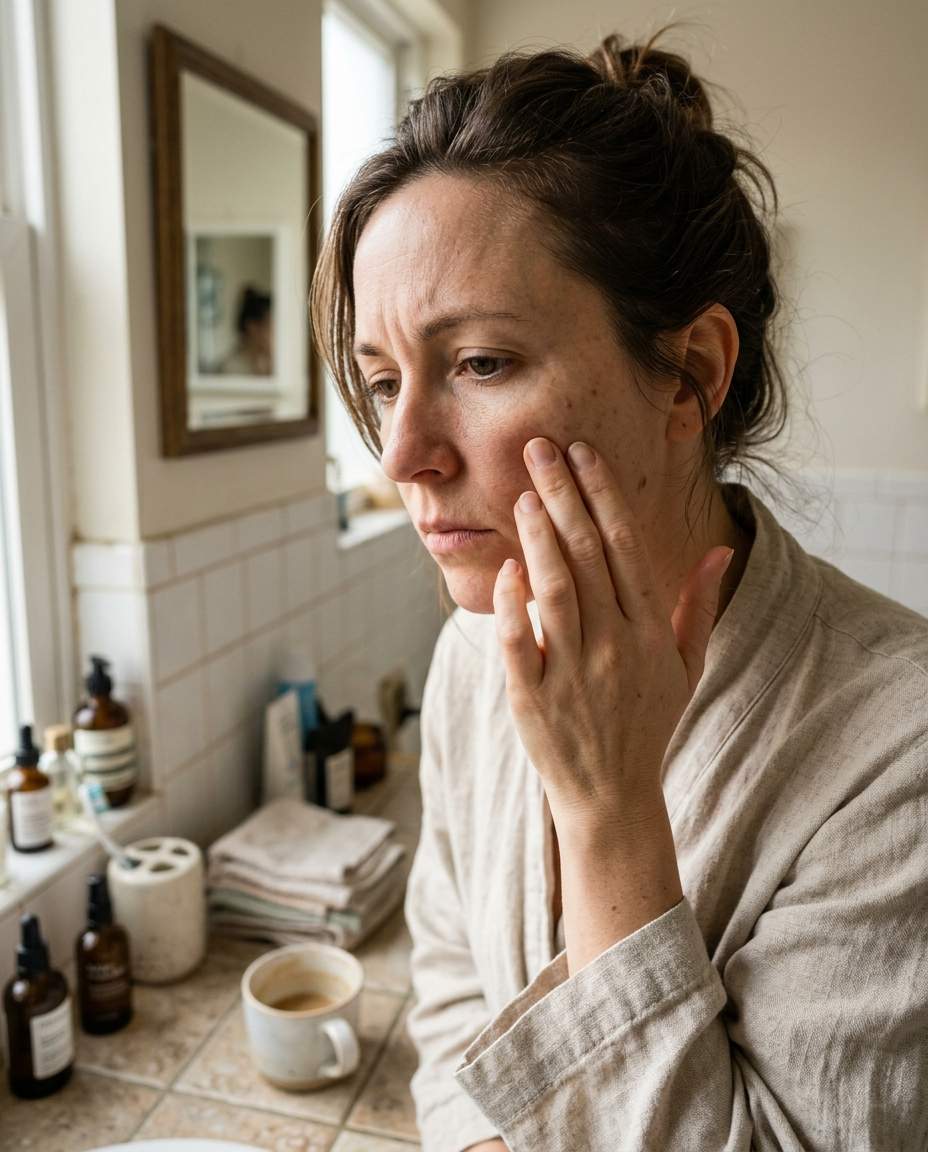
I remember staring at my dry, flaky cheeks in the mirror one morning, wondering why my skin felt like it had aged overnight.
That rough texture, oddly disconnected from my usual skincare routine, was actually my skin screaming for help.
Understanding these subtle signals can reveal critical health and vitamin gaps you might be overlooking.
1. Sudden Patchy Dryness Indicates Vitamin A Deficiency
When my skin started developing rough, patchy dryness, I initially blamed the cold air outside.
It turns out this sensation often signals a vitamin A deficiency, which disrupts skin cell turnover and weakens the protective barrier.
I learned that rather than slapping on heavier creams, addressing the root through diet—like adding sweet potatoes or liver—is essential.
A friend of mine once ignored these dry patches, reaching for potent exfoliants that worsened the problem by stripping what little natural moisture remained.
Vitamin A plays a role in keratin production; without enough, dead skin accumulates in rough spots.
These patches are less about external dehydration and more about internal renewal failure.
If you notice persistent patchy dryness that skincare products fail to soothe, check your intake of preformed vitamin A (retinol) or its precursors (beta-carotene).
Supplements should be taken cautiously, as excessive doses can be toxic.
Instead, aim for balance by consuming foods rich in vitamin A, and consider a dermatologist’s advice for tailored dermatologist-quality retinoids.
2. Unexplained Bruising Reveals Vitamin C Shortfall
One evening, I noticed purple bruises appearing on my forearms without any trauma, sparking alarm.
Unexplained bruising is often tied to vitamin C deficiency, as this nutrient is critical for collagen synthesis and capillary health.
Without enough vitamin C, blood vessels weaken and break more easily, making even minor bumps bruise visibly.
It’s common to mistake this for clumsiness or aging, but the underlying vessel fragility means your skin is telling you it lacks structural support from collagen.
My first mistake was ignoring vitamin C’s systemic importance and relying solely on topical serums, which can’t offset a nutritional deficit.
A practical takeaway is to increase vitamin C-rich foods such as citrus fruits, kiwi, and bell peppers consistently, aiming for about 75–90 mg daily.
If bruising continues, medical testing for scurvy or other clotting disorders is critical.
Your skin is literally the canary in the coal mine when it comes to vascular integrity.
3. Persistent Angular Cheilitis Points to B Vitamins
The cracked, painful corners of my mouth that lasted for weeks baffled me until I connected them with a lack of B vitamins, especially B2 (riboflavin) and B12.
These vitamins help maintain skin and mucous membrane integrity, and their shortage often manifests in inflamed, split skin near lip edges, known medically as angular cheilitis.
Many people mistakenly apply over-the-counter creams without addressing deficits, prolonging discomfort.
I learned the hard way that supplementing B-complex vitamins along with improving diet with eggs, leafy greens, and dairy made a noticeable difference within days.
If you frequently experience soreness or fissures at your mouth’s corners, consider a professional vitamin panel and integrate daily B vitamin-rich foods into your meals.
Avoid harsh lip products during healing and maintain hydration to support barrier recovery.
4. Pale, Chalky Complexion Signals Iron Deficiency Anemia

I once saw my reflection in harsh fluorescent office lighting and was shocked by how pale and almost chalky my face looked, quite different from my natural skin tone.
This paleness can be a subtle indicator of iron deficiency anemia, where low hemoglobin reduces oxygen delivery to tissues, dampening healthy, rosy skin hue.
Many confuse this with fatigue alone and don’t link it with skin changes.
I made the mistake of focusing on sleep and energy but overlooked targeted iron-rich foods or testing.
In reality, pallor is often a visible symptom of systemic oxygen depletion.
If you notice this dull paleness with accompanying tiredness or rapid heartbeat, consider diet adjustments with heme-iron sources like beef and spinach, or heme-enhancers like vitamin C.
Consulting a healthcare provider for bloodwork can provide accurate diagnosis and treatment pathways.
5. Delayed Wound Healing Reveals Zinc Shortage
When I cut myself gardening, I noticed the wound took far longer than usual to heal and sometimes became inflamed.
This slow healing process often roots back to zinc deficiency, a mineral remarkably critical for cell repair, immune function, and collagen formation.
Without adequate zinc, even small injuries can linger unsatisfactorily.
A common pitfall is assuming excess moisture or infection slows healing, but zinc’s role at the cellular level is non-negotiable for timely closure.
Initially, I relied on topical antibiotic ointments, which only addressed infection risk but not nutrient deficiency.
Integrating zinc-rich foods such as pumpkin seeds, chickpeas, and oysters can speed tissue repair.
For those with absorption issues (like vegans or people with gut disorders), supplementation around 8–11 mg daily, per recommended dosages, might be necessary after physician consultation.
6. Rough, Scaly Elbows Point to Essential Fatty Acids Lack
I realized my elbows were unusually rough and scaly despite moisturizing regularly.
This stubborn dryness often signals a deficiency in essential fatty acids, particularly Omega-3s, which maintain skin barrier lipids and hydration.
Without these, skin texture deteriorates into coarse patches resistant to topical emollients alone.
It’s easy to confuse this with eczema or psoriasis, leading to unnecessary steroid creams.
My experience taught me that incorporating flaxseed oil or fatty fish like salmon into the diet improved elasticity and smoothness over weeks.
You want to aim for at least 250 mg daily of combined EPA and DHA omega-3s, which you can track with high-quality supplements or food diaries.
Remember, moisturizer helps but won’t replace the deep strengthening that comes from these fats nourishing your skin from within.
7. Excessive Flaking and Scaling Indicates Biotin Deficiency
When I flaked off noticeable white scales on my scalp and sides of the nose, it was actually a sign of biotin deficiency.
Although rare with a normal diet, biotin—vitamin B7—is vital for skin health and keratin production.
The lack can cause not only flaking but also brittle nails and hair thinning.
People often mistake this for dandruff and turn to over-the-counter antifungal shampoos that never work long term.
I learned the importance of nutritional analysis and adding nuts, eggs, and avocados, which are natural biotin sources, to my meals.
Biotin supplements in doses ranging from 30 to 100 mcg daily support restoration but prioritize food first.
If flakes persist, a dermatological exam is warranted to rule out underlying dermatologic conditions mimicking deficiency.
8. Yellowish Skin Tint Hints at Vitamin E Deficiency

One day I caught a faint yellowish tint in my skin that wasn’t related to jaundice, but instead signaled vitamin E deficiency.
Vitamin E is a powerful antioxidant protecting skin cells from oxidative stress and promoting repair.
Its shortage can manifest subtly as sallow, dull skin lacking the usual glow.
Since vitamin E is fat-soluble, those with fat-malabsorption disorders or restrictive diets often overlook this cause.
I initially tried brightening serums without focus on nutrition, which didn’t resolve the underlying dullness.
To combat this, incorporating nuts like almonds, sunflower seeds, and spinach daily can boost vitamin E levels.
Supplementing with 15 mg (22.4 IU) per day is generally safe and beneficial if dietary intake is inadequate, but always track oil-rich skin products so you don’t overload your skin externally.
9. Small Red Dots Signal Vitamin K Deficiency
Tiny red dots, or petechiae, appeared on my legs after long shifts of standing.
These small pinpoint hemorrhages are often a sign of vitamin K deficiency, critical for blood clotting and maintaining blood vessel walls.
When deficient, capillaries become fragile and prone to leaking.
Many dismiss these as bruises or insect bites, but these red spots won’t fade like typical bruises and can multiply.
I initially misattributed them to mechanical stress but learned that addressing my low leafy green intake was key.
If you see unexplained red dots without trauma, focus on vitamin K1-rich foods like kale, spinach, and broccoli.
Vitamin K2, found in fermented foods like natto, also supports vascular health.
Medical guidance is vital if coagulation disorders are suspected.
10. Persistent Dark Circles Reveal Iron and Folate Deficiency
My stubborn dark under-eye circles made me self-conscious despite enough sleep and hydration.
These shadows are often overlooked as fatigue signs but can reveal deficiencies in iron and folate—both essential for oxygen transport and skin renewal.
Poor circulation under thin eye skin causes discoloration.
It’s common to try cosmetics or cold compresses alone, which provide temporary relief but don’t fix nutrient gaps.
I found that integrating lentils, leafy greens, and liver into my meals helped reduce darkness noticeably over a few weeks.
If dark circles persist despite lifestyle changes, consider blood tests to check iron and folate status.
Topical vitamin K creams can complement internal treatment to strengthen capillaries and brighten skin beneath the eyes.
11. Brittle, Splitting Nails Signal Protein and Vitamin Deficiencies
I was surprised when my nails began splitting horizontally into thin layers, a condition called onychoschizia.
This often marks deficits in protein and vitamins such as B12, iron, and zinc that support keratinocyte health.
Nails are an external indicator of overall nutritional balance.
Many assume nail salons or moisturizers can fix this, yet the internal nutrient deprivation persists unnoticed.
I learned to prioritize protein from sources like lean meat, beans, and eggs plus targeted micronutrients either from diet or supplements.
Daily protein intake of about 0.8 grams per kilogram of body weight, along with a balanced vitamin profile, supports nail matrix repair.
If brittleness worsens, see a healthcare provider to rule out systemic diseases.
12. Persistent Itching Without Rash Signals Vitamin D Deficiency
My skin began to itch relentlessly, even though there was no rash or visible irritation.
This subtle sign can be attributed to vitamin D deficiency, as this vitamin modulates immune responses and skin barrier function.
Low vitamin D may trigger itching without apparent cause.
People often misdiagnose this as dry skin or allergic reactions and overuse topical antihistamines without relief.
I experienced this firsthand before realizing that brief, regular sun exposure and vitamin D supplementation improved my symptoms significantly.
Adults should aim for serum 25(OH)D levels between 30–50 ng/mL, achievable via 10–20 minutes of midday sun several times a week or supplements of 600–800 IU daily.
Consulting your doctor for blood testing guides safe and effective replenishment.




Leave a Reply